

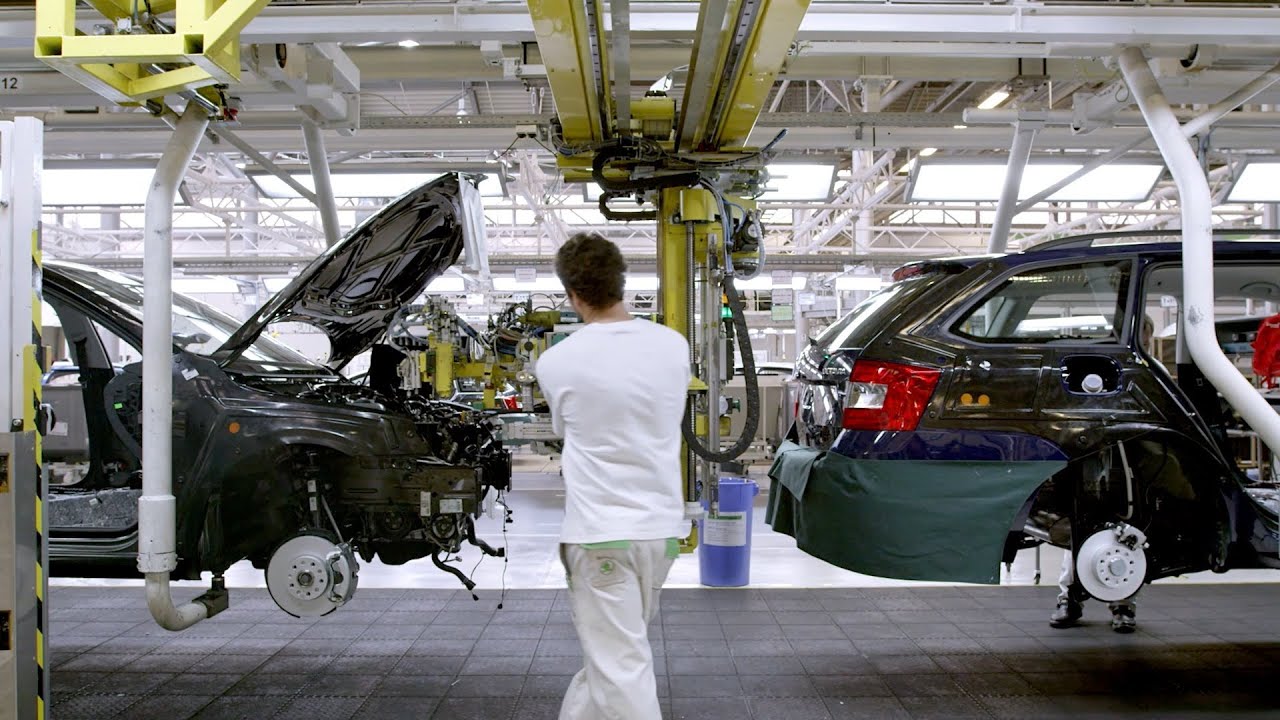
German car production keeps lagging in first half
Passenger car production at German assembly lines is clearly not achieving the recovery projected earlier by the country’s automotive industry federation, VDA.
In January-June, 1.7 million passenger cars came out of German factories, 16% more than in the first half 2020, which was much hurt by production halts. The increase however does not mean a return to pre-pandemic levels, VDA says. However, it notes that in terms of new registrations – 1.4 million units in the first six months 2021 – the figure is 25% lower than it was in the first half of 2019.
While VDA does not go into details about factors throttling production, it cites the supply bottlenecks for semi-conductors as a main factor. This may be the main cause for the extreme turn of trend Kallanish observes for June. The month’s output was 19% below that of June 2020, whereas May still saw a year-on-year increase of 58%.
The federation has therefore adjusted its output forecast for the full year. While it originally predicted a y-o-y increase of 13% to 4 million units, it now expects an increase of 3% to 3.6m units.
New registrations in the first half rose by 15% to 1.7m units. VDA highlights the registration of e-cars, which in the month of June rose 243% to 64,760 units, so that now the mark of 1 million e-cars on German roads has been reached.
Christian Koehl Germany

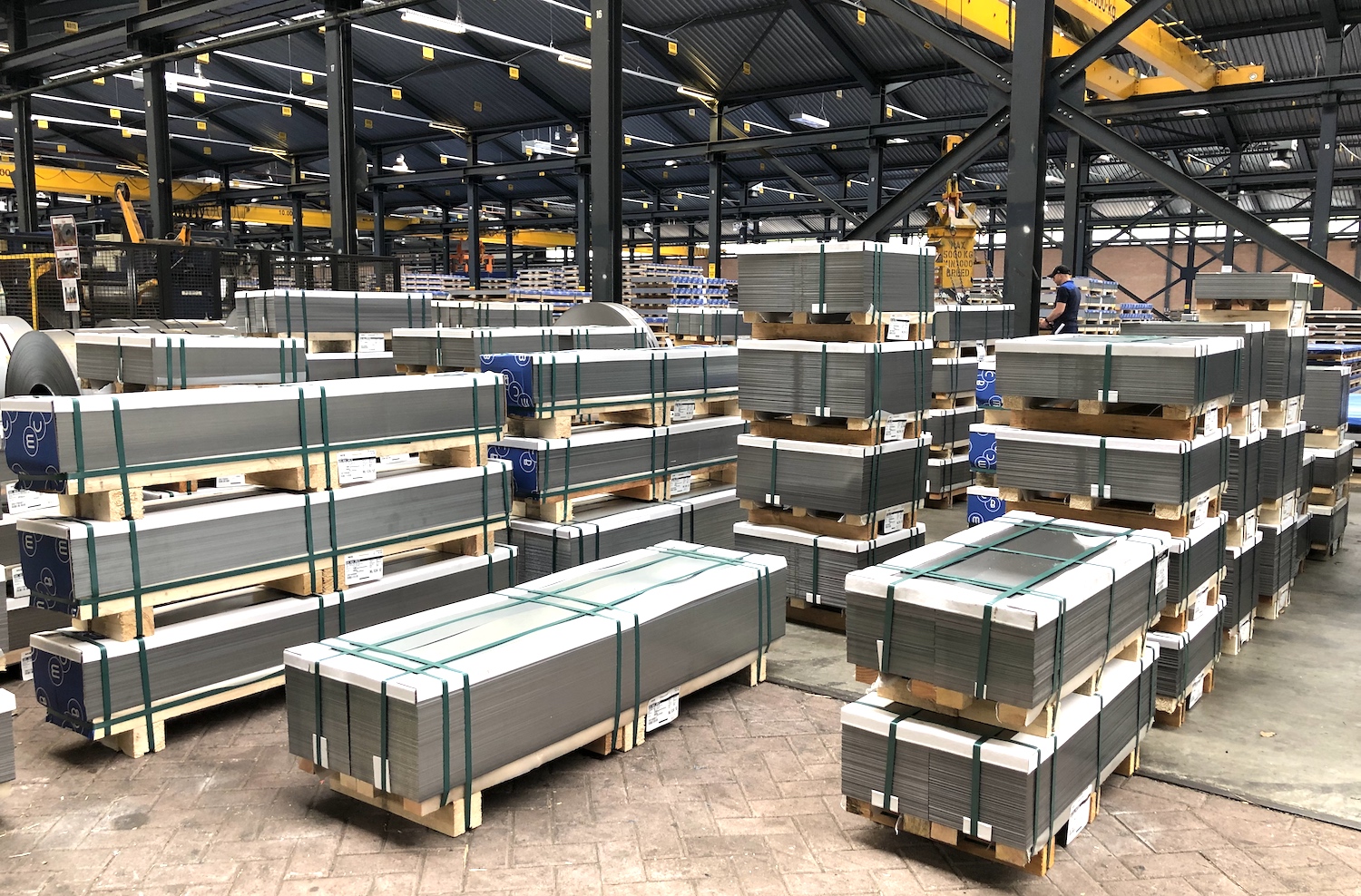
EU service centres seek safeguard revision in 2022
European service centres and distributors of steel confirm their disappointment over the decision of the European Commission to extend safeguard measures for a further three years. They are now hoping for a favourable revision in 2022.
During a webinar organised by Siderweb on Tuesday, Andrea Gabrielli, chairman of the Gabrielli Group, a large network of Italian service centres, voiced his concern. “We are confident that a revision will be done during the next year, even more so as Europe negotiates further with the US towards the cancellation of Section 232,” he said at the event attended by Kallanish.
The official European Commission document confirming the extension of safeguard measures included the possibility of launching an annual review.
Gabrielli stressed that the demand recovery ongoing in Europe risks being put under pressure by the lack of volumes, particularly within the coil segment, exacerbated by safeguard limitations. “So far, we have calculated that we have recorded sales volumes in 2021 of 10% above the levels of 2019. We have had strong demand and have used up our stocks to meet the demand,” Gabrielli observed.
Gabrielli expects the market to normalise somewhat in the coming months and prices to stabilise. “For the future, much depends on how quickly the supply chain will be able to refill stocks after the destocking period, as well as the problems created by safeguard quotas, which are blocking some volumes at ports for long periods,” he explained.
European mills are likely to take advantage of the summer period to catch up on some still existing production backlogs, as demand in European markets cools down for the summer break, Gabrielli concluded.
Emanuele Norsa Italy
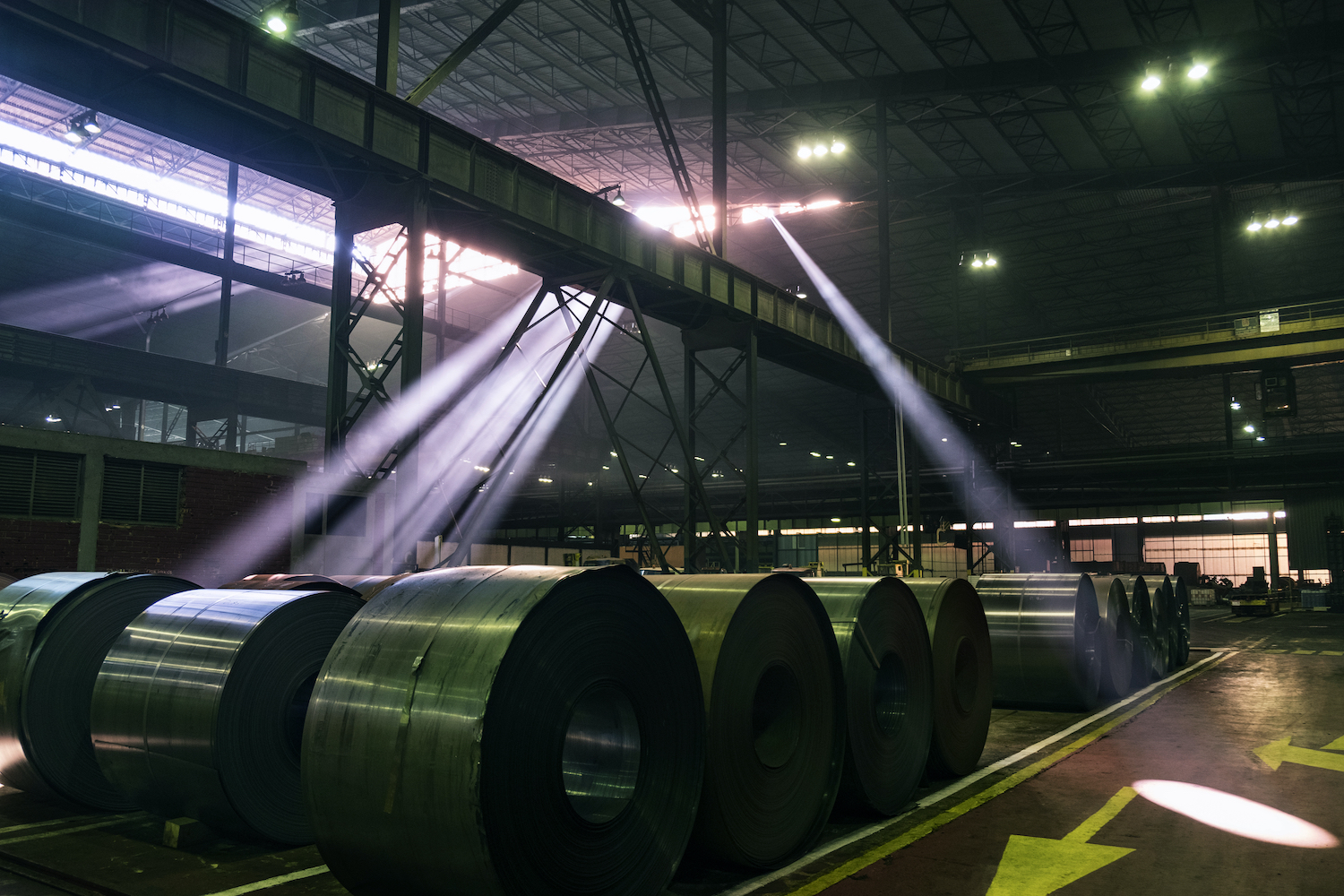
Weekly US steel mill capability utilization rises to 83%: AISI
US raw steel production moved higher the week ended July 3, the American Iron and Steel Institute reported July 6.
The raw steel capability utilization increased to 83%, up slightly from 82.7% the previous week, according to the AISI.
Production rose by 0.4% to 1.842 million st during the week ending July 3, up from 1.835 million st the previous week.
Last week’s production was up 41% compared to the same week a year earlier, when capability utilization was at 58.3% and production totaled 1.306 million st.
Adjusted year-to-date production through July 3 totaled 46.896 million st, with a capability utilization rate of 79%. The total is 16% higher than the 40.415 million st produced during the same period last year, when the utilization rate was 67.7%.
Last week’s production totaled 144,000 st in the Northeast, 648,000 st in the Great Lakes region, 202,000 st in the Midwest, 772,000 st in the Southern district and 76,000 st in the Western region.
The tonnage data is estimated, compiled from weekly production data provided by 50% of domestic producers, combined with monthly production data for the remainder.
— Kevin Salmon


European coils stock levels to rise over summer on incoming imports
The European HRC market continued to fluctuate July 6, with prices heard slightly higher as limited supply and an absence of spot mill offers left prices hanging in the balance.
The market is looking to determine the outcome of prices following cheaper import offers, with the impact of lower prices mostly felt in Italy, sources told S&P Global Platts.
Buyers were heard to be using imports as leverage in their negotiations with mills. HRC import prices were heard in the vicinity of Eur1,070-1,080/mt CIF Antwerp.
A European service center source noted there was a lack of CRC domestically and from imports, with Q3 booked up and Q4 orders nearing their close. If buyers booked material today, they could expect delivery of orders for October-November.
“Backlogs are gone, people are telling me stock levels are huge. All mills are catching up,” the source said.
Meanwhile, a German distributor source said to expect EU prices to remain stable, with HRC import offers softening slightly. Stock levels were expected to rise during the summer with incoming import material awaiting customs clearance.
“We need to see what happens after material cleared by customs, that should be done in 2-3 days, [stock levels] might be higher because of customs cleared import tonnage,” distributor said.
The source said he did not expect prices to soften due to the extended lead times and ongoing production issues experienced at several European mills.
“I have doubts that we’ll see a price decrease. Everyone will try to negotiate, but [with difficulty] given the current state on the worldwide market and reduction of steel exports from China, high US prices and Russian tax on steel exports,” the distributor said.
In the Italian market, a distributor said that although several mills were accepting prices in the range of Eur1,080-1,100/mt ex-works Italy, he said buyers should remain cautious due to antidumping investigations and limited quota allowances.
— Amanda Flint