

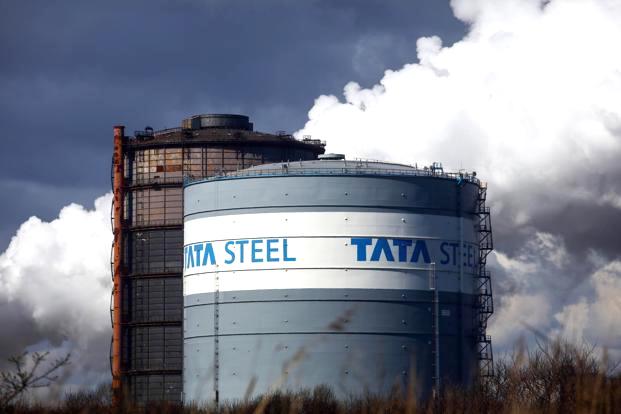
Tata Steel eyes 40mt capacity in India
Tata Steel foresees India to account for 73% of its global steel production over the next decade. The company is ramping up its Indian production capacity from the existing 20 million tonnes/year to 40m t/y by 2030, says chief executive T V Narendran.
With the recent development in the Indian state of Odisha (see Kallanish passim), the steel giant is eyeing to buy Neelachal Ispat Nigam and is evaluating Rashtriya Ispat Nigam, in which the government plans to sell its stake, Kallanish notes.
Following the overseas acquisitions of NatSteel Singapore, Millennium Steel Thailand, Corus and domestic acquisitions of Bhushan Steel and Usha Martin Steel, India’s contribution in overall group steel production increased from 29% in 2010 to 57% in 2020. “India is also one of the lowest-cost producers of steel in the world,” says the ceo.
Amid the pandemic-stricken economic scenario, the country’s oldest steel manufacturer managed to reduce net debt by INR 29,390 crore ($3.9 billion), taking consolidated net debt to INR 75,389 crore in the 2021 fiscal year (FY21), Tata says in a performance report.
During the period, the domestic steel industry suffered nationwide lockdowns owing to which the company faced production loss, especially in the first two quarters. Tata managed to bounce back in the next two quarters on the back of a strong revival of domestic demand and rebound in construction and industrial development activity in India. This helped the company to witness growth of 62% year-on-year in consolidated Ebitda of INR 30,892 crores.
India steel deliveries stood at 17.3mt in FY21, seeing marginal growth of 1.76% y-o-y. However, consolidated steel deliveries fell by 1.38% y-o-y to 28.5mt from 28.9mt last year.
Sayed Aameer India

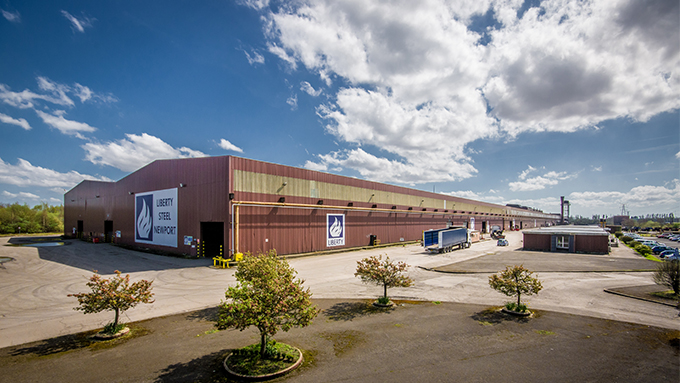
Liberty’s restructuring plans dismay Luxembourg government
Liberty Steel’s announcement that it will have its site in Dudelange supplied from Romania in future is causing scepticism among Luxembourg’s policymakers. They appear to be preparing a plan B for the coil plant in case Liberty chooses to divest it after all, according to a Luxemburger Wort report.
The group is about to merge its Liège-Dudelange and Magona coil processing plants into the Liberty Galati organisation, so that the Romanian steelworks will become their primary hot rolled coil provider (see Kallanish passim).
Luxembourg’s economy minister Franz Fayot is annoyed because he was not informed about these plans, writes the Luxemburg newspaper.
The fact that the coils will come from Galati instead of ArcelorMittal in future will mean a deterioration in steel quality, claims Luxemburgmember of parliament Laurent Mosar.
Reportedly, state investment company SNCI is looking into alternatives for Dudelange. There are also talks with “potential industrial partners” whose names he cannot mention, the paper quotes Fayot as saying.
Christian Koehl Germany
French longs prices may increase on pricey scrap
French rebar and other long steel prices are seen increasing this month by €10-15/tonne ($11-17), in line with increasing scrap values in the country, sources tell Kallanish.
Sales activity, like in all other European countries, however, is plodding along due to the holiday season across the continent and, specifically, in importers of French longs such as the Benelux and Germany. Distribution and end users are seen going back to purchasing in the coming days for September delivery before mills shut down for the August summer break.
Some import sales from Spanish and Italian producers have been reported over the past few days. Their prices are in line with domestic values as rebar makers in these countries are also keeping their values at high levels.
So far, domestic rebar is sold in France at €740-760/t ex-works. This includes €260-270/t size extras. Buyers in the south add between €40-50/t of transport to have material delivered from the north of the country.
Meanwhile, strong demand is reported for drawing- and mesh-quality wire rod, for which some tonnages have been taken out of the market due to the fire at the Thy-Marcinelle plant in Belgium (see Kallanish passim). Prices for drawing-quality wire rod in northern European countries are stable month-on-month at €900/t ex-works, and €30-50/t less in Italy.
In France and the Benelux area scrap prices are increasing by €15/t on average for the high grades.
Natalia Capra France

Mills eye $2,000/st hot-rolled in US
Eye-popping US sheet numbers are still holding strong – and they may indeed continue to rise for the foreseeable future, Kallanish hears from market sources.
On Monday, Kallanish put hot-rolled at $1,800-1,820/short ton, with cold-rolled at $2,000-2,050/st. All prices are ex-works, domestic mill.
By the end of the year, domestic producers would like to see hot-rolled at the $2,000/st mark, several market sources said.
It’s “always probable” that mills will shoot for the moon in a positive pricing environment, says a Midwest service centre buyer.
A West Coast buyer says the $2,000/st figure is “within [the mills’] crosshairs, and $1,800/st is now a firm floor. Import pressure remains minimal, though some cold-rolled and coated material is now coming from overseas, he says.
A Gulf Coast tube trader says the continued run-up in skelp pricing is having a trickle-down effect on the troubled energy tubulars market.
“Hot-rolled keeps rising, making it even harder than yesterday to buy,” he says.
Dan Hilliard USA
Some higher HRC offers emerge in northwest Europe
While opportunities to buy coil in Europe in the second half-year remain scarce, some offers seem to be in the offing, at slightly higher prices than the latest peak reached in June.
Two weeks ago, the market leader mill group came out with another price push for hot rolled coil to €1,200/tonne ($1,421). New offers now, apparently from other western European mills, are said to be at €1,240-1,250/t, Kallanish learns from one market player. These offers are not yet widely heard on the market, as most players keep bemoaning an absolute absence of any offers all, not even at June’s price.
The new offers come from mills “from Sweden to Italy”, the one source says without getting more precise. Some came in last week, and some are not even official yet, “and will be announced only next week once volumes are defined”, he says, pointing at wide differences between mills in their allocation planning.
In fact, while many mills reject any orders for this year, those new opportunities would be for delivery between October and December. Apparently, only HRC has a new price attached, while newly released volumes of cold-rolled and galv remain at June’s price target of €1,350.
Christian Koehl Germany
Competitive HRC import offers reach Europe, market uncertain
In recent weeks some competitive hot rolled coil import offers have surfaced in the European market, serving to increase the uncertainty already in the market, Kallanish learns from sources.
Indian suppliers have over-used tax-free import allocations, but their offers in some cases continue to be competitive even with the 25% tariff added. Traders report offers from India at as low as €880/t ($1,042) cfr southern Europe, to which the safeguard tax would be added.
“Some competitive prices in the market keep being heard, but the reduction in offers has triggered buyers to enter into a wait-and-see mood,” a trader notes.
Another trader hears offers from Japan at some €1,050/t cfr southern Europe for HRC. Turkish suppliers meanwhile are reported this week quoting at some €960-1,000/t cfr, inclusive of anti-dumping duties. “We heard of a Turkish supplier offering at €990/t cfr southern Europe, but these offers could soon be off the market as soon as Chinese authorities limit HRC exports,” a trader comments.
Emanuele Norsa Italy
EU long steel prices remain firm, July scrap contracts continue to climb
July ferrous scrap prices across Europe rose sharply for the third consecutive month to new record index highs, as strong demand for premium ferrous scrap grades continued to support prices, market participants said.
Shredded scrap contracts for July settlements were largely heard ranging from Eur440-Eur460/mt delivered to the mill in Northern Europe, although some sources cited workable levels as high as Eur475/mt delivered.
In Northern Europe, Platts’ June assessment for domestic shredded scrap was at a record high of Eur432.50/mt delivered.
Across most grades, market sources cited a rollover from June prices to Eur10/mt up on the month. However, one German supplier had noted that “two German mills have increased prices by Eur50/mt for new cuttings,” highlighting the strong demand for higher quality scrap grades.
Material feed into shredders was reported to be tight, allowing for a continued higher premium for shredded scrap prices over heavy melting scrap grades. Supply was not a concern for heavy melting scrap grades, with substantial volumes sold into the deepsea export market and Turkey the main buyer.
Steelmaker sources lamented the fact that it remains difficult to find raw materials and said that most prices had increased for the scrap monthly contracts by around Eur10/mt on the month. However, they added that they were managing well to make a margin amid a strong finished steel market.
Finished steel prices firm
Platts assessed Northwest European hot-rolled coil down Eur3/mt to Eur1,178/mt July 8 ($1,394.93/mt) ex-works Ruhr, but prices were still firm at multiyear highs. Flat steel buyers held back from buying, with imports more desirable because of lower prices and similar lead times to domestic sellers.
Long steel market sentiment also remained strong. Northern European customers were only buying rebar as per their requirements ahead of the summer holidays, sources told Platts.
“Rebar supply is good, but I am not doing long-term contracts because it’s too dangerous,” one Benelux-based distributor source told Platts. “I am only selling [to end-users] what is immediately available with mills.”
The distributor also noted that with incoming Russian export duties on finished steel, prices for rebar might move higher, with any downward price correction not expected until September.
“The extension of the safeguard is a positive factor,” one European mill source said. “I also heard that Turkish rebar quota is already full for the third and fourth quarters but it’s not anything unusual. It is not that the market got flooded. It happens every quarter.”
About 3,409 mt, or 5.5%, of the total July-September quota of 61,938 mt for Turkish-origin rebar imports into the EU, which became active July 1, remained available. 68 mt was awaiting allocation as of 6 pm London time on July 8.
Riva fire impact limited
In late June, Belgian long steel producer Riva Thy-Marcinelle had halted production for two weeks following a fire at its Charleroi mill, sources said June 23. Riva was heard to have reassured its clients in a letter in which it said that the mill could deliver from stocks and that they were planning to restart production very soon.
The mill had restarted production during the week ended July 2, market sources said, noting that Riva’s absence had a limited impact on rebar pricing.
Another distributor source in the Benelux region reported that dealings with Riva were back to normal but the mill will be undergoing summer maintenance in the near-term.
“The demand will stay but deliveries will be postponed till after summer. This happens every year, so it is not significant,” he said and cited a deal value for 150 mt of rebar at Eur825/mt delivered.
Rebar offers into Western and Central Europe, including Germany, were at Eur915-Eur920/mt delivered, while one seller source noted indicative mill offers for domestic rebar in Northwest Europe around Eur850-Eur920/mt delivered.
“If we look at the fundamentals in Europe, there is still a large demand of steel, while steelmaker production is now limited following all the production cuts, and on top of that, Far East market prices are moving up so I am confident prices will continue to be strong,” a European long steel buyer said.
Platts assessed TSI Northwest Europe Rebar at Eur830/mt ex-works July 2, up Eur40/mt since June 4, when the index stood at Eur790/mt delivered.
Eurozone construction companies signaled stronger optimism regarding the year-ahead outlook for activity, the strongest since June 2019, according to the latest IHS Markit Eurozone Construction PMI. IHS Markit is subject to a merger with S&P Global pending regulatory approval.
The IHS Markit Eurozone Construction Total Activity Index was unchanged on the month at 50.3 in June, “indicating a marginal expansion in construction activity, which means that Eurozone construction activity has expanded in each of the latest four months.” An index figure below 50 suggests a fall in activity month on month.
Southern European shredded scrap also hikes
In Spain and Italy, prices remained firmly above the Northern European market, with E40 shredded scrap heard at Eur460/mt delivered to the mill in Spain and at Eur470-475/mt delivered to the mill in Italy, although some sell-side sources cited shredded scrap prices as high as Eur520/mt delivered in Italy.
Platts’ assessment for Southern European shredded scrap was at Eur447.50/mt delivered for June contracts.
Platts assessed South Europe export rebar at Eur715/mt FOB July 2, down Eur5/mt on the week, but remaining at multiyear highs.
Turkish deepsea import ferrous scrap prices have remained largely rangebound between $495-$509/mt since the beginning of June. Platts assessed Turkish imports of premium heavy melting scrap 1/2 (80:20) July 8 at $495/mt CFR, down $3/mt on the week.
— Viral Shah, Rabia Arif, Annalisa Villa

European HRC demand still steady as panic buying leaves market
European hot-rolled coil prices were heard slightly lower July 8 as buyers waited to determine the viability of future pricing, with imports more desirable because of lower prices and similar lead times to domestic sellers, sources told S&P Global Platts.
Market participants warned that although cheaper imports were available, there would be risks with clearing material on time.
“Indian HRC material will incur a duty — even if imports are cheaper, you never know what you’ll need to pay in the end. If you miss the initial day of bringing material into Europe, you will pay 25% duty,” a Benelux service center source said.
Domestic lead times continue to be lengthy, with spot transactions not guaranteed delivery before November-December, whereas some imports could be delivered as soon as late October.
HRC import prices from the Far East were heard between Eur1,050-1,090/mt CIF Antwerp.
In the Italian market, there was mixed sentiment on pricing, with some sources quoting varying HRC prices in the range of Eur1,090-1,150/mt ex-works Italy.
One Italy mill source said although import prices were almost Eur200/mt cheaper than local suppliers, he did not see why prices would go down.
“There is no panic anymore, but demand is still constant and present on a daily basis,” the mill source said. “Buyers will try to purchase imports as much as possible, knowing the limited quotas available.”
An Italy-based trader also agreed that demand was good, despite there being no more panic among customers.
“Market is doubtful in which direction it will go. Service centers are trying to postpone purchases and they reduce a bit their selling prices,” the trader said. “Their margins are so big that they can lose a few euros.”
Prices were still heard to be firm, with EU mills unlikely to reduce their prices because of long delivery times and a keen transition toward boosting investment in carbon-free steel.
— Amanda Flint