


Annika Roos to head Swedish Steel Association
Jernkontoret, the association of Swedish steelmakers, has announced that Annika Roos of Sandvik will take over as new managing director of the association at the beginning of 2022.
The current director, Bo-Erik Pers, will retire as planned, and the transition will begin this autumn, Kallanish learns from Jernkontoret.
Roos is currently global head of the Powder business within Sandvik Manufacturing and Machining Solutions. She has worked within the Sandvik Group for 35 years in a number of different management positions, most recently with a focus on developing the business for metal powders used in 3D printing and other applications. She holds a degree in Engineering Physics from the Royal Institute of Technology.
Annika Roos takes over the leadership of Sweden’s oldest industry organisation. Jernkontoret works in close collaboration with iron and steel companies in Sweden and all the industry’s stakeholders, including academia, politics and government agencies.
Christian Koehl Germany
NLMK Clabecq supplies abrasion-resistant plate for Mercedes-Benz trucks
NLMK says its Clabecq plant in Belgium has supplied abrasion-resistant Quard 450 steel plate to Becema to build, in partnership with Mercedes-Benz, a new series of dump trucks.
Becema is set to use NLMK steel to produce the truck bodies. The Quard 450 steel will ensure high resistance to abrasion and impact loads, NLMK says.
“Quard steel is used in harsh conditions and is recommended for construction and mining equipment, among other applications. The unique wear-resistant properties of this grade more than triple the durability of individual special-purpose equipment components,” NLMK tells Kallanish.
Emanuele Norsa Italy
Klöckner sees climate change spurring industry consolidation
Steel distribution group Klöckner & Co believes the economic climate in favour of “clean” steels will be an accelerator of consolidation within the industry.
So far, green steel is hardly visible in the company’s portfolio, chief executive Guido Klöckner admitted during a conference call attended by Kallanish. But the group intends to be active in this respect. “We want to play a role in green steel, and therefore we are looking for partners, to make sure we get volumes,” he said. “It will be important to see who makes the first steps”, with hydrogen, with EAF technology and other prerequisite factors, he noted.
Such a climate of change is a ground for partnership and potential consolidation, “but it is always a question of opportunity”, he said, adding that the company primarily aims at growing organically.
A new partnership was recently struck in the USA with Nucor, “a company that needs a big partner for reliable relations”, Kerkhoff said. That partnership through strategic investment coincides perfectly with projected investments in the US infrastructure, Klöckner says in its quarterly report.
Regarding the marketing of green steel, Kerkhoff said it will be more expensive, and this needs to be tested especially with smaller customers than the big OEMs which have signalled they are in favour.
Christian Koehl Germany
Iron ore, scrap hold after readjustment
Seaborne iron ore prices held their ground on Tuesday. Although steel futures regained some lost ground, iron ore markets were taking a breather to assess whether prices need to fall further.
The Kallanish KORE 62% Fe index inched $0.04/t higher to $165.39/dry metric tonne cfr Qingdao. The Kallanish KORE 65% Fe index gained $0.37/t to $196.14/dmt cfr, and the KORE 58% Fe index increased $0.06/t to $138.90/dmt cfr.
On the Dalian Commodity Exchange January 2022 iron ore settled down CNY 24/t at CNY 840.5/t ($129.69/t), while on the Singapore Exchange September 62% Fe futures settled down $0.67/t at $159.91/t. The same contract for 65% Fe and 58% Fe futures meanwhile settled down $1.31/t at $187.91/t, and down $4.43/t at $136.23/t respectively.
Scrap and billet prices were also mostly steady, apart from some scrap prices in Jiangsu. 6mm heavy scrap delivered to mills in the Yangtze River Delta dropped CNY 10/t to CNY 3,746/t. The decline was led by mills in Jiangsu which were cutting their purchasing prices. In Tangshan, billet prices were steady at CNY 5,080/t.
News of a new production restriction in Tangshan for the Winter Olympics in 2022 continued to fuel expectations of lower output through the rest of the year. As the policy will only ramp up in several months’ time, however, its immediate impact was only on sentiment.
Klöckner sees price dynamic, demand growth continuation
After excellent sales in the first half, German-based steel distribution group Klöckner & Co is extremely optimistic regarding the remainder of the year.
In the second quarter, higher prices and increased demand led to “a very considerable growth” in revenue, by 58% on-year to €1.8 billion ($2.1 billion). To a large part, this is attributable to steel prices, given that the tonnage sold grew more slowly, but also considerably, by 21% to 1.295 million tonnes, chief executive Guide Kerkhoff said during a conference call.
He noted that two pricing effects worked in parallel, pushing up profits. On the one hand, “we have had a return from an extremely low level” of prices and margins that prevailed last year, he observed. On the other, the company cashed in on windfall profits from the appreciation of inventories purchased at low prices, he told Kallanish. This effect alone accounted for €190 million, he detailed. Thirdly, the company also shifted further towards high-value products.
Ebitda improved from €11m in the prior-year period to €271m. Net income was extremely strong at €215m, against a net loss of €111m seen a year earlier.
Klöckner believes the rally is not over yet, and in the current quarter expects further rising revenue due to continued price dynamics, which will compensate for a seasonal drop in shipments.
Christian Koehl Germany
ArcelorMittal Brazil to start rolling mill No. 3 at Monlevade
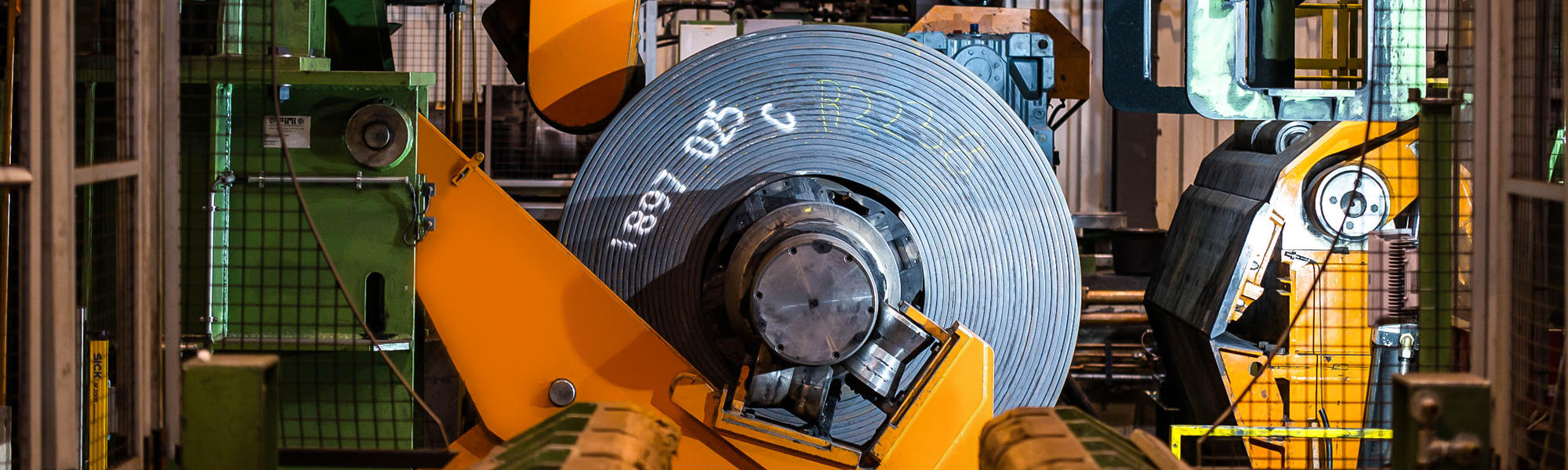
ArcelorMittal Brazil announced that rolling mill No. 3 at Monlevade in Minas Gerais will start operating in January 2022 motivated by market demand and economic growth prospects, the company said Aug. 10.
The company allocated around Real 580 million to the new rolling mill, with capacity to produce 1 million mt/year of long steel.
“However, production will take place gradually and in line with market demand,” it said.
The rolling mill was built in 2015, but the company was waiting for better market conditions to begin operations.
The unit’s rolling mills Nos. 1 and 2 will continue the development of special steels, with an installed capacity of 1.2 million mt/year.
“The strong demand for steel especially in the civil construction and the economic indicators enabled the rolling mill to operate,” the company said.
ArcelorMittal Monlevade is an integrated plant in the long products segment and operates mainly in the wire rod market for special applications.
— Priscilla Antunes

German steel stockholder Kloeckner sees strong market persisting
German steel stockholder Kloeckner is expecting the current steel shortage and high steel prices across the sector to linger and will continue focusing on a “margins over volume” approach, Kloeckner said Aug. 10.
At the Q2 2021 financial results press call, CEO Guido Kerkhoff said that because of the approach of focusing on achieving higher margins and be strict with inventory control, the company was able to have a better supply and delivery situation than its peers. “We did not sell the complete stock just because the price environment was good,” Kerkhoff said.
Kerkhoff also said that there is a trend of more customers moving away from spot purchasing to long-term contracts during the current environment.
Shipments of steel were up 21% year on year at 1.3 million mt in Q2. Sales increased 57.8% year on year to Eur1.8 million.
Kloeckner experienced some windfalls as well by purchasing material when prices were lower and selling when prices went up, which accumulated to a windfall effect in Europe and the US particularly of Eur190 million. It was countered by higher operational and shipping costs as well as some negative forex effects. There Eur12m directly price-linked expenses.
The daily Platts hot-rolled coil assessment stood at Eur1,150/mt EXW Ruhr Aug. 10, having experienced some decrease over the last weeks due to low spot volume trading, but was nevertheless up Eur465/mt since the beginning of the year.
The company is seeing investments in the US infrastructure as big growth opportunity and has strengthened its partnership with the US producer Nucor.
The mechanical engineering industry, is expected to grow heavily in both the US and Europe, while the construction and auto industries also expected to grow in both regions. The energy industry is forecast to move sideways in Europe with some slight upward movement in the US. Shipbuilding is projected to go down on the back of fewer cruise liner demand in Europe while in the US, military demand will boost growth in the shipping industry.
For Q3, Kloeckner expects a significant increase in sales due to pricing dynamics and a slight decrease in shipments due to seasonality as the summer months are usually quieter.
For the full year sales are expected to go up “significantly” with shipments slightly above prior-year level.
— Laura Varriale
Liberty Galati in Romania to raise steel output 50% this year
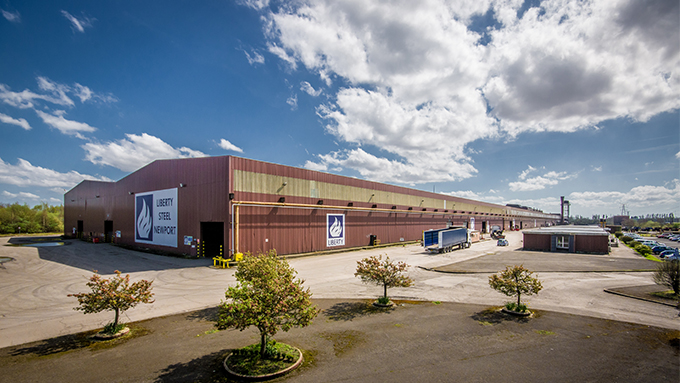
Liberty Steel Group’s Galati integrated steelworks in Romania is to boost crude steel production by 50% this year to 3 million mt, up from around 2 million mt in 2020, the group said Aug.10.
As well as selling hot-rolled coil to the group’s Magona cold-rolling and galvanizing mill in Italy, which recently restarted, Galati supplies Liberty’s Liege-Dudelange works and a wide range of construction, marine, oil, gas and renewable energy customers across Romania, the Balkans and elsewhere in Europe, a Liberty Steel Group spokesperson said in an emailed statement.
Full crude steel capacity at Galati is 4 million mt/year although it was not announced when this production level will be reached. The works is progressing on a longer-term transformation plan involving improvements to existing infrastructure and product portfolio quality as well as initiatives to support its transformation into a carbon neutral supplier by 2030, the group said. The works was previously owned by ArcelorMittal until it was acquired by Liberty Steel Group in 2019.
Hydrogen-based plan
Galati will install a direct reduced iron (DRI) plant and two electric arc furnaces, the group announced last year. The DRI plant, with 2.5 million mt/year capacity, will initially use natural gas, later transitioning to hydrogen when this becomes more cost effective.
One of the EAFs will cast slabs for Galati’s plate mill and the other will be used for direct casting of hot-rolled coil. The EAFs will reduce CO2 emissions per metric ton of steel produced by up to 80% and emissions should fall close to zero once hydrogen is used in the DRI plant, it said.
Liberty Steel Group added that Galati’s progress towards the 2030 carbon neutrality target will be enhanced by a memorandum of understanding signed in July to create a Technical and Research Collaboration Framework based around use of hydrogen with partners including the Romanian Energy Centre and international engineering group MTAG Switzerland.
In an Aug. 10 results statement, Liberty Steel Group said that the Galati works had made “further commercial and financial progress” during Q2, as the group stabilizes after the collapse in March of Greensill Capital, the major financier of its parent company GFG Alliance.
Galati, the largest integrated steelmaker in Romania, “expects positive progress to continue into the second half,” according to the statement.
Galati’s Q2 EBITDA at RON 412 million ($98.2 million) was up 61% on the previous quarter and the best result since 2008, it said. Turnover in the quarter grew 37% to RON 2.4 billion, with shipments up 7% to around 566,000 mt in Q2, it said.
The financial performance has been boosted by multi-year highs in prices for HRC, due to strong demand as markets have recovered from COVID-19, amid product tightness.
S&P Global Platts assessed Northwest European hot-rolled coil down Eur6/mt to Eur1150/mt Aug. 9 ($1,351.36/mt) ex-works Ruhr. Mills were heard fully booked and hindered by operational issues because of flooding, maintenance and repairs, which are likely to extend lead times to later in 2022.
Ostrava increases output, UK reorganization
Also in Q2, the Liberty Ostrava steel business in the Czech Republic had its best production quarter since 2017, Liberty Steel Group said. Ostrava shipped more than 600,000 mt of steel products in the quarter, on a production almost 80% higher than in Q2 2020, when the sector was impacted by COVID-19.
Liberty Steel Group spokespersons did not immediately respond to questions Aug. 10 as to whether the plan to sell the UK’s Stocksbridge Specialty Steel works has been changed in the light of a recent reorganization. On Aug. 5 the group announced that following the introduction of a new Liberty Steel UK (LSUK) management team, LSUK is to become a 2 million mt/year producer of “green” steel with operations-focused units. The new management will oversee the separation of the Stocksbridge, Brinsworth Narrow Strip, and Performance Steel assets where production will be resumed in the short term, in a move to create a more sustainable long-term future for the assets, it said.
“Plans are being shared with unions and creditors for their input, including working with a leading strategic consultancy to validate plans,” the group said.
— Diana Kinch