

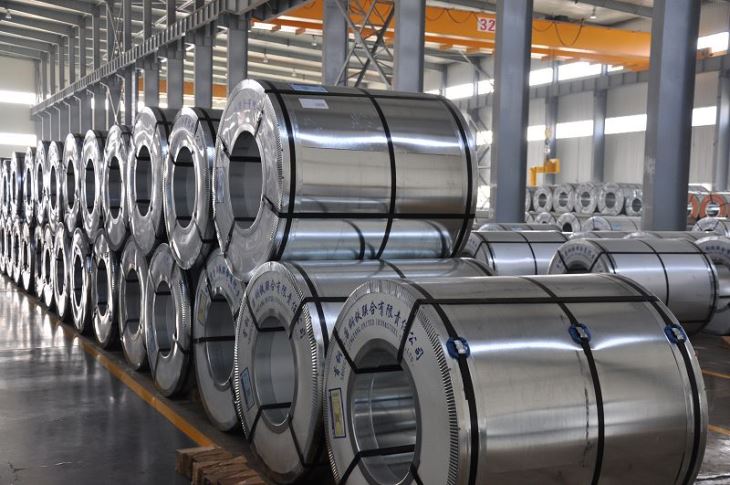
US HDG and CRC scarce despite displaced automotive volumes
US hot-dip galvanized and cold-rolled coil prices maintained their levels on Aug. 12 as domestic mills were still mostly able to book volumes of those products at $2,100/st and above.
The daily Platts TSI US HDG-HRC index rose $12.75 over the week to $2,117/st, while the daily Platts TSI US HDG-CRC index was down by $2.50 at $2,109.25/st within the same time frame. The daily Platts TSI US CRC index moved higher by $4.50 over the week to $2,100.25/st.
Market sources continued noting displaced HDG volumes due to automotive shutdowns but those transactions were not taking place at discounted prices.
“HDG is still the tightest product in the market,” a Midwest service center source said. “If I find HDG availability, it is much easier to find a buyer compared with HRC.”
The service center source said he was able to place orders of HDG with HRC-substrate at $2,100/st and HDG with CRC-substrate at $2,120/st from a Midwest mini-mill for late September production.
Multiple buy-side sources confirmed those levels and some buyers reported HDG with HRC-substrate transactions from the mill as high as $2,140/st.
A southern US mill source anticipated current supply-demand conditions would be sustained through year-end.
“Service center inventories moved up a little last month but they are still low. Imports are rising, but I still think the planned outages cover much of these two issues,” the source said.
The mill source saw supply disruptions the dominating factor for pricing outlook. He started quoting their CRC and HDG availability for October at a minimum of $2,100/st and saw little availability in Q4 as they will run planned outages at the hot strip mill and galvanizing lines.
Another Midwest service center source said he was able to book 300 st of CRC from an integrated mill at $2,100/st.
A third service center source’s transacted level was higher, at $2,140/st for 300 st of October production from a southern mill, and emphasized that those volumes were all that he could get from the mill. He added that he paid the same price for a small-sized order of HDG with HRC-substrate from a Midwest mini-mill.
A Midwest buyer was able to take advantage of displaced automotive volumes from an integrated mill. He reported a transaction of HDG with CRC-substrate at $2,110/st for about 1,000 st from an integrated mill for October production. That price was $20/st above what he paid for a similar-sized order from the mill two weeks prior.
The spread between prices for HDG with HRC-substrate and HRC was at $218.75/st on August 12, according to S&P Global Platts pricing data. Domestic mills continued capturing large premiums for value-added sheet products despite some recent openings related to the auto slowdown.
The combined Platts TSI price index uses a volume-weighted-average calculation – according to TSI’s standard – to determine value on an ex-works Indiana basis.
— Ali Oktay


German railway strike adds to supply issues
A strike at German railway operator Deutsche Bahn is jeopardising the already difficult recovery of the economy, several economic organisations have warned.
The strike was started on Tuesday by train drivers union Gewerkschaft Deutscher Lokomotivführer (GDL) and is announced to last until 13 August.
“Companies now need stability and planning security,” says Steffen Kampeter, head of the Federation of German Employers’ Associations (BDA). “Therefore, reliable freight transport is indispensable for strengthening the still fragile economic upswing,” he says in a statement retweeted by steel federation WV Stahl.
According to calculations by the Institute of the German Economy (IW) and the experience of past strikes, the GDL strike could be expensive for many companies that depend on deliveries by rail. The costs would depend above all on the duration of the strike. It will take about three to four days until the companies clearly feel the consequences of the strike, the institute says. According to empirical values from previous GDL strikes, the daily losses for companies could amount to up to €100 million ($117m).
Steel transportation by rail has seen extra impairment already by the flood that hit especially the Ruhr region three weeks ago, Kallanish notes.
Christian Koehl Germany

Semiconductors force Nissan, Volvo to halt some production
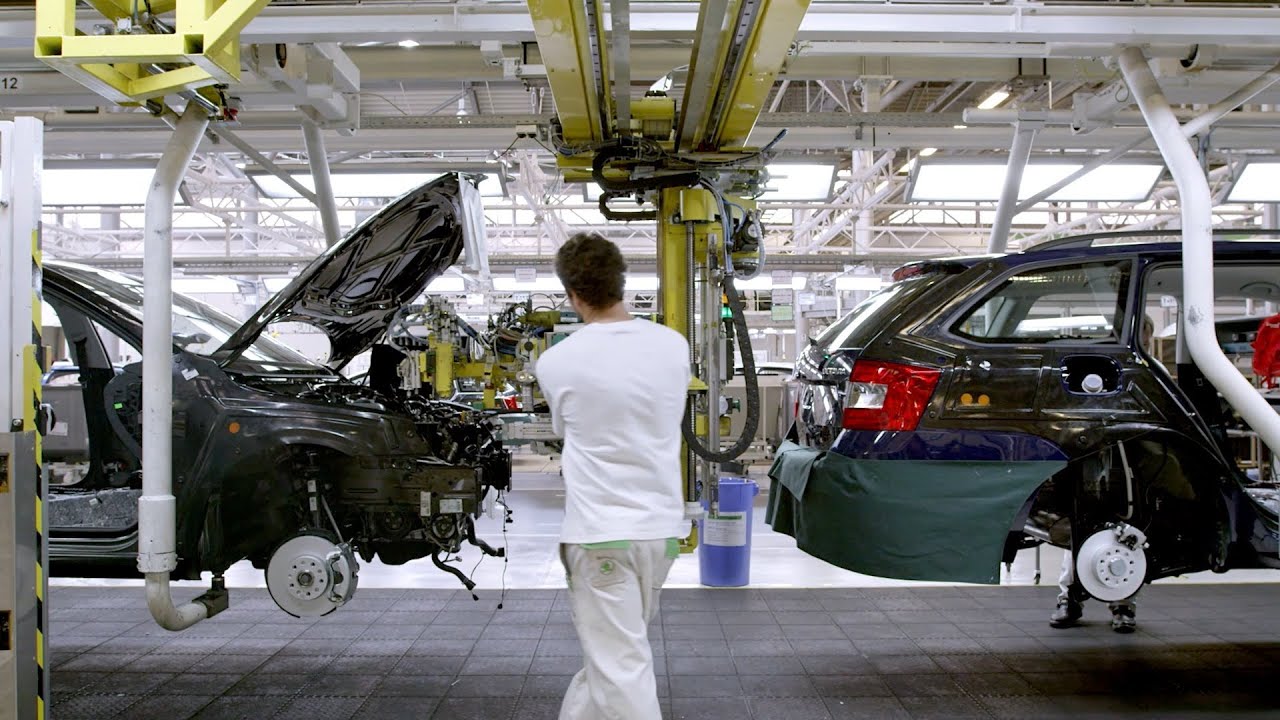
Japan’s carmaker Nissan site in the US state Tennessee and Swedish carmaker Volvo Cars in Gothenburg are temporarily halting production due to the global semiconductor shortages, Kallanish notes.
Downtime will depend on the supply situation, the companies said. Volvo plans to return to work in a week, and the Nissan plant will most likely be idle from Monday for two weeks, until 30 August.
Nissan said that it has ran short of chips due to a COVID-19 outbreak at a chip factory in Malaysia.
Production lines at Torslanda in Gothenburg will be paused from this evening due to a material shortage linked with the semiconductor issue, a spokesperson said in an emailed statement on Wednesday.
“Production will restart as soon as possible, at the latest before next week,” he adds.
As many of its peers, Volvo Cars has been adjusting production in most of its manufacturing sites to adapt output to the limited supply of semiconductors. The ongoing crisis negatively affected the company’s sales in July, and is also impacting feature availability for the cars it sells.
Volvo Cars is warning customers that, due to the shortage, some features may not be available and local retailers should be contacted to find out which car models are affected.
“The demand for semiconductors is at record levels due to a boost in demand for computer gear and other electronics in combination with trade barriers and high demand for new cars with many electronic features,” the carmaker states on its website.
The carmaker didn’t comment on the potential impact on volumes but told Kallanish “the aim is to make up for any lost volumes at a later stage.”
Earlier this month, major Japan-based semiconductor manufacturer Renesas said it expects semiconductor shortages for the automotive industry will continue until the middle of next year (see Kallanish passim).
Global automotive production could rebound 7-9% on-year in 2021 but will be hampered by supply chain frictions, mainly the lack of semiconductors for OEMs, ING Bank said.
The global semiconductor shortage has even affected next year’s production already, with 5 million vehicles estimated not produced in 2021 and 3m units in 2022.
Bosch recently opened a €1 billion ($1.21 billion) semiconductor manufacturing facility in Dresden, Germany. This is expected to significantly ease automotive chip supply shortages, but only from September.
Svetoslav Abrossimov Bulgaria
Mechel-Service supplies beams for Russian construction sites
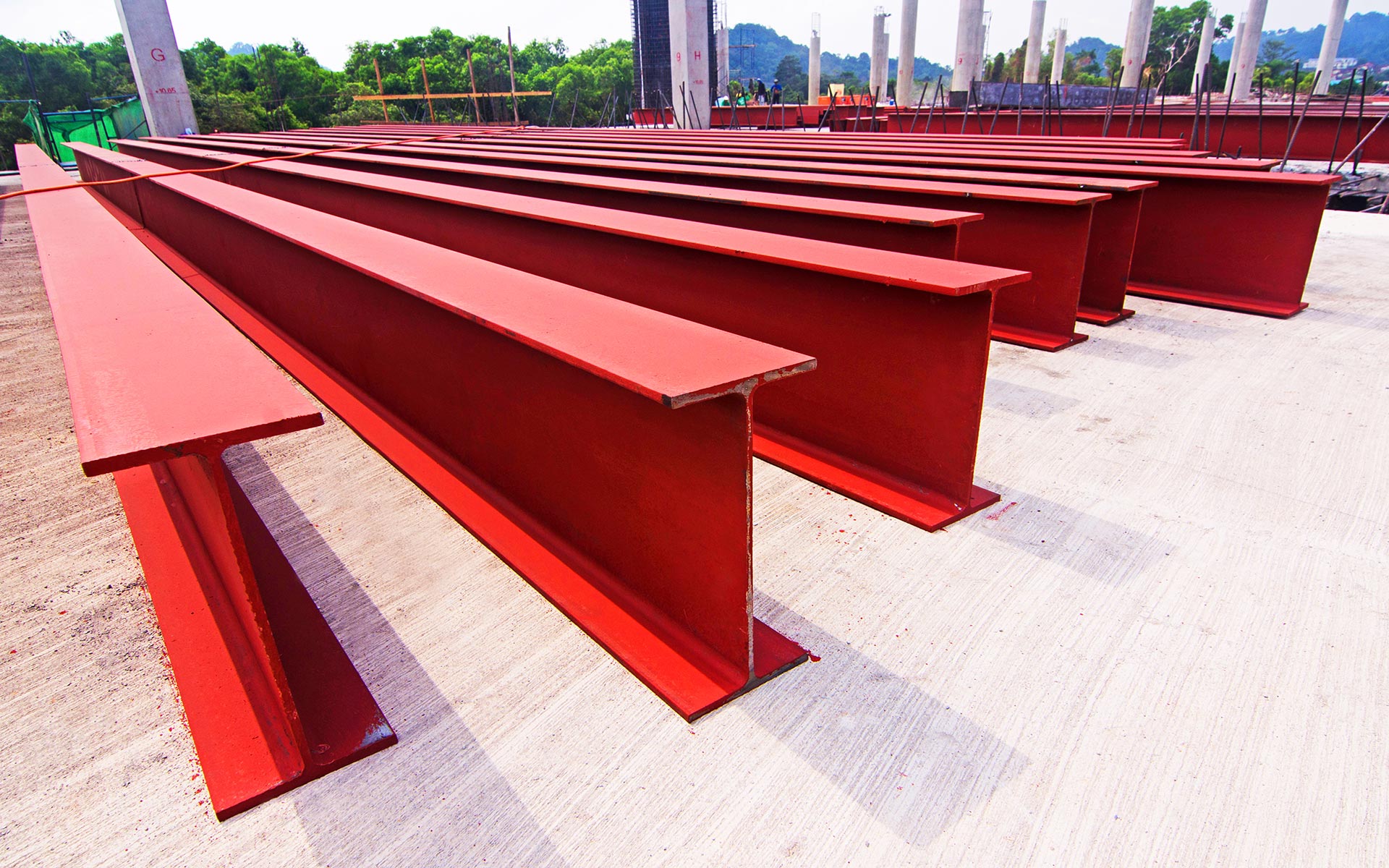
Mechel’s trading arm, Mechel-Service, delivered beams that were produced by its Chelyabinsk Metallurgical Plant for several construction sites in Russia this month, the company says.
It shipped more than 40,000 tonnes for the construction of large-scale offshore structures in the Murmansk region, Kallanish notes. The customer for the construction of a specialised shipyard near the village of Belokamenka in the Murmansk Region is Novatek’s subsidiary Novatek-Murmansk.
The shipyard will build and equip floating reinforced concrete structures for the creation of offshore structures of the gravity type. The purpose of the platforms is natural gas liquefaction and transshipment plants. The modules of the gas liquefaction plant itself are also planned to be manufactured at the shipyard.
Mechel-Service also supplied more than 3,000t of beams for the manufacture of metal structures for a large shopping and entertainment center Zolotoy, with a combined bus station, in the city of Yekaterinburg
The facility is planned to be commissioned in 2023 for 300th anniversary of Yekaterinburg.
Mechel-Service posted a 10% on-year increase in shipments in the first half of 2021 to 797,000t (see Kallanish passim). Sales of hardware products grew by 135%, structural shapes by 44%, beams by 36%, and reinforcement and wire by 4% and 27%, respectively.
This year the company wants to increase its presence in the hardware, wire rope and beam markets.
Mechel-Service posted a 4% on-year increase in shipments in 2020 to 1.52 million tonnes despite the impact of the Covid-19 pandemic.
Parent company Mechel saw first-quarter sales of long products fall 7% on-quarter and 13% on-year to 564,000t. Despite lower sales and output, revenue rose 10% on-quarter and 13% on-year to RUB 76.1 billion ($1.04 billion), while profitability rose to 24%.
Svetoslav Abrossimov Bulgaria