


Iron ore eases in second half: Fitch Solutions
Iron ore prices should ease further in the coming months after the iron ore price rally started to show signs of weakening, according to Fitch Solutions. Demand from Chinese steel producers peaked in the first half of 2021 and this is coinciding with improved global supply.
The research firm has nevertheless revised upwards its 2021 iron ore price forecast from $160/tonne to $170/t, as prices rallied slightly above its expectations in H1. Beyond 2021, the firm expect iron ore prices to follow a multi-year downtrend, with prices forecast to decline to $75/t average by 2025.
As for China, “we expect the demand impact from stimulus to start wearing off from late 2021 as construction projects reach completion and the pipeline of further new projects lessens, with the Chinese Government focusing on tightening credit lines,” Fitch Solutions says in a note seen by Kallanish. “Additionally, the government is on a steel production limiting drive as an avenue to decarbonise the economy, where the aim for 2021 steel production is to total around 2020 levels.”
With China’s steel production increasing by 11.4% year-on-year in H1, however, H2 production would have to decline by approximately the same levels, which Fitch Solutions believes is realistically unattainable. Nevertheless, steel production will slow down in H2, dragging on iron ore demand.
The agency simultaneously expects Chinese domestic production of iron ore to increase as China attempts to reduce import dependency, especially as diplomatic relations remain frosty with Australia.
On the supply side, improving production growth from Brazil and Australia has started to loosen tight supplies on the seaborne market, though Vale will take longer to return to pre-Brumadinho dam collapse capacity levels, Fitch Solutions says. “With all miners holding onto production guidances, we expect better production figures throughout the rest of the year, compared to H121 in order to meet targets,” it concludes.
Adam Smith Germany
Steel prices to retreat but remain elevated: Moody’s
Steel prices should notably retreat from their current record levels over the next two years, but remain above their historical averages in the medium term, says Moody’s. They will be underpinned by more solid demand and supply fundamentals and rising carbon costs on tightening emissions reduction policies in some regions, especially in Europe.
“Demand improvements should be driven by a continued recovery in steel-using end markets, such as (renewable energy) infrastructure and automotive, as Moody’s forecasts global light vehicle sales to reach pre-pandemic levels only by the middle of the decade,” the credit rating agency says in a note seen by Kallanish. “In addition, an expected re-stocking of still-low inventory levels globally should further fuel steel demand over the next few quarters.”
“The market environment benefits from structural improvements, as the recent prolongation and tightening of trade defence measures in Europe and the removal of value-added tax rebates on Chinese steel exports, should be supportive of more balanced international trade flows and limit the risk of excessively rising imports pressuring steel prices, as, for instance, seen in Europe in 2018,” it adds.
This comes as Moody’s assigned a Baa3 long term issuer rating to ArcelorMittal. It concurrently withdrew the Ba1 corporate family rating (CFR) and Ba1-PD probability of default rating (PDR), as per the rating agency’s practice for corporates transitioning to investment grade.
It also upgraded the senior unsecured rating on the group’s medium-term notes (MTN) programme to (P)Baa3 from (P)Ba1, the senior unsecured ratings to Baa3 from Ba1, the short-term rating on its Commercial Paper to P-3 from NP, and its other short-term rating to (P)P-3 from (P)NP. The outlook on all ratings has been changed to stable from positive.
The upgrade to Baa3 with a stable outlook reflects ArcelorMittal’s significantly strengthened operating performance and recovery in credit metrics over recent quarters and, in particular, in Q2, Moody’s concludes.
Adam Smith Germany
EU construction, automotive output see 2021 rebound: Eurofer
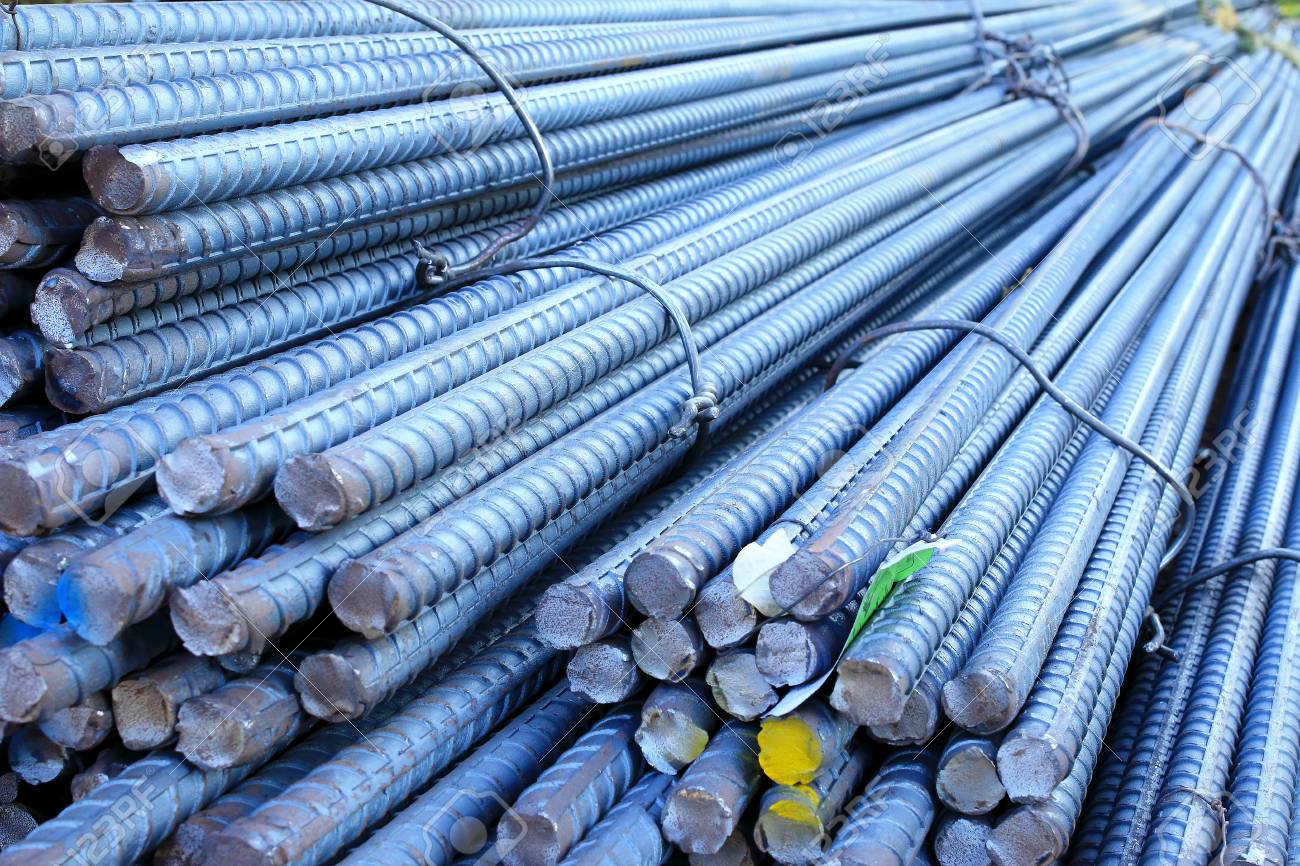
EU construction industry output is expected to rebound 5.5% on-year in 2021 and then by a further 4.5% in 2022. Automotive output is meanwhile seen rebounding 15.3% from a very low base in 2021, followed by 7.9% growth in 2022, says European steelmakers’ association Eurofer.
Following Covid-19-lockdown-induced residential construction activity stoppages in 2020, conditions in 2021-2022 will remain only marginally supportive due to only slight improvements in economic conditions and incomes, Eurofer says in a report sent to Kallanish. “There is already a widespread dichotomy between the upper-segment housing market, which is boosted by higher demand of better homes due to tele-working, and the lower-income segment,” the association comments.
“Civil engineering is expected to be an important growth area for the construction sector as governments invest in infrastructure as a counter-cyclical tool to boost economic performance,” Eurofer continues. “This segment will also be supported by EU-wide public policies (Next Gen EU, etc) whose effects, however, will be seen only to a limited extent during 2021.”
In the automotive sector, general economic uncertainty across the EU during the ongoing pandemic and subdued consumer confidence, due to poor disposable income developments, have continued to impact car demand. The recovery in EU production remains somewhat fragile and exposed to uncertainty factors.
If normal business conditions resume from the second half of 2021, it will take time for activity to return to pre-2019-downturn levels. Demand remains the biggest challenge, as consumers are likely to remain discouraged until the macroeconomic picture and consumer disposable income substantially improve, Eurofer observes.
“In 2021, provided that the industry has been able to restore its production to normal levels, and with WLTP distortions having faded out by then, the launch of new models – many of them hybrid or fully electric vehicles – could be a supportive factor, combined with some improvement in real wages and labour market dynamics on the demand side,” Eurofer comments. “Full recovery in global trade and external demand from major markets such as the US, China and Turkey will remain a key factor for EU car exporters.”
Adam Smith Germany
UK exhausts other HRC, CRC quotas
Half way through the quarter, the UK has exhausted three of its third-quarter steel safeguard quotas. These are hot rolled coil and cold rolled coil from “other countries”, as well as hollow sections from Turkey, UK steel distributors’ association NASS informs Kallanish.
CRC from Vietnam is critical, with 94% of the quota used, while the EU’s merchant bars and light sections quota is also 94% used. The quota for gas pipes from Turkey is meanwhile 71% filled.
As of 1 July the expanded quotas of the new EU and UK safeguards regimes took effect.
The UK implemented emergency regulation to extend safeguards on another five of the 19 steel products for one year by public notice (see Kallaish passim). In June the Trade Remedies Authority had proposed to extend safeguard measures on ten products for a further three years beyond 30 June, with nine slated to be revoked.
Adam Smith Germany
Poland’s Liberty Czestochowa to increase steel output to 1 million mt/year
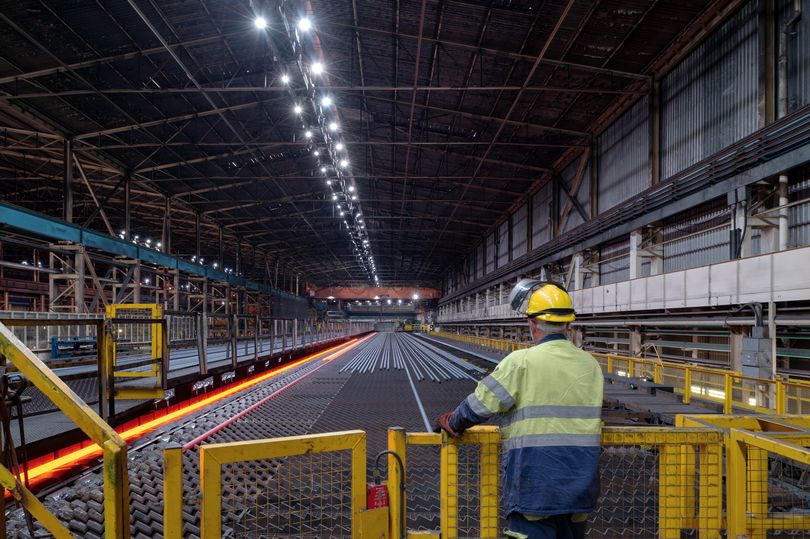
Liberty Steel Group’s Polish heavy plate mill, Huta Czestochowa, is expected to increase production to 1 million mt/year, with current production at its highest monthly levels since 2017, the company said Aug. 18.
With Liberty having restarted the plant within a few weeks of taking over the lease in December 2020, in July more than 57,000 mt of greensteel slab was produced, up from 16,000 mt in January, while the rolling mills increased their production of greensteel heavy plate up to 42,000 mt in July from 12,000 mt in January, it said.
The company said it expects the Czestochowa plant made products to be used in major infrastructure projects due to be started shortly under the Polish Government’s Recovery Plan.
Liberty said the plant achieved positive EBITDA within seven months of taking over the plant’s lease, with EBITDA of Eur7.1 million ($8.3 million) for the month of July.
“We will now be focusing on further increasing our plant’s production of high quality GREENSTEEL, setting this plant up for a strong and sustainable future,” Liberty Czestochowa Executive Director Krishnamoorthy Venkatasubramanian said.
In May, Liberty Steel Group completed the acquisition of Huta Czestochowa, which it started leasing in late December, with the acquisition price put at $51.55 million.
Liberty Steel has exercised its option to acquire the mill, with an 840,000 mt/year crude steel capacity, from the Polish administrative court. The mill had run into difficulties under its previous leaseholder, Sunningwell International, and was idled in October.
— Filip Warwick
