


Die europäische Stahlindustrie ist auf Erholungskurs
Die Lockerungen der COVID-Maßnahmen im dritten Quartal 2020 ermöglichte einen Wiederanlauf der industriellen Aktivität. Die deutliche Erholung der Produktion setzte sich im Vergleich zu den Rekordtiefs des Vorquartals – mit noch schnellerer Geschwindigkeit – über das vierte Quartal 2020 bis zum ersten Quartal 2021 fort und wurde von einer schneller als erwarteten Erholung in einigen Sektoren wie der Produktion von Haushaltsgeräten oder der Automobilindustrie angetrieben.
Dies ebnete den Weg für eine stärkere Beschleunigung der industriellen Erholung im ersten Quartal 2021, trotz der anhaltenden wirtschaftlichen Unsicherheit aufgrund der anhaltenden Pandemie in der gesamten EU. Infolgedessen wuchs die Produktion der stahlverarbeitenden Sektoren im ersten Quartal 2021 auf 36,3 MT (+2,6%).
Entsprechend der verbesserten Nachfrage stiegen die Inlandslieferungen innerhalb der EU. Dies verdeutlichen auch die Daten der Einfuhren aus Drittländern: Nach dem Rekordrückgang (-25,4%) im dritten Quartal 2020 gingen die Importe aus Drittländern auch im vierten Quartal 2020 um 5,4% zurück und mit minus 2,5% im ersten Quartal 2021 war das der neunte Quartalsrückgang in Folge.
Quelle: Eurofer / Foto: Fotolia
19.08.2021 von Hubert Hunscheidt

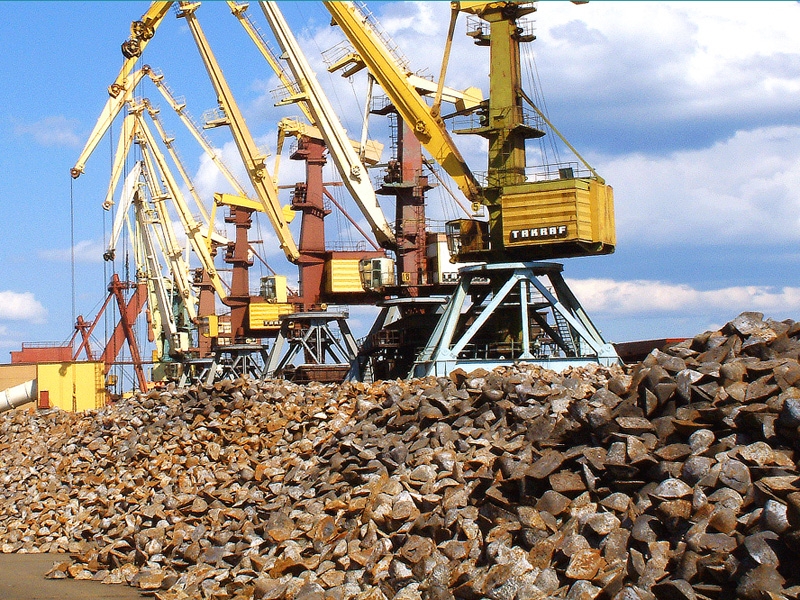
Iron ore rebounds into a new range
Seaborne iron ore prices rebounded on Friday after their cliff-edge dive on Thursday. Expectations for prices remain confused, but Friday suggested they were settling into a new range.
The Kallanish KORE 62% Fe index regained $8.36/tonne to $140.73/dry metric tonne cfr Qingdao. The Kallanish KORE 65% Fe index increased $7.26/t to $165.48/dmt cfr, but the KORE 58% Fe index appreciated only $3.70/t to $118.90/dmt cfr. 170,000t of PB Fines sold at $136.90/t with a laycan of 25 September-4 October.
On the Dalian Commodity Exchange, January 2022 iron ore settled down CNY 10.5/t at CNY 765/t ($117.71/t), while on the Singapore Exchange September 62% Fe futures settled up $8.03/t at $138.63/t. The same contract for 65% Fe and 58% Fe futures settled up $7.31/t at $156.96/t, and down $1.76/t at $120.33/t respectively. In Tangshan, billet was flat at CNY 4,880/t.
Recovering steel and iron ore futures prices on Friday helped reassure the market that the sell-off on Thursday was too far, too fast. After taking another big step lower, prices are now again expected to settle into a new level. Views are mixed on whether any further step down in prices is needed, but with every step down the previous sense that ore was overpriced has faded.
Across 35 Chinese ports iron ore stocks increased 1.68 million tonnes to 120.33mt, according to a count by SMM. This was despite lower deliveries into stocks. Mills restocking needs were low last week, and restrictions or maintenance reduced demand in Tangshan and Jiangsu. Some mills restocked a little after the sharp drop in prices however.

More carmakers halt production due to semiconductors shortages
Automotive companies are again stopping production due to the shortage of semiconductors, which has been going on for almost a year.
German carmaker Audi, part of the Volkswagen Group, will stop production at its headquarters in Ingolstadt and in Neckarsulm from Monday until the end-August due to lack of semiconductor deliveries, the company confirmed to Kallanish.
In September, the carmaker will be forced to significantly cut the production schedule.
“Our goal is to resolve bottlenecks as quickly as possible and to catch up as far as possible on vehicles that have not been built during the course of the year and the top priority is processing the high order backlog,” Audi says.
Russian carmaker AVTOVAZ is forced again to change the production schedule for the working week starting on 23 August due to the continuing shortage of chips from Bosch. “All three lines for the production of cars at the Tolyatti plant will be stopped throughout the week,” the enterprise says.
The work schedule for the week starting 30 August will be drawn up early next week. However, Avtovaz said that this problem will likely continue during the rest of the year.
The global semiconductor shortage has also hit this week Toyota Motor. Japan’s largest carmaker will reduce production in the country by 40% from 22 August to 17 September. The latest problem come after outbreak of Covid-19 infections in chip plant in Malaysia.
Last week, semiconductor shortages forced Nissan and Volvo to halt some production sites (see Kallanish passim).
Global semiconductor demand for automotive will be supported by a recovery in the automotive industry, higher semiconductor content in electric vehicles and sustained strong demand for consumer electronics and industrial goods, says Fitch Raitings.
Earlier this month, Japan-based semiconductor manufacturer Renesas said it expects semiconductor shortages for the automotive industry will continue until the middle of next year.
Global automotive production could rebound 7-9% on-year in 2021 but will be hampered by supply chain frictions, mainly the lack of semiconductors for OEMs, ING Bank said previously.
The disruption will cost automakers 3.8 million units in lost production in 2021, noted Fitch Ratings.
Svetoslav Abrossimov Bulgaria


European HRC activity quiet amid slow comeback to market
The European hot-rolled coil market showed little activity in the last stretch of the summer holiday period with market participants assessing possible movements in the next weeks, sources told S&P Global Platts Aug. 20.
The Italian market is expected to come back over the course of the week beginning Aug. 23 but sources said it would be unclear how much demand would pick up initially.
“Stocks are increasing, sales are going down, prices are falling. We have to be careful that stocks don’t grow too fast, we decided to buy as little as we can and keep our selling prices,” said a German stockholder.
The source reiterated previous comments from market participants that increasingly more factors would point towards an easing of material tightness in the HRC market with the restart of Salzgitter’s blast furnace that had been out since 2019, while HBIS Group Serbia Iron & Steel (formerly Zelezara Smederevo) also said they would go back to a two blast furnace operation later this year.
Workable levels were heard in the Eur1100-1150/mt EXW Ruhr range and at Eur1020-1050 EXW Italy.
The Platts daily assessment for Northern Europe dropped by Eur5/mt to Eur1140/mt EXW Ruhr, while the Southern European assessment dropped by Eur5/mt as well to Eur1040/mt EXW Italy Aug. 20.
Another buy-side source said most in the distribution sector would still be on holiday or coming slowly back to the market in Northern Europe and that first talks with mills showed little price move expectations for the coming weeks. A UK steel service center source said however that one European mill said it would raise prices in September for January shipment.
The import market for HRC was heard quiet, but a Russian offer was heard into the UK market at GBP 930-940/mt DDP West Midlands for October shipment.
— Laura Varriale

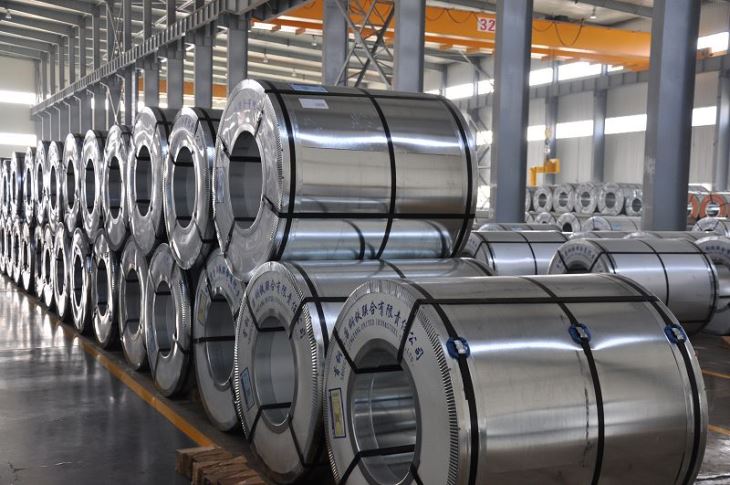
Asian stainless CRC falls on weakened sentiment
Asian stainless cold-rolled coil prices dropped further in the week to Aug 20, amid weakened market sentiment on declines seen in nickel prices and Chinese domestic market.
S&P Global Platts assessed 304 grade 2 mm 2B stainless CRC at $3,050/mt CFR East and Southeast Asian ports on Aug. 20, down $50/mt on the week.
Nickel prices dropped to below the $19,000/mt mark during the week, with the official nickel cash price on the London Metal Exchange settled at $18,476/mt on Aug. 19, down $1,064/mt week on week.
Chinese domestic market saw further declines over the week, in line with the major fall in upstream raw material prices. Spot market fell by some Yuan 600-700/mt ($92-$108/mt) in the spot market in southern China, market sources said.
“The broad steel market saw strong volatility this week. Sentiment is bearish and it’s yet to see a clear outlook now,” said a Chinese trader.
Major mills haven’t announced the new export offers, while overseas buyers were not keen to book amid a falling market. Although Chinese prices, around the $3,000/mt FOB for immediate delivery cargo, remained competitive, sellers were cautious due to the ongoing concerns about potential export duty, said another trader. It remained doubtful whether export duty would be implied soon, he said.
The most actively-traded September stainless steel contract on the Shanghai Futures Exchange was at Yuan 17,640/mt on Aug. 20, down Yuan 600/mt, or 3.3%, on the week.
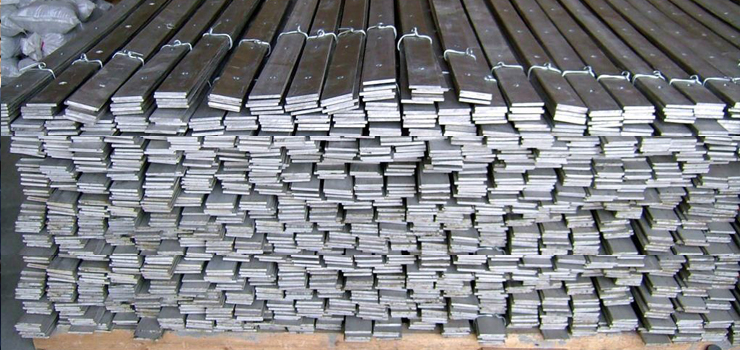
Aluminum, steel margins widen as demand remains firm
Rising metal prices, labor shortages and challenging logistics have continued to support prime aluminum and ferrous scrap grade prices as post-consumer aluminum scrap and obsolete ferrous scrap spreads have widened at a faster pace because of the greater availability of material.
With hot-rolled coil prices holding at a record high and as US aluminum Midwest transaction prices just off record highs, mill margins have continued to increase significantly throughout 2021.
Demand for these products and secondary alloys remains solid, even as automakers’ semiconductor chip shortages and lack of staff at plants challenge nonferrous and ferrous market participants.
These were among the prevailing trends this week in S&P Global Platts’ new low-carbon metals spreads and ratios – a suite of eight price references launched Aug. 13 that allow users to compare low-carbon feedstocks with traditional higher-carbon inputs.
The new spreads and ratios – underpinned by existing Platts assessments in hot-rolled steel, pig iron, scrap, iron ore and aluminum from the US, China, Turkey and the Black Sea region – were launched in response to market participants’ requests for tools to help quantify costs, manage risk, and support opportunities associated with the expansion of carbon-reduction strategies and increasing regulation.
Electric-arc furnace mill margins supported
Long lead times and rising producer prices have supported rising spot hot-rolled prices, even as imports continue to increase in an effort to fill the gap from domestic supply shortfalls, outages and planned maintenance.
Margins for electric-arc furnace mills in the Midwest have continued to rise during the week ended Aug. 20, as HRC spot prices continue to make new highs and as prime scrap prices were steady. Shredded scrap prices have been under pressure as exports have fallen, with Turkey as the major destination for US scrap exports. Shredded export prices are down 14% from the June highs. The Platts HRC-MW No. 1 busheling scrap spread was $1,328.39/st and HRC-MW shredded scrap spread also rose to $1,477.95/st. Margins have risen 99% and 129%, respectively.
The Midwest busheling scrap to shredded scrap differential held at $167.50/lt Aug. 20, as Midwest prime scrap prices were unchanged in August. The melting rate of busheling has supported the differential, but as mini-mills look into evolving technologies to better utilize obsolete scrap, market sources expect that spread to narrow.
Along with planned mill outages, prime scrap demand was expected to fall in September, increasing the availability of material.
Looking forward to the September scrap buy-week, Midwest suppliers see tradable values down $20/lt from the August price of around $650/lt, with shredded scrap prices holding up slightly better.
As the auto sector slowdown has kept busheling tight, and as the market eyes future scrap consumption from EAF capacity expansion, demand for flat-rolled steel has continued to outpace supply as prices remain higher for longer.
Long lead times and rising producer prices have supported rising spot hot-rolled prices, even as imports have continued to increase in an attempt to fill the gap from domestic supply shortfalls, outages and planned maintenance.
New scrap tightens
Strong EAF demand saw new scrap tighten and become more valuable compared with iron ore, expanding the ratio.
The China import HRS101 scrap to iron ore price ratio was at 4.13 on Aug. 20, up from 2.82 on July 21, as 62% Fe iron ore prices have declined by 37.6% from July highs as demand outlook weakened from bearish China steel data. HRS101 scrap prices increased 21.8% since the start of the year, averaging $584.57/mt CFR through Aug. 20 and $592/mt CFR in July. China domestic delivered HMS scrap prices also firmed in July and August from January.
Black Sea pig iron export prices to Turkey HMS scrap dipped to a 1.18:1 ratio on Aug. 20, just below July’s average. US pig iron imports to Midwest Busheling scrap delivered prices were unchanged at a 0.92:1 ratio on the same day, as spot pig iron prices have fallen faster than obsolete and prime grades. US mils remained quiet, awaiting lower pig iron offers. Activity has also slowed in Brazil and Eastern Europe.
Mill, secondary smelter demand remains firm
The spread between Platts P1020 US Midwest Transaction priced and UBCs narrowed to 64.64 cents/lb on Aug. 19, from 67 cents/lb on Aug. 12, or 56% of MWT value.
Imports of UBCs continue to rise, up almost 50% year to date through June, according to the latest US Census Bureau data, to keep up with the shift in more beverages to aluminum cans and the rising percentage of recycled material used to make each can, though class scrap from can making has displaced demand for used beverage cans.
Secondary smelter spreads have also widened even with firm A380 prices, the differential has strengthened as US P1020 all-in prices have hovered around record highs.
The MWT/A380 spread dipped to 30.14 on Aug. 19. Demand for alloys remains solid even as some market sources cited some cancellations or orders being pushed back from their customers that are more tied to automotive. That slack has been picked up by other customers looking to fulfill shortfalls from other orders because of competing smelters limiting production amid summer maintenance.
Rising input costs, such as copper and silicon, continue to support such alloys as 356 and A413.
The mill-grade mixed low-copper clips, or MLCCs, spread to MWT has fallen to 63.14 cents/lb on Aug. 20, from around 47.50 cents/lb June 21. Primary aluminum prices fell slightly during the week.
— Nick Ruggiero, Karen McBeth