

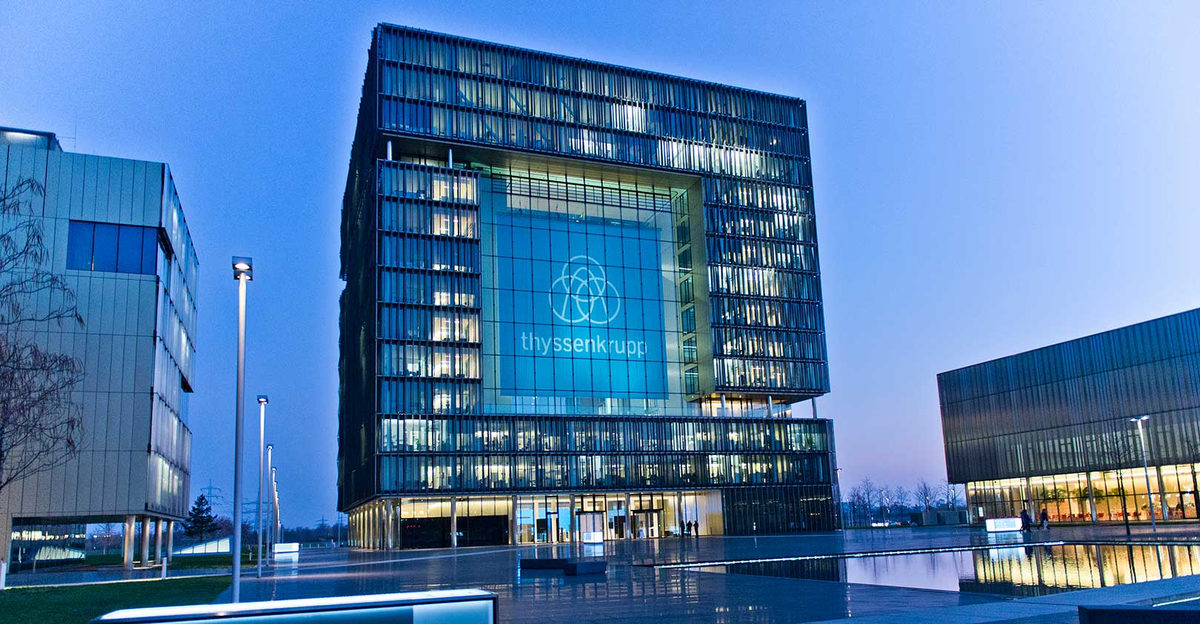
Thyssenkrupp orders treatment line for electric strip
Thyssenkrupp Steel Europe (TKSE) has placed an order with SMS for an annealing and insulating line for electric strip.
With this investment, thyssenkrupp is going to renew core elements of its production network in order to meet future customer requirements. The focus of activities at the Bochum site will be on e-mobility, Kallanish learns from the plant builder. From 2024 on, the line will turn out more than 200,000 tonnes/year of non-grain-oriented electric strip, which will mainly be used to produce efficient electric motors and generators for electric vehicles.
In the annealing and insulating line, the structure of the cold rolled strip will be recrystallised during the annealing process. Thereafter, the material will be provided with an insulating layer.
The finished material will have a width from 700-1,350mm and a thickness between 0.2-1mm. A feature highlighted by SMS is the line’s resource-saving processes and the high degree of automation and digitalisation. For heat treatment, a resource-saving Drever furnace will be installed, which is able to map an optimised annealing curve.
The new facility will be integrated in an existing hall and arranged over several floors. For layout and plant planning, the 3D model of the line was transferred to a 3D game engine allowing a full 360-degree view. Thus, potential collision hazards can be detected at an early stage, for example.
Christian Koehl Germany

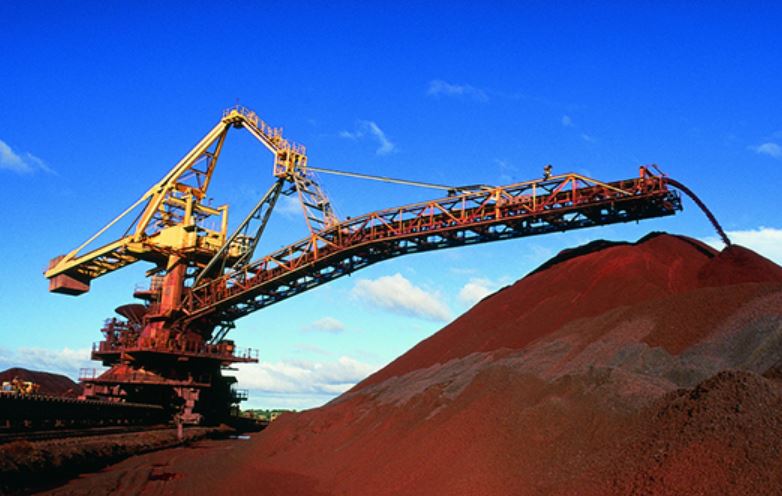
Iron ore shortage closes some Odisha DRI producers
Iron ore shortages have driven Odisha-based direct reduced iron producers to close their units. High prices coupled with shortages have forced 44 units out of 109 DRI units to permanently close their plants, Kallanish notes.
DRI manufacturers depend on merchant miners to fulfil their pellet feedstock requirements. But increasingly, merchant mines have prioritised selling ore outside the state. In the 2020 and 2021 fiscal years, dispatches of iron ore outside the state comprised 58% and 60% respectively of total sales.
“Odisha has witnessed the highest ever surge in iron ore prices than any state in last 12 months, and iron ore in Odisha is costlier than that in any other Indian state. The impact of the iron ore crisis is already visible in the MSME iron and steel industries,” says Utkal Chamber of Commerce and Industry (UCCI) president Brahma Mishra.
The shift in priority has created a massive gap in demand and supply, leading to a steep rise in iron ore prices and a fall in iron ore availability for state-based plants. More than 15 sponge iron and pellet making companies have applied to the Steel and Mines Department to provide iron ore under the pre-emption policy of the state government.
“The average sales price of 62-65% iron ore lumps in Odisha has increased by 176% from May 2020 to May 2021, and that of fines has increased by 352%,” says the Indian Bureau of Mines (IBM).
Industry experts and numerous associations have called for proactive action by the state government to address the issue and ensure iron ore supply to these steel sectors.
Sayed Aameer India
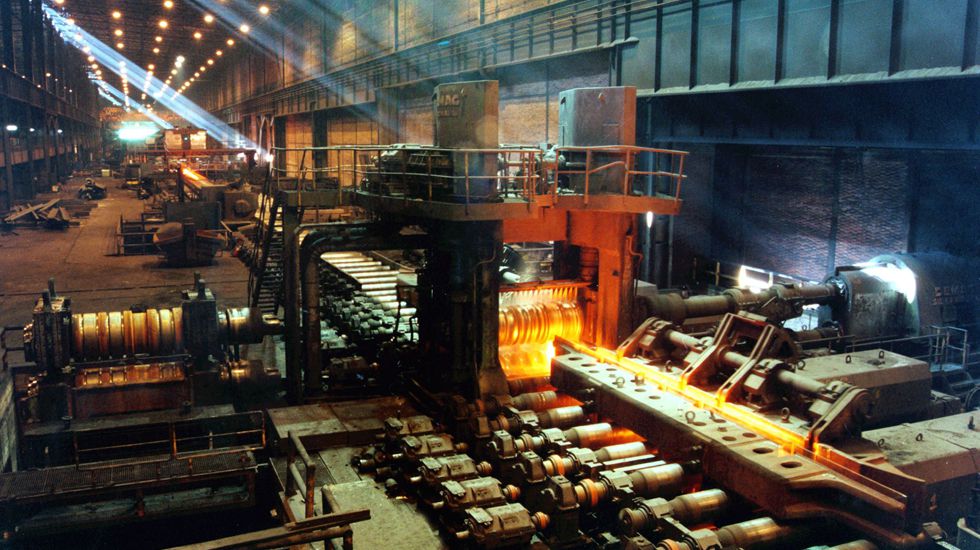
German crude steel production still below ‘pre-crisis’ level: VW Stahl
Germany’s crude steel production remains below “pre-crisis” levels of 2018, while seeing a 11.7% month-on-month drop in July to 3 million mt, German steel federation WV Stahl said Aug. 23.
July alone saw a 24.7% year-on-year increase from the pandemic-stricken year 2020, when demand collapsed and production curbs remained. Through January to July, German crude steel production totaled 23.6 million mt, a year-on-year increase of 18.8%.
German mills ramped up production again from the second half of last year, with mills such as Salzgitter declaring the restart of a blast furnace idled since 2019 — when production started to drop on lackluster demand. However, output levels still remained below 2018 levels when annual production was at 42.4 million mt. WV Stahl projects that under the current level, 2021 output would be at 40.5 million mt.
In July, crude steel production produced via the blast oxygen route dropped 7% month on month to 2.1 million mt, while production via the electric arc furnace route fell 21% month on month to 909,000 mt.
The daily S&P Global Platts assessment for hot-rolled coil dropped Eur50/mt since its record high at Eur1,190/mt EXW Ruhr June 21 to Eur1,140/mt EXW Ruhr Aug. 23, as demand remained low during the summer period.
Steelmaker Thyssenkrupp started its major reline of one blast furnace in July, which would have an impact on output levels even as the steel industry faced logistical challenges by intense floods that month.
Pig iron output dropped 8.3% on month to 1.9 million mt, and hot-rolled production decreased 7.7% on month to 2.8 million mt in July.
With most European mills producing at maximum capacity, the sentiment for increased production in August was less optimistic, data from the Platts monthly German steel survey showed, with the production index falling 11 points since July. Producers were at 42 (50 denotes stability), the least bullish on production levels, whereas traders and stockholders stood at 50, a 14-point loss from the July index of 64.
— Laura Varriale

Weekly US steel mill capability utilization rises to 85%: AISI
US raw steel capability utilization increased to 85% the week ended Aug. 21, the American Iron and Steel Institute reported Aug. 23.
The raw steel capability utilization rate climbed from 84.7% the previous week.
Production increased by 0.4% to 1.877 million st during the week ended Aug. 21, up from 1.869 million st the previous week, according to the data. Production was up 27.2% from the same week a year earlier, when capability utilization was at 65.9% and production totaled 1.476 million st.
Adjusted year-to-date production through Aug. 21 totaled 60.173 million st, with a capability utilization rate of 80.4%. The total was 19.8% higher than the 50.243 million st produced during the same period last year, when the utilization rate was 66.6%.
Last week’s production totaled 149,000 st in the Northeast, 636,000 st in the Great Lakes region, 201,000 st in the Midwest, 815,000 st in the Southern district and 76,000 st in the Western region.
The tonnage data is estimated, compiled from weekly production data provided by 50% of domestic producers, combined with monthly production data for the remainder.
— Ingrid Lexova