

Turkish longs producers bemoan weak demand, high freight
Turkish long steel producers have been forced to decrease their prices further after the expected demand recovery failed to materialise throughout August.
Mills’ rebar prices, which stood at $690-700/tonne fob a week ago, are now pegged at $680-690/t fob Turkey actual weight. Wire rod offers meanwhile decreased to $780-800/t fob and merchant bar quotes fell to $710-730/t fob. However, there are also offers at lower levels from some long steel producers depending on their production costs and utilisation levels.
A Turkish rebar producer tells Kallanish: “We have sold a small cargo to Israel this week, containing rebars and wire rods. That’s all. In a falling market, all buyers are halting purchases. In Asia, even as demand recovers, the biggest issue is the freight rates which have increased to $70-80/t from $45-50/t. On the other hand, India offers competitive prices in the region. The situation is becoming critical.”
A wire rod producer, who is more bullish, expects to see a revival in the market as of next week after the end of the summer holidays.
Although there are inquiries, albeit limited, Turkish long steel producers are seen having difficulties in converting them to sales. Consequently, they are trying not to pass up firm bids, even if they are at a lower price compared to their offers.
A merchant bar producer is heard to have accepted to sell angles at $685-690/t fob after offering the material at above $700/t fob.
“Scrap has to settle first,” says a producer. “When scrap prices continue to fall, buyers expect lower long steel prices and halt their purchases.”
Mills, however, are hoping to seen an improvement in rebar demand before initiating their scrap purchases (see separate story).
Demand for long steel products in Turkey’s domestic market, meanwhile, is not any different. The market is highly dependent on exchange rates and domestic buyers have no confidence in the market. A rebar mill sold at $660/t ex-works in the domestic market on Wednesday. Decreasing prices and the stronger lira are causing demand to come to a standstill.
Burcak Alpman Turkey

British Steel plans profile service centre at Skinningrove
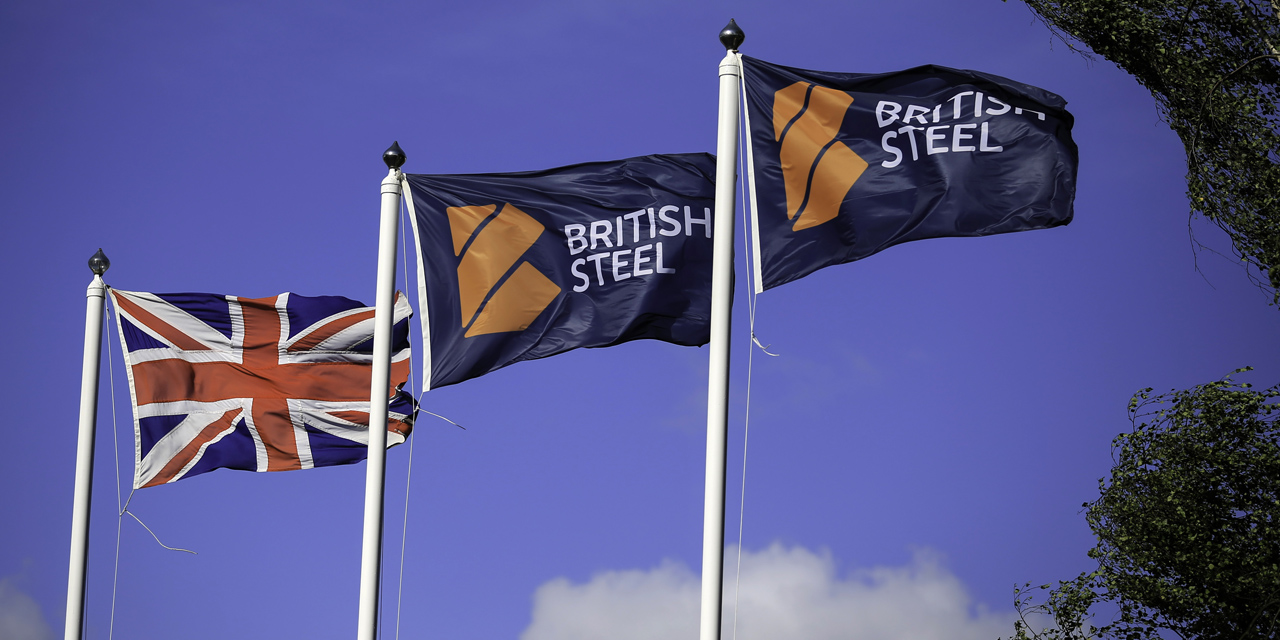
British Steel will invest £26 million ($35.7m) into a new service centre at Skinningrove to process an extended range of value-added profiles for the forklift industry, the firm tells Kallanish.
The is the single largest investment for more than 30 years in its Special Profiles business and forms part of a £100m investment this year to improve the steelmaker’s manufacturing and environmental performance, it adds.
The new service centre will include cut-to-length lines, product milling, machining and warehousing operations. The advanced milling and machining capability will also mean the company can offer profiles with world-leading tolerances of just 0.1mm, British Steel says.
British Steel’s profiles are supplied globally to make components for a wide range of market sectors, such as the forklift and earthmoving industries. “Our investment means we’ll have world-class products manufactured to the tightest of tolerances,” says British Steel commercial director for special profiles David Waine. “It will enable us to explore new growth opportunities for our forklift mast products in Europe, North and South America, India and Asia. And although our primary product offering will be for forklift mast production, we expect to be able to expand this to include other product applications too.”
The steelmaker is seeing strong demand for its products, particularly those used in the mining and construction sectors as well as the demanding application of high-reach trucks.
“With the market growth and demands we’re anticipating, our investment is coming at just the right time,” Waine adds. “It will deliver new key capabilities that use technology nearly two decades more advanced than anything available anywhere in the world.”
Work on the new facilities will begin by year-end, with commissioning expected to start in August 2023.
The new Skinningrove facility will replace the services currently offered at the company’s site in Darlington, which stores and cuts profiles to customer requirements. This location change and processing capability expansion brings logistical, cost and environmental benefits, the firm concludes.
Adam Smith Germany

N. Europe HRC market lower, buyers uncertain about future pricing
North European hot-rolled coil prices were heard lower Aug. 25 as cheaper imports encroached on domestic steel territory, with foreign HRC prices heard at Eur975/mt CIF Antwerp and CRC imports heard at Eur1100/mt ex-works Ruhr. Sentiment has been mixed recently, with market participants uncertain of future pricing developments, sources told S&P Global Platts.
One source was expecting a greater HRC pricing split between north and south Europe, with imports much cheaper than domestic market prices.
“Can be seeing lower prices in the new year. There’s lots of uncertainty, I don’t know the demand viability over the next week,” a European mill source said. “All big customers have big order books, automotive demand is still good, but positions are taken away because of problems with suppliers, so some days there is no [auto] production.”
The market was also wary of other potential declarations about import duties, fueling the uncertainty. Ongoing logistical concerns, including a shortage of truck drivers and ships, added to the unwillingness among buyers to purchase material, with credit issues also a factor.
North European HRC prices were assessed down Eur5/mt to Eur1135/mt ex-works Ruhr and in Southern Europe prices were assessed stable at Eur1040/mt ex-works Italy.
— Amanda Flint
