


European stainless coil prices increase again
European stainless steel cold and hot rolled coil, sheet and tube prices are increasing again this month, market participants tell Kallanish.
European mills are quoting CRC for Q1 2022 delivery at €3,600-3,800/tonne ($4,232-4,467) delivered including alloy surcharges, depending on material quality and volumes. This price consists of an average base price from European mills at €1,600/t plus €2,000 in alloy surcharges. HRC is offered at €3,500/t delivered on average. Like last month buyers are not negotiating prices, instead focusing negotiations on delivery times. While some HRC of Asian origin can be found on the import market at €3,400-3,450/t cfr for larger quantities, there is shortage of CRC and no competitive imports are reported.
August has been a slow month for most of Europe due to the August holiday break. This is worsened by a heavy shortage of trucks and logistics disruptions due to the high import volumes of carbon coils, scrap and pig iron reaching Europe. In Italy, major steel ports such as Ravenna, Chioggia and Marghera are said to be congested, with trucks difficult to find as a consequence.
With import supply also impacted by safeguard quotas expiring from regions like Taiwan, coil availability remains tight, sources say.
Meanwhile, coil derivatives’ prices are also hiking significantly in line with stainless coils. Sheets and flat products however are increasing faster than tubes for which demand remains less lively. Stocks throughout Europe at distributors of flats remains particularly low in all European countries, Kallanish hears.
Natalia Capra France

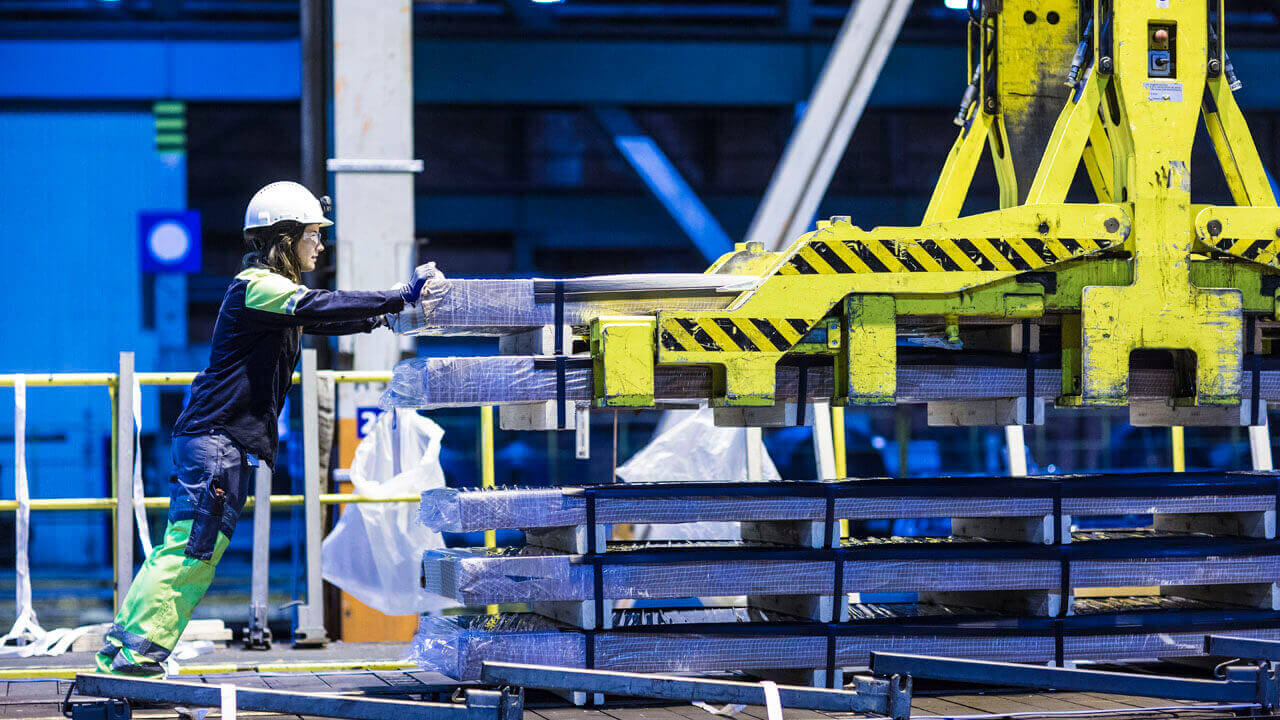
SSAB optimises transnational data flow
SSAB Europe has placed an order with SMS group covering the transnational networking of digital solutions for a stronger exchange between its four production sites in Finland and Sweden.
The steelmaker has signed a contract with SMS’ subunit SMS digital for the digitalisation of its production processes on the way to a “learning steelworks,“ the plantbuilder says. SSAB will thus benefit from an improved, holistic flow of information of all plant data across the four locations Luleå and Borlänge in Sweden as well as Raahe and Hämeenlinna in Finland, SMS states.
SMS DataFactory can be used as a data hub for seamless access to systems such as predictive plant monitoring, production planning as well as for quality and energy management, Kallanish learns from the plantbuilder.
By means of cloud technology, SMS will make available to SSAB the uniform, cross-plant data management system within the next two years. The heart of the solution is the SMS DataFactory which has been in use by several leading steel producers under the name SMS QuinLogic PDW. It will provide SSAB a holistic view of the production locations, combined with an intelligent exchange of multi-site findings, SMS explains.
Activities will start at the Hämeenlinna site in Finland, followed by Borlänge, Raahe and finally Luleå. For linking the locations with each other, the next step will be to set up the IT and cloud infrastructures.
Christian Koehl Germany