

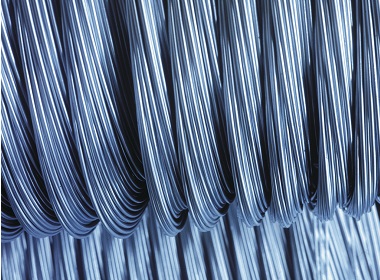
EU confirms duties on Chinese PSC wire
The European Commission (EC) has concluded the expiry review launched in 2020 on existing duties on Chinese pre-stressed concrete (PSC) wires and strands, Kallanish notes.
The review was launched after a request from the European Stress Information Service, representing more than 25% of EU production of such products.
This week, the Commission confirmed duties will remain in place, at a level of 31.10-46.20% depending on supplier. Kiswire Qingdao’s material will not be subject to any duty.
Emanuele Norsa Italy

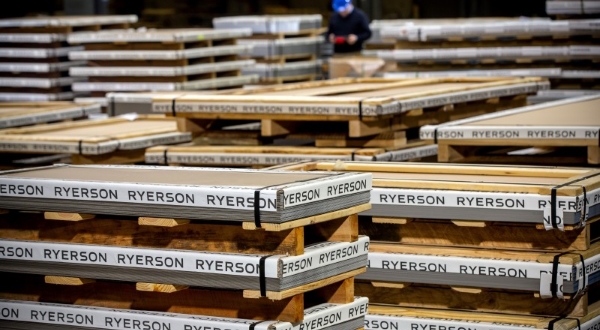
Ryerson expands in the Pacific Northwest
Chicago-based service centre chain Ryerson is building a new greenfield facility in Centralia, Washington, Kallanish learns.
Start-up is slated for the second quarter of 2022, Ryerson says. The 214,000 square-foot facility will serve the Pacific Northwest market – specifically Washington and Oregon. It will have advanced plate, bar, and tube processing equipment.
Financial details were not disclosed.
“Our investment in a new state-of-the-art service center in Centralia, Washington underscores our commitment to modernising our network of intelligently connected manufacturing metals service centers creating great customer experiences at speed, scale, and consistency,” says ceo Eddie Lehner. “I would like to thank the city of Centralia and their leadership team for working diligently with Ryerson to bring this advanced distribution and manufacturing facility to fruition that will create excellent jobs in the Centralia area for many years to come.”
Dan Hilliard USA
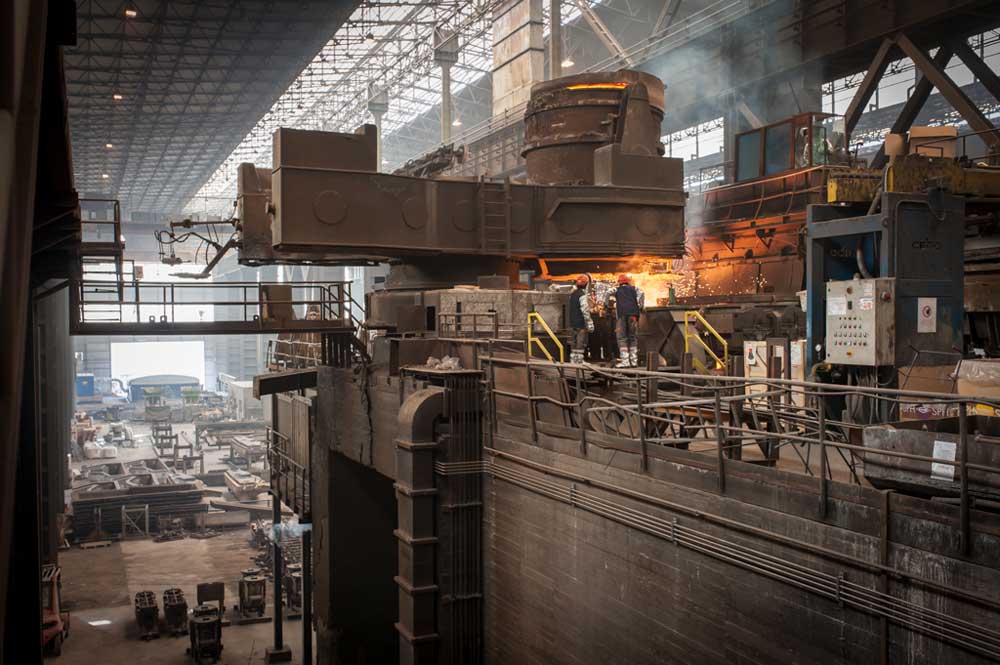
Chinese steelmakers halt production in September
Under pressure from output reduction policies, Chinese steel producers have chosen to conduct overhauls of equipment in order to achieve their set output targets. Most steel mills are being required to limit this year’s output below last year’s level, Kallanish notes.
Guangdong Shaogang announced on Wednesday that in the second half of the year, two blast furnaces at the steel plant will be overhauled, reducing supply of pig iron by 400,000 tonnes in total. On the same day, Juneng Special Steel started the overhaul of its 1,250 cubic-metre blast furnace for 70 days, cutting 220,000 t/y of iron output in total. In addition, another seven steelmakers have announced plans that will reduce around 1.1 million tonnes of iron output in September.
In terms of the finished steel products, 17 producers including Tiangang, Benggang, Angang and Yonggang will reduce a combined 830,000t of long steel and 980,000t of flat steel output.
According to market rumours, Baowu Group has been notified that it must also keep this year’s output at the same level as last year. Sources estimate Baowu’s steel subsidiaries would need to reduce steel output by approximately 14-19mt from September to November to meet this goal.
By Kallanish
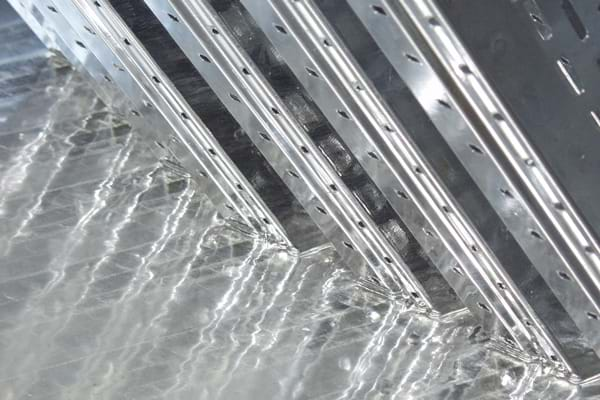
EU market may see greater HDG volumes as auto demand retreats
European hot-rolled coil prices were stable Sept. 2, with pricing uncertainty still rife in a market waiting on the outcome of the potential removal of US Section 232 tariffs come November, and what this could mean for the domestic market, sources told S&P Global Platts.
As mills look to fund carbon-free steel production, and with market chatter around the removal of Section 232 tariffs, prices were expected to increase in the near term.
“Export prices for EU steelmakers will be very good and US prices will decrease for [the removal of] Section 232,” an Italian service center source said. “There is only one loser and that is the European steel industry, which will have less material. It’s important that Brussels understand that the situation is critical – they need to revisit the quota system.”
Buy-side sources were more optimistic about HDG availability, due to the expected lack of demand from automotive manufacturers during September.
Mills were relieved about this unlikely outcome, as it would alleviate the pressure to produce more HDG.
“We have too much in the pipeline to be able to produce anything, so we’re happy automotive haven’t ordered all those [HDG] quantities,” A European mill source said. “It means that we still don’t have a lot of quantities to sell, but we’re not so much in pressure in our production.”
Exporting countries like India were also discontent with the European Commission’s July decision to limit quota allowances, and this was exacerbating the supply pressure felt in the Italian market.
“The Indians want to extend their quotas, and in the past month they discussed with the European Commission, but they didn’t succeed,” the same service center source said. “India is the most important supplier to Italy.”
— Amanda Flint
