

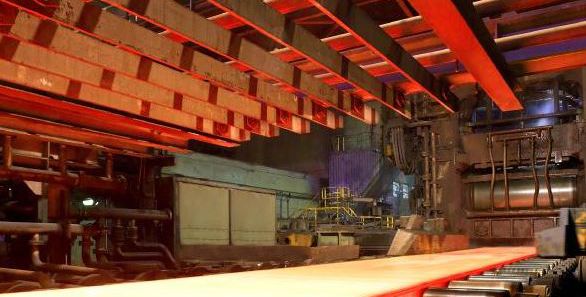
Thyssenkrupp quantifies iron loss from blast furnace interruption
The reline of blast furnace No.1 at thyssenkrupp Steel’s mill complex in Duisburg will result in a production loss of 700,000 tonnes of pig iron, Kallanish is told by the company. The outage for the purpose of a reline lasts some 70 days, and the restart is scheduled for this month.
This major maintenance has been repeatedly questioned as it comes during a period of shortages, high demand and high prices the mill could achieve. Executives previously maintained that the measure could not be postponed as it has become technically unavoidable. Its preparation has taken nearly a year, and could not reasonably be stooped even when it became obvious that the economy is surging.
Still, a spokesman from the works council of tk Steel tells Kallanish that the measure comes late by about one year. It could have been carried out altogether earlier, but the investment was postponed by parent company thyssenkrupp AG. “We wanted to have it sooner, and eventually it could not be pushed back any more, so now it comes at an inadequate time,” he says.
Tk AG was hesitant with lining up investments into Steel for a long time, given that it was pondering spinning off the unit. Eventually, however, it decided on the campaign “2030” with billions of euros to be invested in the future of steelmaking in Duisburg. “We at tk Steel have fought for this, and it was implemented, even despite Covid-19,” the spokesman says.
Meanwhile, some defect was recently heard to have occurred at one of the other blast furnaces. This, however, was only a leak of gas without causing any noteworthy hazard, damage or production loss, he says.
Christian Koehl Germany


Russia’s stainless output rebounds in July
Russia’s production of stainless steel decreased in January-July, show national statistical service Rosstat data monitored by Kallanish.
Output amounted to 118,900 tonnes, down by 2.9% on-year. However, in July alone Russian steelmakers produced 18,100t of stainless steel, up by 9.1% on-year and up 2.5% on-month.
In June, Russia produced 17,600t of stainless steel, less by 7.6% on-year (see Kallanish passim).
Russia’s production of stainless steel in full-year 2020 increased by 1.3% on-year to 204,260t.
Production at Russia’s Krasny Oktyabr (Red October) decreased in July compared with the previous month (see Kallanish passim). It amounted to 16,691t of stainless steel, down by 24.8% on-month. In June, production was 24,900t.
Russian stainless steel imports increased in January-July and the main supplier was again China, national special steel association USSA said earlier. Russian stainless intake was up 5.4% on-year to 241,520t. However, in July alone Russian stainless intake decreased by 18.5% compared to June to 34,700t.
“Rising prices in the foreign markets and problems with the formation of orders for the imported stainless steel limits the supply for domestic customers,” USSA said. “An increase in the key rate and a further increase in prices in the foreign market will contribute to the growth of prices in the Russian market.”
Russia’s additional export duties will meanwhile impact only a part of Russian exports of stainless products, because most of them are delivered to Eurasian Economic Union (EAEU) countries, according to USSA.
Svetoslav Abrossimov Bulgaria
Acciaierie d’Italia stops disputed coke battery for revamp
Coke battery no.12 at Acciaierie d’Italia’s steelworks in Taranto, formerly known as ArcelorMittal Italia and previously Ilva, has been idled due to environmental upgrade works, the company confirms to Kallanish.
Production stopped on 1 September and work will last for a few months. The coke battery will be put back into operation by the end of the year.
The Lazio region administrative court, Tribunale Amministrativo Regionale (TAR) Lazio, ordered in July the shutdown of coke battery no.12 at the Taranto steelworks by 31 August due to excess emissions (see Kallanish passim). It ordered the steelmaker to perform a revamp of the equipment, keeping the threshold of fine dusts to 25 grams per tonne of coke.
The company will have to improve ventilation and install filters for chimney E428, Kallanish hears from a source close to the steelmaker.
Earlier this year, Italy’s ecological transition ministry ordered Acciaierie d’Italia by ministerial decree to reduce emissions of the coke plant by 30 June. Acciaierie d’Italia appealed to extend the deadline to January 2022 but the Lazio court refused.
Natalia Capra France

Price drop expectation curbs Italian merchant bar demand
Prices for Italian merchant bar have remained relatively stable so far this month compared to August, but limited activity and sluggish demand suggests a possible impending price decline, Kallanish learns from sellers and buyers.
Over the past week some purchases were implemented for low tonnages. Due to the significant domestic scrap price decline, service centres are beginning to adopt a wait-and-see attitude, lamenting low sales to end-users. Some are already applying a €10-15/tonne ($11-17) price decline compared to August and believe domestic values will fall by some €20/t in the comping days.
Domestic merchant bar transactions in recent days have been agreed at €460-490/t base ex-works, although the high point of the range is only achieved for small orders and is forecast to disappear. Including size extras, values are hovering at €880-910/t ex-works, sources suggest.
Import offers from Spanish producers are aligned with domestic steelmakers’ levels as export sales remain strong for both Italian and Spanish suppliers, particularly to Eastern European buyers. By the end of next week, Italian sellers expect some demand to come back as buyers will need to restock.
Meanwhile, Italian domestic scrap prices are falling between €20-50/t compared to the high levels seen at the beginning of August (see Kallanish 3 September).
Natalia Capra France
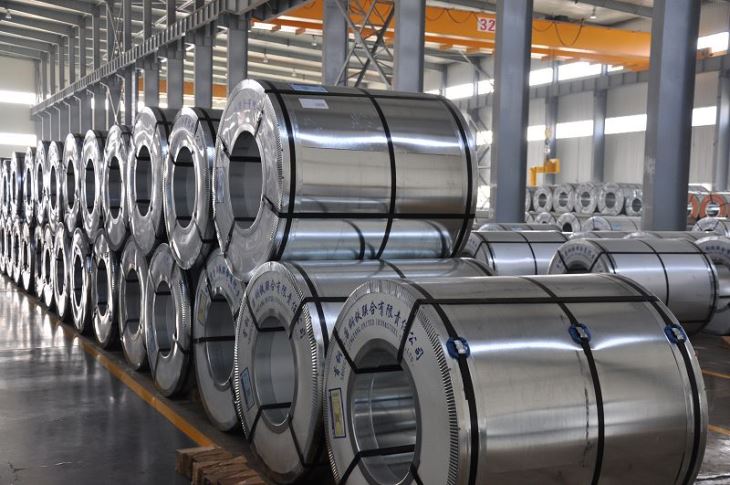
Asian stainless CRC prices rise with higher nickel
Asian stainless cold-rolled coil prices increased in the week to Sept. 3, in line with further gains in nickel and improved market sentiment in the China domestic market.
S&P Global Platts assessed 304 grade 2 mm 2B stainless CRC at $3,120/mt CFR East and Southeast Asian ports on Sept. 3, up $50/mt on the week.
Nickel prices strengthened, rising above the $19,000/mt mark during the week, with the official nickel cash price on the London Metal Exchange settled at $19,365/mt on Sept. 2, up $497/mt on the week.
In Chinese domestic market, sentiment was boosted towards the end of the week on news of output cuts at mills, stronger nickel and stainless futures. Some major export mills hadn’t announced their new offers for November shipment.
Previously, a major mill offered late-August in the range of $3,250-$3,300/mt FOB for end-December shipment. Offering level for immediate delivery cargoes were about $3,000-$3,100/mt FOB, according to traders.
Inquiries were more healthy as most market participants don’t expect export duty to be announced in September. But higher costs for freight remained a major issue, said a Chinese trader.
Some Taiwanese mills were not so keen in adjusting their offers and preferred to wait and see, as they have secured some bookings for October shipment. Their offer level of around $3,350/mt CIF met resistance from buyers, according to a regional trader.
The most actively-traded October stainless steel contract on the Shanghai Futures Exchange was at Yuan 18,715/mt ($2,893/mt) on Sept. 3, up Yuan 1,170/mt, or 6.7%, on the week.

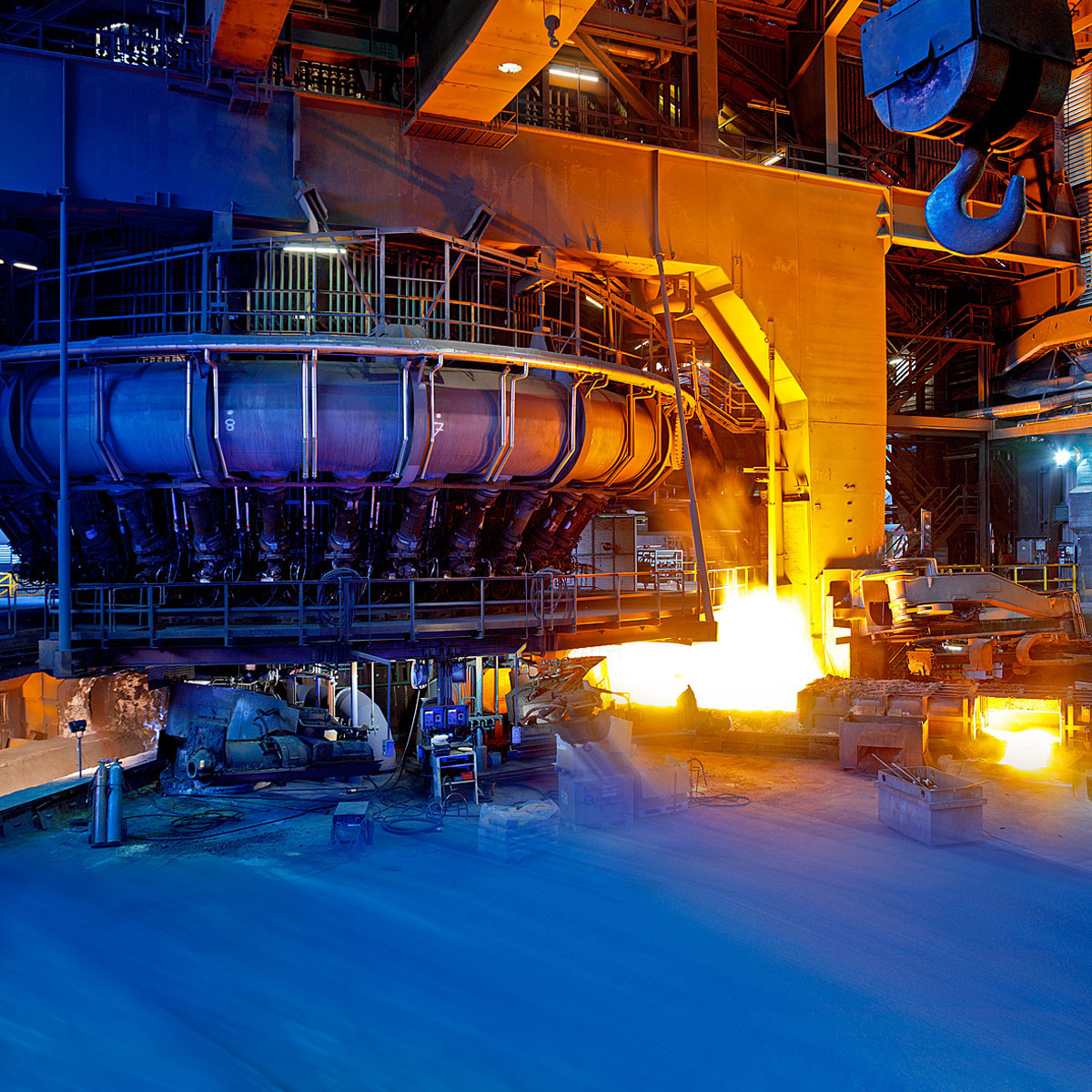
German mills bullish on steel prices, buyers’ see stability
German steel producers are expecting a slight rise in steel prices over the coming weeks, while traders and end-buyers expect a stable pricing environment amid concerns over automotive demand and high volumes of imported material, according to Platts’ monthly German steel sentiment survey.
The survey, conducted at end of August and the beginning of September, showed the overall expectation for steel prices at 56, with producers the most bullish at 67. Traders and distributors as well as end-buyers expect a stable development at 50 (50 denotes stability).
The sentiment for steel price development turned gradually from extremely bullish at 96 in May to a more stable expectation over the summer as the summer slowdown took hold of the market. Over the last two weeks, however, market sources told S&P Global Platts that the takeing of volumes at steel mills by the automotive industry would be less certain amid the semiconductor shortage that forces carmakers to have intermittent production.
Market participants are now mostly back from the holidays and one European mill was heard starting to offer hot-dipped galvanized coil for October – which was one of the most sought-after products during this year’s material shortage. The mill was previously officially booked until year-end.
Sources said that the material will be helping to clear backlogs and opinions were mixed on whether the volumes that are appearing now on the spot market were big enough to have an effect on spot pricing.
Steel prices weaken over summer
Prices for flat steel have overall decreased over the past few months. The daily Platts hot-rolled coil assessment stood at Eur1120/mt EXW Ruhr on Sept 3, down Eur65/mt from its peak June 25 at Eur1190/mt EXW Ruhr, a record high.
European rebar prices have recently shown some weakness as well, though less pronounced. The weekly Platts rebar assessment started to drop on summer lull and lower scrap prices in August to Eur835/mt EXW Northwest Europe on Sept. 1, but sources say fundamentals remain good.
The increase in import material being offered and arriving in Europe over the recent months has led to more pricing pressure on domestic mills, though mills have not been changing pricing officially. Producers are currently in long-term contract negotiations and sources said mills would want to keep spot prices up.
Ahead of the holidays, buyers booked volumes when the opportunity arose amid rapid steel price rises and tight material availability. This has led to an increase in stock levels, which is also reflected in the latest figures from German steel stockholder’s association BDS.
According to the latest BDS data, flat steel stocks increased 8.5% from June to 1.2 million mt in July, stock levels for long steel products grew 2.6% on the month to 791,193 mt.
For September, market participants expect stocks to slightly grow with the survey index at 57, the index for production expectation stood at 74, indicating a pick-up in steel production from the summer.
— Laura Varriale