

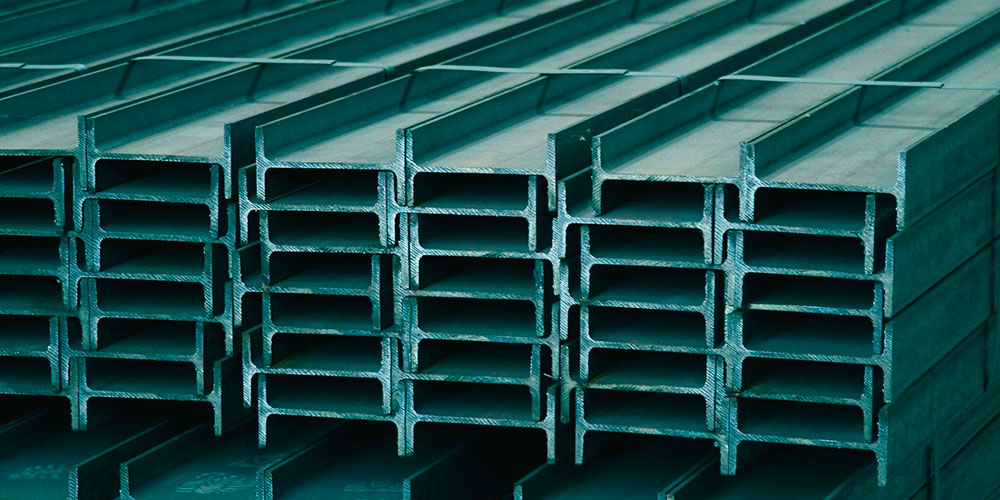
Salzgitter-Konzern erhöht erneut Ergebnisprognose
Nach dem starken ersten Halbjahr setzt der Salzgitter-Konzern auch im Sommerquartal seinen positiven Geschäftsverlauf fort. Die anhaltend gute Preis- und Nachfrageentwicklung spiegelt sich insbesondere in hervorragenden Resultaten der Geschäftsbereiche Flachstahl und Handel wider. Darüber hinaus verbesserte sich die Margensituation im Produktsegment Stahlträger, sodass der Geschäftsbereich Grobblech /Profilstahl höhere Ergebnisse als bislang angenommen erzielt. Folglich heben wir – unter dem Vorbehalt einer trotz latenter Corona-Krise stabilen Marktentwicklung bis zum Jahresende – die Ergebnisprognose für das Geschäftsjahr 2021 abermals an und rechnen für den Salzgitter-Konzern nunmehr mit einem Vorsteuergewinn zwischen600 Mio. € und 700 Mio. € (zuvor: zwischen 400 Mio. € und 600 Mio. €).
Quelle und Foto: Salzgitter AG
08.09.2021 von Hubert Hunscheidt


Italian HRC falls but end-use demand remains strong
Italian hot rolled coil prices are falling compared to the beginning of August by €50/tonne ($59) on average, market participants tell Kallanish. Prices had peaked in July.
Due to low-priced import offers from the CIS region and India, service centres are adopting a wait-and-see attitude. Producers, despite having to accept lower transaction values, remain optimistic about activity, have full order books, and are defending their current asking levels as demand from end-use sectors remains strong.
As HRC delivery stretches to between October and December, sources justify the current price softening as an international “reshaping” of price levels that had reached unsustainably high levels.
Service centres and re-rollers are still not buying from the domestic market as they expect domestic prices to fall further. Their order books however are also well filled and some report lead times into the first quarter of next year.
Italian ports remain congested due in part to arrivals of large tonnages of HRC ordered in June and July when import prices started to decline. Windows of availability for low-tonnage import offers at lower-than-domestic prices are continuing and forecast to remain through September as iron ore and scrap values remain on a downward trend.
Domestic HRC producers are either not quoting or quoting at €1,040-1,070/t base ex-works. These levels will however be hard to achieve in a stagnating market, sources say.
Both Indian and CIS material is offered at as low as €800-830/t cfr Italy. While these prices are challenging for domestic producers, large buyers are shunning these offers as, with import taxes included, values soar to €1,040/t cfr in the case of Indian material.
Domestic material is at €1,070/t for small tonnages and €1,000-1,040/t base ex-works for larger quantities. Sellers lament a “flat, calm” market this week, particularly in the case of service centres.
Natalia Capra France

UK Steel welcomes TRA’s safeguard revocation review
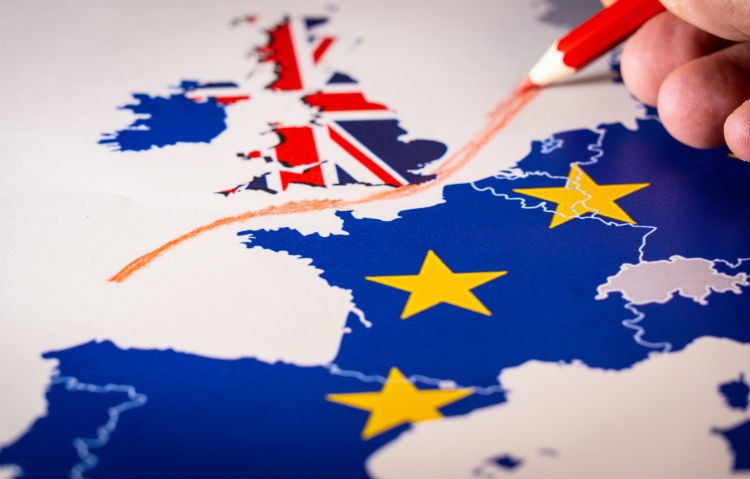
UK Steel has welcomed the Trade Remedy Authority (TRA)’s decision to review its previous recommendation to terminate safeguard measures on the imports of nine steel products.
“Such a termination would leave the sector exposed to uncontrolled surges in imports and undermine the effectiveness of the remaining safeguards, threatening the long-term viability the UK’s steel sector,” UK Steel director general Gareth Stace says in a note sent to Kallanish.
“There are strong legal, WTO compliant, grounds for the maintenance of these measures for the full three-year term,” he adds. “Moreover, at a time when the EU and US have maintained their own protections on all steel products, and UK’s steel producers face obstacles to exporting into these markets, it is the only sensible course of action to maintain equal measures for our own producers.”
The TRA also recommended safeguard measures be extended on the other ten products of the 19 that were subject to safeguard measures until end-June. The UK government accepted the TRA’s recommendation but also introduced emergency legislation to extend safeguards on another five of the products for one year (see Kallanish passim).
Half way through the quarter, the UK had exhausted three of its third-quarter steel safeguard quotas. These were hot rolled coil and cold rolled coil from “other countries”, as well as hollow sections from Turkey.
Adam Smith Germany

Italian contractors seek safeguard removal amid port congestion
The Italian government should press for the suspension of EU steel import quotas, Gabriele Buia, president of Ance, the national association of construction companies, says in a note.
The statement, seen by Kallanish, voices concern over the congestion seen in all major Italian steel ports as a result of steel-bearing vessels waiting to be discharged when import quotas are renewed. The heavy port traffic is also a consequence of producers importing large scrap and pig iron volumes, and of vessels of hot rolled coil purchased by service centres and re-rollers in recent months.
“It is necessary for the Italian government to act immediately in the EU asking for a suspension of the restrictions on steel imports,” Buia says. “In this way, we will not give further space to speculation on prices that are already bringing businesses to their knees, and we will guarantee the continuation of the recovery of economic activities.”
While the country is hungry for raw materials, companies are suffering long waits to receive their supply. Over 0.5 million tonnes of steel is blocked at the ports of Marghera and Ravenna due to the EU import quotas. This situation is described by Buia as “an unacceptable paradox”. He also warns of the concrete risk that this represents for the economic recovery.
In July and August steel and raw material sellers to the Italian market from the CIS region and Asian countries suffered delays and commercial issues when delivering material, two sources confirm.
Natalia Capra France
China’s August steel exports fall 11% to 5.05 million mt
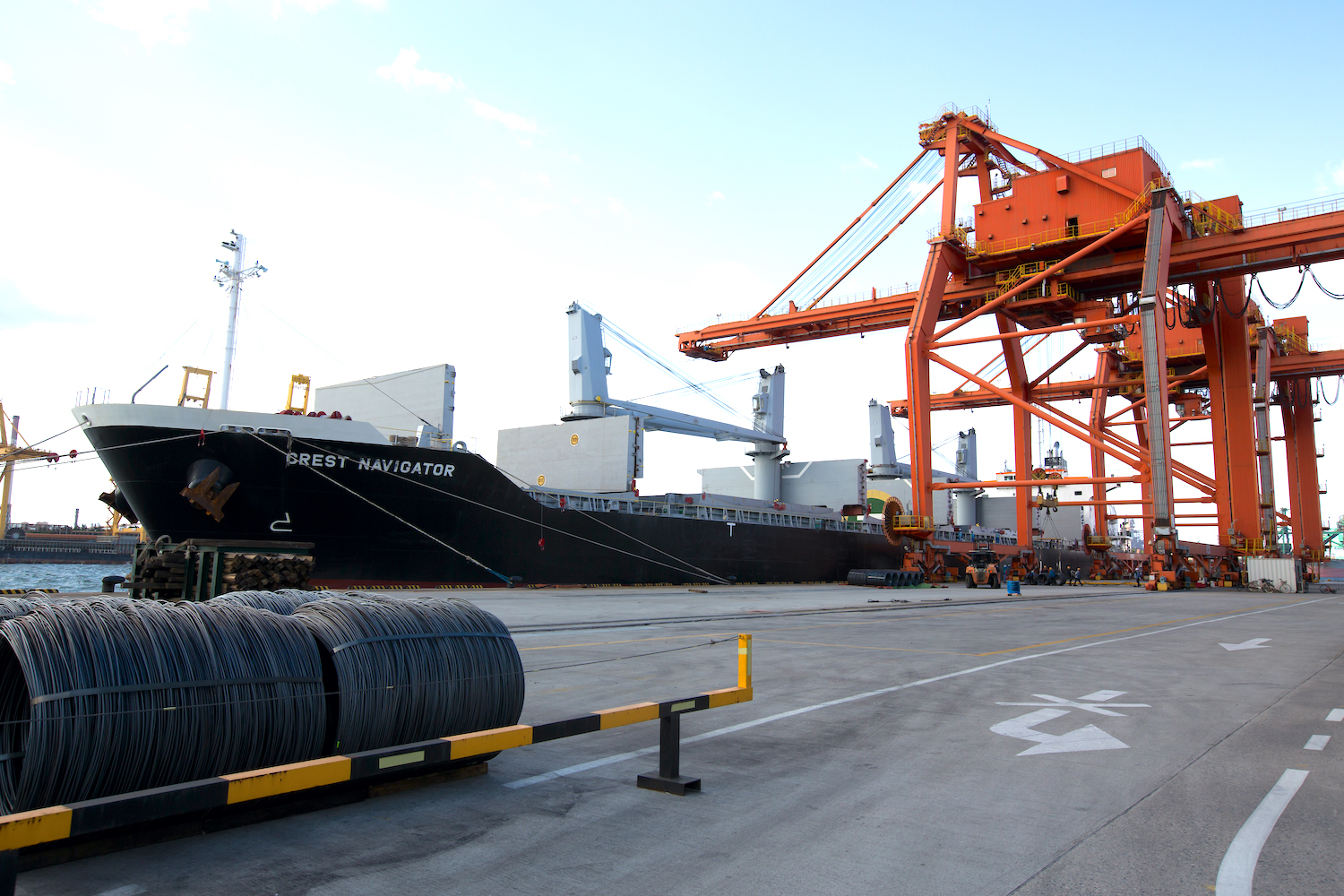
China’s finished steel exports reached 5.053 million mt in August, slipping 11% from July, China’s customs data showed Sept. 7.
The country’s steel shipments fell for the second consecutive month as efforts to curb exports gathered pace in the country.
Market participants said they expected the export downtrend to continue for the rest of this year, as overseas demand is seen weakening amid fresh COVID-19 outbreaks.
Another major factor halting export growth potential is widening output cut orders received by major Chinese steelmakers, which have been verbally informed by government authorities to maintain their 2021 exports at par with 2020 levels, according to sources.
Cutbacks in steel exports are part of China’s plans to keep its steel production in 2021 at 2020 levels, as it looks to cap iron ore prices and cut carbon emissions. To discourage steel exports, China also removed steel export rebates in May and July.
Consecutive fall in exports
China’s slower exports in August follow a similar monthly decline seen in July, when shipments plunged 12% from June levels, according to customs data.
August exports were 37% higher on the year, but this was mainly due to a lower base seen in the second half of 2020, when most export markets were facing a series of lockdown restrictions.
Over January-August, China’s finished steel exports rose 32%, or 11.547 million mt, on the year, to 48.104 million mt.
Some major steel mills have largely trimmed export quota to both overseas clients and traders for the rest of 2021, as their exports from January through August have largely exceeded the year-ago levels, according to some traders and mill sources.
If China wants to cap its 2021 steel exports at 2020 levels, exports over September-December must be maintained below 5.567 million mt in total, or 1.392 million mt/month, according to S&P Global Platts calculations based on customs data.
However, China’s finished steel exports were unlikely to drop below 2 million mt/month, which equates to over 8-9 million mt during September-December, due to supply commitments to long-term strategic clients and overseas projects, a market source said.
Fresh COVID-19 outbreaks overseas have dented demand for Chinese steel recently, which have contributed to the decline in steel exports as well, according to some traders. A stronger domestic market has discouraged traders from purchasing material from the spot markets and they have been avoiding re-exports, trade sources said.
Steel imports on rise
Meanwhile, China’s finished steel imports in August were at 1.063 million mt, up 1% on the month, but still 53% lower on the year, customs data showed. Imports over January-August were 22% below the year-ago levels, at 9.46 million mt, due to a higher base in 2020.
As a result, net finished steel exports were 3.99 million mt in August, up 177% on the year. Net exports over January-August were also up 59% on the year, at 38.644 million mt.
Some traders expected billet imports may slightly increase in the following months, but overall steel imports were unlikely to rise significantly as domestic demand is expected to remain soft because of China’s slowing property sector for the rest of 2021.

ArcelorMittal Hamburg targets 2030 for 1 million mt/year of ‘climate neutral’ steel
Steelmaker ArcelorMittal is to start its direct reduced iron reduction (DRI) plant based on hydrogen in 2025 to allow the production of more than 1 million mt of “climate neutral” steel by 2030 at its Hamburg site in Germany, the steelmaker said Sept. 7.
The plant is expected to produce 100,000 mt/year of DRI to be used in steel production via the electric arc furnace route. The company aims to reduce carbon emissions by 800,000 mt/year at the plant by initially using grey hydrogen and then switching to green hydrogen. According to ArcelorMittal’s statement, conversion to green hydrogen from renewable energy sources via electrolysis will take place once available in sufficient quantities and at an economical cost.
ArcelorMittal Germany will receive Eur55 million in funding from the German government for the DRI project, which was initially outlined in 2019. The total cost of the project is Eur110 million and also includes a 50 MW electrolyzer.
ArcelorMittal Hamburg already produces steel using DRI technology by extracting oxygen using natural gas. The existing EAF at the site has an annual capacity of 1.1 million mt of crude steel.
“The technology is transferable and shows how other steelworks within the group, such as Bremen and Eisenhuttenstadt, can switch to climate neutral steel production,” said Uwe Braun, the CEO of ArcelorMittal Hamburg.
In July, ArcelorMittal set a new group-wide target of 25% reduction in its global carbon emissions intensity by 2030, compared with 2018 levels, based on Scopes 1, 2. The company’s target for Europe increased to a 35% reduction in carbon intensity by 2030, compared with 2018 levels, up from the earlier target of 30%.
The ArcelorMittal Sestao steel mill in Spain also received approval for the construction of a new green hydrogen DRI plant in Gijon.
The Eur1 billion investments will include a new 2.3 million mt/year hydrogen direct reduced iron unit, complemented by a 1.1 million mt hybrid electric arc furnace, which will reduce the mill’s CO2 emissions in Spain by 50%, or 4.8 million mt.
— Laura Varriale
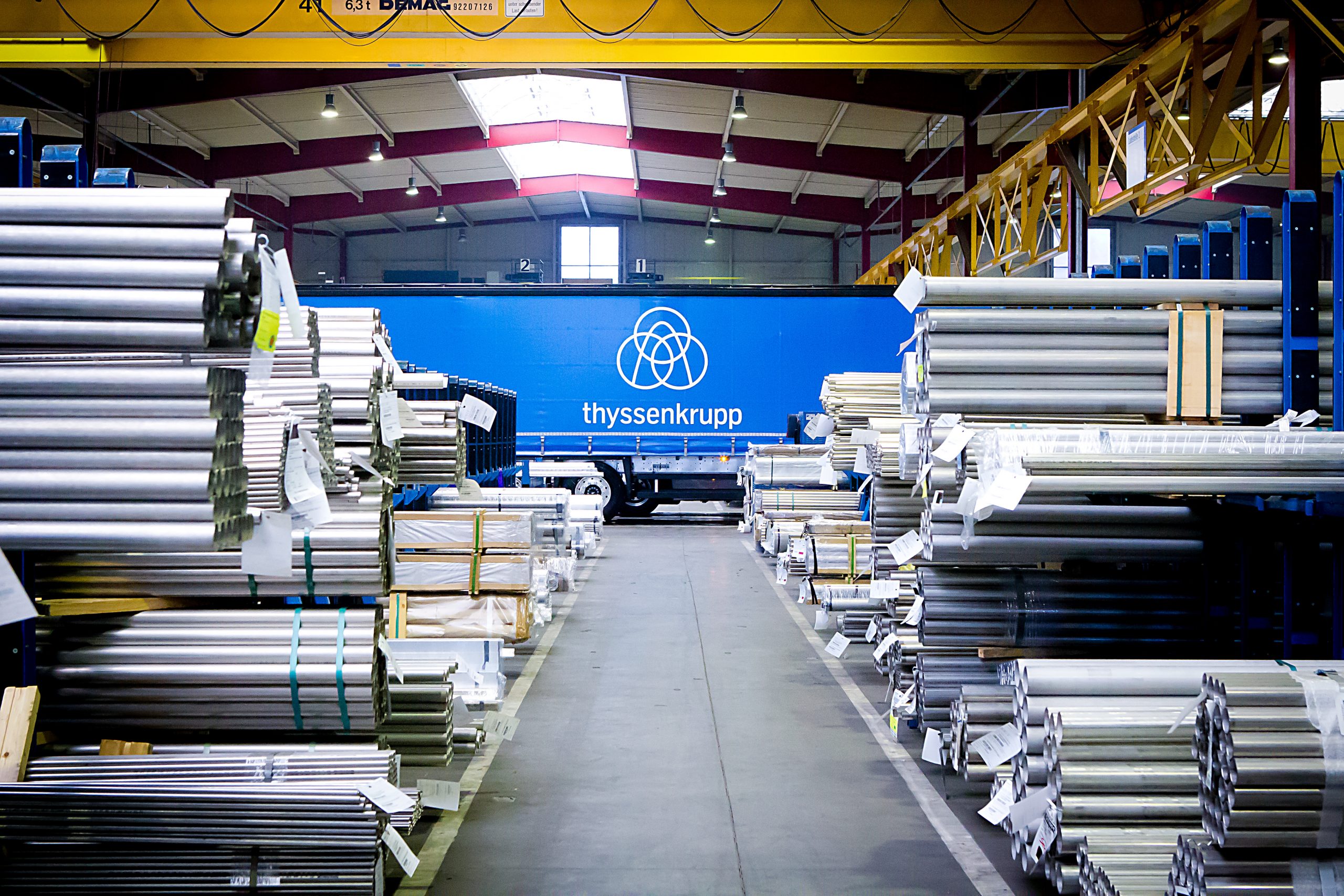
Germany’s ThyssenKrupp to use low-carbon limestone to help decarbonize
ThyssenKrupp’s steel business and raw materials supplier Lhoist Group said Sept. 7 the use of a new lower-carbon “climate-neutral” lime product will help decarbonize steel production.
Thyssenkrupp Steel will use Lhoist’s “LEVEL|BLUE” lime products, which include use of investments into climate projects for benchmarking, and which will reduce carbon dioxide emissions in the steel producer’s supply chain, compared with previous lime supplies, a statement from the two companies said. Lime is a key raw material used to remove undesirable elements from the hot metal, and promote the formation of slag.
Steel and mining companies are bringing low-carbon raw materials supplies and transportation increasingly to the forefront for long-term planning, as steel companies set carbon reduction goals and look to invest in new processes. Iron ore and coking coal miners are adapting fuels and processes to cut emissions to meet demand for high-grade products requiring less energy to convert into finished steel, as well as focusing on environmental, social and governance (ESG) standards.
“We are right in the middle of the transformation to climate-neutral steel production”, said Jens Geimer, Thyssenkrupp Steel’s head of procurement & supply management, in the statement. “Our approach here is comprehensive: Aside from decarbonizing our own units, we also want to make our supply chains gradually climate-neutral by 2050. To this end, we are closely working with our suppliers.”
A large part of CO2 emissions are avoided or reduced in the LEVEL|BLUE lime product, and excess carbon emissions are offset, Alexia Spieler, head of sales at Lhoist Germany, said in the statement.
Platts publishes a range of prices for the global voluntary carbon market, including CORSIA-eligible credits, and Platts Nature-Based Avoidance and nature-based removal credits.
“Complete compensation of the other CO2 emissions arising from the production and transport of our products is achieved by investing in worldwide climate protection projects,” Spieler said. “Thyssenkrupp Steel is thus provided with a climate-neutral raw material, thereby improving its own carbon footprint.”
Thyssenkrupp Steel has set itself the goal to become climate-neutral by 2050, and for emissions from the company’s own production processes and purchased energy to be reduced by 30%, by 2030, it said. The company’s goal to cut Scope-3 emissions in the upstream and downstream value chains is 16%, it said.
Belgium-based Lhoist Group’s new limestone product is certified according to the Greenhouse Gas Protocol (GHG), and the company uses state-of-the-art processes for quarrying, production and recultivation technology, it said.
Limestone products are used in steel and iron production, the chemical industry, the construction industry, water and wastewater treatment, as well as in agriculture & forestry, it said.
— Hector Forster