

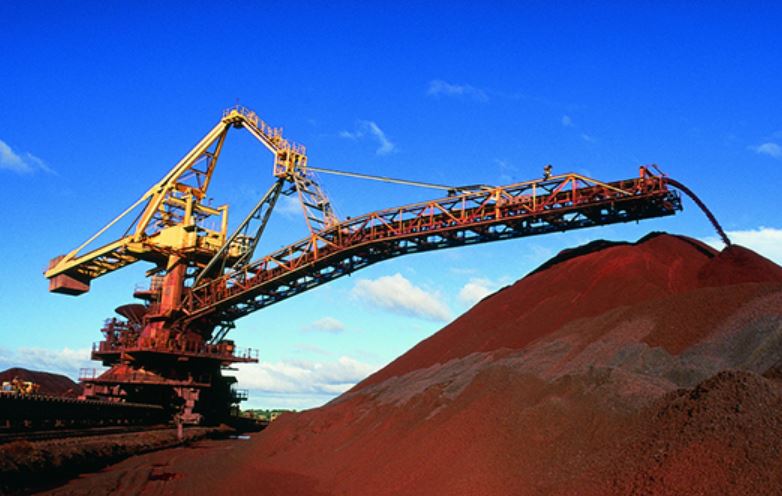
ArcelorMittal, Liberia agree iron ore project expansion
ArcelorMittal and the Liberian government have signed an amendment to the Mineral Development Agreement (MDA) which will enable ArcelorMittal to expand its mining and logistics operations in Liberia.
After the amendment comes into effect, ArcelorMittal Liberia says it will significantly ramp up production of premium iron ore and generate nearly 2,000 new jobs. The expansion project includes the construction of a new concentration plant, substantial expansion of mining operations, and rail and port facilities. The capital required to finalise the project is expected to be approximately $0.8 billion.
The first concentrate is expected in late 2023, ramping up overall production to 15 million tonnes/year. The agreement will allow ArcelorMittal to reserve the right to expand output to 30mt.
Liberia president George Manneh Weah says: “This agreement demonstrates to the world that Liberia welcomes foreign direct investment and is a key emerging destination for capital. The further investment by ArcelorMittal in Liberia bears testament to the company’s confidence in the future of this country.”
ArcelorMittal chairman Lakshmi Mittal observes: “The expansion of mine, processing, rail and port facilities is the largest iron ore project in West Africa and will draw international attention to Liberia as an attractive country to invest in.”
ArcelorMittal adds it has invested over $1.7 billion in the country over the past 15 years.
ArcelorMittal Liberia has been running its first-phase 5m t/y direct shipping ore (DSO) operation since 2011. It utilises a 243km rail line that transports ore to the Port of Buchanan for export.
Concentration plant construction was initially started in 2013 but suspended due to the onset of Ebola in West Africa and the subsequent force-majeure declaration by the onsite contracting companies (see Kallanish passim).
Burak Odabasi Turkey


Italian car output falls
Italian passenger car output decreased significantly year-on-year in July, by 29.1%, and also went down compared to the same month in 2019, Kallanish notes from preliminary data released by local carmakers’ association Associazione Nazionale Filiera Industria Automobilistica (Anfia).
Passenger car output stood at 37,200 units in July. Production in July 2020 was 52,445 units, while 50,523 units were assembled in July 2019, Anfia says.
Over the first seven months of 2021, however, the country’s passenger car output increased strongly compared to the same period in 2020. It stood at 285,763 units versus 190,377 units last year.
In January-June, meanwhile, the county produced 178,990 light commercial vehicles, a 55.4% y-o-y increase, and 33,590 trucks, up 76.9%. Data for these categories is published with a month’s delay.
In full-year 2020 Italy’s passenger car production stood at 451,826 units, versus 542,472 cars in 2019.
Italy has 23 production plants. By comparison, Spain has 17 plants, France 31 and Germany 42.
Natalia Capra France
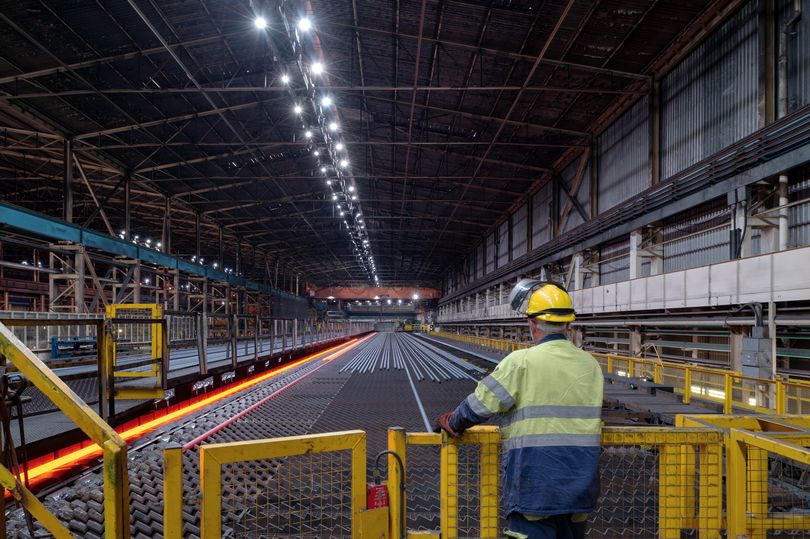
Construction lifts German stockholders’ rebar sales amid Covid-19
While sales of most steel products from stockholding distributors went down in the crisis year 2020, deliveries of rebar to the construction industry in fact rose in absolute terms.
Compared with 2019, rebar sales went up by 8.4% to 1.42 million tonnes, continuing a long-term upward trend on the back of flourishing construction activity, Kallanish learns from the annual review of distributors’ federation BDS.
The trend worked the other way for all other bar products taken together. Tonnage here declined over the past decade, with the latest year-on-year dip bringing the total tonnage in 2020 to 923,000t. The problem with this figure is that it covers merchant bar as well as special bar qualities (SBQ) – two main groups with considerably different application and customer sectors. While merchant bar goes to construction and mechanical engineering at equal shares of about 29%, nearly 50% of SBQ, like engineering or tool steels, is sold to mechanical engineering.
BDS previously announced plans to give SBQ separate statistics. The federation points out that the share of SBQ in total steel sales has risen considerably, from 16% at the beginning of the 1990s to some 40% now.
Sections and wide flange beams, another product group typically used in construction, reported a dip, albeit a small one, of 1.7% to 1.02mt. Here, figures have declined slightly but gradually over the past year. BDS suspects that imports have gone up quite a bit, and taken share from German distributors. A similar explanation applies to most flat products (see separate story).
Christian Koehl Germany
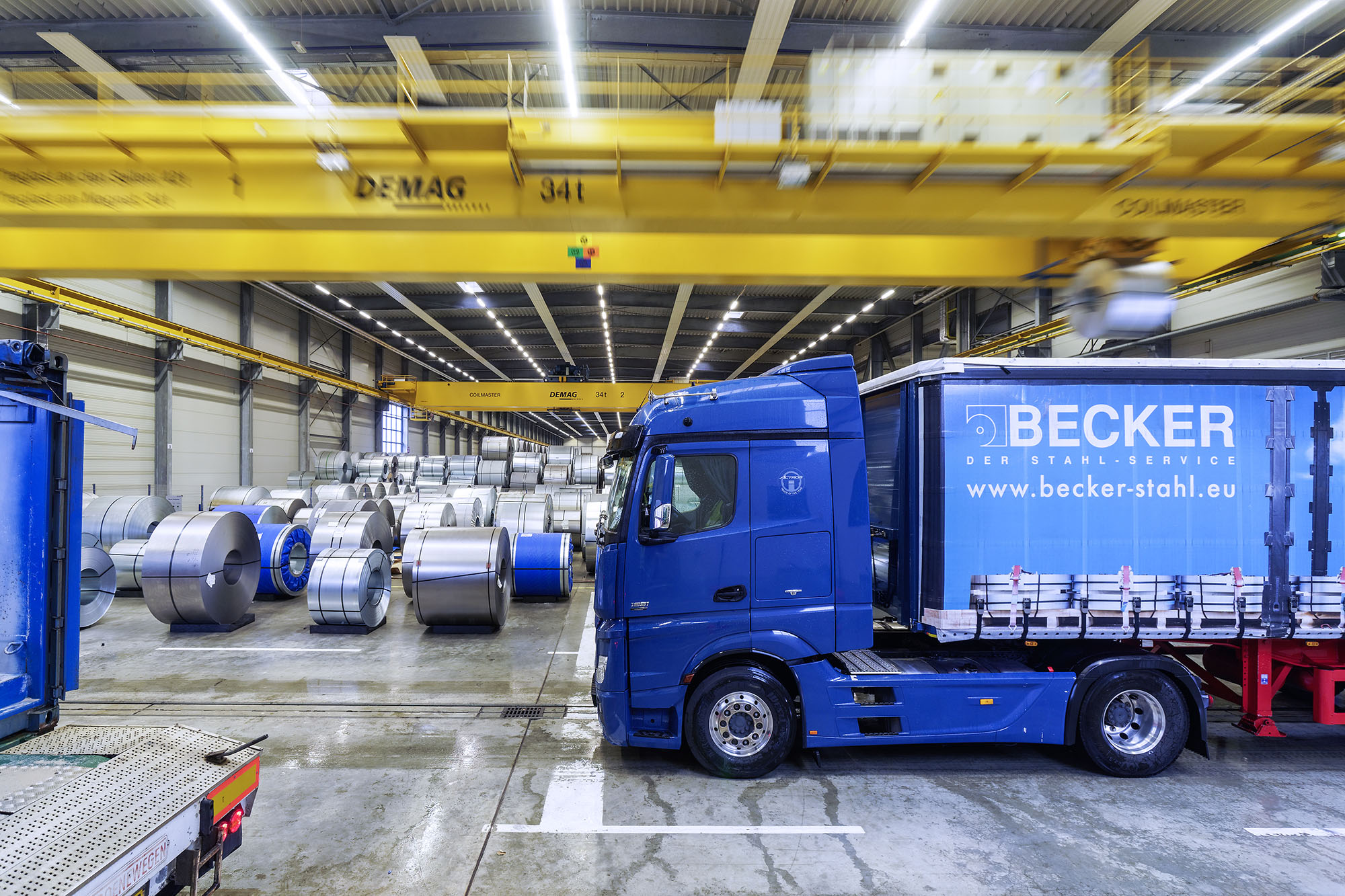
Imports, mills usurp German distributors’ market share
Although the Covid-19 shock throttled business at Germany’s stockholding distributors in 2020, the year-on-year drop in sales turned out relatively moderate, at 3.4% to 10.3 million tonnes, according to distributors federation BDS.
Jörg Feger, head of research at BDS, notes that 2019 had already been a weak year, and that in 2020 the first and last quarters saw higher sales than the respective 2019 quarters. Many distributors had filled their inventories before the lockdowns came, and in Q4 benefitted from industrial business catching up, he explains. During the year, member companies kept inventories cautiously low. By 31 December, they stood at 2.17mt, which was 5.3% below the end of 2019, Kallanish understands.
The product group that saw the steepest fall was plate, reaching 813,000t, around 11% less than in 2019. Given that demand for plate has not changed much recently, Feger suspects more consumers are supplied directly from the mills, or from port warehouses outside Germany.
The same explanation applies to coil products. Here, cold rolled coil saw the most pronounced dip, by 8% y-o-y to 1.17mt. The difference was much narrower for hot rolled coil, which dropped 2% to 1.09mt, and for hot-dip galvanized coil, which fell 1.3% to 2.86mt. HDG therefore stands out as the best-sold product, and Feger notes that last year’s tonnage was higher than in any of the years from 2010 to 2017.
Christian Koehl Germany

European mills offer for Q1; HRC pricing sentiment mostly bearish
North European HRC prices were stable Sept. 13 amid limited transaction activity as buyers remain cautious to book ahead, and mills were in no hurry to seek orders for the rest of the year, with most fully booked, sources told S&P Global Platts.
A German trader said his clients were awaiting further decreases and chose to wait before purchasing, though mills were now fully booked until the end of the year, making the demand story less severe.
One mill source said orders were already being finalized for Q1, with HRC deals closing at Eur1,180/mt ex-works Ruhr, and CRC and HDG bought at Eur1,310/mt ex-works Ruhr, inclusive of carbon surcharge fees.
Overall, sentiment from the buying and trading side was more bearish, with chatter of lower prices and threatening import volumes spilling into the next quota period.
“The signs are pointing toward decreases for the foreseeable future, my money is on constant decreasing prices until the end of October,” a UK-based mill source said. “Despite the proposed production cuts in China, I think there’s still an appetite from Asian rerollers to export to Europe.”
In Italy, a mill source said limited import quota balances were applying pressure on domestic prices.
“I see pressure on HRC but just from imports. I see European mills were stable. Moreover, quota is an issue,” he said.
Imports into Italy were mainly heard from Russia, India, and Turkey at around Eur920-940/mt CIF Italy Ports, duty-paid.
“To buy from Turkey and India now is risky for quota and logistics,” an Italy-based trader said.
Pricing expectations in the market were still mixed, however, with doubts of further price decreases supported by long order books and delivery delays from mills, as well as strong service center demand and import duties.
“The quota for the third quarter is full, so there will be a delay, and the question is regarding automotive … when will they restart?” a European service center source said.
— Amanda Flint, Laura Varriale


Steel shipments EU + UK rise 20.2% on year in January-July
In first seven months of 2021, steel shipments of EU 27 + UK SSC rose 20.2% on the year, while shipments of EU 27 + UK multi-product & proximity steel stockholding distribution went up by 12.3%, the EUROMETAL steel stockholders and distributors association said Sept. 14.
From January to July, EU27 + UK Multi-Product & Proximity Steel Stockholding Distribution registered higher shipments on the year across all categories with the exception of rebars, which saw fewer shipments. Other longs, strip mill products, tubular products and stainless steel registered higher shipments.
In July, shipments of strip mill products rose 3.4% on the year and 24.3% on the month.
Stock levels at EU SSC reached 53 days of shipments in July 2021, compared with 70 days in July 2020.
According to the press note, in July 2021, the stock volumes index for flat steel service centers fell to 71 from 88 registered in July 2020 (average 2018 = index 100).
In July, total steel products shipments increased 3% on the year. All products under the segment saw a year-on-year rise, with the exception of sections and rebars.
Stock volumes index of EU27 + UK Multi-Product & Proximity Steel Stockholding Distribution fell to 81 index points in 2021, compared with 84 in July, 2020 (average 2018 =Index 100).
Stock volumes of EU27 + UK stood at 69 days of shipments in July, compared with 76 days in July 2020.
— Annalisa Villa