


Most Indian flat steel quotas into Europe already met: EC
Indian flat steel volumes are vastly dominating European import levels, with most quotas for Indian flats already exhausted, according to European Commission data Oct. 7.
The Indian hot-rolled coil quota for October-December totaling 169,717 mt, cold-rolled coil quota totaling 150,937 mt and quota tally for hot-dipped galvanized category 4a of 49,651 mt were already exhausted.
Data showed that 34,478 mt of Indian hot-dipped galvanized category 4b was remaining out of a total country-specific quota of 70,874 mt, while approximately 780 mt was awaiting allocation as of 4:30 pm London time on Oct. 7.
For the Russian HRC country specific quota, 264,169 mt remained out of a total of approximately 416,848 mt, while 15,781 mt was awaiting allocation.
For Turkish HRC, 125,622 mt remained out of a total quota of approximately 330,388 mt while around 25,041 mt was awaiting allocation on Oct. 7 as of 4:30 pm London time.
Indian flats steel products seemed to have dominated the import quota into the EU for the October-December period.
“I was surprised by the Turkish quota. I was expecting it to be higher, but it looks like it isn’t being allocated that fast,” one European trader told S&P Global Platts. “The tonnage was lower than expected and India is super high as expected. The HDG quota is even worse and there are not many offers in the domestic market so the prices should be strong.”
Platts assessed Northwest European hot-rolled coil stable at Eur1,047.50/mt ($1,211.53mt) ex-works Ruhr on Oct. 7.
Indian HRC total import volumes awaiting allocation totaled 205,034 mt, around 121% of total quota, on Oct. 5, exceeding country-specific quota of 169,717 mt. Similarly, Indian HDG 4a import volumes stood at 182,438 mt on Oct. 5, approximately 367.5% of quota tally of 49,638 mt.
Rebar import quotas
In line with most Indian flat steel products, Turkish rebar imports showed a similar trend on the longs steel side. The country specific quota for Turkish rebar imports into the EU was already exhausted, EC data showed.
Sources reported that Turkish mills have sold around 110,000 mt rebar to Europe over the last three months, exceeding its country-specific quota. Therefore, even though, total quota tally for Turkish-origin rebar imports into the EU of 61,938 mt was already by Oct. 5, approximately 434 mt was awaiting allocation around 4:30 pm London time on Oct. 7, in addition to 5,047 mt which was awaiting allocation at 05:30 pm London time on Oct. 6, following exhaustion of total country quota.
“I think the figures are clear, we have to pay,” another EU trader said.
The trader said he would no longer buy from Turkish mills.
“We will see how many European buyers will be keen to take the risk,” he said. “The best would be for the Turkish organize themselves to share the quota on their end so that they don’t oversell globally to EU buyers.”
The volumes which will not be cleared during October-December period will be stored at ports awaiting allocation during the January-March 2022 period, where buyers are expected to pay storage costs.
“This has probably happened, and volumes are at the port for January, for sure,” the trading source said, adding, “Storage costs are nothing compared to [antidumping] duty.”
Platts assessed Turkish exported rebar at $672.50/mt FOB Turkey Oct. 7, up $2.50/mt on day.
Approximately 33,488 mt of the total October-December quota of 59,963 mt for Russian-origin rebar remained on Oct. 7, while 1,349 mt awaited allocation.
— Rabia Arif, Amanda Flint

Klöckner partners with Swedish H2 Green Steel venture
Klöckner & Co says it has partnered with Swedish start-up H2 Green Steel (H2GS) and secured unique access to substantial volumes of steel that is considered almost free of CO₂ emissions.
With this collaboration, Klöckner is boosting its offering of sustainable products and services significantly, Kallanish is told by the German-based distribution group. It says it is seizing the strategic opportunity to deeply integrate the new and attractive business activities arising from green steel into its business model.
“As part of our corporate strategy, we are working at full speed to implement this new offering, which will make us a pioneer of sustainability in the steel industry,” says Klöckner chief executive Guido Kerkhoff.
The company is securing significant quantities of green steel for its customers at an early stage. Starting in 2025, the initial partnership defines the delivery of annual volumes of up to 250,000 tonnes, which may be extended in the future. The flat steel supplied by H2GS will be processed primarily by Klöckner subsidiary Becker Stahl-Service. The products will be offered to customers especially in the European automotive and domestic appliance industries.
Klöckner notes it is committed to the UN Global Compact initiative “Business Ambition for 1.5°C”, thus aligning its business activities with science-based targets in order to limit the global temperature increase.
Christian Koehl Germany

Mechel-Service eyes future shipments increase
Mechel’s trading arm, Mechel-Service, posted a 9% on-year increase in deliveries in January-September to 1.23 million tonnes.
Sales of hardware products grew by 129%, structural shapes by 28%, beams by 29%, and reinforcement and wire by 3% and 38%, respectively.
“We continue to develop sales of high-margin products and this year we plan to increase the sales of ropes and hardware from Mechel’s Beloretsk Metallurgical Plant, as well as the products of the rail and section mill of the Chelyabinsk Metallurgical Plant,” says Mechel-Service director for sales Stanislav Karpov. “We plan to continue creating sub-sorting warehouses in Russia’s regions, as well as equipping covered warehouses.”
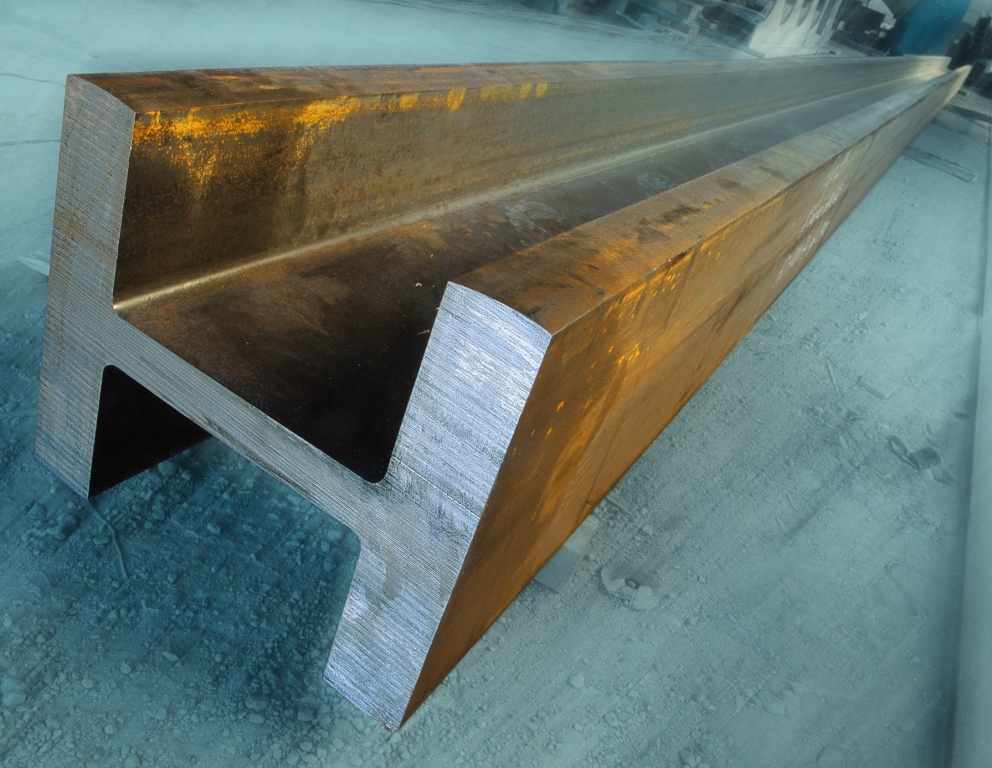
Earlier, Mechel-Service delivered 12,000 tonnes of beams for the construction of the Amur Gas Processing Plant of Gazprom (see Kallanish passim). Among the products supplied were I-beams, which have a high load-bearing capacity with a low specific weight. Its flanges distribute the load and reduce the risk of structural failure.
Mechel-Service posted a 4% on-year increase in shipments in 2020 to 1.52 million tonnes despite the impact of the Covid-19 pandemic. The company continued to supply large infrastructure projects in Russia, housing construction, construction of bridges and sports facilities.
Parent company Mechel saw first-quarter-2021 sales of long products fall 7% on-quarter and 13% on-year to 564,000t. Despite lower sales and output, revenue rose 10% on-quarter and 13% on-year to RUB 76.1 billion ($1.04 billion), while profitability rose to 24%.
Svetoslav Abrossimov Bulgaria

Assofermet formally requests review of EU safeguard system
Italian distributors’ association Assofermet has formally lodged with Italian authorities a request for a review of the EU safeguard system, which is affecting steel trade, Kallanish learns from Assofermet steel division president Paolo Sangoi.
The association noted that the request was well received by Italian economic development minister Giancarlo Giorgetti. The minister reiterated this week during the Made in Steel show in Milan that the safeguard system no longer works properly and needs revision.
Sangoi noted the negative effects of safeguard measures are visible clearly across Europe. He mentioned, for example, the long backlog at Italian ports due to the need to clear steel volumes using new available quotas. He also added that the steel distribution and processing network in Italy was forced to order from abroad due to the lack of volumes available internally.
“My group had to suffer three renegotiations of existing contracts with European suppliers during 2021,” Sangoi said, referring to the difficulties created by rallying prices and scarce availability in the domestic market.
The official European Commission document confirming the extension of safeguard measures earlier this year included the possibility of launching an annual review.
Emanuele Norsa Italy
Thyssenkrupp starts commercial supply of low-carbon steels
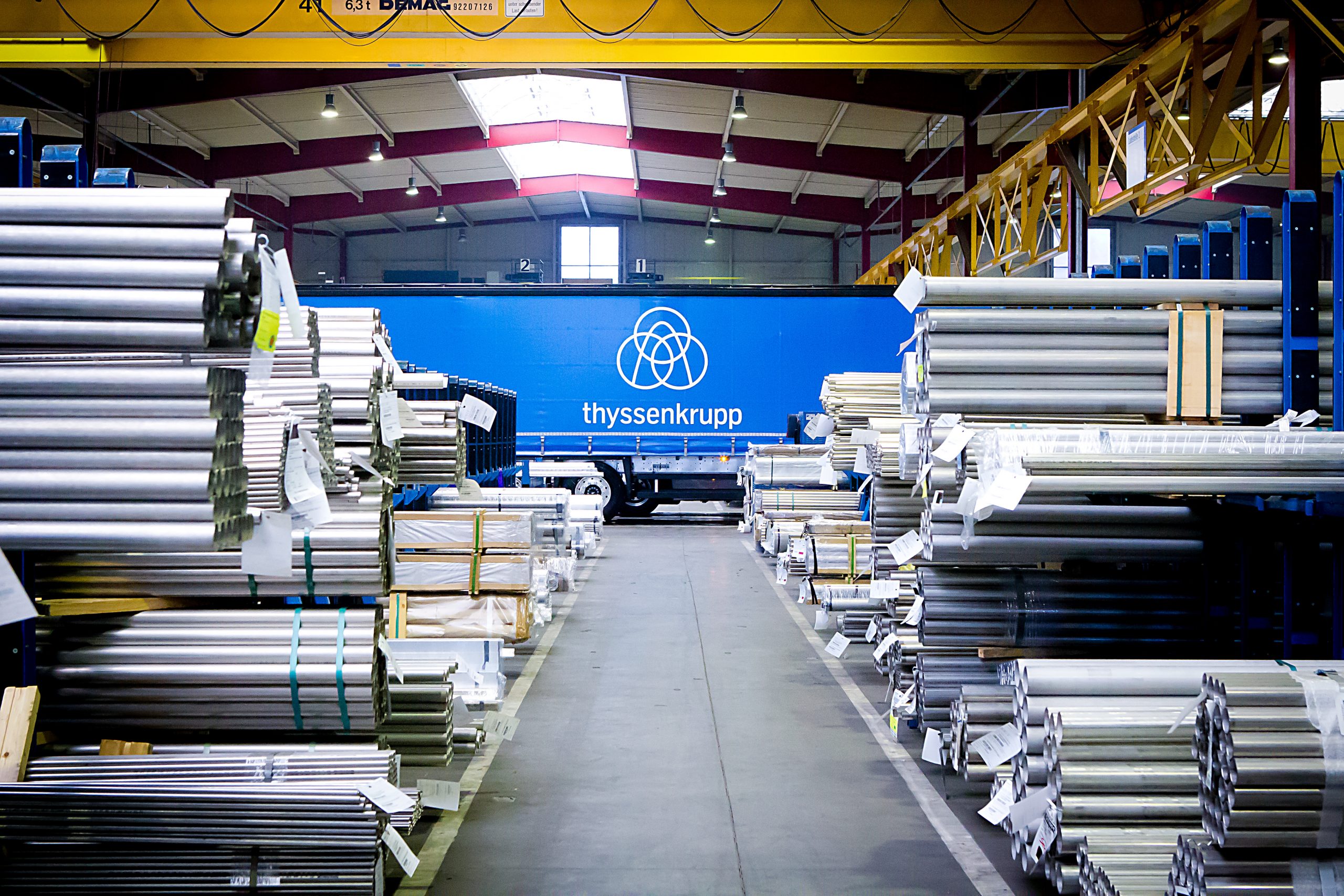
Thyssenkrupp Steel delivered on Thursday the first batches of its climate-neutral steel, which it markets under the brand name “Bluemint”, Kallanish hears from the company. The first customer to be supplied with flat steel products of the Bluemint family is German bathroom builder Kaldewei.
Through the use of hot-briquetted iron, the company claims to have reduced its emission intensity per tonne of steel by 1.5 tonnes to 0.6t of CO2, an overall reduction of 70%. The emissions of the so-called upstream chain – Scope 3, meaning emissions that occur during the production and transportation of the raw materials – are retained.
Tk underlines that the approach has been independently assured by international certification body DNV, as well as by the Wuppertal Institute for Climate, Environment and Energy, the company’s advisor to the project.
“The methodology for calculating product-related CO2 savings is in accordance with the internationally recognised Greenhouse Gas Protocol for Product Life Cycle Accounting and Reporting Standard,” confirms Priti Hoffmann, sustainability lead, Benelux at DNV.
The launch of the Bluemint product family also means the start of active marketing measures for products with an allocated low CO2 intensity. Following the contract with Kaldewei, “we will gradually expand the commercialisation of Bluemint, and have already commenced negotiations with a number of additional customers,” tk Steel chief executive Bernhard Osburg.
Christian Koehl Germany
Made in Steel participants speculate on Arvedi listing
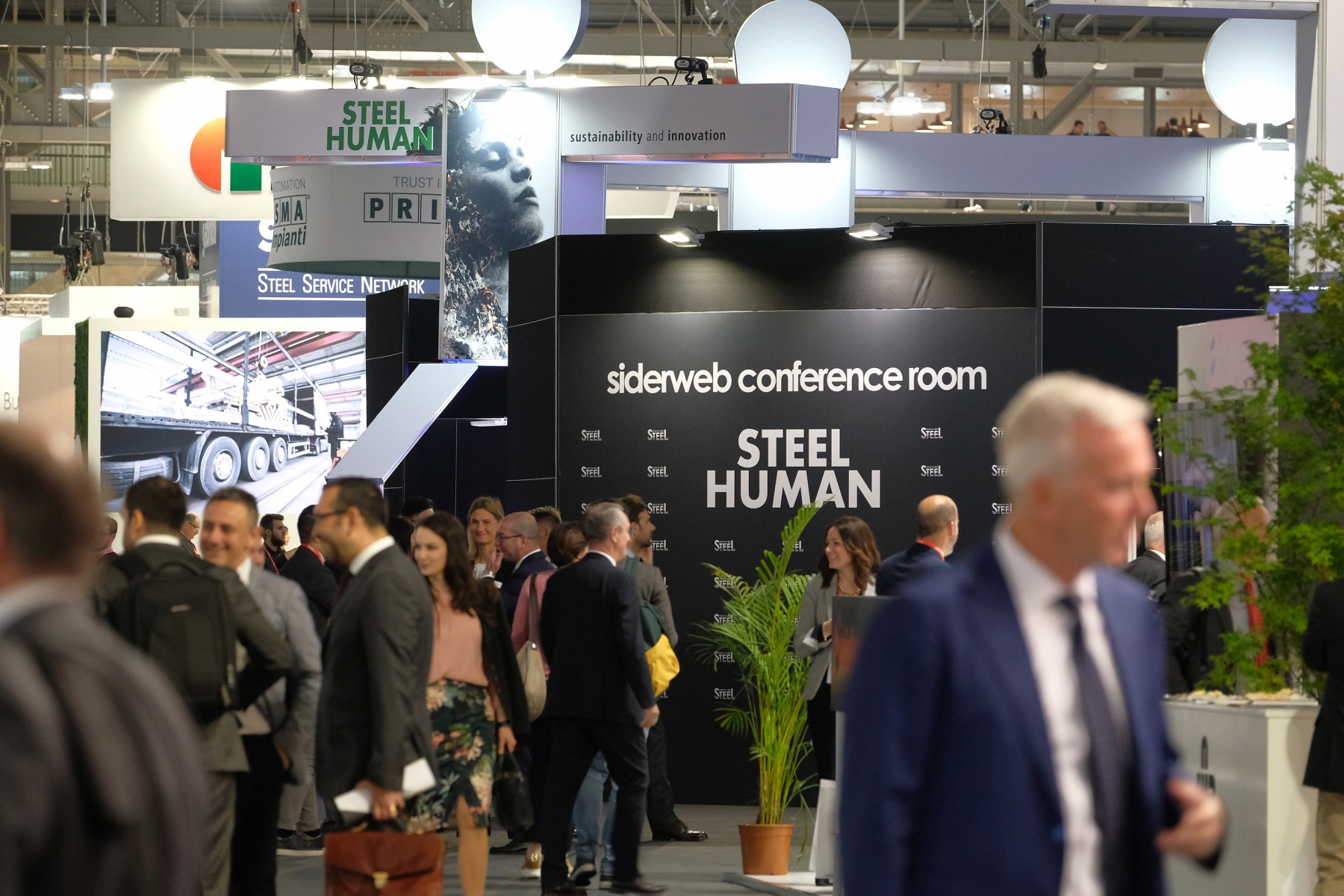
The closing for Arvedi’s acquisition of stainless steel mill Acciai Speciali Terni (AST) will happen in January 2022, Arvedi founder Giovanni Arvedi said at this week’s Made in Steel event attended by Kallanish. He did not however comment on speculation among sources that Arvedi is mulling a stock exchange listing.
Arvedi revealed that a business plan for AST will be disclosed after the closing takes place. So far, he stated, the parties are still at the “signature” phase and added that his plan is to enhance the mill’s domestic and international competitiveness.
Thyssenkrupp agreed to sell AST to Arvedi last month (see Kallanish 16 September). While no purchasing price was revealed, Arvedi is said to intend to retain the entire workforce of 2,700 people and invest a considerable sum in the steelmaking environmental footprint.
AST generated sales of around €1.7 billion ($2 billion) in fiscal year 2019/2020. Thyssenkrupp said it is examining a possible minority shareholding in the firm.
Natalia Capra France
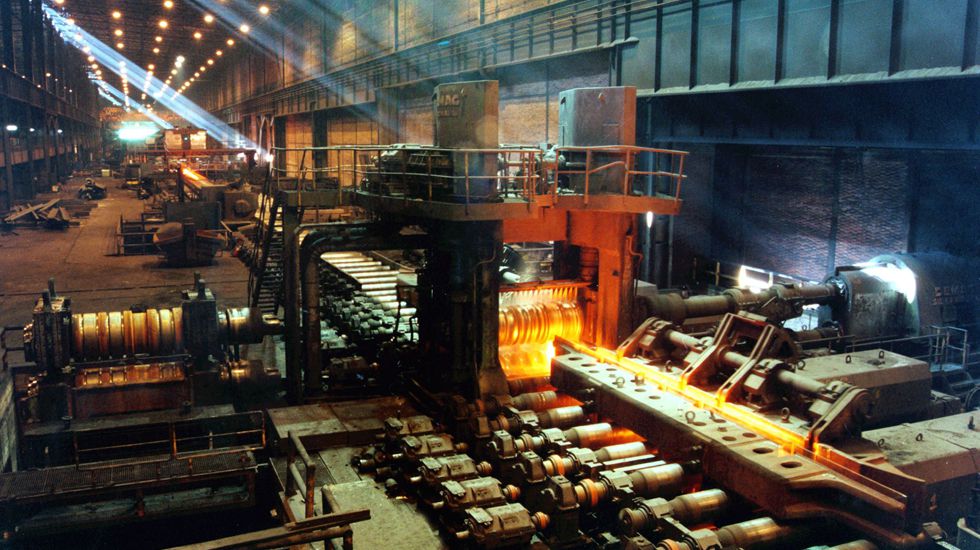
ArcelorMittal implements energy surcharge for EU longs
ArcelorMittal is telling its European clients in the long products segment that it is implementing a €50/tonne ($58) surcharge on new contracts due to surging energy costs, Kallanish learns from market sources.
The company is understood to be informing customers that it can no longer bear the increased energy costs alone. The steelmaker has been hit by the rally in both electricity and natural gas prices in recent weeks, which have added over €120/t to production cost, according to sources. Electricity prices are up to €160-200/Mwh from the usual €55/Mwh, while gas is at €100/Mwh versus €20/Mwh.
In addition to energy prices, European carbon emissions allowances have also reached new record-high prices of €64/t, severely impacting production costs for steelmakers across the continent. Moreover, ArcelorMittal’s ferroalloy suppliers have also levied surcharges of their own. The new energy surcharge is expected to remain in place until energy prices return to “normal levels”, ArcelorMittal tells customers.
While the surcharge will effectively raise ArcelorMittal’s longs prices, it is not a price increase per se. The market is still assessing the latest scrap price volatility to understand if the recent longs pricing downtrend has already reached its end.
Emanuele Norsa Italy