


Italian car production slows
Italian passenger car output decreased again significantly year-on-year in August, by 65.5%, after falling in July. Output also went down compared to the same month in 2019, Kallanish notes from local carmakers’ association Associazione Nazionale Filiera Industria Automobilistica (Anfia) preliminary data.
Passenger car output stood at 7,081 units in August. Production in August 2020 was 20,541 units, while 10,971 units were assembled in August 2019, Anfia says.
Over the first eight months of 2021, however, the country’s passenger car output increased compared to the same period in 2020. It stood at 292,904 units versus 210,918 units last year.
In full-year 2020 Italy’s passenger car production stood at 451,826 units, versus 542,472 cars in 2019.
Italy has 23 production plants. By comparison, Spain has 17 plants, France 31 and Germany 42.
Natalia Capra France

ArcelorMittal implements longs mills shutdowns amid energy costs
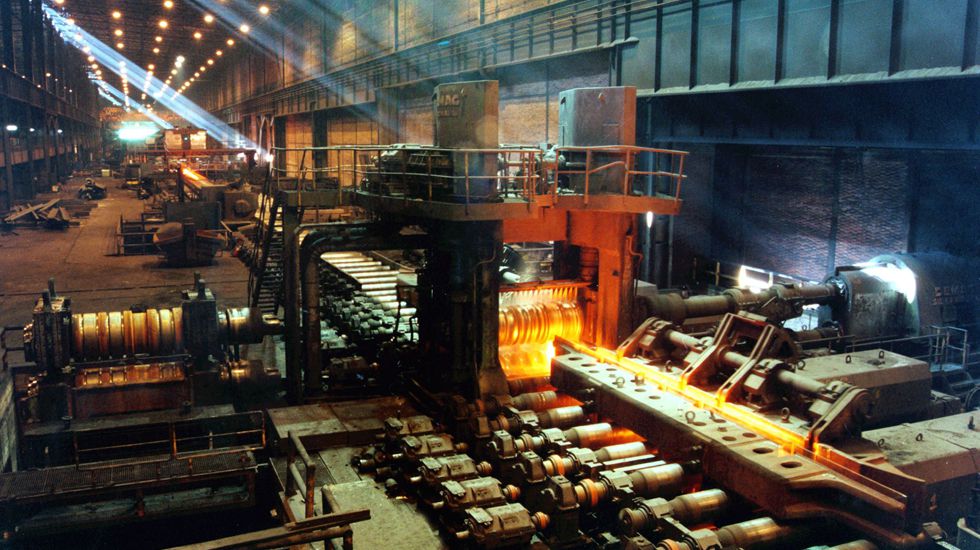
ArcelorMittal’s electric arc furnace-based mills in the European long products business are implementing selective hourly stoppages when energy costs are at their peak within the day, market sources tell Kallanish.
With spot electricity prices ranging between €170-300/MWh ($196-346), the additional cost impact for the EAF-based steelmaking process is calculated to currently be at €150-200/tonne.
The impact on ArcelorMittal’s customers of the selective stoppages has not yet been visible. However, market analysts believe the current high energy prices will continue at least until the end of the year, potentially impacting output further.
Last week, ArcelorMittal informed its clients of the application of a €50/t energy surcharge for all new sales and contracts for long products in Europe.
Italian and Spanish EAF-based steelmakers recently confirmed being in the process of implementing similar selective stoppages.
ArcelorMittal Longs Europe operates production units in a number of European countries, including Luxembourg, Germany, Spain, France, Poland, Bosnia and Romania.
Emanuele Norsa Italy

Spain’s Sidenor to halt steel production for 20 days as electricity prices soar
Spanish steel group Sidenor will halt steel production for 20 days, or about one third of the remaining working days in 2021, due to soaring electricity prices, the company said Oct. 11.
Sidenor specializes in long steel products and operates four steel production units in the Basque and Cantabria regions of Spain with over 1.5 million mt/yr capacity as well as a forging unit, two bright steel units and two scrap collection and processing units.
The company’s 740,000 mt/yr Basauri plant will be the most affected because of the production cut, although other plants will also feel the impact progressively, it said.
Spanish power prices have hit record highs due to soaring gas prices. Spain’s large power consuming industries received subsidized prices due to interruptible contracts phased out in 2020.
Electricity costs jumped to Eur227/MWh in October, from Eur60/MWh a year earlier, and are expected to rise further to Eur284/MWh in November, Sidenor said in a note on its website.
High electricity prices were adding Eur200 in costs for each mt of steel produced, Sidenor said.
In March, the steelmaker signed a power purchase agreement with energy group Naturgy to acquire 350 GWh per year of renewable energy, equivalent to producing around 600,000 mt/yr of steel, according to S&P Global estimates.
— Gianluca Baratti

Arvedi accelerates Servola cold rolling area investment
Italian steelmaker Acciaierie Arvedi is investing in two strip processing lines at its Ferriera di Servola plant in Trieste, north-east Italy. Equipment maker Danieli will supply the two mills next year and they are scheduled to go into operation by end-2022, Kallanish learns from Danieli.
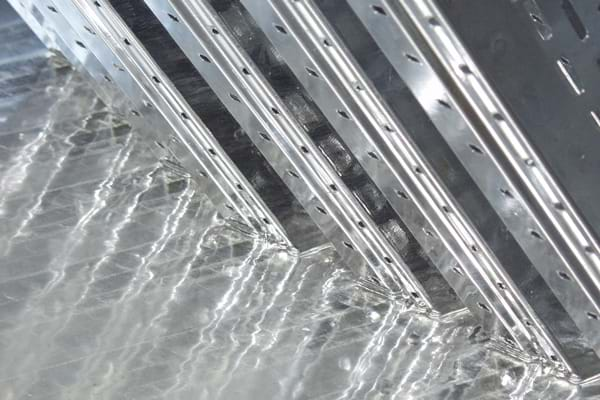
The hot-dipped galvanising line will process 200,000 tonnes/year of coils of a weight up to 30 tonnes and will operate at a speed of up to 200 meters/minute. “The furnace will handle cold-forming, structural, micro-alloyed and hot-rolled strip steel grades,” Danieli reveals in a note. “The 0.15-0.25-mm strips will be processed using only the radiant tubes section, not with the direct-flame section. Thanks to low-NOX burners and a DeNOX/waste gas heat-recovery system, the plant will operate at the lowest emissions levels.”
The lines will be integrated into a digital predictive quality system that enhances control through each production step, it adds.
Arvedi is massively investing in the conversion of Ferriera di Servola, boosting the cold-end area. This comes after the shutdown, which begun this year, of the hot-end, former pig iron plant for which dismantling will be completed by the end of the year.
Arvedi is looking to invest a total of €320 million ($369m) for the plant conversion supported by government investment entity Invitalia, the region of Lombardy and the region of Friuli Venezia Giulia.
Servola currently has a pickling line and cold rolling mill. Arvedi already secured a “green loan” of €240m from a pool of banks. The funding is in line with the Green New Deal for Europe, the European plan that promotes industrial sustainability and circular economy (see Kallanish passim).
Natalia Capra France