

Energy-intensive industries’ joint statement ahead of EUCO: EU urged to take swift action in order to tackle unprecedented energy crisis
Ahead of the European Council meeting, industry calls for immediate support to address the skyrocketing energy prices which endanger the post pandemic recovery, coupled with structural measures securing the affordable low carbon energy required to meet the objectives of the EU Green Deal.

TK Materials to build new steel service center at SDI Texas plant
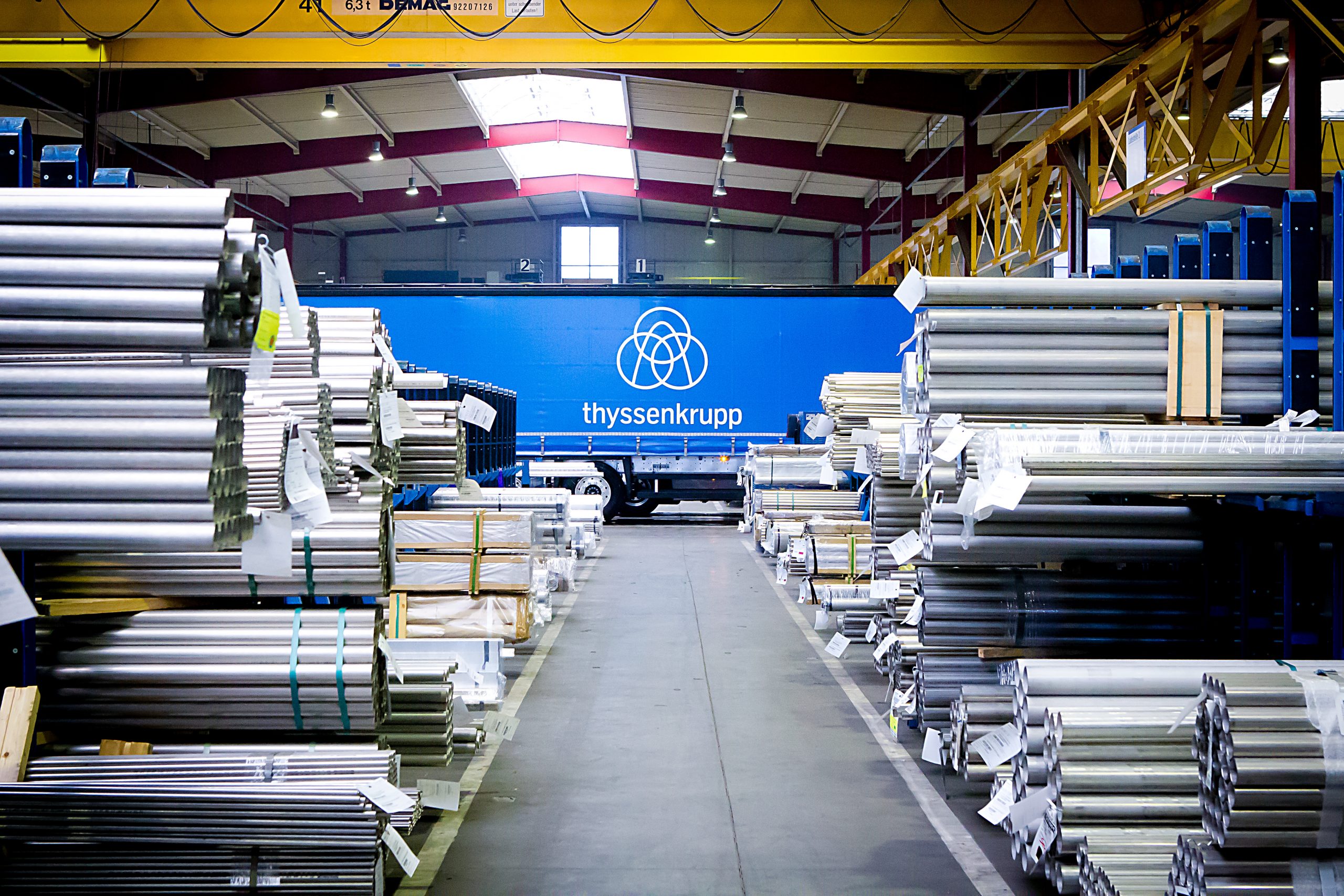
Thyssenkrupp Materials is setting up a new steel service center at the site of US steel producer Steel Dynamics’ new mill in Sinton, Texas, and is expanding further at existing service sites in the US, it said Oct. 19.
Thyssenkrupp Materials will manage the supply chain between the steel plant and individual OEMs — in particular for the automotive industry. The investment of around Eur28 million includes a building with an area of 14,000 sq.m and processing equipment for slitting and cut-to-length of flat steel.
The Sinton mill is still under construction and Steel Dynamics said steel output at the site is expected before the end of 2021 with production of 2 million-2.2 million st in 2022.
Thyssenkrupp Materials is investing over Eur70 million in the expansion of its service business in total in the US.
The company is also expanding capacities, processing and supply chain services at its steel service centers in Alabama, Wisconsin and Tennessee, looking to expand further to gain greater market share in the industry.
“We now want to use our affinity for services in particular to improve our market position even further — if possible also with further acquisitions. Today we are already number three in America. That is not enough for us,” the company’s chairman Martin Stillger said.
Business in North America alone accounts for around 25% of total sales of Thyssenkrupp Materials globally. The North America business sources material from local suppliers to keep transport routes and costs low, a Thyssenkrupp Materials spokesperson told S&P Global Platts.
Thyssenkrupp Materials in Europe sources around 10% of its steel from the Thyssenkrupp Steel Europe mills in Germany which are primarily distributed to the German market.
Thyssenkrupp Materials is the distribution arm of German’s Thyssenkrupp.
— Laura Varriale

Hyundai eyes semiconductors production to reduce shortages
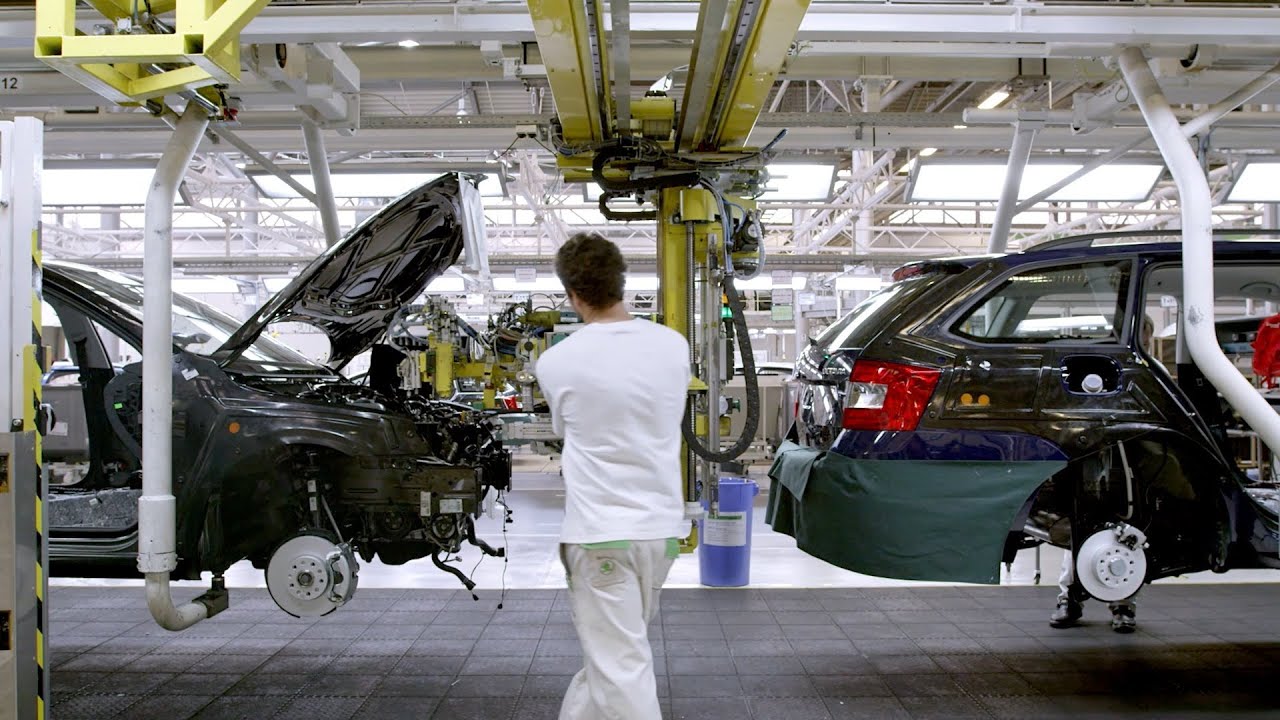
South Korean carmaker Hyundai Motors plans to develop its own semiconductor production to reduce dependence on suppliers, says global chief operating officer Jose Munoz.
“The industry on chips is responding very, very quickly,” Munoz said in a Reuters interview. “Intel is investing a lot of money to expand capacity and in our case, too, we want to be able to develop our own semiconductors within the group, so that we are less dependent in another similar situation.”
Although Hyundai has suspended operations at some plants, Munoz said the worst of the crisis was over, adding that for the carmaker, the hardest months were August and September, Kallanish notes.
The Hyundai Mobis component unit will play a key role in the implementation of this plan. “Hyundai aims to increase car deliveries in the fourth quarter to the level of its business plan and to compensate for some of the production losses,” he added.
Along with Toyota and Tesla, Hyundai is among those carmakers that have increased global sales despite chip shortages.
In September, low semiconductor deliveries forced Ford, General Motors, BMW, Volkswagen Audi, Opel, Nissan and Volvo to halt some production sites (see Kallanish passim). Russian carmakers were also hit by the supply disruptions.
The global automotive sector has rebounded strongly since the initial Covid-19 lockdowns last year but supply chain disruption is constraining further growth, worldsteel said last week.
Global semiconductor shortages will cost the worldwide automotive industry around $210 billion in lost revenue this year, shows the latest forecast of consulting company AlixPartners. The consultancy is now forecasting that vehicle production of 7.7 million units will be lost in 2021.
Svetoslav Abrossimov Bulgaria


European stainless flats shortage pushes prices up again
Tight European stainless steel hot and cold rolled coil supply is worsening amid slow sheet and coil derivative deliveries. Prices are increasing again on account of costly nickel and alloy surcharges, ferrochrome and other raw materials, market participants tell Kallanish.
All European coil producers are now quoting lead times till May 2022, while only one steelmaker is quoting April but solely for its existing customers. Because of the high cost of energy, European producers are increasing their base prices versus September, and adding daily and monthly alloy surcharges.
European stainless HRC is offered at €3,800-3,900/tonne ($4,426-4,542) delivered on average. Stainless CRC contracts for European material now start at €4,100/t delivered, including alloy surcharges, depending on material quality and volumes.
There are no import offers reported that would ease the tight coil supply. Indonesian producers are supplying Chinese buyers and have very little availability for Europe, while Taiwan and other regions have no extra product to offer as they are dealing with tight supply in their own domestic markets. As prices escalate, European buyers’ main concern remains the ability to procure material.
Stocks of flats and tubes are said to be low throughout Europe. Moreover, Italian re-roller Marcegaglia’s main stainless pickling line at its Gazoldo degli Ippoliti facility caught fire earlier this week and will be idled for some time, the company confirms. While no fatalities were reported, production will be strongly affected and deliveries will be significantly slowed.
Natalia Capra France
EU traders highlight rising coil import sentiment
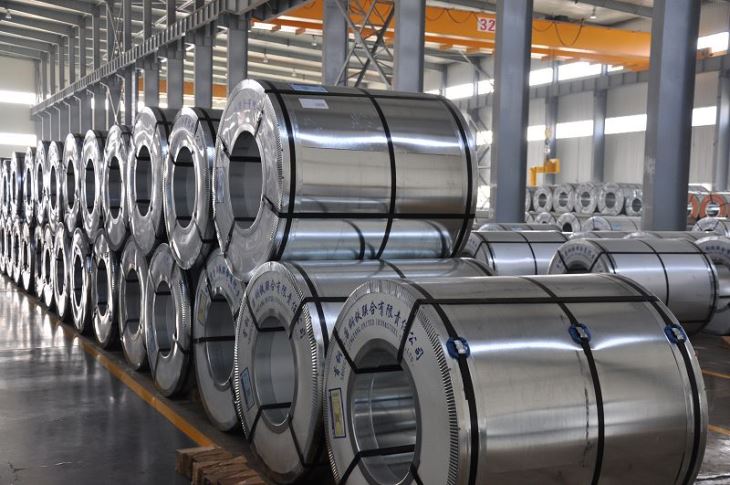
Traders active in coil imports into Europe have highlighted rising sentiment this week, mainly supported by the Turkish and CIS markets.
According to Kallanish price series, import transaction prices for hot rolled coil into southern Europe dropped during August and September. Levels are now seen recovering from the low reached at the start of October.
“Turkish suppliers are trying to raise their offers on a weekly basis, particularly for CRC and HDG,” a trader notes. He reports hearing CRC from Turkey quoted at €1,020/tonne ($1,188) cfr southern Europe, but adds this level could well move up in the coming days.
Another trader confirms the rising sentiment. He believes this will ease pressure on European domestic mills in the coming weeks.
Indian suppliers of HRC are reported to be silent at the moment, having rapidly filled EU import quotas for the fourth quarter. Turkish suppliers are offering HRC at €920-930/t cfr Italy, but some believe transaction prices might be somewhat lower. From Ukraine, offers for HRC are at below €900/t cfr Italy, but still recovering from lower levels registered in early October.
Emanuele Norsa Italy
How the EU CBAM will shape emissions costs
On 14 July 2021, the European Commission (EC) put forward a package of proposals in order to achieve its ambitions related to climate change.
These include a proposal to revise the EU Emissions Trading System (ETS) and a proposal to implement a Carbon Border Adjustment Mechanism (CBAM), which would both impact the primary aluminium sector. As scope 2 emissions are excluded from the CBAM coverage, the proposals impact primarily the outlook for scope 1 emissions costs calculations.
Free allocation to be gradually phased out from 2026
The CBAM addresses the so-called risk of ‘carbon leakage’ and is an alternative to the system of free allocation put in place in the EU ETS. As such, the proposals provide that free allocation under the EU ETS will be gradually phased out from 2026, as the CBAM is phased in. More precisely, a factor of 0.9 will be applied to free allocations in 2026, which will decrease by 0.1 each year as shown in the table below. This means free allocation will be completely phased out by 2035, and by this time, industrials will have to pay for all of their emissions.

This directly impacts the outlook for scope 1 emissions costs, as all the emissions that a smelter produces which are not allocated for free need to be auctioned.
The table below shows the average scope 1 emissions across smelters operating in the EU ETS, as well as the outlook for the average amount of free allocations, as calculated according to the EU ETS regulations and taking into account the CBAM factor. By 2031, free allocations would represent 36% of all scope 1 emissions, which means smelters would pay for 64% of their scope 1 emissions, on average. With an EU Allowance (EUA) price of $60/t CO2e, the average scope 1 emissions cost would be around $74/t Al.

The chart below shows CRU’s base case forecast for the average scope 1 emissions cost across European smelters out to 2031, as well as what would be the outlook if no CBAM factors were applied.

Benchmarks update for the 2025-2030 period
The proposal to revise the EU ETS does not change the basic rules for calculating the free allocations received by smelters. Free allocation is based on benchmarks representing the level of performance of the best-in-class installations, within the industry. Benchmark values have been published for the 2021-2025 period, i.e. the first sub-phase of the EU ETS phase 4. However, the benchmark values for the second sub-phase running until 2030 still need to be assessed and published.
The EC’s recent proposal to revise the EU ETS provides that the maximum annual reduction rate for the benchmark values will increase from 2026, to 2.5% instead of the 1.6% currently in place. This maximum rate applies to all industries, and the actual rates applying for the aluminium industry may be lower and depend on how best-in-class installations improve performances in terms of emissions. In CRU’s base case, as shown above, the values of 1.416 and 0.302 have been used for the electrolysis benchmark and pre-bake anode benchmark, respectively, for the 2026-2030 period. They correspond to a 0.7% annual reduction rate relative to the benchmark values applied during the 2021-2025 period.
Learn more about our emissions data and analysis.
Author: Caroline Alglave Senior Analyst
