


Stahlverbund PHOENIX – Beflügelt in den Herbst

Ob die Gewinnung neuer Fachhandelspartner, die Stärkung des Netzwerkes oder weitere Tonnagezuwächse – all diese und noch viele weitere Ziele hat der Stahlverbund PHOENIX trotz der Corona-Einschränkungen erreicht. Das spiegelt sich sowohl in Tonnage als auch im Geschäftsvolumen wider. Mit weiteren Lockerungen und einem verbindlichen, vorsorglichen Hygienekonzept werden Aktivitäten zudem wieder vermehrt ins „echte Leben“ verlagert.
„Wir haben euch vermisst!“
„Es hat sich wie ein Klassentreffen angefühlt“: mit dieser Aussage eines Handelspartners lässt sich die Stimmung bei der ersten Präsenzveranstaltung des Stahlverbunds seit 790 Tagen ziemlich genau auf den Punkt bringen. Am 31. August 2021 war es soweit. Rund 150 Gäste aus dem In- und Ausland, dem Kreise der Handels-und Lieferantenpartner, kamen in Dortmund zusammen – natürlich begleitet durch ein modernes Hygienekonzept. Lockerer Austausch, ein Status-Update zur geschäftlichen Entwicklung von NORWDEST und ein spannender Vortrag von Branchenkenner Andreas Schneider (Stahlmarkt Consult) standen im Mittelpunkt des Tages, der von vielen herbeigesehnt wurde – versprach er doch ein Stück weit wiedergewonnene Normalität.
Weitere Aktivitäten fest vor Augen
Ende Oktober findet das Treffen der Silber-Fachhandelspartner des Stahlverbunds statt. Gezielt wird auch die Mailänder Messe „Made in Steel“ dahingehend genutzt, spezifische Gespräche mit den bestehenden sowie potentiellen neuen Fachhandels- und Lieferantenpartnern zu führen. Die Wahlen für den Stahlbeirat und die Produktausschusssitzungen finden ebenfalls im Herbst statt. Dabei bestimmen die Handelspartner des Stahlverbunds in Eigenverantwortung ihre Vertreter in den entsprechenden Gremien: Die ist Basis des NORDWEST-Vertrauenskonzeptes.
Ein sogenannter Stahltisch, ein virtueller Stammtisch zum Austausch von Branchenneuigkeiten, wird demnächst monatlich stattfinden. Und auch für 2022 gibt es schon Pläne: Dann will der Stahlverbund PHOENIX auf der Tube & Wire in Düsseldorf mit einem Stand vertreten sein.„Bei all dem, was wir tun, behalten wir den Netzwerkgedanken im Fokus. Pandemiebedingt waren uns Präsenzveranstaltungen leider nicht möglich, wir konnten aber trotzdem den Funktionen des Stahlverbunds und unseren Aufgaben nachkommen. Umso mehr freut es uns, dass wir Handels- und Lieferantenpartner nun wieder live erleben dürfen“, erklären Claudio Kemper und Christopher Rüther, beide Geschäftsbereichsleiter Stahl.
Rekordjagd auf die Tonnage
Von Rekord zu Rekord jagt die über den Stahlverbund PHOENIX abgewickelte Tonnage per Juli 2021. Sie konnte somit entgegen aller Prognosen in nahezu allen Produktbereichen gesteigert werden: Mit 1.258 T to liegt sie +7,0% ggü. VJ. Das daraus resultierende Geschäftsvolumen für den Bereich Stahl lag damit bei 1.153 Mio. € und +47,5% ggü. VJ.
„Neben der positiven Bestandskundenentwicklung konnten wir in den vergangenen Monaten vier neue Fachhandelspartner in den Stahlverbund integrieren. Zusätzlich konnten auch weitere Bezugsquellen erschlossen werden“, erklären die bei den Geschäftsbereichsleiter.
Ein Motor der Entwicklung ist das außergewöhnliche und volumengestiegene Importgeschäft im Bereich Edelstahl/Rostfrei. All diese Entwicklungen lassen den Stahlverbund PHOENIX beflügelt in den Herbst starten.
Quelle und Foto: NORDWEST Handel AG
18.10.2021 von Hubert Hunscheidt

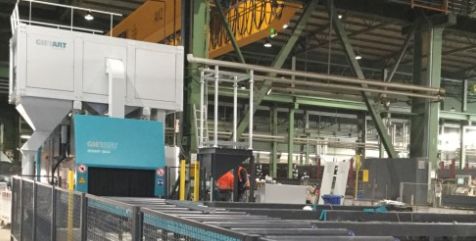
Spain’s crude steel production slows in August
Spanish steel sector activity has slowed after a strong recovery in the first half of this year. Production fell sequentially for the second consecutive month in August, amid the summer holiday season, reaching its second-lowest volume so far this year, Kallanish notes.
According to Spanish steelmakers’ association Unesid, the local steel industry produced around 1.05 million tonnes of crude steel that month. This was 3.6% down over July’s output of 1.09mt but 48% higher on-year, and also 2% more when compared to the pre-Covid-19 August 2019.
Crude steel production in August was just 20,000t above the 2021-low in January. During the first eight months of the year, Spanish monthly output ranged from 1.05mt to 1.35mt, data show.
Year-to-date through August, the country’s crude steel production reached 9.57mt. Unesid did not disclose an on-year comparison in its latest report, but taking worldsteel figures into account, the growth is estimated at 43.8%.
Spain used 857,000 tonnes of ferrous scrap for steelmaking in August, up 4.6% month-on-month. This volume was also up 36% and 19% over the same month in 2020 and 2019, respectively. Cumulative scrap usage was 7.56mt, representing 79% of total crude steel production in the eight-month period.
Todor Kirkov Bulgaria

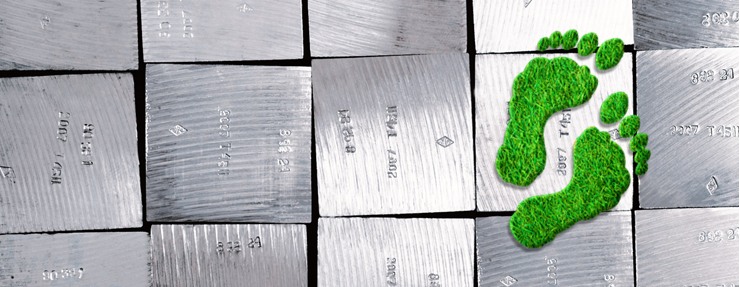
European nickel-bearing stainless surcharges set to be lower for November
Monthly alloy surcharges on nickel-bearing stainless steel flat-rolled products in Europe are set to fall for the first time in six months in November, the first mill announcement indicated Oct. 21.
Finland’s Outokumpu, the continent’s largest stainless steel producer, set its alloy adjustment factor for type 303 (4301) flat products at €2,187/mt ($2,545/mt) for November, down €6/mt from October — the first month-on-month fall since May.
Three-months nickel prices on the London Metal Exchange hit seven-year highs above $20,000/mt on Sept. 10 before dropping sharply to three-month lows below $18,000/mt by the end of the month. Prices have subsequently recovered in October, breaching $21,000/mt this week.
Outokumpu’s surcharge for molybdenum-bearing type 316 (4401) flat products was set at €3,383/mt for November, down €43 from the previous month.
Molybdenum oxide prices surged above $20/lb to their highest levels in almost 13 years in early September on the back of tight supply and healthy demand. Prices subsequently eased back to hit two-month lows in early October; as of Oct. 21 the Platts daily oxide assessment stood at $19.10-$19.70/lb.
Outokumpu’s surcharge for nickel-free type 430 flat products is up €15 for November to €980/mt.
Ferrochrome prices have strengthened in recent months, with the European benchmark ferrochrome price settling at 180 cents/lb for the fourth quarter of 2021, up 15% from the third-quarter rollover level of 156 cents/lb.
— Andy Blamey

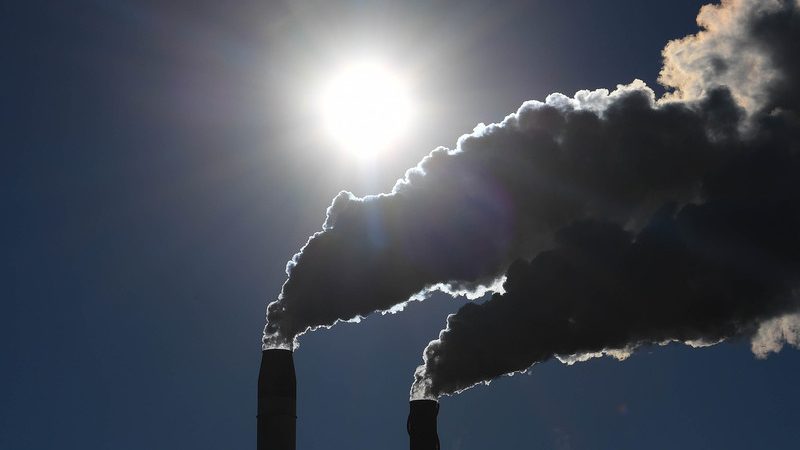
Miele joins premium brands sourcing Salzgitter low-emissions steel
Germany’s Salzgitter said Oct. 21 it will start supplying low-emissions certified steel to German appliance maker Miele Group, starting next month, for a pilot program.
Miele is seeking to reduce its carbon emissions footprint, and from November plans to source just under 24 mt/month of low CO2 steel for use in tops of stoves and ovens with a diameter of 60 cm, the company said in a statement.
High-end appliance manufacturer Miele joins other premium German brands like Mercedes-Benz, Bosch, Siemens, Gaggenau and Neff testing low-emissions steel from Salzgitter to meet sustainability targets and appeal to certain consumers.
“Green steel products are eliciting ever keener interest from our customers operating in a wide range of sectors,” Ulrich Grethe, CEO of Salzgitter Flachstahl said in the statement. “We are pleased that our low CO2 steel products meet the company’s [Miele] high quality standards.”
The steel will come from Salzgitter Group’s Peine electric arc furnace, and will be rolled and galvanized at the Salzgitter Flachstahl works in central Germany, it said. Salzgitter is offering steel produced from ferrous scrap, with certified emissions reductions compared with higher emissions from blast furnace-based steel, ahead of future plans to use green hydrogen and direct reduction iron to replace coal and met coke and slash emissions further.
“The CO2 emissions generated by the manufacturing process are reduced by more than 66% in this material through harnessing climate compatible sources of energy and steel scrap,” it said. “In taking this step, Miele is making a first contribution to lowering emissions in the domain of purchased goods and services (Scope 3.1) and taking an important step toward implementing its ambitious sustainability goals.”
Before the end of 2021, Gutersloh-based Miele will be operating in a carbon neutral manner across all its locations in terms of Scope 1 and Scope 2 greenhouse gas emissions, while it targets by 2030 lowering its emissions from the utilization phase of Miele appliances by 15%, which accounts for a major part of its Scope 3 emissions, it added.
The steel from ferrous scrap cuts the carbon footprint of galvanized steel by 66% compared with the conventional production of steel via the blast furnace route, as verified by TUV SUD using 2018 data for comparisons, it said.
— Hector Forster

Turkish HDG exports soar on EU demand, dumping probe raises concerns
Demand from European countries, particularly from southern Europe, continued to support Turkish mills’ coated coil exports, however the EU’s dumping probe on Turkish HDG has begun to raise some concerns among European buyers in recent weeks, sources told S&P Global Platts.
The European Commission (EC) opened an investigation into hot-dip galvanized coil imports from Turkey and Russia on June 24, alleging imports of certain corrosion-resistant steels originating from these countries were being dumped, as Platts has reported.
Pre-disclosure of the investigation is expected on Dec. 24, while provisional measures, if any, will be imposed by the EC until Jan. 24, 2022, informed industry sources told Platts. Definitive measures could be announced on July 20, 2022.
EU customers have begun to ask in recent weeks if they can share any dumping duty amount with Turkish sellers, if provisional duties will be imposed in the New year, according to a Turkish source. Turkish mills have been offering for late-December, January.
Turkish mills exported 1.43 million mt of coated coil to global markets in widths of 600 mm and above in January-August, 300,000 mt higher on year, according to the latest monthly Turkish Statistical Institute (TUIK) data observed by Platts.
EU countries remained Turkey’s top coated coil export destinations by far in that period, despite the dumping investigation opened in June.
Spain was Turkey’s main coated coil buyer in January-August, importing 365,800 mt, while Turkish mills’ coated coil exports to Italy reached 117,700 mt, both, 67% higher on year.
Portugal imported 124,200 mt of coated coil from Turkey in the eight-month period, more than double on year, while Belgium was Turkey’s other main coated coil buyer importing 116,400 mt, down 32% on year.
Turkish mills’ other coated coil export destinations in January-August were: Romania (82,400 mt), Greece (77,900 mt), UK (63,500 mt), US (51,600 mt), Ukraine (52,400 mt), Bulgaria (45,800 mt) and Canada (43,200 mt), the latest data showed.
— Cenk Can

European HRC in stalemate, demand improves further in South
European HRC prices remained stable Oct 21, with some slight increases in Italy after a deal was confirmed at Eur930/mt ex-works Italy. One Benelux-based source said it was likely we would see an increase in Q1 dependent on the viability of demand. Demand was still rather tepid, with more availability seen on hot-rolled coil versus cold-rolled coil and hot-dip galvanized, sources told S&P Global Platts.
Platts assessed North European HRC prices stable at Eur1025/mt ex-works Ruhr and in southern Europe, the price was assessed up Eur2/mt to Eur927/mt ex-works Italy Oct. 21.
“Everyone that is quiet is searching for demand and orders,” the same source said. “Demand is rather slow, but there is more material of every coil comparable to a month ago.”
On imports, the same source had heard of production problems in China and India due to energy costs, with the likelihood they would close some production lines for a several days.
Several mills across Europe have also been contending with returned orders initially promised to the automotive sector, leading to a glut of material in Italy.
Prices for HRC were heard between Eur1000-1025/mt ex-works Ruhr, and for CRC and HDG prices were heard between Eur1160-1200/mt ex-works Ruhr.
As productivity is set to increase in Q1, the market remains mixed about pricing direction, with some expecting stability, and some seeing the availability situation translating to lower prices.
As energy costs continue to rise, there has been a spark of bullish pricing sentiment from those who expect the cost of producing steel to increase, with uncertainty about how mills will be able to manage the cost of electric arc furnace (EAF) production for the future.
— Amanda Flint

EU skips India/Indonesia stainless duty, imposes electrode duty
The EU has decided not to impose anti-subsidy duties on imports of stainless steel cold-rolled flat products originating in India and Indonesia. This goes against the expectations of European steelmakers’ association Eurofer.
In May, the EU imposed 13.6-34.6% anti-dumping duties on imports of stainless steel cold-rolled flat products from India and Indonesia, a move which Eurofer welcomed, adding that it expects anti-subsidy measures to follow (see Kallanish passim).
Separately, the EU has imposed a provisional anti-dumping duty on imports from China of graphite electrodes used for electric furnaces falling under HS code 8545 11 00. The duty rates applicable to the net, free-at-Union-frontier price, before duty, are 17.5-66.5%, depending on company (see table).
| Company | Duty rate |
| Fangda group composed of four producers: Fangda Carbon New Material Co., Ltd; Fushun Carbon Co., Ltd; Chengdu Rongguang Carbon Co., Ltd; Hefei Carbon Co., Ltd | 24.5% |
| Liaoning Dantan Technology Group Co., Ltd. | 17.5% |
| Nantong Yangzi Carbon Co., Ltd. | 24.5% |
| Other cooperating companies | 21.6% |
| All other companies | 66.5% |
Adam Smith Germany
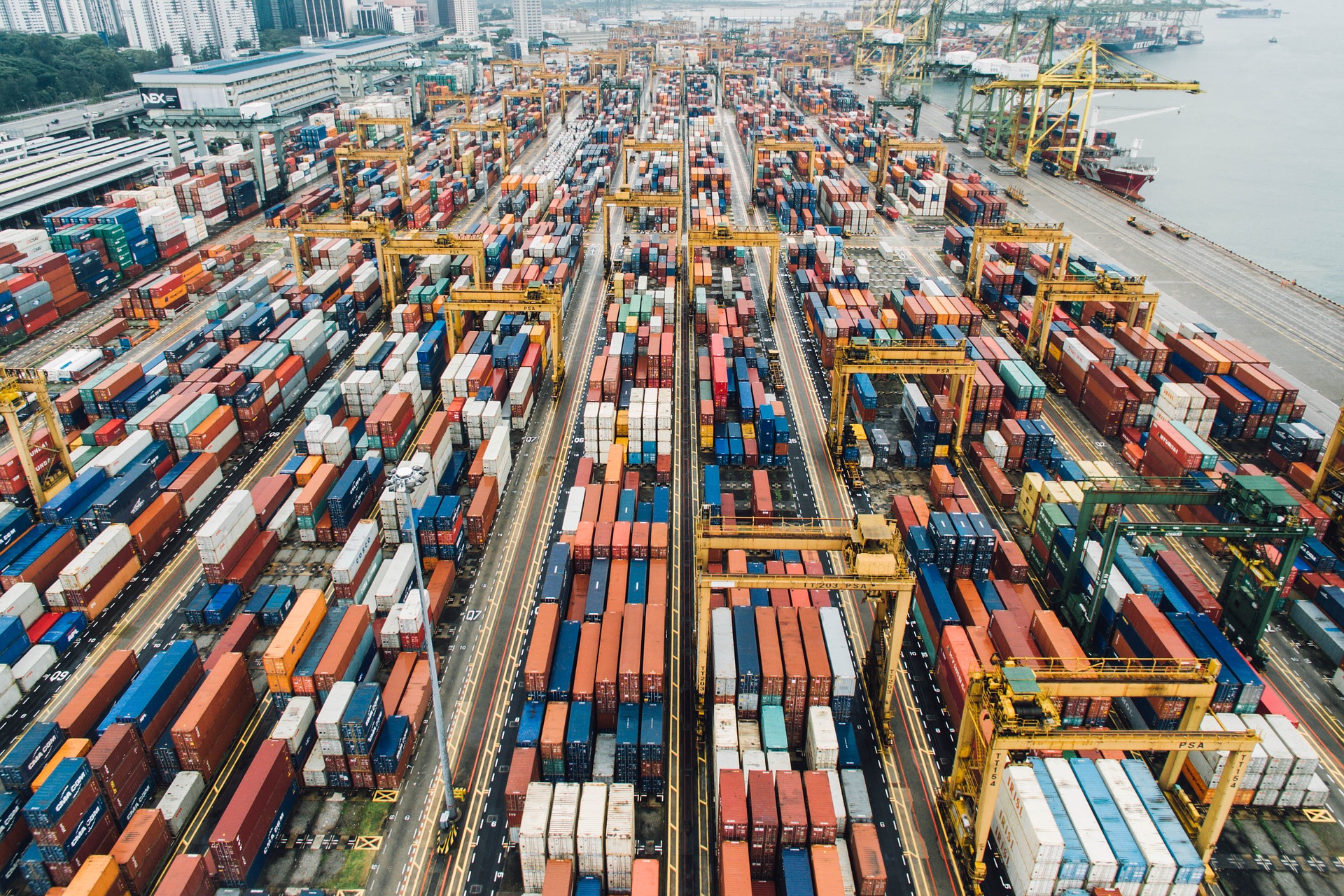
China’s steel production to sustain, exports will decline
China’s steel production could remain at around 1 billion tonnes/year for the next ten years, but large volumes of steel exports will no longer be allowed, according to China Iron & Steel Association chief economist Wang Yingsheng.
At a conference held earlier this week, Wang Yingsheng said he believed the industrial foundation of the domestic steel industry will remain basically unchanged in the next ten years. The dual limitation on Chinese output that comes from energy consumption and peaking carbon, as well as the move towards carbon neutrality mean China’s steel industry no longer attaches great importance to exports, he added.
Under the requirements of industrial upgrading, China hopes to end low-end steel exports, Kallanish notes. The export peak for China’s steel industry was in 2015, when steel export volumes exceeded 110 million tonnes for the year.
Meanwhile, the economist also said that crude steel production needs to be controlled within 2.5 million tonnes/day for the remainder of this year, in order to meet the target of stabilising steel output on-year. China’s National Statistics Bureau data show crude steel output increased by 2% year-on-year to 805.88 million tonnes by end-September.
In order to match the 1.065 billion tonnes of output seen in 2020, production in October-December needs to be limited to within 259mt, which means 86.3m t/month on average. Based on September output of 73.75mt, China should not only easily reach the goal of not increasing crude steel output, but may even see a decrease in output. Winter output restrictions and power shortages are expected to continue, but pressure to meet China’s annual target is easing.
By Kallanish Team