

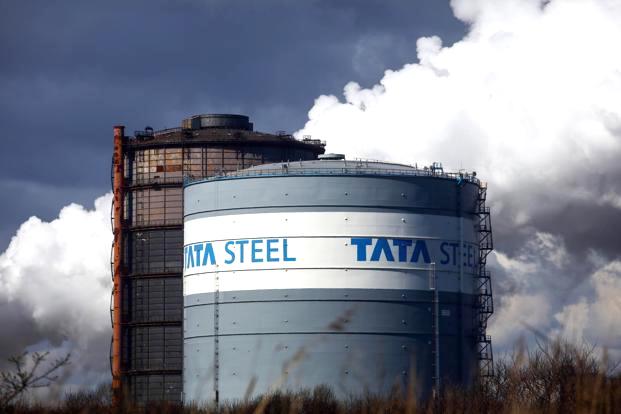
Tata Steel installs 30MW generator at Port Talbot to reduce carbon emissions
European steelmaker Tata Steel has installed a 30-MW generator at its Port Talbot plant in South Wales to improve environmental efficiency and reduce carbon emissions, it said Oct. 25.
The generator will provide a number of environmental benefits, it said, as more process gases from the blast furnaces, steelmaking plant and coke ovens could be converted into useful energy, reducing emissions from external power generation by around 43,800 mt/year of CO2.
In addition, the installation will reduce Tata’s energy bill by millions of pounds per year at a time when rising energy prices are a major concern for steelmakers.
Gas and power prices have risen up to five times higher than a year ago, with heavy industries that are most exposed to such price spikes, including some steelmakers, being forced to react by temporarily shutting down plants.
Tata’s new generator is part of its wider GBP37 million ($51 million) investment in the Port Talbot site’s power station and was installed in the new turbine hall.
The power plant uses process gases to heat water into steam to drive a turbine, which in turn drives an electrical rotor to generate electricity, Tata Steel’s Project Manager Guy Simms explained.
“We have a number of these ‘turbo-alternators’ but not enough to use all the steam we can create. This latest addition, energy, however, will make a step-change to our energy-generation capacity. We’ve been hot commissioning the plant and have run it up to its capacity of 30 MW,” Simms added.
In September, climate research house Industry Tracker called on steel companies to rapidly shift their business models to reach net zero, saying that the European steel industry has less than 26% (12%-35%) of its carbon budget remaining.
— Jacqueline Holman

Swedish steelmaker SSAB studies accelerating low-emissions steel supplies
Swedish steelmaker SSAB said Oct. 25 that there is “great interest” from customers for low-emissions steel, while bringing on more supplies will need developments in power transmission, permitting and supportive steel market policies.
SSAB said it continues to study accelerating its offering of commercial low-emissions supplies, currently targeted by 2026, in a quarterly report. The move is contingent on electric arc furnaces (EAFs) being installed at Oxelosund in southern Sweden and at its other Scandinavian sites in the future, the company said.
“We are exploring the prerequisites to convert to fossil-free production earlier than the original plan,” SSAB said. “However, this requires that society can ensure power transmission, effective permit processes and a level playing field within Europe and beyond.”
SSAB brought on Mercedes-Benz in the third quarter, among new partnerships with steel users to demonstrate lower emissions through the steel value chain. Truck and bus manufacturer Volvo Group in Q3 successfully used steel plate rolled at the Oxelosund blast furnace works from hydrogen-based hot-briquetted iron sourced from the HYBRIT pilot plant in Lulea, to demonstrate use in a mining haulage vehicle. SSAB is a partner in HYBRIT, which is using renewable power for electrolysis to produce hydrogen, compared with typical direct reduction iron plants which use natural gas.
Heating cold ferrous scrap and HBI supply has hampered usage rates for steelmaking through the blast furnace’s basic oxygen furnace, while some companies are now trying to optimize use of scrap and HBI with iron ore in the blast furnace to cut down on coke and other fuel emissions.
“SSAB’s fossil-free steel is based on HYBRIT technology, where the coal and coke used in traditional ore-based steelmaking is replaced with fossil free electricity and hydrogen,” it said. “By 2026, SSAB plans to supply the market with fossil-free steel at a commercial scale following the replacement of the blast furnaces in Oxelosund with electric arc furnaces.”
In the meantime, SSAB said the industry’s sustainability can be enhanced by using SSAB’s high-strength steel. In 2021, this overall saving may correspond to 10 million mt/year of CO2 during steel use, split between SSAB EcoUpgraded products with 80% and premium automotive steels with 20%.
SSAB, which relies 100% on use of iron ore pellets rather than sintered ore and lump, saw iron ore purchase pricing double from Q3 2020, and rise further from Q2, as market pellet premiums rose to record levels.
Average iron ore pellet prices in Q3 rose by 9% in US dollar terms compared with Q2, it said. SSAB said it buys pellets from LKAB and Severstal.
SSAB’s coking coal purchasing prices rose 31% on the quarter in in Q3, and by 64% from Q3 2020.
SSAB sourced coking coal from Australia, the US and Canada, usually through annual supply contracts with monthly pricing, the company said in its report.
— Hector Forster
German steel stocks rise to 12-month high: BDS data
German steel inventory levels for long and flat steel at stockholders grew to the highest level since August 2020 as stocks for both product groups increased in September, according to data provided by German stockholder association BDS Oct. 25.
Flat steel stocks rose for the third consecutive month to 1.29 million mt to the highest level since August 2020. The month-on-month change stood at 2.5%, while the year-on-year change was slightly down 0.73%.
Stocks for long steel increased to 804,792 mt, up 2.1% month on month and 3.6% year on year.
The average for third-quarter 2021 was at 1.24 million mt for flat steel and 794,857 mt for long steel, showing that, despite recent restocking, stock levels remain at low levels compared with inventories generally seen pre-pandemic.
Sales of both product groups rose as well in September after a sluggish August. Flat steel sales increased to 7.2% month on month to 528,408 mt, down 2.6% year on year.
Sales of rebar increased 2.4% month on month to 268,828 mt, seeing a year on year 9.98% decrease.
September 2020 was marked by a rapid comeback of demand following months of pandemic-related shutdowns and a depressed market.
Though sources said that in September this year the usual end-of-summer demand pickup did not happen, particularly for flat steel, the figures for September show that there has been a considerable increase in sales volumes for stockholders.
What had been on the downside were steel prices during that month. The daily Platts hot-rolled coil EXW Ruhr assessment dropped Eur75/mt over the course of that month, while the weekly rebar North European DDP assessment fell Eur45/mt to Eur790/mt Sept. 29. Rebar prices have since been volatile but have recovered to Eur815/mt DDP Northwest Europe Oct. 13.
The hot-rolled coil assessment, however, continued its downward trend and fell to Eur1,022/mt EXW Ruhr Oct. 22.
— Laura Varriale
Power cost surge jeopardises ‘Made in Germany’
The extreme increase in energy prices seen in recent months means that many medium-sized steel and metal processing firms will no longer be able to cover their costs, warns their federation, WSM.
The exchange electricity price for procurement in 2022 has risen since October 2020 from around €40/MWh ($46.50) to over €128/MWh (base load), if taking the prices of the EEX stock exchange at day-end. Prices of €400 reported earlier were possibly only peak bids at certain hours during the day. Gas prices in the same period have risen from less than €30/MWh to around €130/MWh, with previous daily peaks of €160/MWh.
WSM – Wirtschaftverband Stahl- und Metallverarveitung – represents mostly small and medium-sized companies, and emphasises that this segment is suffering, in particular, from rough economic spells.
On average, the industry achieves a profit margin of 1.5% (2019), Kallanish hears from WSM. Even with the average energy cost share of 2.1%, “it is clear even to school kids that the companies will run into considerable losses from 2022 onwards”, the federation states. “Experience shows that it is extremely difficult to pass on the costs to customers.”
Within the German economy, the segment of small and medium enterprises, with many so-called “hidden champions”, has a special reputation as the backbone of industry. Hence, the cost surge will affect family businesses, which have often been the largest employer in their regions for years. “In contrast to listed groups, SMEs still maintain close relationships with their employees; they take on social and societal responsibilities,” WSM notes.
Christian Koehl Germany


Un GIE européen pour développer l’hydrogène
Creos Deutschland, Encevo, GazelEnergie, GRTgaz, H2V, Hydrogène de France, Stahl-Holding-Saar GmbH et Steag GmbH se sont réunis pour former un groupement européen d’intérêt économique (GEIE): «Grande Region Hydrogen».
Ce regroupement a pour objectif de produire jusqu’à 61.000 tonnes d’hydrogène par an.
Une ambition nécessitant plus de 600 millions d’euros pour les installations de production et les infrastructures de transport afin de développer un écosystème devant permettre de réduire les émissions de CO2 de plus de 980.000 tonnes/an d’ici 2030.
Une première étape avant d’atteindre la neutralité carbone d’ici 2050.
