


Global Sept crude steel production falls 8.9% on year: worldsteel
Global crude steel production in September dropped 8.9% year on year to 144.4 million mt, the second consecutive year-on-year drop as lower output in China weighed on the volumes, according to World Steel Association data published Oct. 26.
China produced 73.8 million mt of crude steel in September, down 21.2% year on year, although India, the second-largest producer, saw output rise 7.2% to 9.5 million mt.
Japan’s production rose 25.6% to 8.1 million mt and output from the US climbed 22% to 7.3 million mt.
Russia is estimated to have produced 5.9 million mt, down 2.2% year on year, while output from South Korea dropped 5% to 5.5 million mt and Iran’s estimated production fell 51.4% to 1.3 million mt.
Germany, the largest European steel producer, produced 3.3 million mt, up 10.7% year on year, while Turkey produced 3.3 million mt, up 2.4% and Brazil’s output rose 15.3% to 3.1 million mt.
Iron produced in blast furnaces worldwide in September amounted to 102.50 million mt from 110.20 million mt in August, while production of direct reduced iron dropped to 7.30 million mt in September from 7.60 million mt in August, the worldsteel data showed.
The data released covers the 64 countries that report to worldsteel, accounting for around 98% of the world’s crude steel production.
— Annalisa Villa

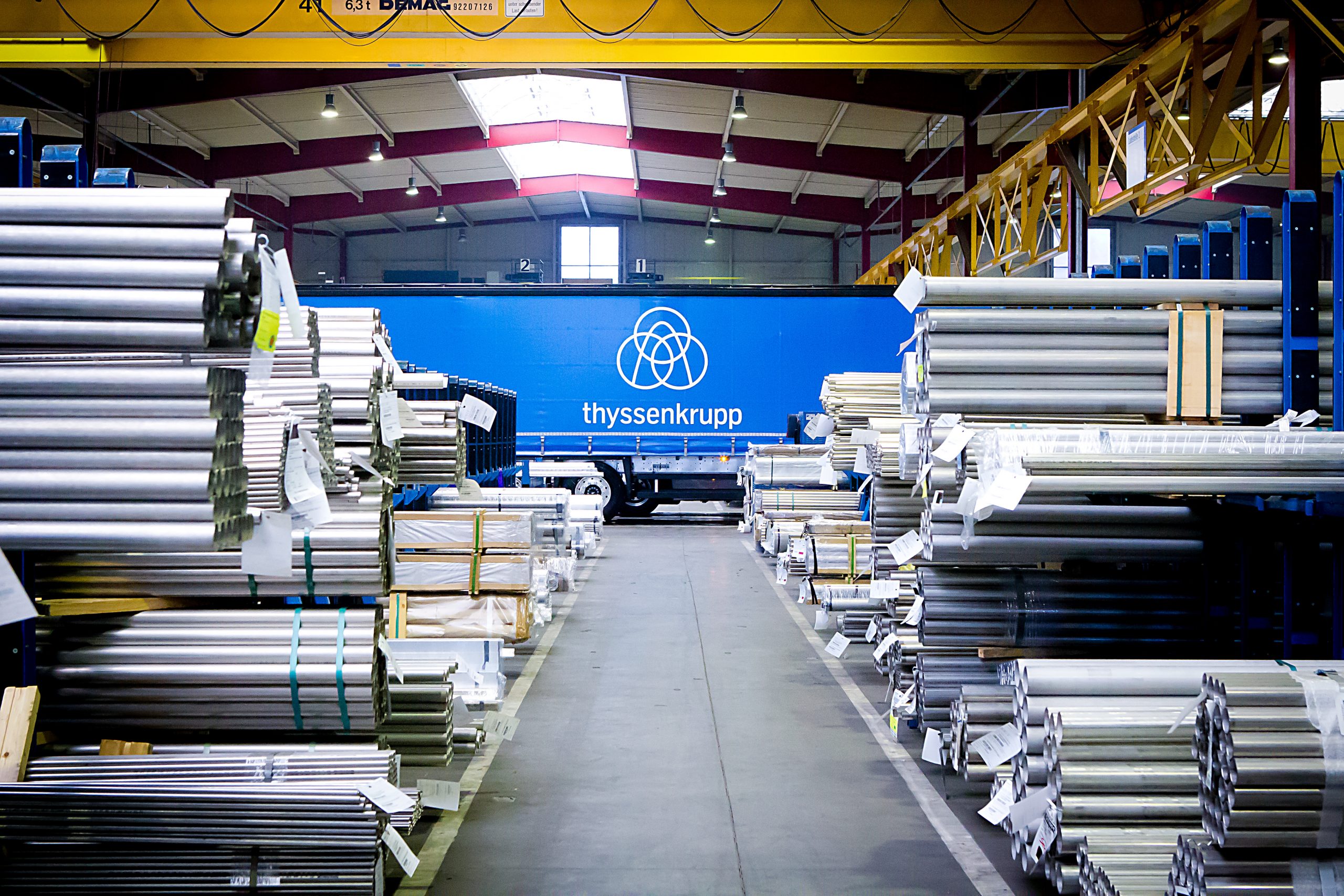
Thyssenkrupp offers service for coordinating supply chain
As the intelligent control of material flows has become an enormously demanding task, thyssenkrupp Materials Processing says it has come up with a package coordinating the entire supply chain.
At its core is a data dashboard that provides an overview of planning and call-off order data for the customer and its various suppliers at all times, Kallanish learns from the company.
The issue has become increasingly dire over recent months, especially with carmakers stopping and restarting their assembly lines amid a rapid post-Covid-19-lockdown demand rebound followed by semiconductor shortage-induced stoppages.
The “Control Tower”, as the new service is called, enables the company to work dynamically and intelligently with partners in a network, to mitigate supply chain risks. As with a control tower at an airport, all the information flows together into one place, on the dashboard, the firm explains. The company can now react at an early stage and find alternatives if, for example, a supplier of input materials experiences bottlenecks, says Thomas Wölk, head of Business Development at tk Materials Processing Europe.
Another advantage is that small quantities can be grouped together, enabling customers to plan more in line with demand and thus avoid tying up a lot of capital, the company points out.
Christian Koehl Germany
