

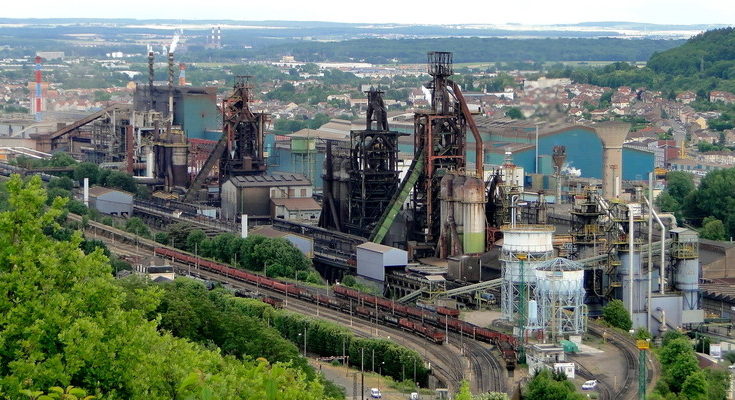
Automotive slowdown to hit ArcelorMittal Florange output
ArcelorMittal has announced to its workforce its intention to temporarily idle some rolling lines at its unit in Florange, France, due to the reduction in demand from the automotive sector, Kallanish learns from local sources.
The company has not issue prior to press deadline an official comment on the matter. It is understood nevertheless that the lines impacted should be those for galvanised coils at the unit, including the second one recently inaugurated. The Galsa line number 1 could be temporary halted from 28 October until 7 November, and the Galsa line number 2 from 18 November until 22 November.
Workers will be invited to take holidays to avoid the need to use layoffs at the site.
If the semiconductors shortage continues to further to impact automotive output, more reductions could be implemented by other steelmakers in the coming months, Kallanish notes.
Emanuele Norsa Italy

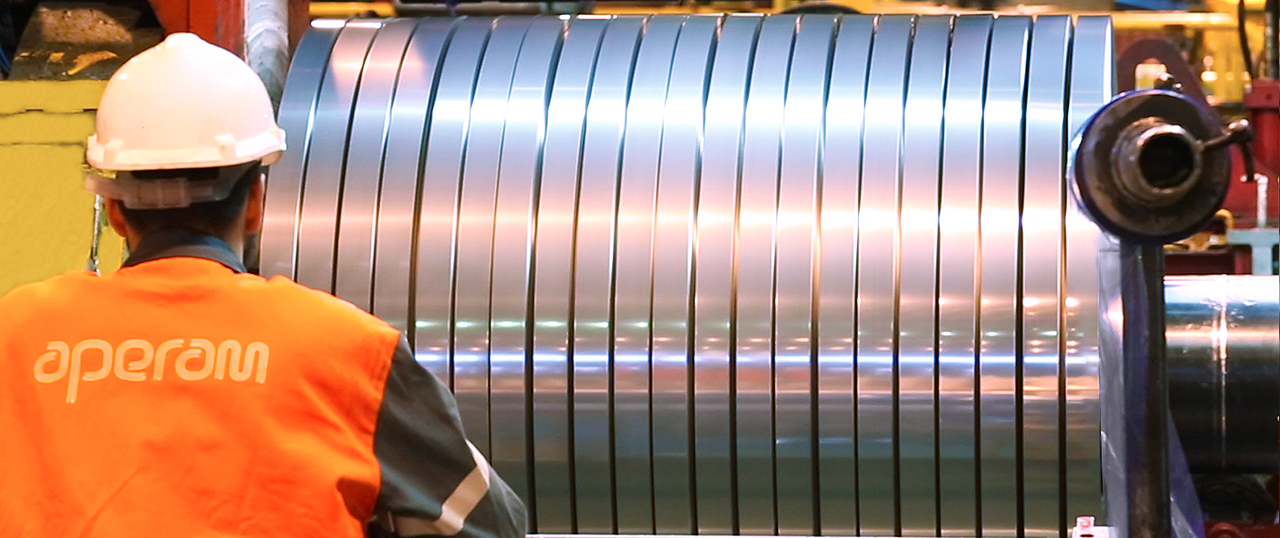
Aperam pushes up November alloy surcharges
French stainless steel producer Aperam has increased its November alloy surcharges for its austenitic range of flat stainless steels for Europe by over €50/tonne ($58) on average versus October, Kallanish learns from the company.
The surcharge for grade 304 (1.4301) has gone up from €2,190/t in October to €2,239/t effective 1 November. For grade 316 it has increased significantly from €3,379/t to €3,409/t. Grade 309S, a heat-resistant stainless steel used in high-temperature applications, has also seen its surcharge hiked from €2,969/t to €3,080/t in November. The surcharge for the most popular ferritic grade, 409, has risen from €843/t to €929/t, the company reveals.
Offers for nickel cash buyers were at $19,180/t on 24 September and reached $20,495/t on 26 October, Kallanish notes.
Natalia Capra France
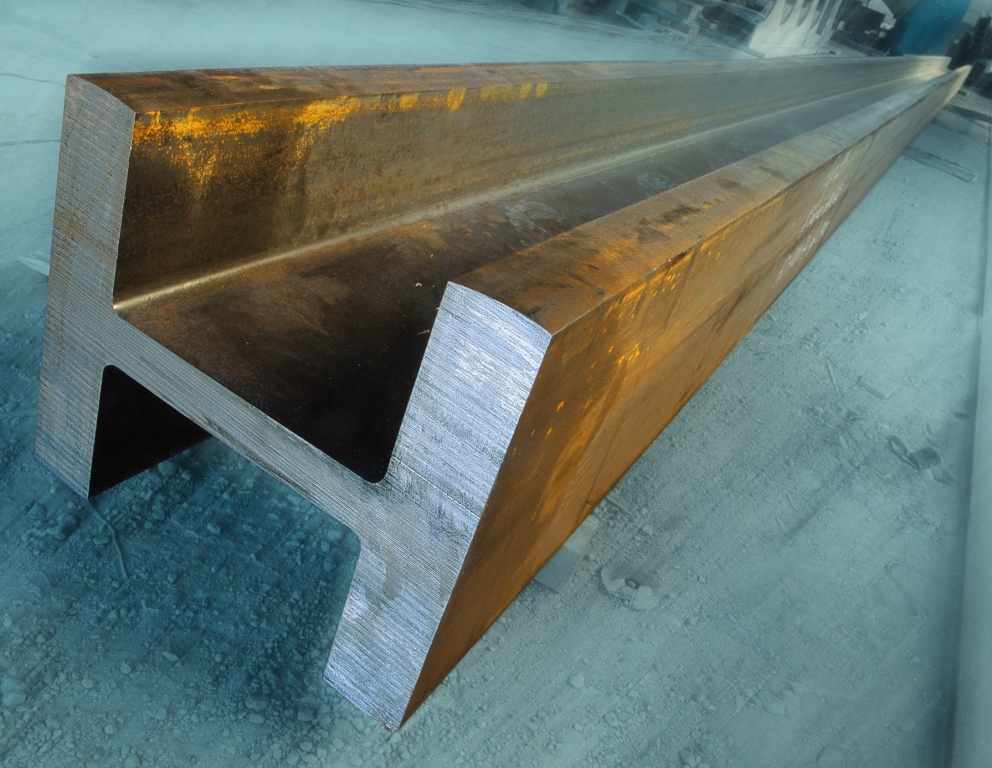
Italian section producers seek increases
Italian beam and merchant bar producers are seeking €30/tonne ($34/t) increases on average because of the increased cost of energy and price hikes expected for domestic scrap in November, Kallanish notes.
Section prices have lost €30/t on average compared to the beginning of the month in line with other long products in the country. Demand, particularly for merchant bar, remains unreliable, with buyers only purchasing back-to-back. Market sources say domestic merchant bar is trading at €450-470/tonne base ex-works while producers are now asking €480-490/t base ex-works. Including €420/t average size extras, local material is at €870-890/t ex-works, sources suggest.
Beam values are now at €570-580/t base ex-work, down from €600/t base ex-works of the beginning of the month. Producers are seeking €620/t ex-works. Including €380-390/t average size extras, the first category of beams is at €960-990/t ex-works. Prices increase by €20/t for each subsequent category, sources say.
Natalia Capra France
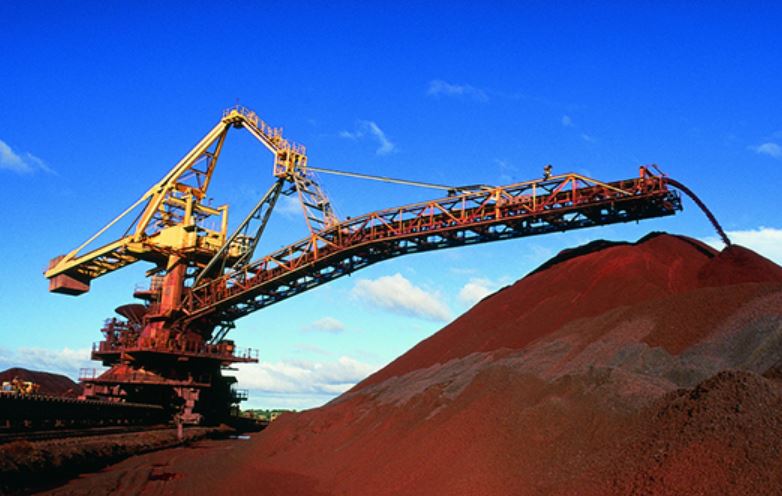
Iron ore slides, resists coal’s slump
Seaborne iron ore prices fell a little on Wednesday but remained within their $120+/tonne range. Steel and coking coal prices have fallen more dramatically on weak sentiment and price controls for coal.
The Kallanish KORE 62% Fe index fell $0.76/t at $120.48/dry metric tonne cfr Qingdao. The Kallanish KORE 65% Fe index dropped $1.42/t at $142.32/dmt cfr, and the KORE 58% Fe index fell $0.73/t at $92.02/dmt cfr.
On the Dalian Commodity Exchange, January iron ore settled flat at CNY 700/t ($109.48/t), while on the Singapore Exchange November 62% Fe futures settled down $3.25/t at $117.60/t. The same contract for 65% Fe and 58% Fe futures settled down $5.43/t at $135.91/t, and $3.32/t at $89/t respectively.
Scrap and billet prices too continued their decline. Grade 6mm+ heavy scrap delivered to mills in the Yangtze River Delta fell CNY 7/t to CNY 3,688/t. In Tangshan, billet prices fell CNY 60/t to CNY 4,900/t.
Thermal coal has driven the decline, spreading to coking coal and coke and then other ferrous products. On DCE January coking coal futures settled down CNY 126.5/t at CNY 2,844/t, while the same contract for coke settled down CNY 131.5/t at CNY 3,637.5/t. Speculators have fled futures markets on higher trading costs and government moves to control prices.
Sentiment meanwhile remains weighed down by weak demand, a struggling real estate sector and the deepening winter.

US steel imports up 17% in September; 35% in the first 9 months of 2021
| Top imported products in the US (C&A)Based on DOC data; in mt | |||
| Aug. final | Sept. prelim | % change | |
| Slab | 431,948 | 494,998 | +14.6% |
| HRC | 344,979 | 399,124 | +15.7% |
| OCTG | 106,736 | 219,152 | +105% |
| HDG | 271,936 | 217,915 | -20% |
| Coiled plate | 137,264 | 167,510 | +22% |
| CRC | 121,671 | 146,982 | +20.8% |
| Rebar | 84,816 | 143,950 | +70% |
| Other semis | 103,570 | 121,664 | +17.5% |
| Coated sheet & strip | 109,616 | 110,228 | +0.6% |
| Wire rod | 75,285 | 102,782 | +36.5% |
US steel import volumes in September rose 16.7% month on month to 2.9 million mt and climbed 34.6% year-to-date in the first nine months of 2021 compared with the same period in 2020, according to preliminary US Commerce Department data Oct. 27 and analysis from the American Iron and Steel Institute.
September imports soared 156.4% from the same month last year when the industry was recovering from the onset of the coronavirus pandemic.
The import share of the US finished steel market was an estimated at 25% in September and 21% over the first nine months of 2021, according to the AISI.
Imports of slab and other semi-finished steel increased from August, with slab imports up 14.6% to 494,998 mt and non-slab semis up 17.5% at 121,664 mt, according to the US Census preliminary count.
September imports of hot-rolled coil and cold-rolled coil climbed 15.7% to 399,124 mt and 20.8% to 146,982 mt, respectively, from August levels. Hot-dip galvanized imports dropped 20% to 217,915 mt in the same period.
Oil country tubular goods and rebar imports in September jumped from the previous month, rising 105% to 219,152 mt and 70% to 143,950 mt, respectively.
September imports from South Korea, Mexico and Thailand spiked month-on-month, while higher imports from Turkey and Algeria represented the rise in rebar to the US.
Canada was the largest exporter of steel to the US in September, with preliminary imports from the country totaling 747,027 mt, compared with 695,572 mt in August.
| Top steel exporters to the US (C&A)Based on DOC data; in mt | |||
| Aug. final | Sept. prelim | % change | |
| Canada | 695,572 | 747,027 | +7% |
| Mexico | 383,536 | 401,861 | +5% |
| Brazil | 301,282 | 386,375 | +28% |
| South Korea | 150,800 | 270,998 | +80% |
| Germany | 140,030 | 152,123 | +9% |
— Nick Lazzaro

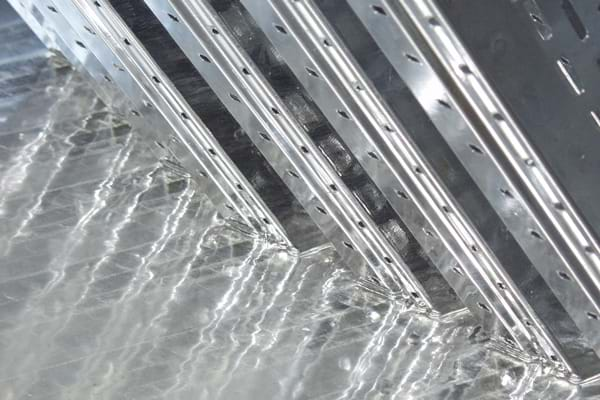
Automakers return HDG volumes to mills, lead times improve for December
European HDG prices were stable Oct. 27, with sources seeing a bottoming in current prices, and expectations of further stabilization. Market participants from across Europe are attending the BlechExpo fair in Stuttgart, Germany, to make sense of fluctuating market dynamics.
A European mill source said automotive manufacturers had relinquished HDG volumes as a lack of demand from the ongoing semiconductor and chip shortage restricts automotive production.
The return of large automotive orders has resulted in speedier delivery from mills for as early as December – two months earlier than expected.
A deal for 300 mt was heard for Eur1,250/mt ex-works Ruhr for December delivery, and another subsequent deal heard for Eur1,200/mt ex-works Ruhr.
The European mill source expected greater clarity on the semiconductor and chip shortage to come from the BlechExpo fair, though the market would mostly need to rely on the situation in China and Vietnam, where the bulk of those components are produced.
“Everyone is expecting to know more at the fair. Volvo has no problem with production apparently, we are hoping they will take HDG again,” the mill source told Platts. “But no one knows when this will happen, has to come from China, Vietnam – we are relying on this.”
The source was confident, however, that the shortage would be short-term, and did not expect the influx of rejected automotive material to have any severe consequences on HDG prices.
The looming reality of higher energy costs is likely to raise prices in the near term, as mills struggle to contend with higher production costs, particularly along the EAF route.
The supply situation is very imbalanced sources have pointed out, with plenty more availability on HRC compared to critically low stocks of CRC and HDG, though returning auto volumes could ease this supply tension slightly.
— Amanda Flint