

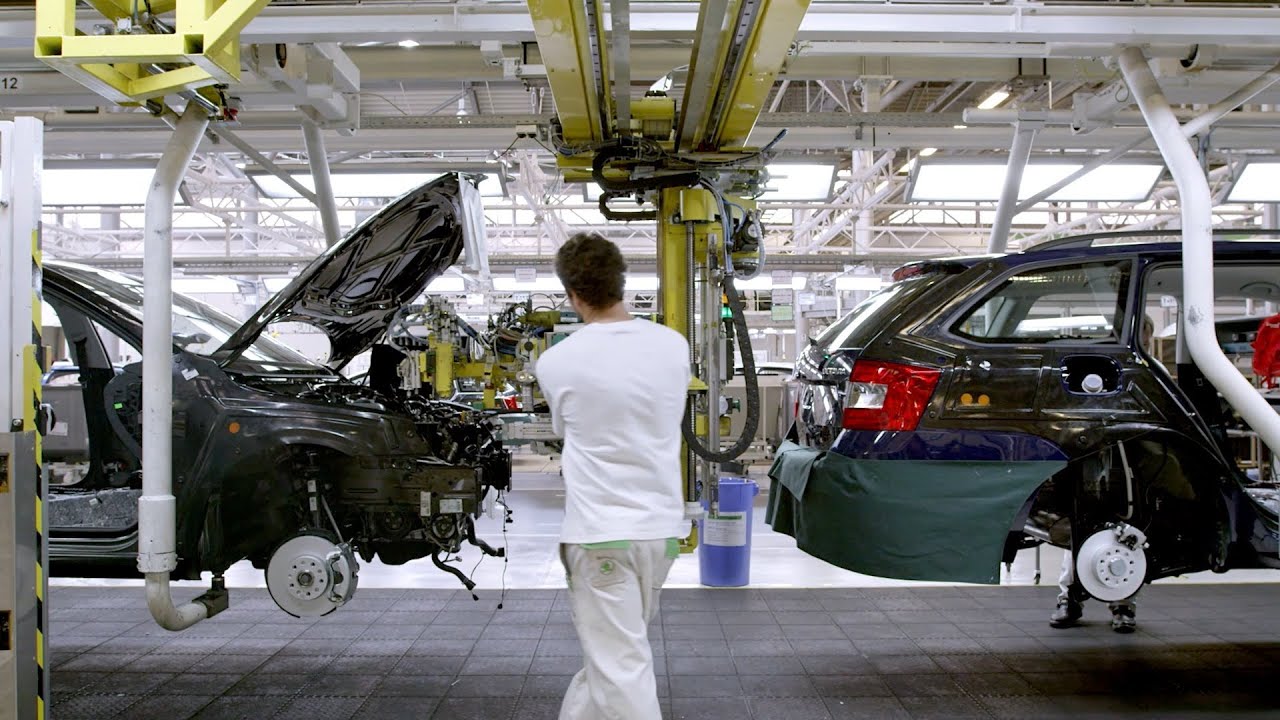
Stellantis car output hit by component crisis
Automaker Stellantis reports poor visibility of component supply and significant production losses, Kallanish learns from the company’s Q3 financial statement. Shipments during the third quarter of 1.131 million units were down 27% compared to Q3 2020 caused by a loss of 30% of Q3 planned production. Unfilled semiconductor orders caused a production cut of 600,000 vehicles.
In North America and Europe shipments were down 29% and 36%, respectively. In the Middle East and Africa, shipments were also down 22%.
Stellantis reports Q3 net revenues of €32.6 billion ($37.8 billion), down 14% year-on-year. At the end of September, total new vehicle inventory stood at 689,000 units.
The automaker forecasts “no further deterioration of semiconductor supply and no further significant lockdowns in Europe and US.”.
Opel, part of Stellantis, will halt production in Eisenach, Germany, until at least the end of the year because of the global semiconductor crisis and Renault forecasts a significant production loss in 2021. While the Q3 production reduction amounts to 170,000 units, Renault predicts a drop of approximately 500,000 vehicles for full-year 2021 but says that visibility on Q4 remains low.
Natalia Capra France

Eurofer increases EU demand outlook despite economic uncertainties
Eurofer, the European steelmakers association, has increased further its apparent steel demand outlook for 2021 despite acknowledging that the peak of the positive economic sentiment has been reached and a number of uncertianties lie ahead.
In its latest report seen by Kallanish, the association noted that 2021 European apparent steel demand is set to jump 13% y-o-y. In the latest outlook issued in August, the recovery was forecasted at 11.2% y-o-y. Real consumption will also jump 7% y-o-y this year, after the fall of 9.8% y-o-y in 2020.
Alessandro Sciamarelli, director of market analysis at Eurofer, confirmed that economic momentum seems to have peaked in Europe in August. Confidence in the industrial and economic sectors has started to ease due to growing disruptions affecting the supply chain and increasing energy prices.
The automotive sector is now reported to be the most troubled.
“The ongoing disruptions in the supply chain have continued to affect the automotive industry in the first half of 2021 and are expected to persist up to the first quarter of 2022,” Eurofer says. “Even assuming that from the second half of 2022 onwards the current supply chain issues will disappear, it will take time before pre-pandemic activity levels will resume. Another source of uncertainty is the consumer demand for new cars, which is expected to remain weak at least until the macroeconomic picture and consumer disposable income substantially improve.”
Meanwhile the construction sector, using some 35% of the total steel consumed in Europe, is receiving strong support by the Next Generation EU plans and ongoing housing schemes across the continent.
In regard to trade, Eurofer highlights that Europe continues to have a negative trade balance during the first seven months of 2021. The association calculated that on average the European trade deficit was of 1.5 million onnes/month during the January-July period. Alessandro Sciamarelli confirmed that Europe turned into a net importer of steel back in 2016 and that this situation is now seen as systemic.
Emanuele Norsa Italy

Northwest Europe coil contract negotiations heat up
The season for negotiating long-term coil contracts for 2022 has arrived, but sources note that the market is still quiet and tense with buyers trying to delay talks towards year-end.
For Germany and some neighbouring markets, the annual period of contracts coincides with the big sheet fairs Blechexpo Stuttgart and Euroblech Hanover, taking turns annually, staged in October and November.
This year, participants at the Blechexpo in Stuttgart tell Kallanish that they might not agree to a deal this week, and they do not expect too many others to do so. As spot prices keep coming down from record highs, it seems better for buyers to wait and see.
Mills nevertheless are coming out with their indications for Q1, H1 and full year 2022 contracts. ArcelorMittal, for example, is reported to be indicating levels of €1080/t ($1,261.79/t) for HRC and €1220/t for HDG.
While these levels are currently above the latest spot prices registered in the market, ArcelorMittal has told clients they need to understand the volatility of the prices and the need for customers to secure volumes going into 2022.
“We hope to close negotiations in the next days and weeks. Buyers should have understood that they need to cover their needs with domestic supplies from reliable European mills as they prepare for 2022, which should be characterised by strong demand [excluding the automotive sector],” a source among suppliers says.
“Mills will be trying for a stabilisation at the present level,” a visitor from Benelux says regarding spot prices, as though it is understood that an increase is out of the question. It is hard to tell just where the present level is. For cold-rolled as well as hot-dip galvanized coil, spot prices can be anywhere from €1,100-1,200/t, he says, without a nominal gap between CRC and HDG.
Due to the slowdown at the carmakers for lack of semiconductors, the mills are building up larger inventories planned for automotive customers that now refrain from calling off the volumes they had booked. Other customers can now again order material for delivery within a couple of months, he says.
One mill manager indirectly confirmed the sentiment, also using the word stabilisation for the mill’s goal this year. He cites the rising costs for input materials and energy, and to some extent dismisses that the slowdown at the carmakers will release too much tonnage. Other industries are doing quite well, he notes, citing economic statistics.
According to one buyer of large volumes for automotive applications, very few deals have been signed with carmakers so far.
Christian Koehl Germany , Emanuele Norsa Italy
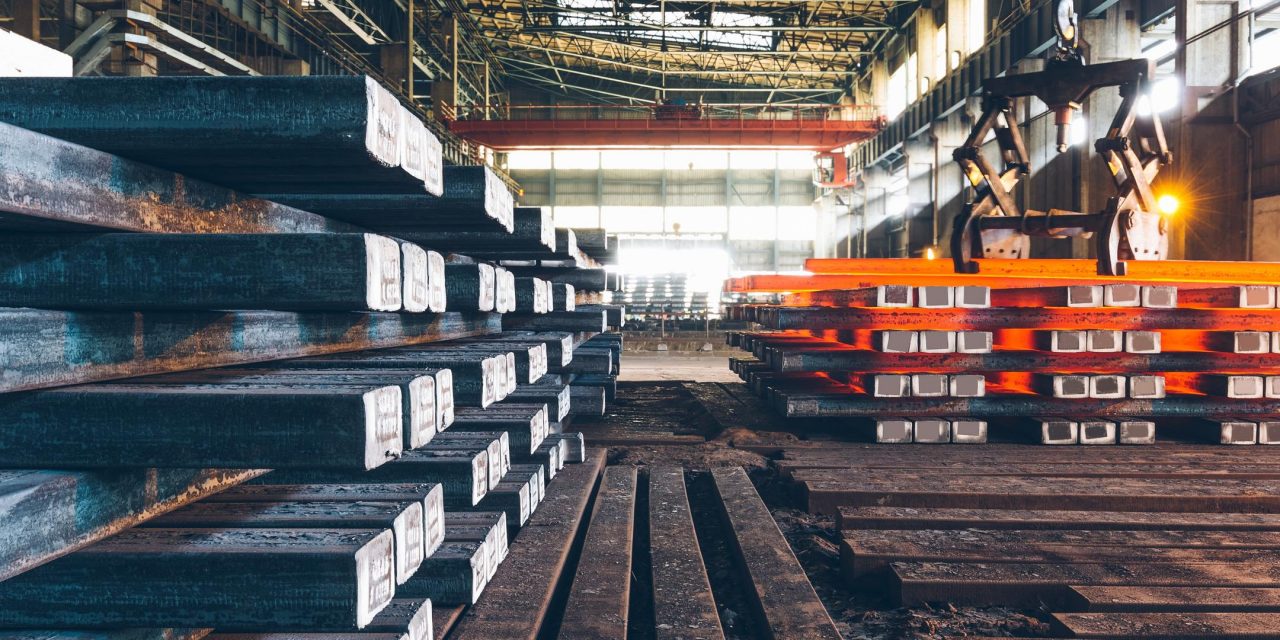
EU-US agreement on S232 expected soon: Eurofer
A first agreement between the European Union and the US on the existing section 232 measures could be announced in the coming days, according to Karl Tachelet, director for trade and external relations at Eurofer.
Tachelet stressed that a final deal should be reached by the beginning of December to secure the blocking of the doubling of the existing retaliatory measures imposed by Europe on the US back in 2018. “By the beginning of November we need to understand if a deal can be achieved, in order to work toward a final deal by the beginning of December,” Tachelet confirmed.
Eurofer believes that it is very likely that the ongoing negotiations on the topic will result in a deal, Kallanish understands.
“I would be very surprised if an agreement is not been reached,” Tachelet said.
What remains unclear is what an agreement would include. It is understood Europe and the US could agree to a quota system for sales into the US. This would mean a certain volume of European steel would be able to be imported in the US without tariffs being applied. Imports beyond the quotas would sill face the 25% import tariffs.
Europe historically exported over 3 million tonnes of steel products to the US annually, now exports are at some 2m t/y, meaning S232 lowered exports by some 1mt, Eurofer calculates. The association also noted that around half of current exports to the US are products that have been exempted from S232 measures following specific applications by steelmakers.
While expressing support toward an agreement on S232, Eurofer noted that is still needs to look into the modalities of how the quotas will be calculated and applied. Tachelet said, for example, that quotas should be calculated on a country-by-country basis, rather than generally for the continent.
“The S232 measures are a success story for the US steel industry so there is internal pressure from the industry to keep them in place. Nevertheless we expect an announcement and a deal in the next days and weeks,” Tachelet concluded.
Emanuele Norsa Italy
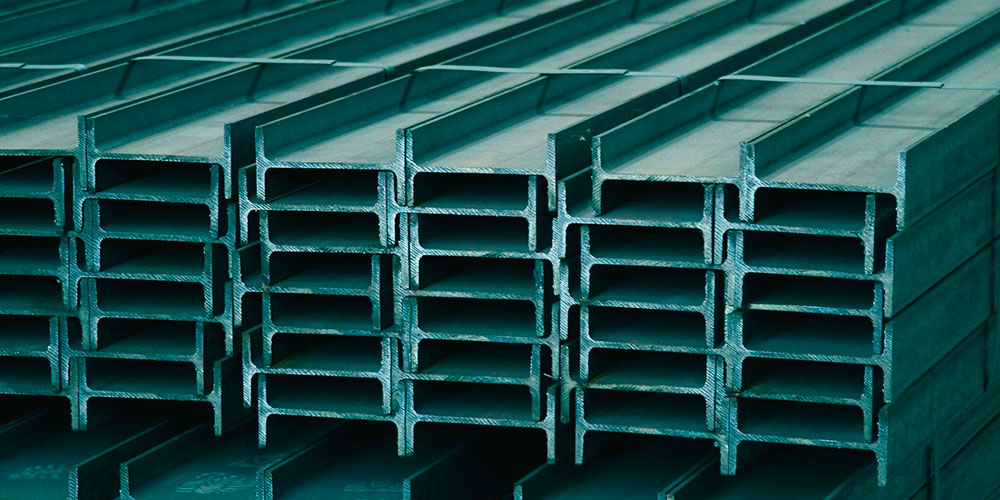
Steel demand recovery ongoing, supply outlook uncertain: Eurofer
The recovery of steel demand is set to continue through 2021, but at “a moderate rate” and subject to a “considerable uncertainty” expected to last until the first quarter of 2022, the European Steel Association said during an Oct. 28 webinar on the state of the European steel market.
The association, also known as Eurofer, said the outlook was becoming increasingly uncertain particularly due to disruptions in the global supply chain, which were likely to seriously affect demand from steel-using sectors, although by 2022 most of the current disruptions were expected to ease significantly.
The association reviewed its apparent steel consumption figure for the whole 2021, which it now forecasts rising by 13% to 146 million mt of steel, up from its previous view of an 11.2% increase.
Steel consumption was forecast to grow by 4.7% in 2022, when it is expected to return to above-2017 levels thanks to a mild but continued improvement in demand from steel-using sectors.
The whole of 2020 was impacted sharply by the COVID-19 pandemic and saw apparent steel consumption in the EU plummet by 10.6%, revised from a fall of 11.1% in the previous outlook, for the second consecutive year after a 5.2% slump in 2019.
Eurofer also reviewed its real steel consumption outlook for 2021, reducing it from a previously expected 7.9% rise to an expected increase of 7%. However, the association was still positive, considering the drop seen in 2020 caused by the COVID-19 crisis when real steel consumption declined by 9.8%, the second consecutive year taking into account 2019’s 4% fall.
Outlook for steel-using sectors
Total output from steel-using sectors was expected to rebound in 2021 by 8.5% after the 10.4% fall in 2020 due to low output levels, although this was revised downward from the 9.3% rise expected in the previous outlook. This was then forecast to grow more moderately in 2022 by 4.7%, Eurofer said.
Construction sector output, which counts for 35% of total steel demand, was expected to rebound in 2021 by 6.4%, revised up from 5.5% in the previous outlook, and increase a further 4.2% in 2022. However, the association said the current global supply chain issues had started affecting the construction sector in terms of materials shortages, which could impact the outlook.
EU construction confidence took a sharp hit in March 2020, falling to 2015 levels. Residential construction was hit by stoppages caused by lockdown measures, but in 2021-22 conditions were expected to remain broadly positive thanks to a slight improvement in economic conditions and government housing supporting schemes, the association stated.
Non-residential construction was the sector that suffered the most, a trend that may continue if smart-working remains partially in place in the post-pandemic scenario. However, civil engineering was expected to boost the construction sector’s performance thanks to public investment in infrastructure.
The second largest steel consumer sector, the automotive industry, was also facing major disruption issues in the supply chain, particularly due to the lack of microchips, which had affected the industry in the first half of 2021 and was expected to persist into the first quarter of 2022.
After a severe slump of 21.2% in 2020, revised downward from 20% in the previous outlook, due to the pandemic, automotive output was set to rebound by 9% in 2021 and more pronouncedly by 12.1% in 2022, Eurofer said.
— Annalisa Villa

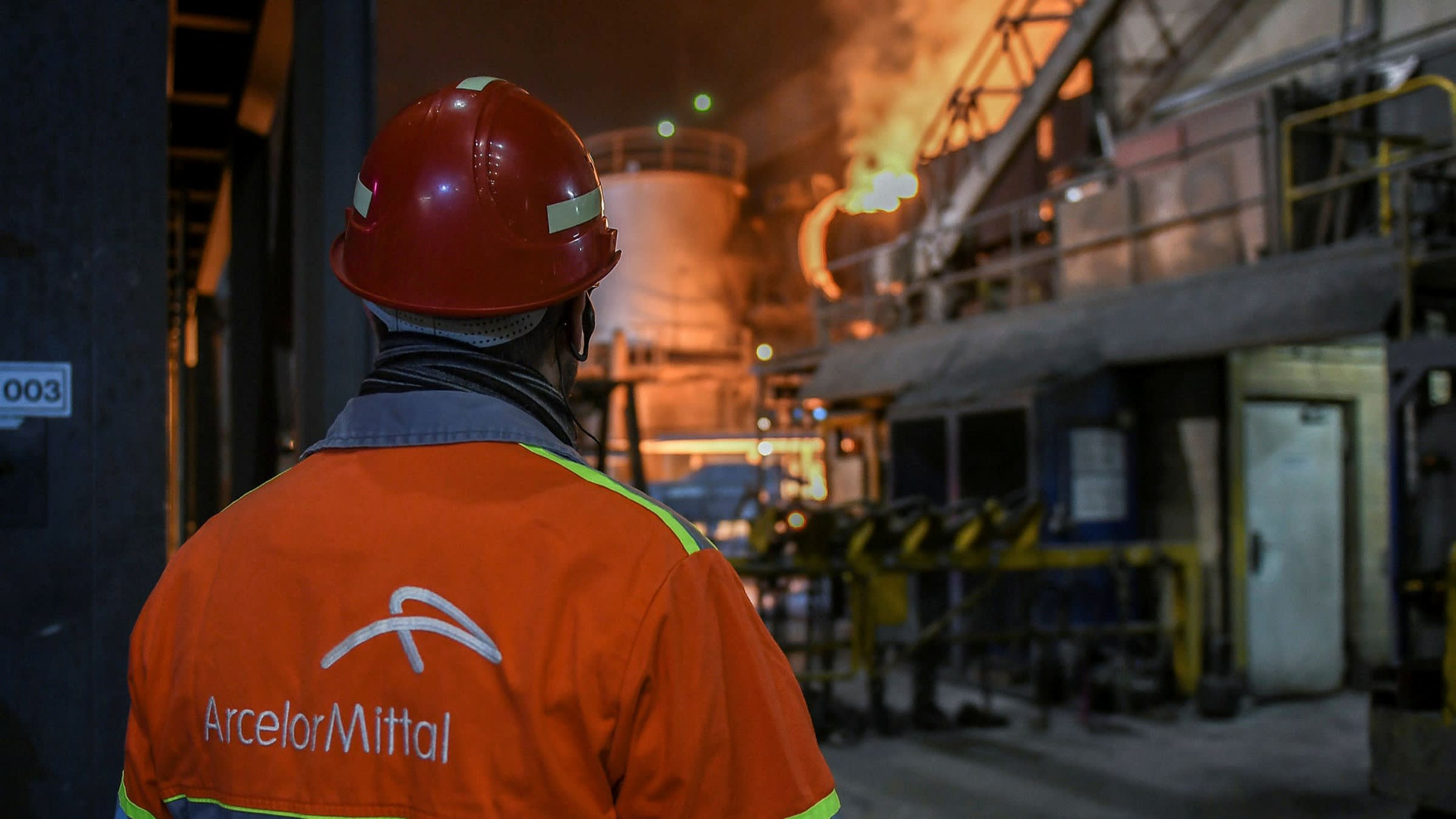
ArcelorMittal puts out fresh contract prices for industry customers
Steelmaker ArcelorMittal Europe has issued new contract prices to industry customers with hot-rolled coil contract prices at Eur1,080/mt and hot-dipped galvanized at Eur1,220/mt across Europe, sources told S&P Global Platts Oct. 28.
According to sources close to the company confirming the new contract prices for quarterly and longer contracts, the prices are not for automotive customers but rather for industry customers such as distributors.
An ArcelorMittal spokesperson would not comment on the company’s steel pricing.
Order books for other end-users such as the mechanical engineering or white goods industries have been strong, and one European mill source said some rerollers had already received firm bookings into 2023.
Automotive demand still unclear
The question over automotive demand and the level of volumes being booked by carmakers struggling with production disruption is, however, still looming over the steel market. Contract negotiations are ongoing for the automotive industry.
Earlier this month, a Southern European automotive manufacturer and a European mill were heard to have finalized a long-term HDG contract for Eur1,250/mt — Eur50-100/mt lower than what mills were initially attempting to conclude.
Other mills were heard to be proposing even higher contract prices, between Eur1,300-1,400/mt, for HDG material.
Because of the ongoing semiconductor and chip shortage, the European automotive sector has endured ongoing production disruption, with some auto manufacturers relinquishing previously agreed-upon volumes back to mills, prompting a surge of HDG availability.
“A lot depends on the semiconductor issue,” a German trader told Platts. “If car manufacturers must continue with reduced volumes, it‘ll impact auto steel needs and prices. If the issue can be solved and car manufacturers restart full steam, steel demand and prices will go up strongly again, especially for green steel in the years to come.”
There is also no change in current spot price levels for flat steel from European mills yet as attention is focused on contract negotiations that are currently above spot level prices.
Spot prices remain at current levels
A German distributor said discounts were now available for spot transactions and said automotive contract negotiations were likely to conclude in November. Market participants were expecting higher spot prices in Q1 on the back of prolific gas and electric surcharges from mills, and elevated raw material costs.
The mill source said that the delta between longer term contracts and spot prices “have never been higher,” but that the first positive signs can be seen in Southern Europe where customers start to accept higher prices. The Made in Steel industry fair in Milan, Italy, earlier in October, and the Blechexpo fair in Stuttgart, Germany, this week, have boosted sentiment across the industry but have not resulted in higher spot prices in Europe — yet.
The daily Platts HRC assessment dropped Eur170/mt since its all-time high at Eur1190/mt EXW Ruhr June 25 this year. The Italian HRC assessment fell Eur228/mt since its record peak at Eur1145/mt EXW Italy June 10 this year.
— Laura Varriale, Amanda Flint
Revista Infoacero Octubre 2021
En el siguiente enlace pueden acceder a la edición de Octubre de INFOACERO
A continuación destacamos algunos de sus contenidos:
1. Opinión – Dña. Meritxell Serrano – Junta Directiva de la UAHE.
2. Evolución del Índice de Precios de Productos Siderúrgicos – UAHE.
3. Información Asociativa: Resumen SNF Lisboa (30 Septiembre).
4. Formación y Conferencias: Calidades del Acero, Transformación Digital, Masterclass Kaltenbach Solutions y Lantek.
5. Jornada UAHE: Asamblea General y Conferencias, (Madrid, 25 de Noviembre).


EUROMETAL at Catalonia steel distribution forum 2021
Fernando Espada, chairman of EUROMETAL, and Roberto González, chairman of EUROMETAL Coordination Work Group of National Federations, participated in the XVII Forum de la distribució de productes siderúrgics (XVII Forum for the distribution of steel products), organized by the Unió de Magatzemistes de Ferros de Catalunya i Balears on October 28, 2021.
This initiative was born in 2005 with the aim of creating an open dialogue and enrichment space for the metallurgical sector.
Roberto González was responsible for opening the XVII Forum as president of the UAHE (Unión de Almacenistas de Hierros de España).
The president of EUROMETAL spoke on the panel “trends in our value chain” accompanied by Mr. Alfonso Hidalgo de Calcerrada (UNESID) and Ramón José Aloguín Casas (Solunión Assegurança de Crèdit).
EUROMETAL also contributed in this online forum as a Gold sponsor.
The forum had over 160 participants.