


Turkish mills focus more on exports as local steel consumption falls
As steel consumption in Turkey fell notably in September and imports remained a threat, Turkish mills focused more on exports, Turkish Steel Producers Association (TCUD) said in a statement sent to S&P Global Platts Nov. 1.
According to the latest TCUD data, steel consumption in Turkey declined by 24% year on year in September to 2.1 million mt, while export volumes rose 53% on year to 2.1 million mt.
Revenue generated from these exports increased more significantly by 186% in that month at $2 billion, amid strong steel pricing globally, the data showed.
Turkish steel output rose by 2.4% on year in September to 3.3 million mt, while output in the first three quarters of the year totaled 29.8 million mt, up 15% on year.
Steel consumption totaled 25 million mt in January-September, up by 14.6% on year, with the support of higher consumption figures seen in the first half.
Turkish mills’ steel exports totaled 14.8 million mt in that period, up 25.1%. on year, while the revenue generated from these exports rose by 95.7% to $11.7 billion.
“As the share of steel imports made within the scope of the inward processing regime in Turkey reached 67% [it] raised the pressure on the steel sector, Turkish mills focused more on export markets, ” TCUD said, adding that the recent decline in loan rates is expected to raise the steel demand of the manufacturing and construction steel sectors in the coming months, which could ease the export pressure on mills.
The inward processing regime in Turkey exempts exporters of finished steel, such as pipe makers, from feedstock steel import duties.
— Cenk Can

US and EU markets have mixed view of tariff decision on metals imports
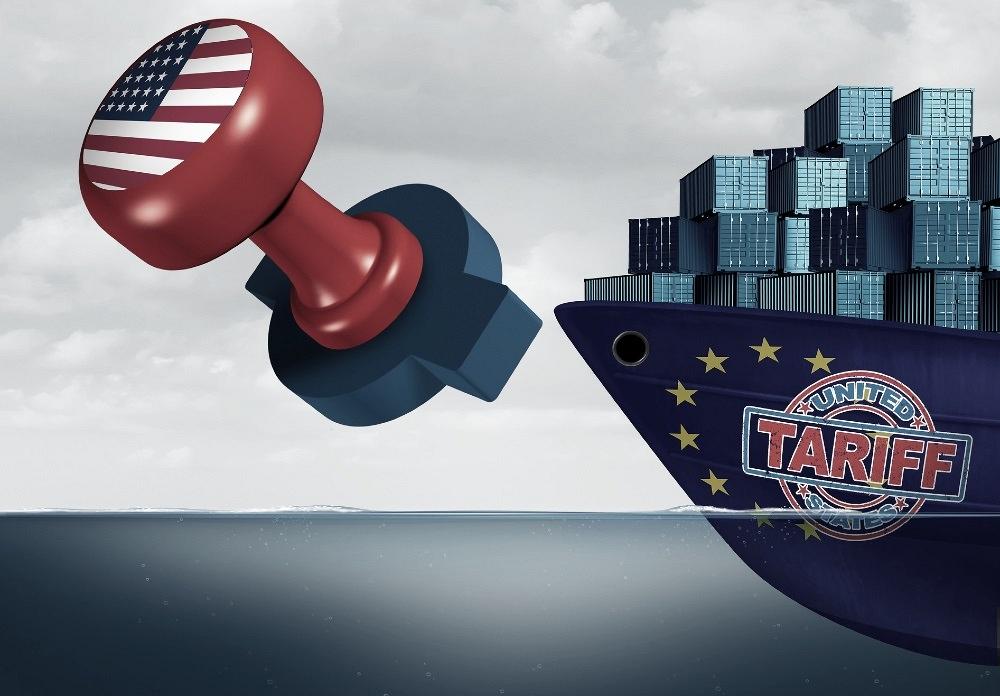
A decision by the US and the EU to replace the Section 232 tariffs on European steel and aluminum imports with a tariff-rate quota was met with mixed market reaction. Domestic buyers feared another surge in domestic steel prices, while European steel producers look to increase export prices to the US, sources told S&P Global Platts Nov. 1.
The initiation of a tariff-rate quota system will allow for lower levies on metals exports between the US and the EU up to a certain amount. Former US President Donald Trump had initiated a 25% steel tariff and 10% aluminum tariff on metal imports from most countries under Section 232 of the Trade Expansion Act in March 2018.
European mills were optimistic about the tariff decision, as it would allow them to export to the US overseas market, which has a Eur600/mt ($695.48/mt) premium over ex-works Ruhr HRC prices.
The daily Platts TSI US HRC index was assessed unchanged at $1,890/st on an ex-works Indiana basis Oct. 29, with the European HRC index was also stable at Eur1,020/mt ex-works Ruhr.
Eurofer welcomed the move by the EU and the US to replace US Section 232’s 25% duty on EU steel imports, the European Steel Association said on Nov. 1.
“This step forward on Section 232 is a positive signal after the EU-US frictions over the past years. It prevents a further escalation in the trade dispute between the two blocks by avoiding the doubling of the EU tariffs on US goods otherwise kicking in on Dec. 1, 2021,” said Axel Eggert, director general of the European Steel Association.
Eggert underlined it was important for EU steel exporters to the US that the new Tariff Rate Quota system would take into account traditional EU export levels within a stable framework, and that the product exemptions for EU steelmakers already in place would be maintained or renewed.
EU market reacts
“I think the mills are happy with this; they now have a new market outlet to sell into with very high prices,” a Benelux buyer told Platts. “But when there is more material flooding into America, it will then bring pressure to their market.”
There remained some concerns of rising European prices and demand viability, with the market in a wait-and-see mode.
“I am worried about higher domestic prices, but there also needs to be decent demand, and we cannot say that for now,” the buyer said.
Uncertainty still loomed about the specific terms of the tariff-rate quota, and what it could mean for countries exporting to the US.
A Turkish longs trader said market sentiment would depend on the details of US quotas covering EU-origin imports and how it would affect EU safeguard quotas for Turkey and other countries.
“Demand is very slow, and news of a deal brokered between the EU and the US is not helping the sentiment here either,” the trader said. “Europe now has the chance to sell into the US, tariff-free under the quota arrangement, which is bad for Turkish suppliers who will continue to face 25% antidumping duty in case the imported volumes exceed assigned country-specific quotas.”
Meanwhile, European aluminum participants were skeptical about the impact of the tariff revisions.
The deal stipulates that for European aluminum, 366,000 mt of semi-finished product and 18,000 mt of primary aluminum could be imported tariff-free by the US.
“The bottom line is it’s very early stages, there are not enough details. You might see demand for unpaid [duty] go up if the ability to ship goods to America is easier,” a European trader said. “If it’s semi-finished products going to the US then that’s an increase in unpaid demand.”
One Swiss-based trader highlighted the limited financial gain offered by the new tariffs. “It’s only 18,000 mt of primary for the whole year, which in the grand scheme of things is not a lot at all. The main effect is going to be on the futures curve in the US,” he said.
Deal could impact short-term pricing in US
The trade deal came at a time when US sheet pricing was already showing signs of weakness. The daily Platts TSI US HRC index peaked around $1,960/st in September and moved sideways until mid-October. Since then, the price has started moving lower and was assessed on Oct. 29 at $1,890/st on an ex-works Indiana basis.
With wider supply availability and rising inventory levels, prices were already under pressure and some market sources saw the trade deal as another threat for short-term pricing in the US. Moreover, buyers with easy access to major ports would use competitively priced EU product as leverage to achieve better terms in their ongoing contract negotiations with domestic mills.
“Europe is getting ready to ship some tons,” an end-user said. “I do not think it will be a game changer, but East Coast buyers will have another option [and] can move some of their books from domestic mills.”
At least one European mill was testing the market with index-linked deals to see buying interest, according to the end-user.
Some US-based traders had already positioned themselves ahead of the trade deal, offering terms that would refund a significant portion of tariffs back to buyer if they are waived by the arrival of the ordered product.
A service center source said that all his recent purchase agreements stated that he would receive the whole tariff amount in case of any change in rules.
— Staff

US taking country-by-country approach to steel, aluminum tariff negotiations
The US will be taking a pragmatic approach on a country-by-country basis to reach alternative arrangements to the Section 232 tariffs on steel and aluminum, with the ultimate vision of creating a global arrangement to address trade distortion and overcapacity, United States Trade Representative Katherine Tai said Nov. 2.
On the heels of the US and EU’s Oct. 30 agreement to replace the US Section 232 tariffs with a tariff-rate quota for EU metals imports, the US is seeing increased interest from trading partners to negotiate alternative arrangements, Tai said during a speech at the American Iron and Steel Institute and Steel Manufacturers Association General Meeting in Washington.
“If we were setting up shop in a physical place, I think the line would be out the door and around the block,” Tai said of the interest from other countries following the announcement of the EU deal.
From the perspective of the US, it is looking for trading partners that are committed to fair and healthy trade that will take effective measures at their own borders to reinforce the environment needed to tackle the global overcapacity crisis.
In the case of the deal with the EU, enforcement will be key, Tai said, adding that she is committed to working with those in the steel industry in the coming months to ensure it is implemented in a way that would not cause harm to the domestic industry.
In terms of the discussions still to come, the focus will be on the “twin challenges” of overcapacity and carbon intensity, Tai said.
“How can we convert the existing measures – which have been effective for American steel and aluminum industries and our workers – how can we convert this current set of measures into measures where we can promote partnership with like-minded trading partners who are aiming for the same thing, which is fair trade in steel and aluminum and clean trade in steel and aluminum?” she said. “…We need to bring as many other partners into an arrangement that does further our interests for healthy competition, fair trade, clean trade for the sake of all of our futures and for the planet.”
One of the biggest challenges in the past was not that the US and other governments didn’t know about the overcapacity problem. They have struggled with how to address the issue.
“What I’m really optimistic about is that we have the conditions right now and we have the will to take the measures that we have in place now and convert them to being more effective by creating room for us to collaborate with those economies that share our values, that are similarly affected by the global overcapacity problem and also bringing them along and locking arms and taking effective measures at our border,” Tai said.
— Justine Coyne

EU HRC outlook bullish, shortages expected following US tariff deal
The bullish outlook on European HRC prices intensified Nov. 2 following a decision by the US and the EU to replace the US Section 232 tariffs on European steel and aluminum imports with a tariff-rate quota (TRQ) effective Jan. 1, 2022. Market sources had been waiting on the outcome of EU-US discussions since the summer, with many buy-side sources fearing higher domestic prices as a result of expected material shortages, sources told S&P Global Platts.
European lead times were also getting noticeably shorter as buying activity eases and the sluggishness in automotive demand creating more steel availability.
“Lead times are shorter, and from the Section 232 announcement for European steel into the US, a lot of material will disappear,” a German distributor warned.
The aggregate yearly import quota volume under the TRQ system is set at 3.3 million mt and is country-specific, coming under 54 product categories.
Imports would also become less of a threat because of the stringent European quota system, the same source added, with ports in places like the UK at over capacity with material still waiting to be custom cleared for January.
Fewer import deals and the possibility of an exodus of European steel to the US was therefore creating concerns of a second-wave coils shortage.
The source agreed prices would increase by early 2022, with higher energy costs and other logistical issues contributing to the pricing upside.
HRC prices were heard between Eur1,020-1,035/mt ex-works Ruhr, and CRC prices were heard stable at Eur1,150/mt ex-works Ruhr.
In the Italian market, a mill source said the stabilizing period would soon transition to more upward pricing movement after the Section 232 decision.
“Mills are very interested in selling abroad to the US now [that] this agreement moves from tariff to quota system,” the source said. “US market still most lucrative.”
— Amanda Flint
Iron ore slumps deeper
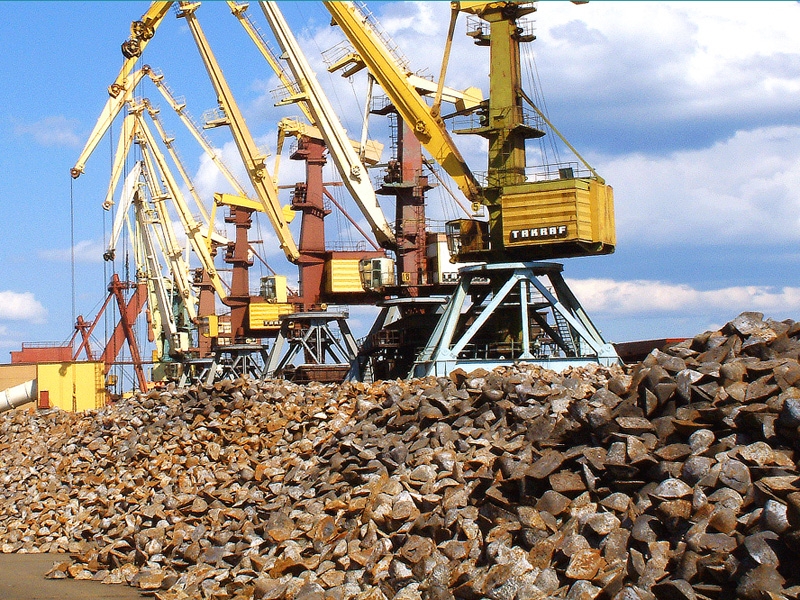
Seaborne iron ore prices fell closer to $100/tonne on Tuesday. Scrap and billet prices followed as ferrous sentiment remains weak and production restrictions have further cut into raw materials demand.
The Kallanish KORE 62% Fe index fell $3.14/t to $102.75/dry metric tonne cfr Qingdao, the lowest level since 21 September. The Kallanish KORE 65% Fe index fell $3.13/t to $122.09/dmt cfr, and the KORE 58% Fe index dropped $2.64/t to $81.30/dmt cfr.
On the Dalian Commodity Exchange January iron ore settled down CNY 36/t at CNY 592/t ($92.55/t), while on the Singapore Exchange December 62% Fe futures settled down $6.22/t at $94.04/t. The same contract for 65% Fe and 58% Fe futures settled down $6.13/t at $113.12/t, and down $6/t at $76.20/t respectively.
Both scrap and billet prices were falling fast on Tuesday amid a sharp drop in both iron ore and steel futures. 6mm+ heavy scrap delivered to mills in the Yangtze River Delta dropped CNY 37/t to CNY 3,576/t. Mills in Jiangsu were announcing several progressive declines in their purchasing prices over the day as market sentiment continues to slump. Meanwhile in Tangshan, billet prices slumped CNY 130/t to CNY 4,770/t.
Iron ore demand continues to be undermined by production restrictions. In addition to the large-scale reduction in production already seen, some areas of northern China have again seen short-term restrictions policies because of heavy pollution.

US Steel manufacturers applaud US-EU agreement
The Steel Manufacturers Association (SMA) is cheering the recent trade deal struck between the US and the European Union, allowing for up to 3.3 million tonnes of European steel exports into the US tariff-free.
In a statement, the SMA thanked both US Commerce Secretary Gina Raimondo and US Trade Representative Katherine Tai for their work in negotiating the agreement.
“The deal sets the stage for both trading partners to work collaboratively on solving critical issues such as global excess steel capacity, diversion of unfairly traded steel imports from China through the EU and reduction of greenhouse gas emissions,” says SMA president Philip Bell.
While the SMA celebrated the trade agreement, the organisation said there is still room to narrow down the scope of European steel imports excluded from tariff duties, Kallanish understands.
“We also believe that with the additional EU volumes not subject to quota, there is a renewed need for the administration to narrow the exclusion process substantially,” Bell adds. He adds that “many exclusions will not be needed as new investments by the US industry come online.”
Zach Johnson USA

Buyers ready to pay premium for green steel: Marcegaglia
Steel buyers in Europe are demonstrating that they are ready to pay a price premium for certified green steel, Antonio Marcegaglia said last week during an event attended by Kallanish.
The executive mentioned his group’s involvement in the Swedish H2 Green Steel (H2GS) venture, the greenfield hydrogen-based steelmaking project set to start production in 2024.
“When it was announced our group was one of the partners of the project, some clients from the auto sector asked us to prepare contracts to secure for them volumes produced using the new hydrogen-based steelmaking,” Marcegaglia said. “They accepted the fact a significant premium will need to be charged for the products.
Marcegaglia intends to buy 5% of H2GS’s green steel coil production and will re-roll it for sale in southern and Eastern European markets. Marcegaglia will re-roll a total of 250,000 tonnes in 2024 and will double this figure to 500,000t when H2GS’s production reaches 5 million tonnes/year.
Emanuele Norsa Italy
ArcelorMittal prepares revamp stoppage at Spain-based ACB
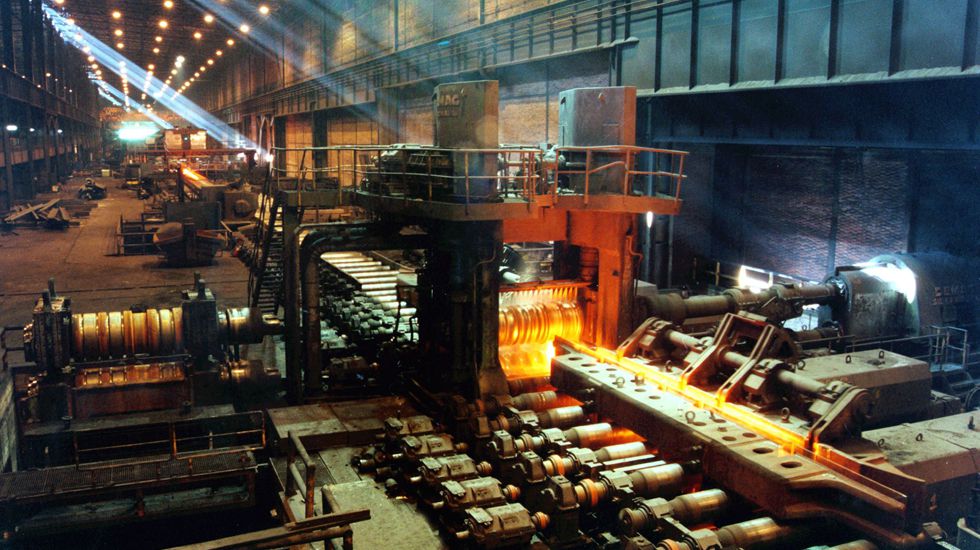
ArcelorMittal is preparing to temporarily halt activities for a revamp of its Acería Compacta de Bizkaia (ACB) plant in Sestao, northern Spain. The work will expand output and reduce CO2 emissions resulting from production processes to less than 500kg per tonne of steel.
The start of the engineering works at the electric arc furnace-based plant is subject to a reorganisation, which is under discussion with the steelmaker’s workforce, the steelmaker tells Kallanish.
“We are advancing on social dialogue with workforce representatives to reach an agreement that lays the foundation for the future of ArcelorMittal Sestao, as a world leader in decarbonisation,” the company explains. “The planned works have been brought forward by a month, partly due to the current highs in electricity prices. Employees have been informed that production activities will be halted until early 2022.”
The upgrade is part of ArcelorMittal’s investment to expand the plant’s steel production capacity to 1.6 million tonnes/year by 2023.
The upgrade will also enable ACB to manufacture ArcelorMittal’s so-called XCarb steel from the second quarter of 2022. This product is made by the EAF method using recycled scrap and 100% renewable electricity.
In July, the company announced that ACB will become the world’s first full-scale zero carbon-emissions steel plant (see Kallanish passim).
Todor Kirkov Bulgaria
German mills demand trade liberalisation amid US-EU deal
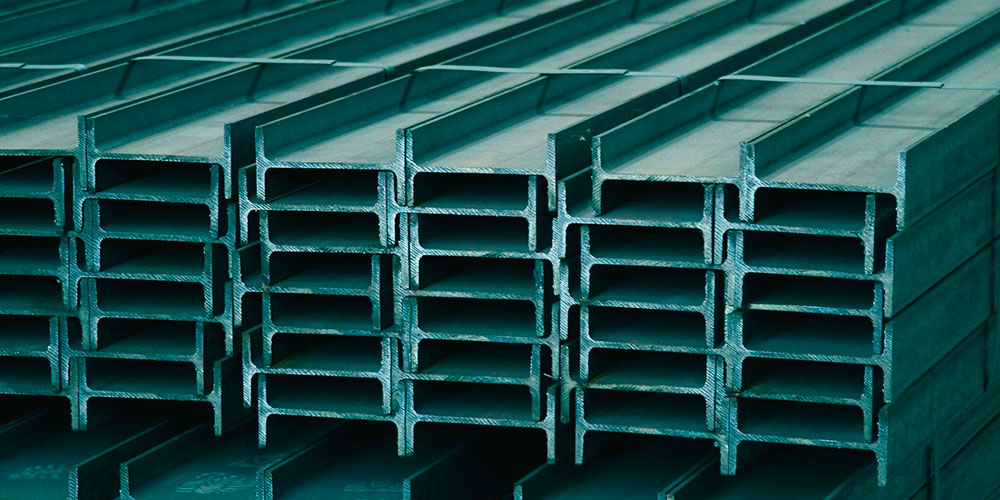
The abolition of US safeguard measures against steel from the EU is an important signal of transatlantic trade, but the barriers against other countries and regions must fall, too, German mills say. Otherwise, diversions of US-bound imports to Europe could still occur, German steel federation WV Stahl says in a statement sent to Kallanish.
With the agreement, fixed quantities of EU steel deliveries can be imported duty-free into the US again with immediate effect. In 2017, the year before the US steel tariffs were introduced, 4.8 million tonnes of steel were delivered from the EU to the US. 1.4mt came from Germany.
However, “as long as the US steel tariffs for other regions of the world remain in place, the risk of trade diversion continues to exist”, WV Stahl president Hans Jürgen Kerkhoff warns. “Therefore, the existing safety net through the EU Safeguard measures remains indispensable.”
As another part of the negotiations, an EU-US committee for a sustainable steel industry will be launched in the next two years. The joint commitment to deepen cooperation here is a first step towards a possible “climate club”, Kerkhoff says. “However, further liberalisation steps to completely dismantle the 232 measures must not be linked to climate policy progress,” the association president demands.
In a commentary on the political agreement, Austrian state broadcaster ORF pointed out another reason why the EU cannot be completely happy with the outcome. The volume that has been agreed to remain untouched by duties remains capped to the tonnage imported before the safeguards were introduced by the Trump administration. This does not allow for potential expansion, and for free competition in the real sense, the commentator says.
Christian Koehl Germany
US permits EU to supply 3.3mt of steel
European exporters to the US will be given the opportunity to export up to 3.3 million tonnes/year of steel products as part of the US-EU steel and aluminium trade agreement signed last weekend.
The volumes of tariff-free quotas have been calculated on the basis of 2015-2017 exports from the EU to the US. The quotas are divided into 54 product categories and allocated specifically for each European country of origin on a quarterly basis.
“Any unused TRQ volume from the first quarter of the year, up to 4% of the allocated quota for that quarter, will roll over to the third quarter; any unused TRQ volume from the second quarter of the year, subject to the same limit, will roll over into the fourth quarter; and any unused TRQ volume from the third quarter, subject to the same limit, will roll over into the first quarter of the following year,” explains an Office of the US Trade Representative document.
According to the agreement, only steel products “melted and poured” in the EU will be eligible for the new tariff-free quotas. Productions made from extra-EU billet and slab, for example, will not be included, Kallanish notes.
In recent years a number of producers applied for exclusions from the US Section 232 measures for specific products to be sold from Europe to the US. These exclusions will remain in place for a further period of two years and these products will not be calculated in the allocated new 3.3mt quotas allocated.
Earlier last week, Eurofer calculated that during the last year some 1mt of steel products were exported from the EU to US under the exclusions. As a result, potentially 4.3m t/y of different steel products could be sold from the EU to the US going forward.
Annual reviews of the quotas will be conducted by the US to calculate levels of local apparent steel use and adjust the quotas up or down by some 3% for every 6% of changes detected. If the changes in demand are below 6%, no adjustments will be applied. From April 2022, under the request of the EU, a further quarterly review can be requested to address any substantial under-use of the quotas.
Emanuele Norsa Italy