

Prices seeing ‘gentle’ rebound, says Klöckner
Distribution group Klöckner & Co cashed in massively in the third quarter on considerably higher steel prices, as well as on windfall effects brought by the price surge. While most steel prices have meanwhile seen a downward correction from their record peaks in summer, this trend seems to be turning again at the moment.
“Right now, I think we are seeing a gentle resurgence of prices,” chief executive Guido Kerkhoff told Kallanish during a telephone conference, pointing at “many positive signals” in that direction. He cited a lack of Chinese-origin imports into the EU as well as to the USA, Klöckner’s main playgrounds, which are now feeding on their domestic production. Also, he sees transatlantic EU exports on the rise.
At most customer groups in both regions, demand is stable or inching up, with mechanical engineering especially providing full order books, Kerkhoff said. Demand from the automotive industry is still seen flat for the time being, “but the bottleneck of semiconductor chips will be opening at some point next year”, he said. Klöckner is the largest mill-independent steel distributor in the joint markets of the EU and the USA, so its assessment of the climate has some weight.
On the causes for the continued price surge seen this year, Kerkhoff explained that they include ancillary costs that go beyond the pure materials price. These include higher prices for truck transport, for containers on sea, and even for the wood used for the pallets in the warehouses. Another factor are wage costs linked to steel prices, like provisions for sales staff.
Christian Koehl Germany

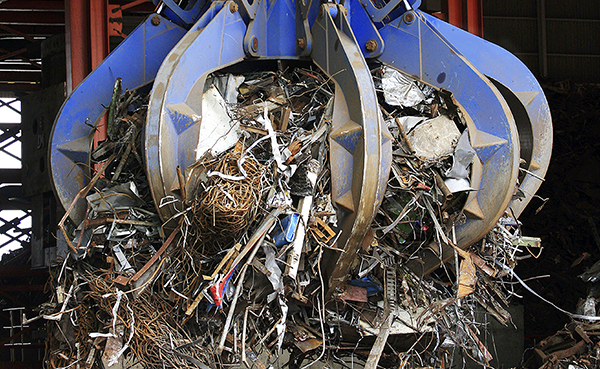
Cognor earnings surge, sees scrap-based cost advantage turning
Cognor says the competitive advantage of scrap-based steelmakers over iron ore-based mills is narrowing after the Polish firm recorded a massive surge in third-quarter earnings, Kallanish notes.
The competitive advantage currently enjoyed by electric arc furnace mills over their blast furnace-oxygen converter-based counterparts could soon reverse after the gap in feedstock costs between the two routes narrowed in Q3. This would put pressure on Cognor’s profitability and semi-finished steel sales tonnages, it observes.
Cognor nevertheless increased crude steel production by 16% on-year in Q3, while overall sales, including of scrap, rose 4.5%, the firm says without providing tonnages. However, finished steel sales fell 4%.
Revenue surged 93% on-year in Q3 to PLN 716.9 million ($180.7m) and net profit soared to PLN 113.48m versus PLN 1.5m in Q3 2020. Spreads widened considerably in the quarter thanks to the faster rise in steel prices compared to scrap prices.
The extraordinary steel market boom seen in Q3 has prompted Cognor to delay the finalisation of two large investment projects until Q1 2022.
In the nine months through September Cognor thus reported a 57% on-year revenue surge to PLN 2.02 billion, while net profit ballooned over nine-fold to PLN 238.2m.
Adam Smith Germany
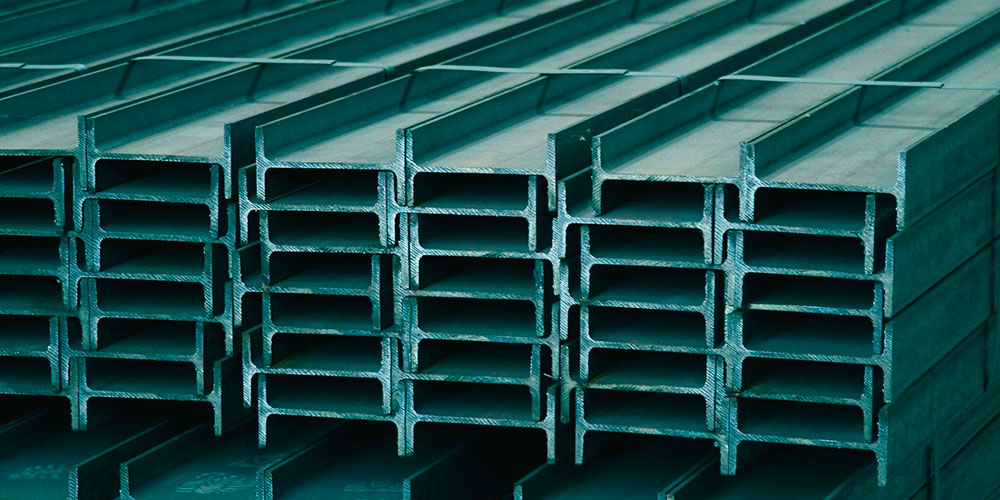
Ukraine’s Metinvest Jan-Sept steel output up 13% on year
Metinvest, Ukraine’s largest steel and mining group, saw steel output over January-September rise 13% year on year to 6.933 million mt.
Metinvest said Nov. 3 it increased production of steel, pig iron and rolled steel after it acquired Dniprovskiy Metallurgy Plant (DMK), one of the largest metallurgy plants in Ukraine, in July 2021. The group started consolidation of production data of DMK in its reports from August.
The company controls Ilyich, Ukraine’s No. 2 steelmaker, Azovstal, the No. 3 steelmaker and DMK, the No. 6 steelmaker.
Over January-September, Ilyich increased output of steel 7% on the year to 3.202 million mt, Azovstal produced 3.346 million mt, up 6% and DMK produced 340,000 mt of steel in August-September.
Metinvest is a vertically integrated group that owns massive iron ore, coking coal mining and steel smelting assets.
Metinvest’s production of rolled steel over January-September increased 23% to 5.345 million mt, up from 4.359 million mt in January-September 2020, but output of pig iron rose 11% to 7.056 million mt.
In the Q3, Metinvest produced 2.575 million mt of steel, up 16% in comparison with 2.229 million mt produced in the Q2.
Metinvest produced 2.651 million mt of pig iron in the Q3, up 18% from 2.254 million mt in the Q2, and production of rolled steel rose 2% to 1.863 million mt in the Q3 from 1.819 million mt in the Q2, the group said.
Metinvest is the world’s No. 7 producer of iron ore and accounts for about 60% of Ukraine’s overall iron ore output. The group controls three major Ukrainian iron ore producers: Pivnichniy HZK, Tsentralniy HZK and Inhuletskiy HZK.
The company’s output of iron ore concentrate and pellets rose 4% on the year to 23.678 million mt from 22.817 million mt produced in January-September 2020.
At the same time, production of coke fell 3% on the year to 3.461 million mt from 3.583 million mt.
Among overseas assets, Metinvest owns Ferriera Valsider and Metinvest Trametal plants in Italy, Spartan UK in the United Kingdom and Promet Steel AD in Bulgaria. Metinvest also owns United Coal Company (UCC), the sixth-biggest coal mining company in the US.
In January-September, Metinvest increased output of coal concentrate at its US-based coal mines by 80% to 4.055 million mt.
UCC is a producer of coking and steam coal located in the Central Appalachian region of the US.
— Alexander Bor

Steel execs see dynamism continuing in US industry
With incredibly strong demand and an agreeable tariff quota deal solidified between the US and European Union, American steel executives see good times continuing for the US industry well into 2022.
Although 2020 was quite the roller coaster ride, it did not stop the dynamism of the US steel industry, says American Iron and Steel Institute ceo Kevin Dempsey. He was speaking at a press conference held during the joint annual meetings of AISI and the Steel Manufacturers Association this week in Washington, DC.
The 232 steel tariffs imposed by the US in 2018 have worked as intended to stabilise the domestic industry and to protect the nation’s national security interests, Dempsey told Kallanish and other reporters.
A report from the Economic Policy Institute earlier this year revealed that American companies have invested upwards of $16 billion since the tariffs were put in place to upgrade and expand the industry. And since that report was released, Dempsey said another $6 billion in planned investments have been announced.
“It’s an incredibly exciting time when you see our companies spending billions of dollars,” says Mark Millett, president and ceo of Steel Dynamics and current chairman of the SMA.
“We’re happy that 232 stayed in place and allowed us to invest our money to improve our industry to produce steel in our country,” says Lourenco Goncalves, president and ceo of Cleveland-Cliffs.
When asked about the current price competitiveness of the domestic industry, Goncalves said: “[The] question implies that excessive prices are artificial. There are no excessive prices. There’s nothing artificial in the old laws of supply and demand.”
Steel prices in the US remain elevated when compared with the rest of the world, Kallanish notes.
“We’re in a cyclical business….It’s a supply-demand driven business, and we understand that,” says Leon Topalian, president and ceo of Nucor, noting that demand is incredibly robust at the moment and is expected to remain so well into next year. Topalian was also elected chairman of AISI in May.
“Yeah, prices are high, but we are investing those dollars. This is a good time for steel,” Millett adds.
Laura Miller USA
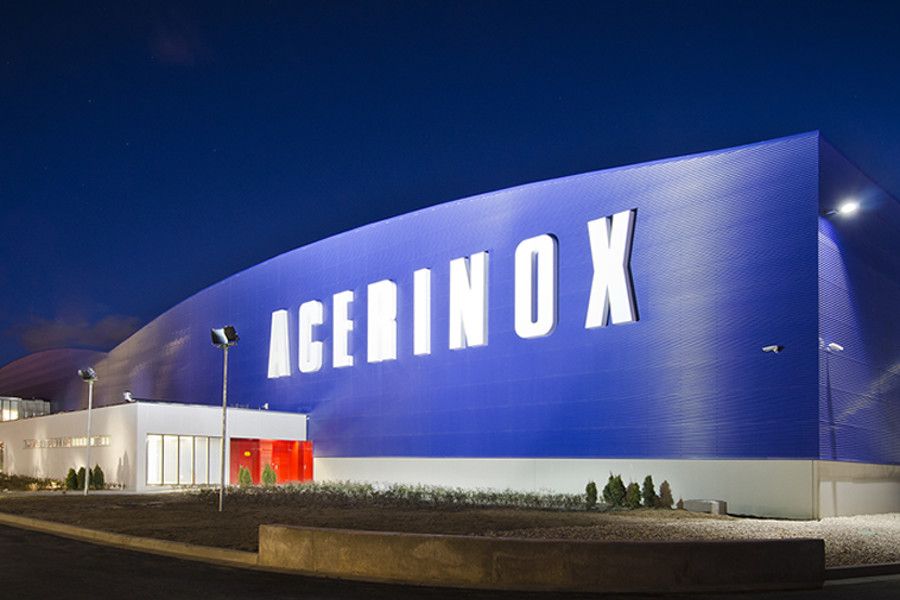
Acerinox sees record 2021 results after 20% Q3 production increase
Spanish stainless steel group Acerinox said Nov. 3 it expects record earnings in 2021 after it increased production volumes and widened margins in the third quarter.
The Madrid-based company expects the momentum to carry on for the first half of 2022, CEO Bernardo Velazquez said, noting that its order books are full “everywhere” and that its production facilities are running close to full capacity.
Acerinox operates plants in Spain, Kentucky, South Africa and Malaysia with a combined melt shop capacity of 4.5 million mt/year, as well as production facilities for high performance alloys in Germany.
The company’s EBITDA in Q3 was the best in 14 years at Eur293 million ($339 million) and this is expected to lead to the company’s best year on record in 2021, Velazquez said.
Production in the fourth quarter is expected to be boosted after Bahru’s site returned from around a three-month halt due to COVID-19 restrictions that spanned the second quarter and Q3.
The halt meant that Q3 melt shop production volume was down 4% versus Q2 at 629,000 mt, although this was a 20% increase from Q3 2020.
Cold rolled production was at 408,000 mt in Q3, up 23% year on year while hot rolled long production was 59,000 mt, up 15% year on year.
VDM recovers
Production was seen at pre COVID-19 levels in its Germany-based alloy business VDM that the company bought in 2020, Velazquez said.
In Q3, it produced 19,000 mt in its melting shop, up 35% year on year and 11,000 mt in its finishing shop, up 11% over the period.
Synergies of the merger were also becoming apparent, Vazquez said, with Acerinox starting to produce HPA in its stainless sites.
The company said it saw strong conditions in all markets with demand, inventory levels, prices and lower import competition all bullish factors, with just the risk of energy prices in Europe a lingering concern.
Increased energy costs in Spain are currently costing around an extra Eur8 million or Eur9 million/month, Acerinox estimates, although the company has moved to secure more long-term supply at better prices and increased its use of power purchase agreements, Velazquez said.
Additionally, the better margins obtained in Q3 had been sufficient to offset the rising energy costs, he said.
— Gianluca Baratti
Steelmakers not doing enough to address Scope 3 emissions: Kloeckner
Steel companies are not doing enough to address Scope 3 CO2 emissions, which will be the biggest challenge for the steel supply chain in energy transition, Guido Kerkhoff, CEO of German steel stockholder Kloeckner, said Nov. 3.
At the press call on the company’s third-quarter results, Kerkhoff said that some are only superficially looking at lowering CO2 emissions.
He said 99% of Kloeckner’s CO2 emissions fall under the Scope 3 category, which measures indirect greenhouse gas emissions of corporations.
Kerkhoff said Kloeckner is going to be the biggest customer of the H2 Green Steel venture once it starts production and the steel volume acquired from Kloeckner would address 10% of the stockholder’s Scope 3 emissions.
Kloeckner signed a distribution deal with Swedish fossil-free steel venture H2 Green Steel in October this year to distribute up to 250,000 mt/year of green steel from 2025.
H2 Green Steel, founded in 2020, aims for large-scale fossil-free steel production in northern Sweden by 2024 with a production target of 5 million mt/year of fossil-free steel by 2030.
Kloeckner’s emissions under Scope 1 and 2 totaled 100,000 mt of CO2/year.
Kerkhoff said that despite the difficulty of addressing all three Scopes, the steel industry is in an advantageous position compared to other commodities due to its recyclability and the technical changes that are underway. He said steel would be able to replace other materials to achieve a greener supply chain and that the company is working on this with one customer.
He added there are opportunities in construction and the carbon fiber space to use more steel.
Increase in real steel demand
In terms of the current short-term outlook, Kloeckner sees the steel price environment improving, backed by an expected increase in real steel demand in 2022 in the US by 8%-12% and Europe by 4%-8% in the construction and mechanical engineering industries in both regions.
Shipbuilding is expected to grow in the US but fall in Europe, while auto demand will slightly increase. The energy industry is expected to grow as well but mostly in the US, it added.
The auto industry is expected to see some easing of the semiconductor shortage in 2022 as well, Kerkhoff said.
The semiconductor shortage did have an impact on Q3 volumes. Overall, shipments were down 4.2% year on year at 1.19 million mt. Kloeckner continued its margin-over-volume strategy, opting for higher priced sales instead of large bookings, while the uptake from auto was muted.
The overall higher price level of steel compared to Q3 2020 meant that Kloeckner was able to achieve a sales increase of 59.3% year on year to Eur2 million ($2.32 million) and EBIDTA of Eur277 million, up from Eur40 million in Q3 last year.
— Laura Varriale