

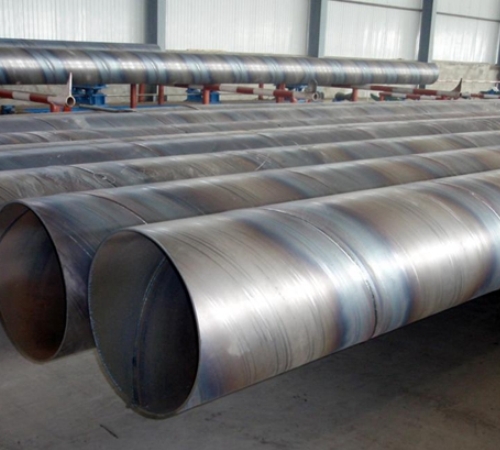
Federal Steel Supply acquires Process Pipe Materials
Federal Steel Supply (FSS) has acquired distributor Process Pipe Materials, Kallanish learns from FSS’ parent company V&A Capital.
Process Pipe is a producer of industrial pipe, fittings, valves, and flanges based in Lafayette, Louisiana. It operates distribution facilities in New Mexico and Texas.
“The addition of Process Piping Materials further positions FSS as a leading provider of pipe and related products to a broad range of end-markets and geographies. Our combination creates a strong platform from which to expand into other geographic regions where we see opportunities,” says FFS ceo Scott Harris.
FSS is a distributor of carbon steel and chrome-moly tubular products serving the oil and gas, fabrication, and construction industries. It is based in Chesterfield, Missouri.
Laura Miller USA

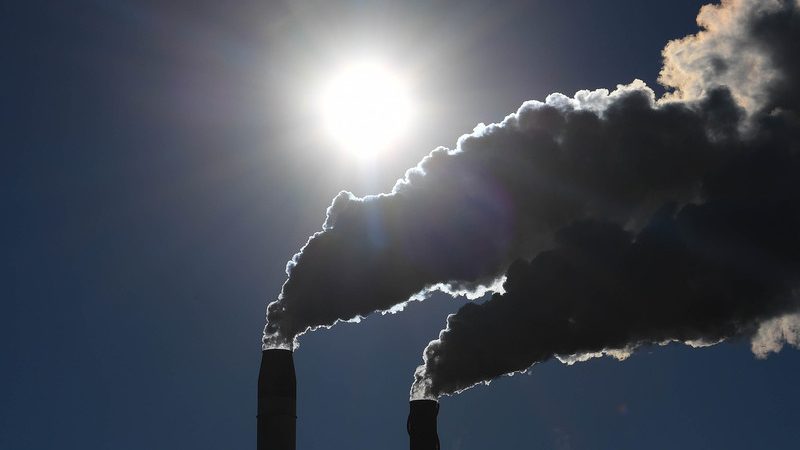
EU backs seven decarbonization projects with Eur1 billion Innovation Fund
The EU is backing seven large-scale industrial decarbonization projects through its Innovation Fund, with over Eur1.1 billion ($1.3 billion) to support breakthrough technologies in energy-intensive industries, hydrogen, carbon capture, use and storage and renewables, the European Commission said in a statement Nov. 16.
The grants will support projects in Belgium, Italy, Finland, France, the Netherlands, Spain and Sweden, and were selected for their greenhouse gas reduction potential, it said.
“Innovation is crucial to provide the solutions we need this decade to keep 1.5 C within reach,” EC Executive Vice-President Frans Timmermans said in the statement.
“Together with sharp emissions reductions, innovation gives us a path towards the Paris Agreement,” Timmermans said. “Today’s decision gives concrete support to clean tech projects across Europe and enables them to scale up game-changing technologies that support and speed up the transition to climate neutrality.”
The selected projects include the chemicals, steel, cement, refining, power and heat sectors. All are either part of industrial hubs or would kick-start industrial decarbonization clusters, the EC said.
The selected projects are “sufficiently mature to enable their quick deployment,” have potential to scale and are cost effective, the statement said.
The successful projects include Hybrit in Sweden that aims to eliminate GHG emissions from steel production by using renewable hydrogen in Gallivare and Oxelosund. A demonstration project in Finland will produce clean hydrogen at a refinery in Porvoo with CCS.
A French CCS project for a cement plant also received the EU’s backing, along with a CCS value chain at the Port of Antwerp in Belgium, including the production of hydrogen and chemicals.
In the renewable energy sector, the EU is supporting an industrial-scale pilot to produce solar photovoltaic cells, while a Spanish project will convert waste to methanol. The EU is also supporting a full-scale bioenergy CCS facility in Sweden.
Successful projects will now prepare individual grant agreements with the European Climate, Infrastructure and Environment Executive Agency, the body implementing the fund, to be finalized in the first quarter of 2022, the EC said.
The first Innovation Fund call is to support large-scale projects with capital costs of over Eur7.5 million.
“Our Fit for 55 package proposes to increase the Innovation Fund so that even more innovative European projects and ideas can jump ahead in the global climate innovation race,” Timmermans said.
The EC launched a second call for large-scale projects on Oct. 26, with a deadline of March 3, 2022. It is encouraging all projects unsuccessful in the first round to re-apply.
The EU will separately fund smaller projects with capital costs below Eur7.5 million through the Innovation Fund.
| Successful EU Innovation Fund projects | ||||
| Project name | Location | Participants | Description | CO2 avoided in first 10 years (million mt) |
| Kairos-at-C | Belgium, Netherlands, Norway | Air Liquide, BASF | Cross-border CCS value chain. Multi-modal CO2 transport infrastructure in Antwerp, storage in North Sea. | 14.2 |
| Tango | Italy | Enel Green Power | Industrial-scale solar PV cell production, scaling to 3 GW/year from 200 MW/year. | 21 |
| BECCS@STHLM | Sweden | Stockholm Exergi | Full-scale bio-energy carbon capture and storage facility at existing heat and power biomass plant in Stockholm. | 7.8 |
| K6 | France | EQIOM, Air Liquide, VDZ | Decarbonization of Lumbres cement plant through biomass and alternative fuels, plus CCS. | 8.1 |
| Ecoplanta | Spain | Ecoplanta Molecular Recycling Solutions | Project to convert non-recyclable waste to chemicals and biofuels, displacing fossil fuels. | 3.5 |
| Hybrit demonstration | Sweden | Hybrit, SSAB, LKAB, Vattenfall | Replaces coal-based blast furnaces in steel production with direct hydrogen-based reduction technology. | 14.3 |
| Sustainable Hydrogen and Recovery of Carbon (SHARC) | Finland | Neste | Hydrogen production by renewable-powered electrolysis and from fossil fuels with CCS at Porvoo refinery. | 4 |
| Source: European Commission |
— James Burgess


Green steel transformation will support scrap prices: conference
As the “green” steel transformation is about to play an increasingly important role in the overall move towards carbon neutrality, the importance of scrap will increase across the whole steel industry. So said delegates at the Kallanish Flat Steel 2021 virtual conference held on Tuesday.
“Green steel is going to be the most important issue for the steel industry in the future,” said Colakoglu Metalurji chief executive Ugur Dalbeler. “Certain areas will have better positions. In my opinion, it is the US and the second one is the European Union.”
The trend will also be driven by industries including construction and automotive as they all have plans for reducing carbon footprints, according to Dick Sands, managing director distribution of Stemcor.
Dalbeler believes scrap will be more and more important and will see higher prices. Sands agreed with the view, saying decarbonisation will increase demand for scrap and keep prices high. As for China, Dalbeler thinks the country will consume all the scrap it generates, rejecting the speculation that China might become a net exporter of steel scrap.
Another issue the industry is facing already is energy cost, and this will continue as green steel brings the need for clean energy. High energy and raw material costs will result in high steel prices, and a higher “new normal” price level. “From now on, we will see steel prices be at least $700-800/tonne and it might even be higher,” Ugur commented.
Trade measures, however, will force global supply chains to become increasingly regional, he added. This creates a risk for Turkish scrap procurement from Europe (see separate article).
By Kallanish Team

Green steel demand grows, challenged by supply constraints
Demand for green steel is increasing and technologies continue to be developed as the industry moves towards decarbonisation and a more sustainable future. Low-cost and renewable energy sources must be more readily available, however, should the industry wish to achieve its carbon netural goals. Speakers at Kallanish’s virtual Flat Steel Conference discussed these topics and more on Tuesday.
Sander Heinhuis, head of marketing automotive at Tata Steel Europe, says it’s not about finding just one best option for decarbonisation. The best solutions can differ according to location, depending especially on low-priced natural gas and hydrogen availability.
Steelmaking is trending away from the typical blast furnace/basic oxygen furnace route, but there is not enough scrap or direct reduced iron currently available to completely replace that capacity. Nor is there enough green hydrogen available at the scale needed, said Todd Ames, senior key account manager at Midrex Technologies.
“We can produce steel with near zero emissions if green energy and green hydrogen are available at a reasonable cost. Most places don’t have such quantities of H2 available,” Ames said.
The greatest opportunities exist in areas with abundant natural gas reserves to build large plants where natural gas and hydrogen can be made into ho-briquetted iron and then transported to steelmakers around the world, Ames said.
Friso de Vries, owner of service centre Vogel Stahl, says he is already seeing demand for green steel from his customers, but current production is limiting availability. Stockists can add value to green steel in the processing and transportation segments of the supply chain, he said, but they need the help of steelmakers in actually making the product available in greater supply.
Countries utilising green energy sources will have the best chance to make green steel, and Sweden’s SSAB is working diligently to achieve fossil-free steelmaking, said Thomas Hörnfeldt, vp sustainable business and public affairs at SSAB AB.
“Our steels in the future will have at least the same performance as we have today, with the added value of being fossil free,” Hörnfeldt noted.
Laura Miller USA

EU buyers seen treading cautiously in first quarter
Buyers, especially of coil products, will be cautious with placing orders in the first quarter of 2022 because they need to bring down current overstocks, according to a speaker at Tuesday’s Kallanish Flat Steel 2021 conference.
“Orders from steel service centres and tier 1/tier 2 suppliers at mills will be lower for a while because we need to get rid of our high stocks,” said Francios-David Martino. The chief executive of Europe’s largest service centre, Becker SSC in Germany, believes that this will occur through Q1 and into Q2.
Due to the shortage of semiconductor chips, call-offs for steel put aside for the automotive industry are 30% lower than planned, he detailed. Business in the first quarter will not be totally out of the ordinary, but “we will draw less from mills”, he said.
Becker SSC, based in Bönen, North Rhine-Westphalia, has a storing capacity of more than 100,000 tonnes, and these days is dealing with “double the volume we have normally”, Martino revealed. Even more pressuring is the burden on tied-up capital, as the extra volumes translate to “times the cash that is locked”, he explained.
His thoughts were picked up by Fernando Espada of European distributors federation Eurometal. Companies that have problems with tied-up capital “will stop buying simply because they cannot afford it anymore”, Espada added.
Christian Koehl Germany

Summer coil peaks could repeat in 2022
The hibernation of the automotive industry throughout the prevailing period of semiconductor shortages should come to an end next summer, which will then see a massive surge in demand and prices.
“As soon as auto is back we will see the level again as we saw in the summertime this year,” Fernando Espada of Eurometal said at the Kallanish Flat Steel 2021 conference held online on Tuesday. He was referring to the all-time peak of prices seen in mid-year, which has eased somewhat over the months since.
His view was supported by Alessandro Sciamarelli of Eurofer who believes that the disruption to the semiconductor supply chain will wane after the first quarter next year, and that demand will surge in the second half-year.
Francois-David Martino of service centre Becker SSC in Germany worded the scenario more drastically. “We will face huge demand from the OEMs as of June,” he predicted. Volkswagen, for example, “has a huge backlog of several 100,000 cars that cannot be produced now”.
Martino does not see imports on the horizon that could help in feeding that demand. In fact, he points to another factor of external trade that could play a role until then. As the EU and the USA are coming to terms to ease Section 232 measures, the EU’s transatlantic exports should rebound, and thus take away volumes from the domestic European market.
Christian Koehl Germany
High coil prices will stay: Kallanish conference
Steel prices will remain elevated even after the current downward correction in coil prices from the highs seen in summer, and could mean a new climate for steel pricing.
Francois-David Martino, chief executive of major service centre Becker SSC in Germany, says he does not see much price reduction from mills anymore, despite pressure from imports. At Tuesday’s Kallanish Flat Steel 2021 conference, he said he believes that “prices will remain high”. His assessment is in line with other market players.
Notably, the indicative price Martino gave for hot rolled coil – €900/tonne ($1,021) – is a good deal below prices quoted elsewhere in northwestern Europe. He did not specify if the figure applies only to integrated local northwestern integrated mills, or takes into account imports from in and outside the EU. Quite possibly, Becker SSC, together with its strong parent, Klöckner & Co, enjoys better offers for the volumes they buy.
Another speaker from the distribution sector, Fernando Espada of Eurometal, said “prices will be moving within a new and different range” in future. He noted that since the financial crisis of 2008/09, mill margins have not sustainably recovered, until this year. There will be a new level of prices, a “new equilibrium”, and adjustments to the pricing mechanism, he commented.
Christian Koehl Germany
US-EU deal, auto industry drive demand recovery
The new EU-US trade deal should lead to a normalisation of global trade flows and prices, said participants at the Kallanish Flat Steel 2021 virtual conference on Tuesday.
“The removal of US Section 232 should improve trade flows and improve European steel presence in the North American market. The new trade agreement will be very healthy for the steel sector and the EU economy,” EUROMETAL president Fernando Espada said during the event.
The global market and steel pricing equilibrium should also be supported by the absence of Chinese exports. “Steel prices will see certain fluctuations in the following months, but the cycle of volatility is seen coming to an end. Expected new offers, however, will not be the same as that in 2020,” Espada continued.
Espada believes the European steel market should return to normal by the second quarter in 2022, with the recovery of automotive industry production. “The normalisation of semiconductor supplies will boost car output, and consequently support the normalisation of steel sector demand. The post-Covid-19 situation is moving steel prices to a different range, following a new adjustment mechanism including additional costs and surcharges,” Espada explained.
Meanwhile, Eurofer director of economic and market analysis Alessandro Sciamarelli said the reopening of the US market for European steel will have a positive effect on the sector. “The positive effects will range from the establishment of fair trade, as it possible, to reducing the diversion of the steel flow,” he commented. “Demand is set to improve, so the US is an open gate for European steel.”
According to Sciamarelli, the worst of the economic recession is over, although growth in steel-consuming sectors will remain uncertain in Q1 2022. “Global supply chain bottlenecks and disruptions, as well as shortage of components, rising energy and transport costs impacting the manufacturing sector, and automotive in particular are not expected to ease substantially before Q1,” Sciamarelli predicted.
Inflation has gained ground and reached record highs in many advanced economies in August-September, which may trigger a serious concern in case Central Banks wanted to raise interest rates, he continued.
“The rise in interest rates should be avoided as public support schemes after the pandemic, such as NextGenEU, have created an enormous additional amount of public debt. Eurofer remains positive for 2022, although the market recovery will depend mostly on the macro-economic picture,” Sciamarelli concluded.
Todor Kirkov Bulgaria