


Inflation could be 2022’s big challenge: Kallanish conference
Apart from issues that are proprietary to the steel business, like price fluctuation and supply shortages, inflation and financing problems could be the biggest challenges going forward, said speakers at the Kallanish Flat Steel 2021 conference.
Asked what he considers the biggest challenge in the near future, Alessandro Sciamarelli of Eurofer replied he is afraid that 2022 could see “another shock in monetary policy”.
He was supported by Francois-David Martino, chief executive of German steel service centre Becker Stahl SSC, who stated that “inflation is the risk we may face next year.” He added: “High prices are good for employment, but may kill demand.” In the steel chain, inflation has not arrived at the consumer level, but it will do so in January when carmakers issue new price lists, he pointed out at this week’s event.
One effect on steel trade could occur further upstream, Martino believes. If the EU is not tackling inflation, it will have to ease safeguard measures against imports, to open the doors to alternatives, if domestic prices get out of reach, he suggested.
He also noted that it is difficult for many companies to finance the high prices and the capital tied up in high stock levels. His firm is therefore extremely careful about the credit lines of customers and prefers to work with customers it has known for years.
Fernando Espada of distributors federation EUROMETAL did not quite agree in this regard, pointing to the low interest rates which facilitate easy financing. “Some companies have problems because they had problems even before Covid-19,” he said. However, he expressed understanding for the uncertainty among many steel consumers, who “simply stop buying because they cannot finance it anymore”.
Christian Koehl Germany


Italian sections prices flatten
Italian beam and merchant bar prices are stable compared to the beginning of November, despite some increases implemented by producers this month on high scrap prices and energy costs.
Demand for sections remains unreliable, with purchasing groups and large distributors unwilling to commit to high volumes. Some have replenished their stocks for the end of the financial year, but the sector is refusing the increases and blaming unreliable demand, particularly for merchant bar.
Market sources say domestic merchant bar is trading at €460-480/tonne ($520-543) base ex-works, while producers are now asking for €490-495/t base ex-works. Including €420/t average size extras, local material is at €890-900/t ex-works, sources suggest.
Beam values remain at €570-590/t base ex-works, with producers asking for €600/t base. Due to uncertainty, some service centres are implementing low prices and intend to sell as much as possible before the Christmas holiday. Including €380-390/t average size extras, the first category of domestic beams is at €960-990/t ex-works. Prices increase by €20/t for each subsequent category, Kallanish hears.
Natalia Capra France

EU waste shipment proposal could complicate scrap trade
The European Commission has published this week its proposal to review existing waste shipments regulations. While the document does not contain indications directly aimed at limiting scrap exports and trade, the new proposal includes a series of limitations and standards to be applied to firms exporting outside the EU.
As largely anticipated by sources in the market, the proposal mentions the necessity for exporters to only sell waste to countries and customers respecting similar standards required within Europe.
“The Commission proposes that all companies exporting waste outside the EU conduct independent audits in the facilities to where they ship waste in order to ensure that those facilities are operating in line with criteria showing that they manage waste in an environmentally sound manner,” the document explains. “If the audits show that this is not the case, the companies should stop exporting their waste to the facility concerned.”
If approved, the new regulation could effectively make the process of exporting steel scrap from Europe more complicated. Most of the impact is nevertheless expected to be felt by importing countries outside of the OECD, such as India and China, to which stricter regulations and monitoring will be applied.
A Benelux exporter notes that the impact on ferrous products will be limited, while plastics will be more impacted.
“Today, only 12% of raw materials used in EU industry come from recycling,” the Commission document seen by Kallanish explains. “While shipments of waste for recovery in the EU have steadily increased in the last decade, too many waste materials are still not prepared for reuse or recycled in new products in the EU, representing a considerable loss in its transition to a circular economy.”
“Every year, the EU exports around 33 million tonnes of waste,” it continues. “This represents around 16% of the total of global trade in waste, making the EU one of the top exporters of waste worldwide. The EU also imports 16 million tonnes of waste, while 70 million tonnes of waste is traded within the EU.”
“The EU relies heavily on exports for a number of waste streams, in particular ferrous and non-ferrous metal scrap, paper waste, plastic waste, textile waste and glass waste,” the Commission explains.
EU exports of waste have increased by 75% since 2004, with almost half destined for non-OECD countries. This has generated increased pollution linked to the unsound treatment of some of this waste in many destination countries.
Emanuele Norsa Italy
Samuel: Metal industry leadership needs diversity
Diversity is needed within the leadership of the metals industries and redefining what makes a great leader is key to making this happen, says Samuel, Son & Co president and ceo Colin Osborne.
Speaking at the Association of Women in the Metal Industries’ annual meeting last week in Orlando, Florida, Osborne said most diversity initiatives meet great resistance at senior levels of management and ultimately fail because of this.
“[Diversity] does have to start from the top and it has to be sincere,” Osborne said. “Putting the best possible leaders in the best possible position, that’s what I need to do.”
Osborne said Samuel, Son & Co has three areas of focus to make this happen: internal development, external recruiting, and the training and culture within the company. Communication is key at all levels, he told AWMI conference attendees, which included Kallanish.
Conventional views of leadership value confidence over everything else, including competence, he said, but good leadership is not just about commanding control.
Traditional leadership characteristics such as overconfidence, charisma, commanding, and talking need to be replaced by placing more value on things like humility, thoughtfulness, inspiration, and listening, he said.
“We are investing heavily in training and communication to change the view of what great leadership really looks like so the best leaders get promoted,” Osborne said.
Osborne said he is happy with the trajectory of Samuel, Son & Co’s approach to redefining leadership. While his company’s approach is nowhere near mature, “We are learning as we go,” he said.
Samuel, Son & Co is a privately-owned company headquartered in Oakville, Ontario. It is one of the oldest metals service centres in North America with locations throughout the US, Canada, and Mexico. Its metal purchases reach between 3-4 million short tons/year.
Laura Miller USA

US housing completions down year on year in October: government data
US housing completions in October were markedly below the year-ago level, according to data from the US Census Bureau and Department of Housing and Urban Development Nov. 17.
October housing completions were unchanged from the revised September estimate of 1.242 million units, but were 8.4% lower than the October 2020 rate of 1.356 million units.
October housing starts were at a seasonally adjusted annual rate of 1.52 million units, a slight decrease of 0.7% compared with September’s revised estimate of 1.53 million units. Still, housing starts were 0.4% above the October 2020 rate of 1.514 million units.
US privately owned housing units authorized by building permits increased month on month, rising 4% from September to 1.65 million units. This was 3.4% above the October 2020 rate of 1.595 million units.
— Ingrid Lexova

EU may restrict waste exports including metal scrap to non-OECD countries
EU exports of waste, including metals scrap, to non-OECD countries may be restricted in a move to create a robust and integrated market for secondary raw materials, in line with the concepts of a circular economy, the European Commission said Nov. 17.
That is geared to help the EU meet its so-called ‘Fit for 55’ package of legislative proposals to reduce greenhouse emissions by 55% by 2030, as compared to 1990 levels, the EC said.
Under a proposed revised legislation on waste shipments, including steel and non-ferrous scrap, EU scrap metal exports to third countries will be allowable only if they can manage these sustainably, the EC said in a formal communication on the subject to the European Parliament, European Council, the European Economic and Social Committee and Committee of the Regions.
Under the proposal, all EU companies that export waste outside the bloc should ensure that the facilities receiving their waste are subject to an independent audit showing they manage the waste in an environmentally sound manner.
“The EC will rely on audits to be conducted in third countries,” EC Executive Vice-President Frans Timmermans said at a news conference on the proposed revision.
As well as laying down stricter rules on the export of waste to non-OECD countries, the proposals should improve monitoring and enforcement of rules on waste exports to OECD countries, the EC said.
The new directive will require collaboration between EU member states and will cover exports of waste paper, plastics, glass, textiles and wood as well as metals, it said.
Largest ferrous scrap exporter
The EU is the world’s largest exporter of ferrous scrap, the use of which can assist in the decarbonization of steel production.
The region exported 17.4 million mt of steel scrap in 2020, as well as 1.6 million mt of copper, aluminum and nickel scrap and 0.1 million mt of precious metals scrap, the EC said. Exports of both ferrous and non-ferrous metal scrap are expected to rise gradually to 2030, with prices also expected to remain stable or rise, according to data presented.
According to the proposal, the new regulations should be of unlimited duration and should be implemented with a start-up period from 2024 to 2027, followed by full-scale operation, and will be directly managed by the EC.
Tepid market reaction
The new proposal falls short of a strict or even blanket export ban on certain types of steel and metals scrap which had been feared by some trade quarters and could possibly have distorted trade.
Nonetheless, it met with a tepid response from the market, due mainly to its lack of specific proposals. It defined a list of hazardous materials, including certain non-ferrous metal products: however, exports of EU hazardous waste to non-OECD countries are already prohibited under existing legislation.
“For the moment it does not mean much. None of this is very precise,” one EU recycler told S&P Global Platts.
An EU trader said: “Basically same of what already in place for non-OECD countries, hence not great change at all. I now rather expect more exporters to be in the market so to exploit the weaker EUR.”
For one EU scrap exporter, “the issue will be how scrap exporters will react to it.” He noted it makes little sense to stop export of heavy melting scrap grades that are little used in Europe but are exported to Turkey. “A ban would affect the environment because this un-exported scrap will be lying around unused. Those decisions would run counter to WTO rules.”
A Turkish agent noted that without more investments in electric arc furnace steelmaking in the EU, the region will not be able to consume all its scrap.
Steel scrap is used mainly in EAFs which emit less GHG that blast furnaces based on iron ore and coal inputs.
“There are strong incentives for the steel sector in the EU to use more steel scrap in the future,” the EC said in an impact assessment document accompanying its main proposal, noting the region “has a high potential to absorb additional scrap.”
Aluminum sector fears ‘unfair’ competition
European Aluminium, a producers’ association, said the Revision of the Waste Shipment Regulation is an important step towards further elevating environmental standards and attracting more investments to the European recycling value chain. However, EA urged the EC to level the playing field for waste exported outside Europe by clarifying the ‘equivalent conditions’ for exported waste.
“Both environmental as well as labor rights must form the basis of equivalency,” EA said in an emailed statement to Platts. “Without clear guidelines on how scrap should be recycled, there is no level playing field. Losing valuable resources to competitors in countries with less ambitious environmental and health and safety regulations means unfair competition for high quality European operations.”
“To facilitate the European circular economy, the EU must also simplify and harmonize the administration for the intra-EU shipments of waste and address the missing Green Listed codes,” it said.
Export destinations
Ferrous metal waste is by far the largest category of waste exported by the EU in both tonnage and value terms, with Turkey the largest single country destination. However, despite the large tonnage of ferrous metal scrap exported to third countries, a significantly larger volume of such wastes is shipped between EU Member States, the EC noted.
According to EU Comext data, 74.44% of the EU’s ferrous metal waste went to OECD countries and 25.56% to non-OECD nations on average in 2018 and 2019. The picture was, however, reversed in the case of non-ferrous metals waste, with 28.92% going to OECD nations and 71.08% to non-OECD nations during this period.
Non-ferrous metals wastes volumes from the EU doubled between 2004 and 2019, with China the largest recipient, with other major recent recipients including the US and India, according to the EC data.
— Diana Kinch, Wojtek Laskowski and Annalisa Villa

EU quotas sharply reduce Turkish mills’ HRC exports
The quotas imposed by the EU sharply reduced Turkish mills’ HRC export sales in the first nine months of the year, S&P Global Platts observed from the latest Turkish Statistical Institute (TUIK) data.
Turkish mills’ overall HRC exports declined to 1.9 million mt in January-September, 385,000 mt lower than exported in the same period the previous year, which raised the pressure on prices, especially in recent months amid globally slowed demand.
According to the TUIK data, Italy which was Turkey’s main HRC export market in January-September 2020 at 730,000 mt, imported 468,000 mt of Turkish HRC in the same period this year, while exports to Spain declined to 258,000 mt in that period, down from 300,000 mt.
Turkish mills’ HRC exports to Belgium alone remained above last year at 129,000 mt in the first nine months, while exports to other European countries remained notably low on year due to quotas.
Despite the decline seen in exports to the EU, Turkish mills managed to increase their HRC shipments to the US as prices there stood notably above other market prices.
Turkish mills’ nine-months HRC exports to the US totaled 291,500 mt, sharply up from 14,300 mt exported in January-September 2020.
However, taking into account that this country was one of Turkey’s top HRC markets, importing more than 500,000 mt per year before the Section 232 tariffs, it could still be considered a low figure for sales to the US.
The deal that the US and EU reached on Oct. 30 to replace the Section 232 metals tariffs with a tariff-rate quota on imports from the EU, could also harm Turkish steel exports to the US in the coming months, according to Turkish industry sources.
Turkish mills also raised their HRC exports to Canada in January-September by shipping 96,500 mt, versus zero in the same period the previous year.
— Cenk Can
HDG prepares for Q1 hikes on signs of auto contract finalizations
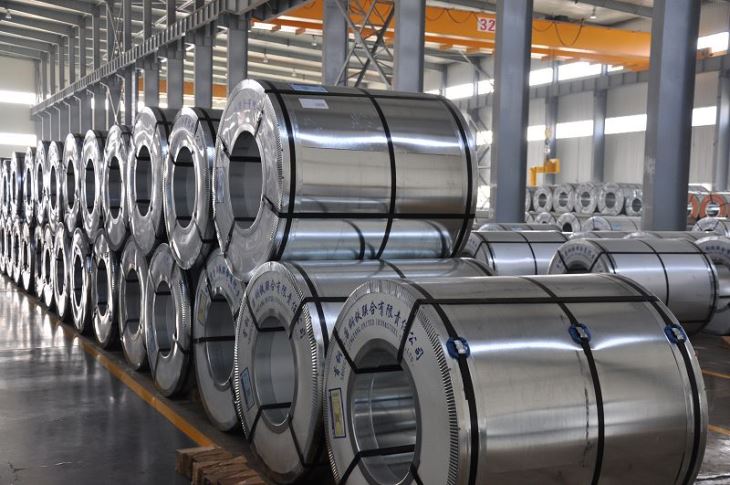
North European hot-dipped galvanized steel prices were lower in the week to Nov. 17, as mills look to make their last discounts on previously agreed automotive material now back in circulation.
There has been minimal pricing pressure on HDG products following weak automotive production, with the supplementary demand from other industries building momentum, accompanied by expectations of renewed automotive demand in the first quarter, sources told S&P Global Platts.
Participants across the supply chain are taking the first signs of auto contract finalizations as the directive for the European steel market in Q1, with some buyers hesitant to purchase ahead until prices are widely announced, due to concerns about the viability of domestic demand. Some original equipment manufacturer contracts were heard finalized between Eur1000-1050/mt delivered Europe — the general market expectation.
“There are no more discounts and now mills are facing issues with logistics; the ports are inundated with material and there are restrictions with vessels,” a European mill source said. “We are just offering for Q1 now — not offering too much spot — everyone is in wait and see mode. People just want automotive contracts finalized.”
The source said he expected this year’s auto contracts to have a Eur600-650/mt premium over the previous year. For cold-rolled coil, Eur1200/mt was the confirmed price in some signed contracts from OEM, the same mill source said.
Mills were heard to be taking positions for export, with the door to the US market wide open to European suppliers.
“Mills starting to offer actively, US prices are still super high,” the mill source said. “There are some opportunities to move volumes there and get good deals as opposed to Europe.”
In Italy, spot prices were heard slightly lower, as mills look to alleviate the shortfall in auto demand and uptake in spare auto volumes, with prices earlier in the week heard between Eur1100-1130/mt ex-works Italy.
A second European mill source said that he expects the semiconductor shortage to resolve by the first half of next year and the excess HDG material to be cleared by Q1.
“Demand will pick up and we will have a new market. Energy prices are increasing, transport logistics are heating up,” the mill source said. “Prices aren’t falling any more, since weeks we have been stable on same level, we can increase prices because raw materials, transport, energy, is all pointing toward uplift.”
— Amanda Flint