

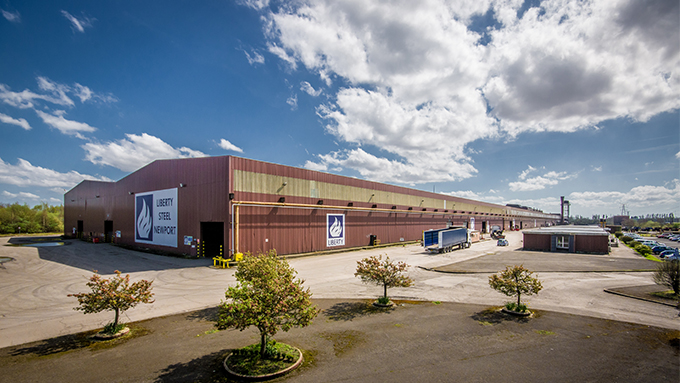
Poland greensteel producer Liberty Czestochowa restarts steel prefabricates production
Polish greensteel producer Liberty Czestochowa has restarted production of steel prefabricates for the first time since 2020, the company said Nov. 22.
The restart of the 2,500 mt/month prefabrication plant was allowed after it received all the necessary certificates, with the first order for one of the line’s regular customers already being processed.
The Huta Czestochowa plant was previously suspended in mid-2020, due to financial issues, and the company was acquired by Liberty Steel Group, part of metals and energy group GFG Alliance, in May 2021 for $51.55 million.
The prefabrication plant manufactures the greensteel produced by the company into prefabricated products, such as wind turbine and pressure tank parts.
Liberty Czestochowa’s director of steel structures and prefabrication plant Jaroslaw Huptys said the realization of the first orders would allow the company to verify its capabilities and the efficiency of the plant’s equipment after a long break.
“If we can ramp up our production of prefabricates to previous levels then it should be possible to increase employment in our plant to over 100 workers,” he said of the plant which previously employed 72 workers.
The head of Liberty Czestochow’s prefabrication order fulfilment department, Robert Gierlinski, said the company was already receiving inquiries from past customers, which was “a good sign for the future.”
In August, Liberty Czestochowa said it planned to increase steel production to 1 million mt/year, with July production at its highest monthly levels since 2017.
— Jacqueline Holman

Japan: Crude steel output rises 14.3% on year in October
Japan’s crude steel production in October reached 8.22 million mt, up 1% from September and 14.3% year on year, data from the Japan Iron & Steel Federation data Nov. 22.
The firm start to the fourth quarter was due to strong demand from the country’s manufacturing sector.
The ease in pandemic restrictions and a ramped-up vaccination program that promoted domestic economic activities led to the au Jibun Bank Japan Manufacturing Purchasing Managers Index for October to reflect an expansion to 53.2 from 51.5 in September.
Of the overall output, 6.01 million mt came via convention blast furnaces, down 0.2% from September but up 13.4% against October 2020, while electric arc furnaces manufactured 2.21 million mt of crude steel in October, a 4.3% month-on-month gain and a 16.6% jump year on year.
With the October data summed up, crude steel production in the first 10 months of 2021 totaled 80.36 million mt, 17.5% higher on the year. But compared with the same period pre-COVID-19, 2021’s January to October output has recovered to just 4.1% shy of 2019’s production.
Downstream, in Japan’s finished steel production, 5.61 million mt of hot-rolled products were made in October, up 1.4% and 10.5% higher from September 2021 and October 2020, respectively.
Wide strips formed the bulk of the HR production at 3.26 million mt, a slight 0.5% gain from September and 10.1% higher annually.
Year to date, as of October, HR products totaled 54.76 million mt with wide strips making up 33.12 million mt. The former was up 11.7% while the latter grew 17.0% on a year-on-year basis.
Demand for automotive steel is expected to fall following local vehicle production and sales targets cuts for the financial year ending March 31, 2022.
For instance, Toyota Motor Corp. announced Nov. 4 that it lowered its annual production forecast to 9 million vehicles from 9.3 million vehicles it previously projected in May, citing a global shortage of semiconductor chips and the coronavirus.
Similarly, on Nov. 5, Honda Motor Co. cut its annual vehicles sales target by 650,000 to 4.2 million units for the financial year ending March 31, 2022.
— Clement Choo, Samuel Chin
ArcelorMittal concludes buyout of Spanish steel tube group Condesa
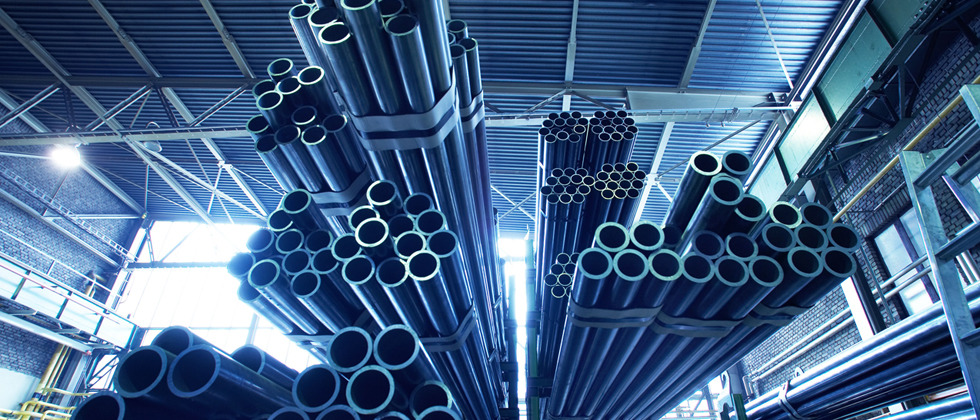
ArcelorMittal has concluded the buyout of its partners in Spanish steel tubing producer Condesa Tubos after receiving antitrust approval, the company said Nov. 22.
As a result of the purchase, whose value was not disclosed by the company, AM will take full control of manufacturing facilities in Lesaka, Berrioplano and Alava, Spain as well as Altensteig-Walddorf in Germany, all belonging to Condesa.
AM already held a 33% stake in Condesa, which specializes in steel tubes and shaped soldered steel. The companies announced the deal in July this year.
The unit will be incorporated into ArcelorMittal Europe – Tubular Products, which makes tubes and pipes for the energy, building, engineering and transport sectors in Czechia, France, Poland and Romania. It will make AM Tubular the largest producer of steel tubes in Europe, the company said.
AM bought the minority stake in Condesa in 2016 as part of a restructuring including a banking consortium (Santander, BBVA, CaixaBank, Kutxabank, Bankinter, Caja Rural de Navarra and Banco Sabadell) which took the majority 67% stake of the company.
— Gianluca Baratti

South Korea requests steel tariff negotiations with US
South Korean trade minister Yeo Han-koo called for trade negotiations with the US on steel tariffs at a press conference on Monday.
This comes after the US and EU reached a new tariff agreement on steel exports last month, and the US agreed to renegotiate steel tariffs with Japan last week, Kallanish notes. ”Because South Korea is a rival of the EU and Japan in the US, I’ve strongly raised the necessity of negotiations with the US on the matter,” Yeo Han-koo said.
South Korea’s exclusion from these negotiations was because of Seoul’s earlier agreement with the Trump administration on a limit on exports to the US of 70% of the average volume between 2015 and 2017. Such a ceiling allowed Korea-manufactured steel exports to avoid the 25% tariff imposed under Section 232 rules on other suppliers.
Regarding the timing for negotiations, Yeo said: “For the time being, it’s too early to judge; however, because the United States Trade Representative (USTR) and US Department of Commerce are involved in the matter simultaneously, we will try our best for an early start by maintaining minister-level communications.”
By Kallanish Team

Wuppermann, Tata cooperate on low-corrosion steels
Tata Steel Ijmuiden and processing company Wuppermann Staal Nederland BV have agreed to jointly increase capabilities of producing thicker high-strength galvanized steels meeting stringent automotive requirements.
Tata will introduce a new range of hot-rolled steels for chassis applications, in thicknesses of 2-4mm, Kallanish learns from the steelmaker. The new range will combine the benefits of hot-rolled high-strength, low-alloy (HSLA) grades and advanced high strength steels, with a protective zinc layer against corrosive influences, it says.
“The chassis of a car is subject to a lot of wear and tear, day in day out. At the same time, further downgauging of chassis parts plays an important role to meet light-weighting targets. This combination makes effective corrosion protection a necessity,” says Paul Cremers, marketing manager Chassis & Suspension at Tata.
He notes that significant improvements have been made in relation to zinc layer thickness control, oil types, and many other areas to ensure these products adhere to German automotive association VDA standards, among others. Both companies are committed to extend this programme further in the future.
Christian Koehl Germany

Mechel-Service grows shipments amid sales regionalisation strategy
Mechel’s trading arm, Mechel-Service, posted a 12% on-year increase in deliveries in January-October to 1.41 million tonnes. Sales of beams grew by the most, followed by hardware products.
“The growth in hardware sales was achieved due to the development of a programme for creating sub-sorting warehouses in the regions and selling products from them, which were previously sold directly from Mechel Group enterprises,” says Mechel-Service director for sales Stanislav Karpov. “By the end of the year, we want to further increase our share in the hardware and rope sector, as well continue our work to consolidate our share in the market for beams and shapes. In addition, we plan to install equipment for cutting ropes to size, as well as introduce additional areas for covered hardware warehouses.”
Earlier, Mechel-Service delivered 12,000 tonnes of beams for the construction of the Amur Gas Processing Plant of Gazprom (see Kallanish passim). Among the products supplied were I-beams, which have a high load-bearing capacity with a low specific weight. Its flanges distribute the load and reduce the risk of structural failure.
Mechel-Service posted a 4% on-year increase in shipments in 2020 to 1.52mt despite the impact of the Covid-19 pandemic.
Parent company Mechel saw third-quarter pig iron and steel output remain largely at the previous quarter’s level of 790,000t and 891,000t, respectively. However, nine-month hot metal production decreased 11% to 2.35mt and steel by 1% to 2.61mt.
Consolidated Q3 revenue slipped 5% quarter-on-quarter to RUB 102.9 billion ($1.4 billion). However, year-to-date revenue increased by 47% on-year to almost $4 billion.
Svetoslav Abrossimov Bulgaria

EAEU approves plan for future scrap export ban
The Eurasian Intergovernmental Council has adopted an action plan for 2021-2024 aimed at ensuring local scrap supply and improving logistics in the Eurasian Economic Union (EAEU).
The document contains measures from stimulating the collection and procurement of scrap to optimising logistics, and introducing environmentally friendly and energy-saving technologies for processing scrap, Kallanish learns from the Eurasian Economic Commission (EEC).
“The issue of raw materials supply for metallurgical enterprises is very sensitive for all EAEU countries, where about one third of steel is currently produced using scrap,” EEC observes. “After a comprehensive analysis, the conclusion is that in the EAEU there is virtually no shortage of scrap metal, scrap stocks are sufficient and it is only necessary to organise its efficient collection and logistics.”
The implementation of the action plan aims to solve the problem of raw materials supply for metallurgical enterprises in the union states. However, it is very important that the union does not impose any restrictions on the movement of metal within the EAEU, the commission adds.
The project will allow EAEU countries to apply export restrictions form January 2022 (see Kallanish passim). The ECC proposed last June to impose a ban on the export of scrap from the union.
Simultaneously with the introduction of a future ban on the export of scrap at the EAEU level, it is proposed to cancel similar decisions previously adopted at the national level by Armenia in 2021. Kyrgyzstan and Kazakhstan also introduced a temporary ban on the export of scrap outside the EAEU.
The Russian government’s sub-committee on tariff regulation previously issued a provisional decision to increase the minimum fiscal level of the 15% ferrous scrap export duty to €100/tonne ($113) from the current €75/t. This would be effective from 1 January for six months.
Russian scrap exports fell 8% on-year to 3.2 million tonnes in January-September.
Svetoslav Abrossimov Bulgaria