

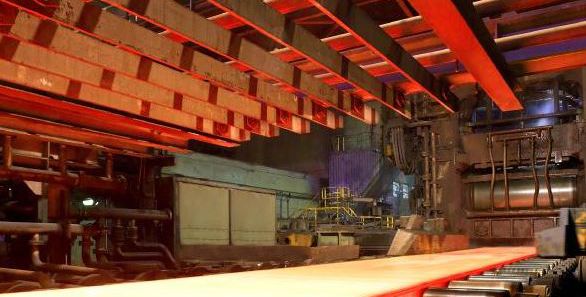
Vitkovice Steel returns to profit after several years
Vitkovice Steel has bounced back into profit after several loss-making years, posting a CZK 25 million ($1.1m) net profit in the nine months through September. This was supported by strong steel demand and production efficiency improvement. The firm says the outlook is also positive despite rising utility prices.
Last year Vitkovice posted a CZK 267m loss. This was still better than previous years. The previous time the firm posted annual profit was in 2017 but this was due purely to high exchange rate profit from revaluation of shareholder loans. Before that, the firm last registered profit in 2008.
“The circumstances faced by steelmaking are still full of risks, from the EU climate package up to the growth of prices of utilities and emission credits, but the strong revival of demand for steel products plays into our hands,” Vitkovice Steel general manager and chairman Dmitrij Scuka says in a note seen by Kallanish. “Now we are doing our utmost to improve the favourable conditions in order to strengthen our position of a leading steel plate producer.”
Efficiency has been improved by modernising procurement logistics, streamlining production planning, and introducing a new software for rolling, the Czech steelmaker says.
Vitkovice Steel chief financial officer Radek Strouhal says: “We believe that the market conditions will continue to be positive for steelmakers. Steel, as a 100% recyclable material, should play a leading role in the economic and environmental approach to the development of society.”
Vitkovice has a 755,000 tonnes/year capacity plate mill and seldom-used 170,000 t/y heavy sections mill. The firm switched to sourcing merchant slab when it shut down its 950,000 t/y electric arc furnace-based meltshop in 2015.
Adam Smith Germany

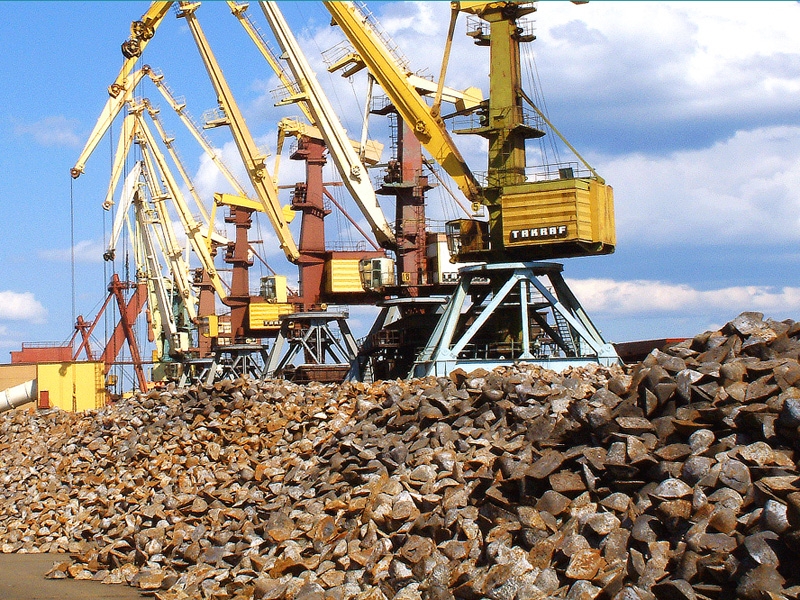
Iron ore tops $100 on Chinese recovery
Seaborne iron ore prices topped $100/tonne on Wednesday for the first time since 4 November. Vale’s announcement that it would increase production in 2022 was still supportive, with its new guidance falling below some analysts’ expectations.
The Kallanish KORE 62% Fe index gained $4.95/t to $101.85/dry metric tonne cfr Qingdao. The Kallanish KORE 65% Fe index increased $5.33/t to $117.18/dmt cfr, and the KORE 58% Fe index appreciated $3.65/t to $71.58/dmt cfr.
On the Dalian Commodity Exchange January iron ore settled up CNY 18/t at CNY 600.5/t ($93.99/t), while on the Singapore Exchange December 62% Fe futures settled up $4.31/t at $103.05/t. The same contract for 65% Fe and 58% Fe futures settled up $4.76/t at $117.77/t, and up $1.75/t at $70.72/t respectively.
Both Chinese scrap and billet prices also continued to increase. 6mm+ heavy scrap delivered to mills in the Yangtze River Delta increased CNY 33/t to $3,192/t. In Tangshan, billet prices increased CNY 60/t to CNY 4,320/t.
Vale is reportedly seeking board approval this week for a production guidance of 330-350 million tonnes in 2022. The miner has said output this year would be in the bottom half of its guidance of 315-335mt. Expectations however were for Vale to produce at least in the top half of its reported guidance for 2022, and perhaps more.
In China, meanwhile, expectations of a pick-up in crude steel production continue. Improved weather and freer lending to real estate have caused a short-term improvement in steel demand.
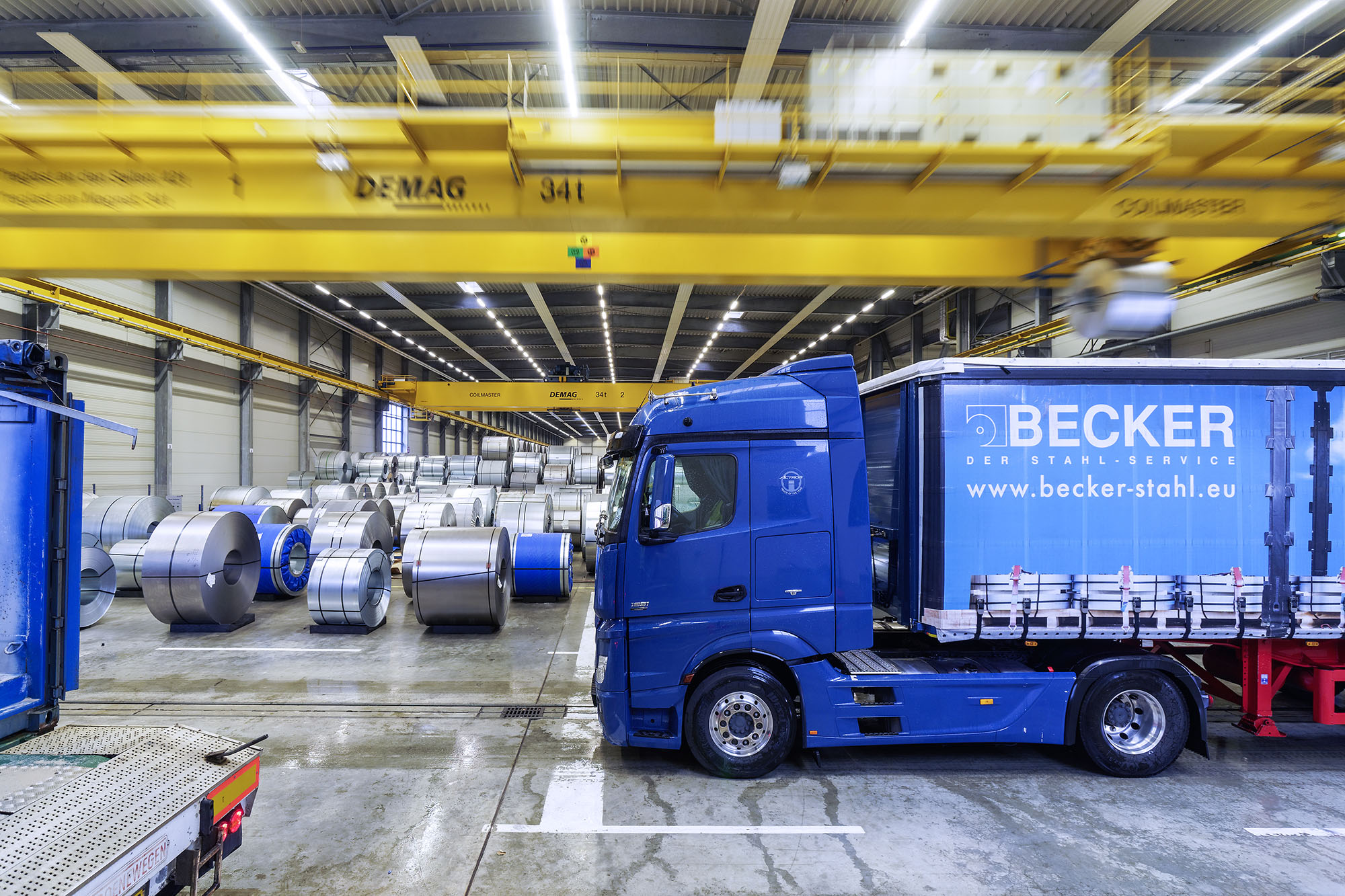
German October steel sales down, stocks up on weak automotive demand: BDS
German steel product sales resumed a downwards trajectory in October after a September upturn, and overall inventory levels have continued to rise in recent months, German steel stockholders’ association BDS reported Nov. 24.
Overall sales in the month of October were 865,119 mt, down 2.4% from September’s 886,742 mt, with falls noted in both long and flat product categories as well as other product types, BDS said. Sales were as much as 11.7% lower than the 979,598 mt total of October 2020, which had been a strong month, it said.
“Production decline in automotive has an effect on the sales as we see in the figures for flat products,“ a BDS official commented.
The automotive sector is typically the second biggest steel consuming sector. Automotive production has been impacted throughout Europe in recent months by a shortage of semiconductors and in recent weeks by a tightness of magnesium for lightweight autoparts due to a fall in Chinese production and exports, leading to slower steel orders.
Flat products sales fell notably to 510,765 mt in October, down 3.3% from September; while long products sales fell proportionally less, by 0.5% to 267,475 mt.
Stocks continue to inch up
German steel products stocks reached 2.18 million mt in October – their highest for nearly two years, the BDS data showed. The overall stocks were 1.1% higher than the 2.16 million mt of September and 3.2% higher than the 2.12 million mt of October 2020.
“Stocks have risen in the last couple of months but are still on a moderate level,“ the BDS official said.
Inventories varied according to product in October, with flat products stocks growing as much as 4% in the month to the end of October, reaching 1.34 million mt, while long products stocks fell 3% from September to 779,977 mt, the BDS data showed.
— Diana Kinch

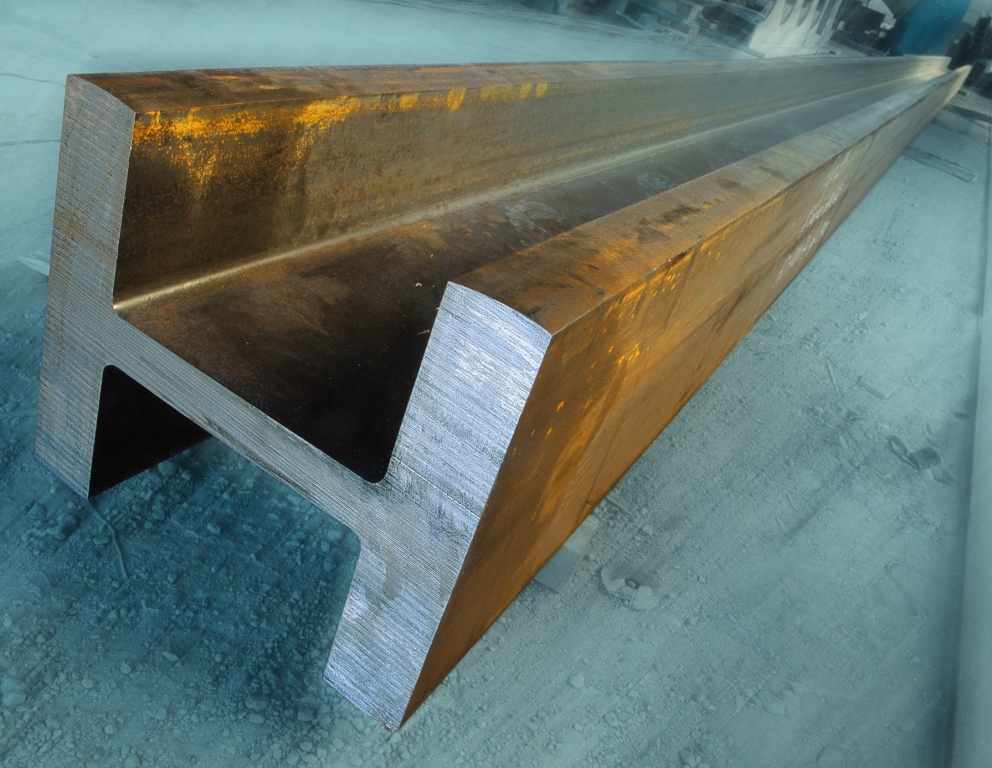
EU steel sections prices slip amid slow demand
European domestic steel sections prices softened in the week to Nov. 24, as sources cited slow demand.
S&P Global Platts’ European medium sections price (category 1, S235 JR) was assessed at Eur985/mt delivered Nov. 24, down Eur15/mt on the week.
One Benelux-based distributor source cited a workable level for medium sections category 1 in the domestic market at Eur995/mt delivered, expecting that prices might move lower next week. The source also noted that demand was quiet as customers were expecting prices to soften further as the year-end approaches.
A second distributor source in the Benelux region cited slow demand but noted that prices were stable on the week at Eur970-Eur980/mt delivered for medium sections category 1.
The source told Platts that mills were planning to increase prices for the second half of December order amid high energy costs, strengthening scrap and strong order books.
“In Belgium, prices are not going down. Also, for rebars and wire rods, big players are placing big orders,” he told S&P Global Platts. For orders placed at the beginning of December, shipments will be made in January, he told Platts. There is a bottleneck for transportation, which is currently a big issue in the market, he said, adding that the steel industry does not pay the best rates for transportation, so truck drivers prefer to take shipments for other products.
In Northern Europe, the S&P Global Platts November assessment for domestic shredded scrap was at Eur410/mt delivered Nov. 10, up from Eur380/mt in October.
Meanwhile, domestic rebar prices in Northwest Europe also softened on the week. Platts assessed TSI Northwest Europe Rebar at Eur790/mt ex-works Nov. 24, down $5/mt on the week.
One distributor source cited tradable levels for domestic rebars at Eur805/mt delivered.
One Italian mill source put mill offers for rebars to Germany at Eur800/mt delivered, noting that demand was quiet.
One seller source also cited workable levels for rebars in the Northwest European domestic market at Eur810/mt delivered.
— Rabia Arif, Staff

Asian HRC rebounds amid rally in Chinese market
Asian hot-rolled coil prices rose for the first time in two weeks amid a strong rally in the Chinese market led by raw materials, which saw higher offers in the regional market, while buyers were waiting for a clearer market trend.
S&P Global Platts assessed SS400 HRC of 3 mm thickness at $765/mt FOB China Nov. 24, up $5/mt on the day. On a CFR Southeast Asia basis, the same grade of coil was assessed at $771/mt, up $3/mt on the day.
The Chinese spot market climbed on the day, driven by a strong futures market led by raw materials including coal and iron ore, amid reports that some mills would resume production from December after reaching the yearly output control targets.
One eastern China mill increased the SS400 HRC offer by $10/mt on the day to $800/mt FOB, while the offer level for a northern Chinese mill was heard at $780/mt FOB.
“After the domestic market corrected downward sharply, this round of price rebound might be more sustained,” a Chinese trader said. “Offers were all up, as futures surged and mills saw improved sales today,” a second trader said.
Some offers for Chinese SS400 were heard at $795-$805/mt CFR for January to February shipment. Buyers were heard waiting on the sidelines assessing the sudden rise in the Chinese market.
Platts assessed SAE1006 HRC at $815/mt FOB China, up $5/mt on the day. On a CFR Southeast Asia basis, the same grade of coil was assessed at $808/mt, up $5/mt over the same period.
In Vietnam, some low offers heard previously were absent on the day, due to the expectation of higher tradable levels for Chinese mills for SAE1006 HRC and an unclear market outlook. “The offer-bid spread is wide as … [the buyer] might be unable to secure SAE coils from Chinese mills below $830/mt CFR today,” a Vietnam-based trader said.
Some market sources in South Korea heard a major Chinese export mill suspend its offer to the market due to the strong rally seen in the Chinese market for both raw materials and steel.
In Shanghai, the spot price of Q235 5.5 mm HRC was assessed at Yuan 4,770/mt ($747/mt) ex-stock, including value added tax, up Yuan 95/mt on the day. The assessment had been moving lower since Oct. 20, falling more than Yuan 1,000/mt from Yuan 5,800/mt on Oct. 19.
The most actively traded January 2022 HRC contract on the Shanghai Futures Exchange closed at Yuan 4,599/mt, up Yuan 176/mt, or 4%, on the day.
Separately, Platts assessed Q235/SS400 grade 12-25 mm thick plate, or equivalent, at $840/mt CFR East Asia, down $4/mt on the week. The assessment was normalized to Dangjin port in South Korea.
Offers from Chinese mills were heard at $825-$875/mt FOB, but CFR offers were absent due to the lack of buying interest with the buyers’ indications far below the tradable level, a Chinese trader said.
Domestic prices of the same grade of material were at Yuan 5,060/mt ex-stock Shanghai, including value-added tax, down Yuan 10/mt week on week.
— Staff, Ashima Tyagi