

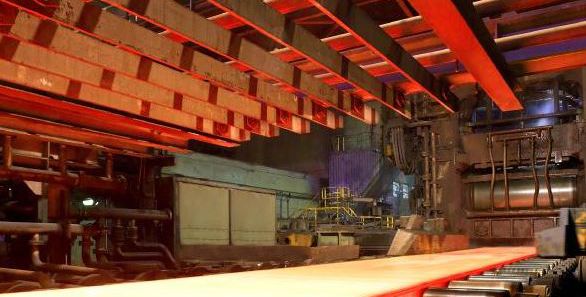
German steel production likely to reach 40mt
Crude steel output at German mills from January through October this year rose 15% over the first ten months of 2020 to 33.56 million tonnes, according to figures provided by steel federation WV Stahl.
In the reporting month of October, production at oxygen-route mills rose by 13% to 2.52mt, whereas that of EAF mills sank by nearly 5% to 1.13mt. This apparently odd development can be attributed to strong activity at EAF mills in autumn 2020, which were faster and more flexible than BOFs to respond to the rapid demand resurgence following lockdowns.
While WV Stahl refrains from making interpretations or forecasts, a clearer word comes from the chief economist of steel recycling federation BDSV, Daniela Entzian. “We are optimistic that steel production will again reach 40 million tonnes this year, which is also good news for the demand for scrap,” Kallanish heard her say during BDSV’s annual meeting on Thursday (see separate story).
One factor in favour of higher production in the fourth quarter is the restart in October of the biggest blast furnace at thyssenkrupp’s works in Duisburg, following a reline.
Christian Koehl Germany


Global bottlenecks hurt German scrap market: association
The German scrap industry is suffering from global bottlenecks and semiconductor shortages, despite strong demand from home and abroad, Daniela Entzian of German steel recyclers federation BDSV tells Kallanish.
“The problems are particularly hard for the automotive manufacturers, which to a large extent contribute to the volume of new scrap,” she noted during a Thursday meeting. “However, so far this problem has not been reflected in the order books of the steel industry.”
Trade barriers due to the revision of the EU’s Waste Shipment Ordinance are also making the scrap industry worried, she added. “In its new proposal published on 17 November, the European Commission does not differentiate between mixed or hazardous waste and raw materials recycling. This will create competitive disadvantages compared to primary raw materials that are imported with a high carbon footprint.”
According to the association, EU scrap suppliers also face serious competitive disadvantages compared to competitors from countries in which secondary metals are not subject to the waste regime. An example is the US, the second-largest scrap exporter in the world after the EU.
“Currently, over 20 million tonnes/year of steel scrap are sold from the EU to third countries,” BDSV said. “In order to be able to use these quantities in Europe, capacities have to be expanded and manufacturing processes changed.”
In November, the European Commission revised the EU Waste Framework Directive which proposes far-reaching restrictions on international trade in scrap. “We reject these restrictions on international trade because this leads to lower scrap prices within Europe and economic restrictions make recycling no longer possible,” BDSV observed.
At the same time, the global volume of scrap supply is increasing and in 2030 will break the 1 billion tonne barrier, the association observes.
“Export restrictions are therefore completely unnecessary,” said BDSV president Andreas Schwenter. “The restrictions on the cross-border scrap trade will lead to rising CO2 emissions and undermine climate protection efforts, because climate protection doesn’t stop at borders.”
Svetoslav Abrossimov Bulgaria

European hot-rolled coil market moves sideways, remains under pressure
Buyers’ interest in purchasing new material continued to be muted in the European hot-rolled coil market as flat steel stock levels remain sufficient, sources told S&P Global Platts Nov 25.
Though most expect the market to remain stable, the availability of material from suppliers is a factor that market participants say could prevent any substantial price increase on the spot market.
“All buyers know this and don’t request much – for big buyers and big tonnages, actual deals are still in the range of Eur850-870/mt EXW Italy. Eur900/mt is only accepted for small lots,” said an Italian supplier, adding that Eur920-940/mt CPT South Germany ex-Italy and ex-Eastern Europe was also possible.
A German stockholder said they bought HRC at Eur920/mt delivered Germany from Eastern Europe and considered this the currently cheapest option.
Most sources put workable levels for HRC from Western European mills in the high Eur900s/mt EXW Ruhr, depending on volume.
Stockholding sources said that their inventory levels are sufficient and given most want to keep levels down for year-end, they are not in a rush to buy material.
The latest data provided by German steel stockholders’ association BDS showed that in October, flat products stocks grew as much as 4% in the month to the end of October, reaching 1.34 million mt, while sales volumes of flat steel fell.
“Some steel service centers have increased stock with cheap material and their 2021 contracts allocations are giving them enough material, that’s not gonna stop Jan 1,” said the stockholder.
“As long as auto is so weak, we will see the pressure. The main reason prices are holding up is the Black Sea region and Eastern Europe, they increased prices this October,” said the source.
The exposure of Eastern European mills to the automotive industry is overall smaller than Western European tier-1 mills that continue to struggle with volume cancellations by the automotive supply chain.
— Laura Varriale
