


ABB tool to improve meltshop productivity
ABB has launched what it claims is the first smart factory digital application of its kind for the metals industry, Kallanish hears from the technology supplier. This is set to help improve efficiency in crude steelmaking.
Based on advanced digital algorithms, ABB Ability Smart Melt Shop offers real-time ladle tracking, automated crane scheduling and a predictive thermal modelling engine, the firm observes. The tracking engine follows ladle movement via cranes and transfer cars in real time. Radar and laser positioning technologies provide accurate visualisation while reducing hardware footprint and maintenance needs.
According to ABB, this will enable steelmakers to move towards autonomous operations by eliminating manual co-ordinations, with increased safety in hot zones due to lower footfall. Mills can expect 4-5% higher casting speeds to improve productivity and reduce arcing by 5% degrees Celsius per heat in ladle furnaces, ABB claims.
The application has already been installed by JSW Steel in India at the Dolvi works in Maharashtra. ABB says it expects to increase the mill’s profit by around $2 million/year through 4% higher casting speeds, time savings of one working day per month and additional output of 24,000 tonnes/year.
Christian Koehl Germany
Metinvest increases Italian plant plate capacity
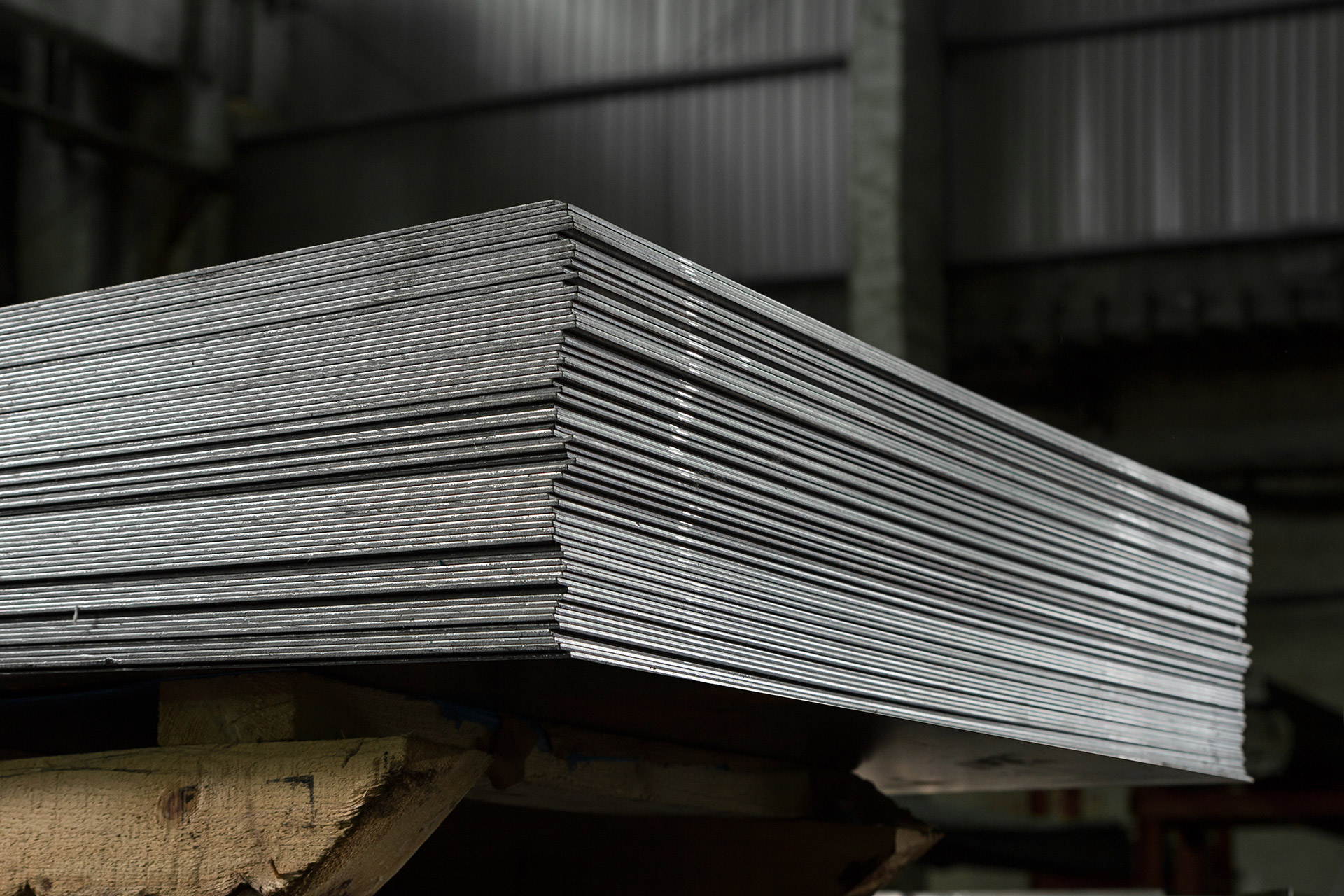
Italy-based Trametal, the re-roller subsidiary of Ukrainian steelmaker Metinvest, has started a new plasm cut trimmer edge line at its plate rolling mill in San Giorgio di Nogaro, near Udine, Kallanish learns from the company.
The new master plasma bevel Line Tech Nova 55 was assembled in a warehouse adjacent to the main plate mill. It will boost output from the current 65,000 tonnes/year to approximately 235,000 t/y.
The plate mill has an overall capacity of 600,000 t/y. The expansion is in line with the company’s plan to respond to increasing demand from the Italian and European shipbuilding sector, selling more material to large shipbuilders such as Fincantieri, Metinvest explains.
The €10 million ($11m) investment for the new equipment has been funded by a state-guaranteed loan granted by Cassa Depositi e Prestiti S.p.A (CDP).
In 2020 Metinvest Trametal signed its first facility with CDP for €15m. The six-year term loan facility, with a two-year grace period, was issued under an Italian government programme guaranteed by SACE S.p.A., the state-owned export credit agency. This comes under the “Garanzia Italia” initiative to support companies through the international health crisis.
Natalia Capra France
Chinese mills cut production on Winter Olympics
Chinese steel mills will restrict production in the first quarter of next year to ensure air quality during the Beijing Winter Olympics. At the same time, power cuts in some provinces have caused southern China’s steel mills to reduce production.
Kallanish learns from market sources that restrictions will hit all heavy industrial enterprises in Huabei, Huaibei, and West China, especially Tangshan, Tianjin, Shijiazhuang, Zhangjiakou, Chengde, Shandong, Jinan, Weihai, Weifang, Taiyuan, Datong, Changzhi, Luoyang and Zhengzhou. These will need to suspend or restrict production from 1 January to 8 March 2022. There is no official document to announce the details of the production limit, however.
Individual cities in Shandong have issued policies that require companies with an environmental rating of C grade or below to suspend production completely during most of this production restriction period. Although Tangshan did not announce a similar policy, the Tangshan government adjusted ten grade D steel companies to grade C on Monday.
The central government requires that crude steel production be kept unchanged this year, and this goal is expected to be easily completed in most provinces. Therefore, after getting rid of production restrictions for the purpose of controlling this year’s output, steel mills are expected to increase production to supply restocking demand before the Spring Festival. This is expected to bring around 3 million tonnes of additional production in December, according to Huatai Futures.
Regional production restrictions are also continuing through winter due to power supply issues. Market reports indicate that electric arc furnace steel mills in Heyuan, Guangdong have almost completely stopped production and will restart in early January 2022. The reason for the shutdown is local energy consumption control requirements.
By Kallanish Team

EU steelmakers must compete for hydrogen resource: Jeffries
The green hydrogen requirement to fuel green steelmaking in Europe would amount to 1.2 million tonnes by 2030, below the EU’s Hydrogen Strategy target, but the steel industry will be fighting over the resource with other sectors, says Jeffries. Green hydrogen costs would meanwhile need to decrease 75% to $1.20/kg for H2-DRI/EAF costs to break even with the traditional BF-BOF route.
As EU steelmakers decarbonise, electric arc furnaces’ share in the bloc’s steelmaking will rise to 55% in 2030, with iron ore and scrap demand up 17% and 4% versus 2019, but coking coal demand down 13%, says Jeffries.
The industry has identified hydrogen-based iron-making as the path to decarbonisation. However, the question is, “will hydrogen, and specifically green hydrogen, be available to meet these ambitions?” Jeffries points out in a report seen by Kallanish.
Under Jeffries’ “business as usual” scenario, European hydrogen demand is forecast to increase – relative to 2015 – by 48% by 2030 and 140% by 2050. In the ambitious scenario, these increases are 105% and 593% respectively. Heating and power for buildings, and transportation are the two largest incremental drivers of hydrogen demand, contributing 65% of the total increase by 2050. Industry energy, which includes steelmaking, is forecast to be 12% of the incremental demand.
Jeffries estimates electricity usage from steelmaking will grow 135% by 2030 versus 2019. Despite hydrogen-based steelmaking forecast comprising some 10% of EU steelmaking by 2030, it would represent 54% of sector electricity consumption.
The forecast for $1.20/kg hydrogen cost being required for H2-DRI/EAF to break even with the BF-BOF route is based on long-term assumptions for iron ore of $80/tonne, coking coal of $150/t and electricity of €50/MWh.
Vale’s green briquette venture meanwhile provides an example of iron ore providers moving down the value chain and taking ownership of Scope 3 emissions, Jeffries observes. “This may provide an illustration of similar moves by Australian miners and the possible build out of renewable resources and energy infrastructure,” it comments. “However, such a scenario to leverage Australia’s natural resource advantage needs government support at all levels.”
Adam Smith Germany

Turkish HDG mills focus on alternative markets amid EC antidumping investigation
Turkish mills have started to focus on alternative markets in recent weeks as the European Commission investigates an antidumping case against hot-dip galvanized steel coil imports from Turkey and Russia on a request from the European Steel Association. The case, which could retroactively impose duties on imports, has increased concerns among European buyers, sources told S&P Global Platts Nov. 29.
“As Eurofer’s move has been expected in the market, demand from the European market has almost disappeared in recent weeks,” an export manager of a Turkish producer told Platts Nov. 29, adding that it has started to focus on alternative markets in this sentiment.
“Nobody in Europe is currently demanding Turkish material due to the dumping investigation, while demand from Ukraine and Egypt is mixed. Turkish producers are currently offering DX51D with 100 g/sq m of zinc coating, 0.50 mm HDG at $1,180-$1,200/mt FOB in this sentiment,” the manager said.
The New Year’s slackness also has begun to dominate the overall market sentiment, and demand from almost all export markets, including the EU, is currently notably below expectations, sources said.
“Demand from the US market also disappeared following the Section 232 deal with the EU. We are currently focusing on the North African market,” a manager of another Turkish coated coil producer told Platts Nov. 29, confirming 0.50 mm HDG offers at $1,180/mt FOB.
Noting that domestic demand also has almost faded away due to the sharp currency depreciation, a general manager of a Turkish steel service center said he is expecting to receive new lower offers both from Turkish coated coil producers and import suppliers in the coming days.
“Low export demand could also support lower prices,” he said.
The EC opened an investigation into HDG coil imports from Turkey and Russia June 24 on allegations that imports of certain corrosion-resistant steels originating from these countries were being dumped, as Platts reported previously.
Predisclosure of the investigation is expected Dec. 24, while provisional measures, if any, will be imposed by the EC until Jan. 24, 2022. Definitive measures could be announced on July 20, 2022, which could raise the pressure on Turkish mills’ HDG pricing.
— Cenk Can
