

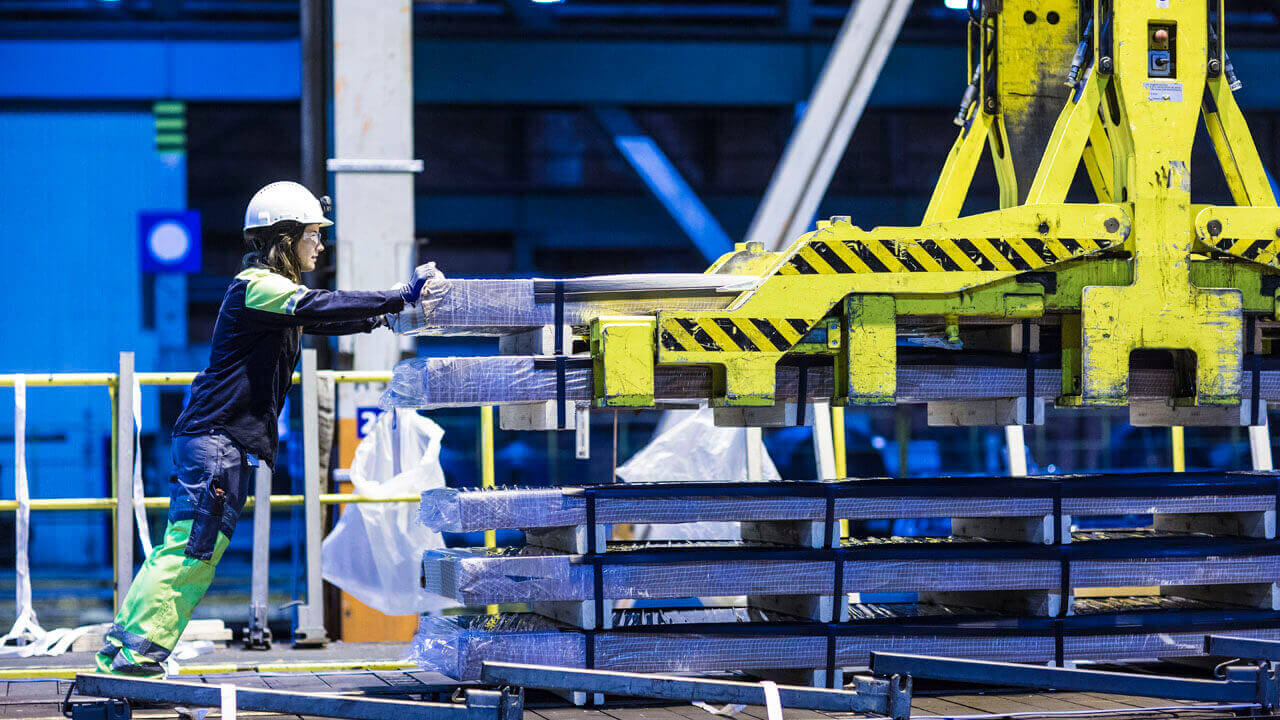
SSAB to supply plate for US Navy ships
SSAB Americas has bagged a contract to supply steel plate to Austal USA for use in the construction of US Navy ships.
SSAB’s plate in various strengths and sizes will be used for the construction of steel-hulled towing, salvage, rescue and potentially combat ships, Kallanish understands.
Austal USA was awarded a $145 million construction contract from the US Navy in October – the company’s first new steel ship construction project.
Both SSAB and Austal USA have manufacturing locations in Mobile, Alabama.
Austal’s $100m steel manufacturing facility in Mobile is expected to begin cutting steel in April 2022. Ground was broken on the project in March 2020.
“SSAB not only provides us with quality steel, but also great flexibility due to its location adjacent to us here in Mobile,” says Austal USA president Rusty Murdaugh.
“Our participation in such an important and vital project, that will strengthen both the economic and national security of our country, makes this partnership even more meaningful,” comments SSAB Americas senior vp and coo Jeff Moskaluk.
Laura Miller USA


US details EU quotas; Netherlands, Germany big winners
The US Department of Commerce’s Bureau of Industry and Security (BIS) has published detailed tariff-free quotas for European steel applicable from 2022. This is part of the new bilateral agreement between the US and EU regarding Section 232 measures.
As anticipated, overall, European mills will have the possibility to sell into the US 3.3 million tonne/year of steel goods without having to pay tariffs linked to S232 measures. The quotas have been assigned on a country-specific level under more than 50 different sub-categories for specific products, on the base of historical export levels.
In addition to these volumes, suppliers will continue to be able to sell the products previously exempted from the measures, Kallanish notes.
In the rebar segment, for example, Portugal, Spain and Italy have been allocated the majority of quotas, being historically the most active European exporters of such products to the US.
In the flat products and coil sector, on the other hand, the Netherlands and Germany were assigned the largest share of quotas.
The largest quota assignment for a specific country and product has been for tinplate produced in the Netherlands – over 195,000 t/y of quotas – followed closely by German-origin tinplate with over 121,000 t/y.
Emanuele Norsa Italy
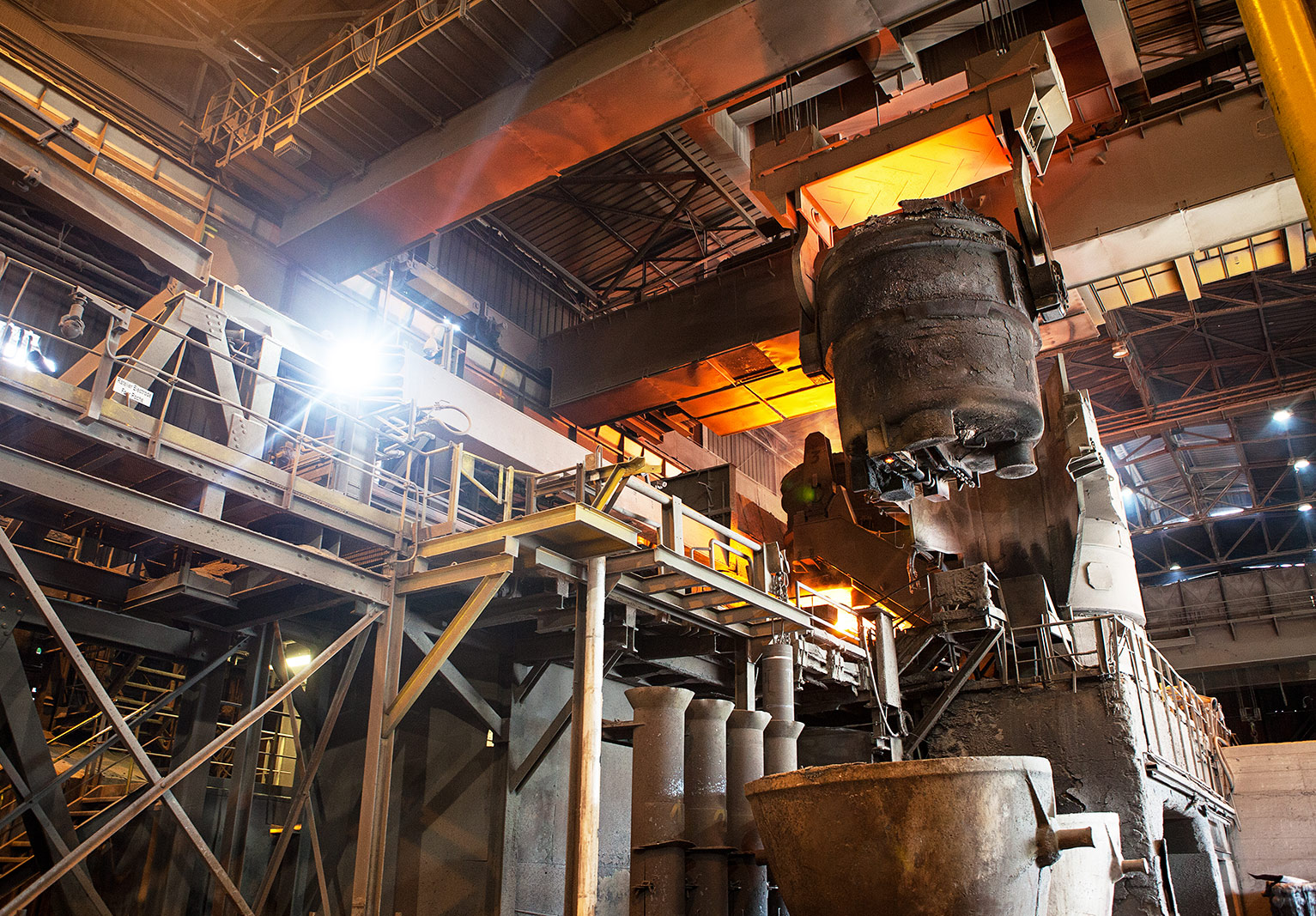
Acciaierie d’Italia idles part of Taranto hot end
Acciaierie d’Italia, the joint venture between ArcelorMittal and state-owned Invitalia, is to again idle blast furnace no.4 at the Taranto steelworks from 1 December because of a technical issue. This will cause meltshop no.1 to also be idled for over a month, together with continuous casting units no.1 and 5, Kallanish learns from union sources.
While Taranto’s cold rolling mill is currently operating, workers believe it is only a matter of time before it is also idled. BF no.4 and the rest of the mothballed equipment are planned to be restarted on 20 January.
In October, the steelmaker restarted BFs1 and 4. The latter was idled for about seven months and the company spent €70 million ($79m) on upgrade works.
Acciaierie d’Italia posted approximately 4.4 million tonnes of output in 2020. Unions believe the target of 5mt for this year may not be reached. Until 20 January, Taranto will be working with two blast furnaces, no.1 and 2, and meltshop no.2, Kallanish notes.
Natalia Capra France

EU construction recovery to slow following 2021 jump
European construction activity is set to jump 5.6% year-on-year in 2021, performing better than previously expected, according to the latest forecast issued by Euroconstruct.
The recovery will take construction activity in Europe to above pre-Covid levels. “The upward correction is based on numerous factors: the synchronous international upswing, the use of infrastructure investment as a classic instrument of fiscal policy, the introduction of generous incentives for building renovation and the growth of the housing sector against a backdrop of low financing costs and rising real estate prices that have favoured the upswing in investment,” says the research and consulting network.
“In addition, the changes induced by the pandemic affected some phenomena already underway, accelerating them or triggering new demand,” it adds.
Going forward, a positive trend for construction in Europe will continue to 2024, but the speed of recovery will slow significantly. Euroconstruct expects activity to jump a further 3.6% y-o-y in 2022, before seeing growth stabilise at 1.2-1.5% y-o-y each in 2023 and 2024, Kallanish notes.
“All non-residential construction sectors will show a relatively better short-term performance, against a more moderate increase in the level of expenditure for housing: in particular, for civil engineering, a growth rate close to 3% per year is estimated, not so far from that expected for non-residential building (+2.5% on average 2022-2024), while for the biggest European market the slowing path should be more pronounced (+1.6%),” Euroconstruct writes in its blog.
At a country level, the positive development is sustained by strong growth of over 4% in Ireland, Spain, Hungary and the UK. A flat trend is expected for Germany and Switzerland, while sectoral output is expected to shrink in Finland and Sweden, the firm concludes.
Emanuele Norsa Italy
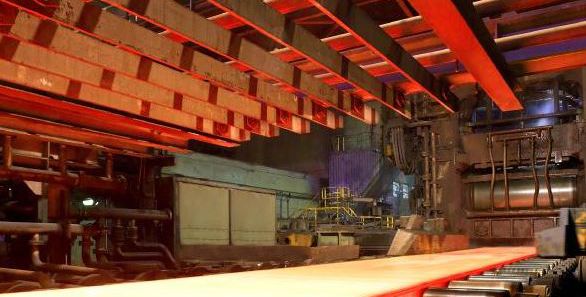
Nippon Steel plans India expansion; eyes mill in Southeast Asia
Japan’s Nippon Steel reiterated its plans to raise the crude steel production capacity of its ArcelorMittal Nippon Steel India (AM/NS India) joint venture as well as to establish an integrated steel mill in Asia, the steelmaker said Nov. 30, as part of its global expansion plans.
Under consideration are plans to expand the capacity of AM/NS India, which includes “the construction of a second steel mill,” Eiji Hashimoto, representative director and president of Nippon Steel, said, as well as either buying or taking a taking a stake in a steel mill in Asia, particularly in Asean.
Recently in Southeast Asia, India’s Tata Steel sold its 100% stake in NatSteel Holdings to TopTip Holding, a Singapore-based steel and iron ore trading company, Sept. 30 for $172 million. Tata Steel also plans to sell Tata Steel Thailand, which is the largest domestic producer of long steel products with 1.7 million mt/year of production capacity.
On April 1, 2022, Nippon Steel plans to merge its two Thai subsidiaries, NS-Siam United Steel (NS-SUS) and Siam Tinplate (STP) to consolidate the manufacturing and sale of cold-rolled and hot-dip galvanized steel sheets. The merged company will have production capacities of 1 million mt/year of CR steel, 360,000 mt/year of hot-dip galvanized steel, 140,000 mt/year of tinplate and 120,000 mt/year of tin-free steel.
Nippon Steel’s expansion is in line with its restructuring plans that are expected to be completed by March 2026 which include reducing the number of blast furnaces in Japan to 10 from 15. The reduction will lower its domestic crude steel production capacity by 10 million mt/year or about 20% of its overall output.
“We will shift into high gear in full-scale oversea business that will ensure higher added value,” Hashimoto said, as Nippon Steel plans to build up 100 million mt/year of crude steel production capacity globally, up from about 71 million mt/year at present.
The output expansion includes doubling the production capacity of AM/NS India to 14 million mt/year while a new 1.5 million mt/year electric arc furnace at its AM/NS Calvert venture in Alabama is due to be started up over the first half of 2023.
Locally, Nippon Steel aims to start operating a new EAF at Hirohata in the first half of 2022 with a production capacity of 60,000 mt/month, which will be used for electrical steel sheet making.
While expanding its crude steel output, the Japanese steelmaker reiterated its goal to be carbon-neutral by 2050, with plans to cut its carbon dioxide emissions down to 70 million mt/year by 2030 from 91 million mt in 2019.
“Our idea of a ‘zero-carbon steel production process’ is to combine two steelmaking routes, utilizing their respective features: the BF and basic oxygen furnace (BOF) route, and the EAF route,” Hashimoto said.
Zero-carbon steel “has its own big challenges,” Hashimoto said, pointing out that the “needed innovations” will cost about Yen 500 billion ($4.4 billion) for research and development and Yen 4 trillion to Yen 5 trillion in capital expenditure.
— Clement Choo

China’s manufacturing PMI rebounds in Nov, but outlook remains sluggish
China’s manufacturing purchasing managers’ index, or PMI, rebounded to 50.1 points in November, an expansion in manufacturing activity for the first time in two months but still the third lowest in 21 months, China’s National Bureau of Statistics said.
China’s PMI was seen at 49.2 points in October and at 49.6 points in September. PMI, which indicates direction of economic trends in manufacturing, is in contraction if the reading is below 50 points.
As power shortages eased in November, it led to improved manufacturing production in China.
However, new orders have now remained in contraction for four straight months. Similarly, new export orders contracted for the seventh month in a row.
Market sources told S&P Global Platts that they expect sluggish domestic consumption and slowing property investment would continue to weigh on the recovery of the manufacturing industry and its demand for steel into 2022, especially as overseas orders for Chinese goods were tapering off after overseas factory operations gradually return to normal.
Some steel mill sources said steel demand from vehicle and home appliances sectors — indicators of consumption-related manufacturing — showed no signs of improvement in November.
One source said passenger car production was likely to increase in 2022 due to easing semiconductor chip shortages.
“But the growth [of passenger cars] should be limited, as [China’s] domestic consumption is likely to remain sluggish amid intermittent new COVID-19 cases and slowed economic growth,” the source added.
Meanwhile, property investment is expected to trend downwards in 2022 due to declining new home sales and land purchases at a time of tightened credit borrowing, according to some steel market participants.
Construction-related manufactured goods, as well as home appliances, will continue to feel the heat brought about by property sector, sources said.
Given the prospect of a slowdown in domestic steel demand, China’s steel production in 2022 is unlikely to exceed the level in 2021, even without any government requirements, according to sources.
According to NBS, sub-indexes of manufacturing production rebounded to 52 points in November, up from 49.2 points in October and 49.6 points in September.
New orders and new export orders also rebounded by 1.4 and 1.9 points from October, but were still in contraction at 49.4 and 48.5 points, respectively.
— Staff