Spain’s crude steel production rebounds strongly in October
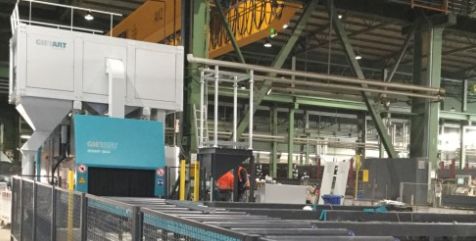
The Spanish steel sector saw production and scrap melting increase for the second consecutive month in October, Kallanish notes.
According to Spanish steelmakers’ association Unesid, the local steel industry produced around 1.28 million tonnes of crude steel in October. This was 2.6% more than September’s output of 1.25mt and 8.8% higher year-on-year. According to Unesid data, crude steel production in October was just 69,000t down on the 2021-high in May.
During the first ten months of the year, Spanish output reached 12.16mt. Unesid did not disclose an on-year comparison in its latest report, but taking worldsteel figures into account, the growth is estimated at 35%.
Spain used 1.03mt of ferrous scrap for steelmaking in October, up 1.8% month-on-month. This volume was also almost 48,000t more over the same month in 2020. Cumulative scrap usage was 9.6mt, representing 78.9% of total crude steel production in the ten months.
Todor Kirkov Bulgaria


Steel industry needs $278 billion to decarbonise: BloombergNEF
Steelmaking could happen with almost no carbon emissions through $278 billion of extra investment by 2050, with hydrogen and recycling to play a key role, says a BloombergNEF (BNEF) report.
By 2050, green hydrogen could be the cheapest production method for steel and capture 31% of the market. Another 45% could come from recycled material, and the rest from a combination of older, coal-fired plants fitted with carbon capture systems and electric processes to convert iron ore into iron and steel, says the research firm.
Today, around 70% of steel is made in coal-fired blast furnaces, with 25% produced from scrap in electric furnaces, and 5% made in direct reduced iron plants, the majority of which are fired by natural gas. In the hydrogen-DRI-EAF scenario, blast furnace production would fall to 18% of capacity, Kallanish notes.
“The steel industry cannot afford to wait for the 2040s to start its transition,” says BNEF head of sustainable materials Julia Attwood. “The next ten years could see a massive expansion of steel capacity to meet demand in growing economies, such as India. Today’s new plants are tomorrow’s retrofits. Commissioning natural gas-fired plants could set producers up to have some of the lowest-cost capacity by retrofitting them to burn hydrogen in the 2030s and 2040s. But continuing to build new coal-fired plants will leave producers with only bad options toward a net-zero future by 2050.”
To achieve the transformation, the steel industry must boost the amount of steel that is recycled, particularly in China; procure clean energy; and design all new capacity to be hydrogen or carbon capture-ready. It must also begin blending hydrogen in existing coal- and gas-based plants to lower the cost of green hydrogen, and retrofit or close any remaining coal-fired capacity by 2050, BNEF observes.
Producing hydrogen-DRI-EAF ‘green’ steel will require massive amounts of clean energy, and a shift to higher grades of iron ore. “This could change where most steel is made, or shake up the mining industry,” BNEF comments. Russia and Brazil both have access to high-quality iron ore reserves and to abundant clean power. Moreover, Brazil is expected to have one of the lowest costs for hydrogen production by 2030. Australia will however have to invest in equipment to upgrade its iron ore quality to avoid losing its number one place in the supply chain.
“Most of the costs to make green steel come from operations, rather than capital costs. Reducing the cost of green hydrogen is thus critical, and BNEF estimates that these should fall more than 80% by 2050 to under $1/kg in most parts of the world,” the firm concludes.
Adam Smith Germany
EU fund uncertainty cools Polish construction optimism: analyst
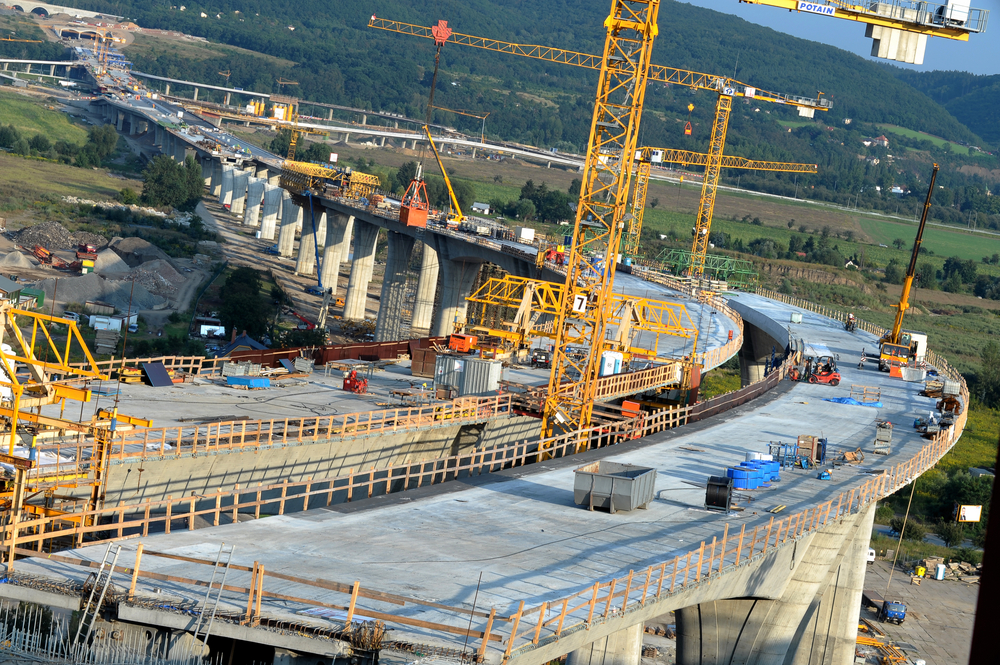
Uncertainty over the allocation of EU recovery funds and instability in China’s real estate market have cooled the optimism seen earlier this year in Poland’s construction industry, Bank BPS analyst Artur Wizner confirms to Kallanish.
Following the initial Covid-19-induced collapse in spring 2020, the WIG Budownictwo construction company subindex was the fastest growing index of the Warsaw Stock Exchange, peaking in September 2021.
This was due to construction investments continuing despite the pandemic, as well as a rebound in the construction sector from the third quarter of 2020. Thirdly and most importantly, the prospect of Poland receiving over €700 billion ($791.5 billion) of overall EU funding for infrastructure investments, such as in road and rail, was a major driver of the strong growth.
However, now, “it’s unknown when they [EU funds] are supposed to appear and what they’ll actually be allocated to,” Wizner says. “This situation has cooled the earlier optimism. Moreover, in September, the sentiment of investors towards the sector was damaged by the information of Chinese construction company Evergrande’s potential bankruptcy.”
The Evergrande situation should not pose a risk to Polish construction companies that do not have contracts in the Asian market. However, high inflation will have a direct impact on company performance, as it creates upward pressure on wage values, “and a rise in labour costs plays a very significant role in this business”, Wizner comments.
Rising raw material prices are meanwhile the main risk factor for the profitability of contracts in the sector, he concludes.
Adam Smith Germany
German steel players welcome new government’s targets
Major German steel industry associations WV Stahl, WSM and BDSV have welcomed in principle the basic declaration of the new government.
Headed by Olaf Scholz as chancellor, the German government will for the first time be made up of three parties: the Social Democrats (SPD), the Greens, and the Liberals (FDP). With red the traditional colour of the SPD, and yellow that of the FDP, the government is referred to as the “Traffic Light Coalition”.
BDSV, the Federal Association of German Steel Recycling, says it approves of the intended goals for climate protection and resource conservation. In the view of the BDSV, German industry plays a central role with regard to climate protection.
“We therefore support the plans of the traffic light coalition to establish an industrial strategy that is aligned with the European Green Deal,” says BDSV managing director Thomas Juker.
“The steel recycling industry will be strengthened and thus remain competitive,” he adds.
However, the new federal government must quickly step up the “steel transformation into turbo gear”, steelmakers federation WV Stahl warns. “In order for steel companies to be able to make the multi-billion investment decisions associated with the transformation, a political framework for it must be built in the first 100 days,” Kallanish hears from WV Stahl.
Some disappointment has been expressed by the Steel and Metal Processing Trade Association WSM. “The coalition agreement gives us hope. But many companies are irritated by the low consideration given to the segment of small and medium-sized enterprises,” says managing director Christian Vietmeyer.
He finds that SME’s, especially, which make up the majority of the steel working sector, are left alone with certain costs. “Unfortunately, the politicians missed the chance to transfer the Fuel Emission Trading Act – whose CO2 price particularly burdens the manufacturing SMEs only in Germany – into a European system,” he says. Only this would create fair competitive conditions in Europe, which would prevent the industry from relocating, he adds.
Christian Koehl Germany

LME scrap, rebar see sharp losses, India hits volume peak
Near-term scrap and rebar futures contracts on the London Metal Exchange saw sharp losses over the week to Dec. 2, as expectations of near-term weakness in physical prices persisted.
Platts assessed the December contract down $24.50/mt on the week to $455/mt on Dec. 2. The January contract fell $22.50/mt on the week to $441.50/mt, while the February contract fell $23 /mt on the week to $434/mt.
The backwardated structure for the December-February forward curve remained largely unchanged on week, suggesting that futures traders’ continue to hold firm expectations of a near-term drop in physical scrap prices.
“The LME December contract at $455/mt has no bearing on today’s physical price – let’s see if $470/mt CFR for HMS 1/2 80:20 is achieved first,” a Turkish mill source said. A UK trader said the LME scrap backwardation was too steep and unlikely to be realized in the physical market.
Spot prices for physical imports of premium heavy melting scrap 1/2 80:20 dropped $11.75/mt on the week to $480/mt CFR Turkey on Dec. 2, as US and Baltic sellers accepted lower bids from Turkish buyers.
A Turkish trader said below $480/mt CFR could soon be workable for Baltic-origin HMS 1/2 80:20.
“It is a finance game so it’s hard to say [if below $480/mt CFR is workable] – everybody will make his own decision as [Baltic region scrap] collection prices are still very high,” a Turkish agent source said. “Selling is gambling and not selling is also gambling, but you still can skip January shipment and ship in February.”
Weekly LME scrap futures trading volumes over the week to Dec. 2 totaled 58,230 mt, up from 30,190 mt recorded last week.
Near-term rebar futures contracts also saw sharp losses on the week, while physical Turkish export rebar prices continued softening amid consistently weak demand.
Platts assessed the December contract down $12.50/mt to $692.50/mt on the week to Dec. 2. The January contract fell $22/mt to $669.50/mt, while the February contract fell $3/mt on the week to $676.50/mt.
The backwardated structure of the December-January portion of the forward curve strengthened sharply on week, suggesting that futures traders’ continue to expect a strong near-term physical price downtrend.
However, the backwardation over the January-February portion of the curve shifted into contango over the week to Dec. 2, highlighting uncertainty in the physical price direction over the first quarter of 2022.
Turkish physical rebar export prices dropped $2.50/mt on the week to $717.50/mt FOB on Dec. 2.
Mills were trying to hold firm around $720/mt FOB minimum, with lower levels dependent “on how mills’ production programs are,” according to one Turkish trader.
“I expect a great rally in two or three weeks as stocks are low everywhere,” a second Turkish trader said.
Sharp volatility in the Turkish lira has led to very low rebar sales in the domestic market. The lira weakened to a new record low against the US dollar after the Turkish finance minister Lutfi resigned Dec. 1 and was replaced by deputy finance minister Nureddin Nebati, a loyalist to President Recep Tayyip Erdogan. Platts assessed the Turkish lira against the US dollar at Lira 13.6971 at 4.30 pm London time Dec. 2, down on day from Lira 13.3664 on Dec. 1.
Rebar futures weekly trading volumes this week on the London Metal Exchange totaled 12,750 mt, up from 7,790 mt traded volume last week.
The daily outright spread between Turkish export rebar and import scrap was assessed at $237.50/mt, up $9.75/mt on the week.
Elsewhere, Indian scrap futures saw an all-time daily trading volume high on Nov. 29, when 1,320 mt traded. A total of 2,430 mt has traded so far on the contract, which settles basis the Platts CFR Nhava Sheva shredded scrap index, since its launch in late July 2021.
— Viral Shah


European hot-rolled coil remains in wait-and-see mode
The European hot-rolled coil market was quiet Dec. 3, entering a wait-and-see mode amid high stocks, sources told S&P Global Platts.
“The market is very quiet,” a Benelux steel service center source said. “Stocks are high, if not very high. No appetite to place orders must make mills nervous.”
Mills were still offering additional volumes in the market, but most buyers are not willing to buy unless on a back-to-back basis.
“Most SSC and stockholders are working toward end of year, so they don’t buy now,” another Benelux buyer said.
Sources have been more optimistic in recent days with chatter that the German auto industry would be strengthening, having received more semiconductors for Q1, and Northwest European mills were heard mulling exporting more into the US, which could support domestic price levels as it would tighten supply in Europe.
Also, higher energy and logistics costs will need to be passed on across the supply chain in the coming year.
Market participants were also observing potential changes in China because of production curbs, which could set a trend for international steel prices.
However, the HRC spot market remained at an impasse, with sources reporting one Western European tier-2 mill offering Eur920/mt EXW, though sources said that was not reflective of the current market level, which was in the Eur950-975/mt EXW Ruhr range Dec 3.
Imports remained difficult to work with as ports in Italy and Antwerp in Belgium were full. Importers were dealing with delays in getting material processed and lack of warehousing facilities around the ports, while vessels were waiting days to unload at times.
— Laura Varriale

US-EU-Stahlhandelsabkommen: Kein Booster für EU-Stahlexporte
Die USA und die EU haben sich Ende Oktober auf ein Stahlhandelsabkommen geeignet. Die Neuregelung löst ab Januar 2022 die seit 2018 für Stahlexporte aus der EU in die USA geltenden „Section 232“- Maßnahmen ab. Für die Stahlindustrie der EU ergeben sich zweifellos Verbesserungen. Erwartungen an eine deutliche Exportsteigerung oder gar an einen kurzfristigen Exportboost, der am EU-Markt für neue Knappheiten sorgen könnte, sind aber übertrieben. Grund dafür sind nicht nur die Detailregelungen des Abkommens, sondern auch die aktuell schon erreichten Exportmengen und allgemeine Trends im Stahlaußenhandel der EU.
Was wurde vereinbart?
Seit 2018 galt für EU-Stahlexporte in die USA ab der ersten Tonne ein Importzoll in Höhe von 25%, von dem US-Importeure allerdings im Rahmen einer zu beantragenden Ausnahmegenehmigung befreit werden konnten. Ab dem 1. Januar 2022 tritt stattdessen ein „Tarif-Quota-System“ in Kraft, nach dem insgesamt 3,5 Mio. Tonnen pro Jahr zollfrei geliefert werden können. Sobald diese Menge überschritten wird, ist weiterhin ein Zoll von 25% fällig. Das zollfrei gestellte Volumen entspricht den mittleren Liefermengen der Jahre 2015 bis 2017. Die Gesamtmenge wird entsprechend dieser historischen Lieferungen auf die einzelnen EU-Mitglieder und auf 54 einbezogene Stahlerzeugnisse verteilt. Die Jahresmenge wird auf einzelne Quartale aufgeteilt, wobei nicht genutzte Mengen in Grenzen auf Folgequartale verschoben werden können. Zusätzlich wurde festgelegt, dass unter dem alten Regime erteilte Ausnahmegenehmigungen bis Ende 2023 weiter gelten. Das davon betroffene EU-Liefervolumen wird auf 1,1 Mio. Tonnen beziffert.
Welche Folgen sind zu erwarten?
Einige EU-Werke kommunizieren ebenso wie manche Experten, dass das Abkommen zu einer deutlichen Exportsteigerung aus der EU in die USA führen werde. Dieser Materialabfluss könne zu einer neuerlichen Angebotsverengung in der EU führen. Dies wird teilweise sogar zur Begründung von für das 1. Quartal 2022 angestrebten Preiserhöhungen herangezogen.
Auch wenn 3,5 Mio. Tonnen auf den ersten Blick nach einer hohen Zahl klingt, muss diese Menge richtig eingeordnet werden. Dafür ist es wichtig, dass nur ca. 75 bis 80% der Tonnage auf klassische Walzstahlerzeugnisse entfällt. Der Rest umfasst vor allem Stahlrohre, aber auch Halbzeuge und legierte Stähle. Zum zweiten ist der europäische Export in die USA nach der Verhängung der Zölle im Jahr 2018 keinesfalls komplett eingebrochen. Die Lieferungen beruhen vielfach auf etablierten Produktionsnetzwerken oder betreffen laufende Projekte und wurden daher oft fortgeführt – entweder unter Inkaufnahme der Zölle oder durch Ausnahmeregelungen zollbefreit. Zudem bietet der US-Markt gerade im Jahr 2021 erhebliche Preisvorteile, der schon in den vergangenen Monaten zu einem deutlichen Ausfuhranstieg geführt hat.
Der europäische Export wird im kommenden Jahr nicht von Null auf Hundert starten, sondern geht von einem bereits beachtlichen Ausgangsniveau aus. Nach annualisierten Exportzahlen erreichen die Walzstahl-Exporte in die USA in diesem Jahr bereits gut 2/3 des Volumens der Jahre 2015 bis 2017, wobei die Lücke zwischen den aktuellen und den „historischen“ Liefermengen bei Flachprodukten kleiner ist als bei Langprodukten. Bei einigen Erzeugnissen wie zum Beispiel bei Weißblech liegen die aktuellen Mengen sogar schon über dem Referenzniveau. Auf Basis der aktuellen Liefermengen ergibt sich zur Exportsteigerung in die USA rechnerisch ein Potenzial von ca. 500.000 Tonnen bei Langprodukten und von gut 600.000 Tonnen bei Flachprodukten. Dies sind ca. 0,6% der EU-Walzstahlerzeugung.
Schaut man die US-Importe aus Deutschland an, so lagen die mit Stand September annualisierten Mengen des Jahres 2021 um ca. 370.000 Tonnen unter der ab dem kommenden Jahr zollfrei importierbaren Menge. Davon entfallen 153.000 Tonnen auf Flachprodukte, 107.000 Tonnen auf Langprodukte und 98.000 Tonnen auf Rohre. Bezogen auf den Abstand zu früher erreichten Exportmengen besteht bei Rohren, auf die vor Inkrafttreten der US-Zölle ein beträchtlicher Teil der deutschen Exporte entfiel, eindeutig das größte Potenzial, während die Flachstahlexporte bereits ca. ¾ des Ausgangsniveaus erreicht haben.
Zwar ist nicht feststellbar, welcher Teil der aktuellen Lieferungen derzeit mit Zöllen belegt ist und somit direkt von der Neuregelung profitiert. Dennoch legen die Zahlen den Schluss nahe, dass kein allzu großer Mengeneffekt auf den hiesigen Markt zu erwarten ist.
Aufgrund der quartalsweisen Zuteilung der zollfreien Mengen müssen die Lieferungen gleichmäßig über das Jahr verteilt werden. Ein sehr starker Anstieg zum Jahresbeginn 2022 ist daher ausgeschlossen. Wie sich die EU-Exporte in die USA im späteren Jahresverlauf entwickeln werden, ist kaum vorherzusehen. Dies hängt nicht nur davon ab, in welchem Maße neue Kundenkreise erschlossen werden können. Auch ist zum Beispiel offen, wie lange am US-Markt noch deutlich höhere Preise als im Rest der Welt erzielt werden können und wie sich die Nachfrage in der amerikanischen Automobilindustrie vor dem Hintergrund des Halbleitermangels entwickeln wird.
Nicht nur auf die USA schauen
Auch wenn die USA zweifellos ein sehr wichtiger Exportmarkt für europäische Hersteller sind, ist es ohnehin nicht sinnvoll, die Ausfuhren in diesen Markt isoliert zu betrachten. Für die Versorgungswirkungen am EU-Markt ist vielmehr der gesamte Handel mit Drittstaaten, also das Saldo aus Importen und Exporten, relevant. Und hier zeigen die Zahlen ein Bild, in dem potenziell steigende Exporte in die USA nur noch zu einer Randnotiz werden: Zwischen 2017 und 2021 hat sich die Stahlhandelsbilanz der EU netto um mehr als 10 Mio. Tonnen verschlechtert, wovon alleine 6,5 Mio. Tonnen auf Flachprodukte entfallen.
Das neue Abkommen wird zwar dem ein oder anderen EU-Hersteller zu höheren Gewinnen verhelfen, die Lage am europäischen Stahlmarkt aber nicht grundlegend ändern.
Der Beitrag stammt vom Leverkusener Stahlmarkt-Berater Andreas Schneider, StahlmarktConsult.
Der Gastkommentar spiegelt die Meinung des Autors wider, nicht notwendigerweise die der Redaktion von marketSTEEL.
03.12.2021