

UK launches bid for USA to end tariffs on steel, aluminum
UK Secretary of State for International Trade Anne-Marie Trevelyan is visiting the US this week as part of a push for an end to Trump-era tariffs on steel and aluminum imports, the UK government said in a statement Dec. 5.
During her three-day trip to New York and Washington, the UK trade secretary will meet with US Commerce Secretary Gina Raimondo to discuss how trade and investment can support each country’s leveling-up agendas and find a resolution to the s232 steel and aluminum tariffs, the UK government said.
“The visit offers an opportunity to build support for state-level cooperation that offers significant opportunity to unlock trade and investment wins for UK and US businesses,” according to the statement.
In March 2018, then US President Donald Trump imposed a 25% tariff on steel imports and a 10% tariff on aluminum imports from most other countries, as part of his “America First” policy.
In October this year, the US and the EU agreed bilaterally to remove the tariffs.
The UK steel sector has called on the country’s government to request a similar lifting of the tariffs.
“On the 1st January, steelmakers in the EU will gain a significant price advantage over their UK counterparts,” according to Gareth Stace, the director general of industry group UK Steel. “Already, customers in the United States will be factoring in January 2022 prices to their plans for the next year, which of course risks the UK sector losing market share in the US, to EU exporters.”
According to UK Steel, since the tariffs came into force, the UK’s exports to the US have declined from 350,000 mt in 2018 to 200,000 mt in 2020.
“While many of our US customers have stood by us, it is imperative that all parties work together to come to an agreement that provides the UK with the same tariff free quotas the EU has already secured, and that such an agreement is arrived at as soon as possible,” the association added.
— Annalisa Villa

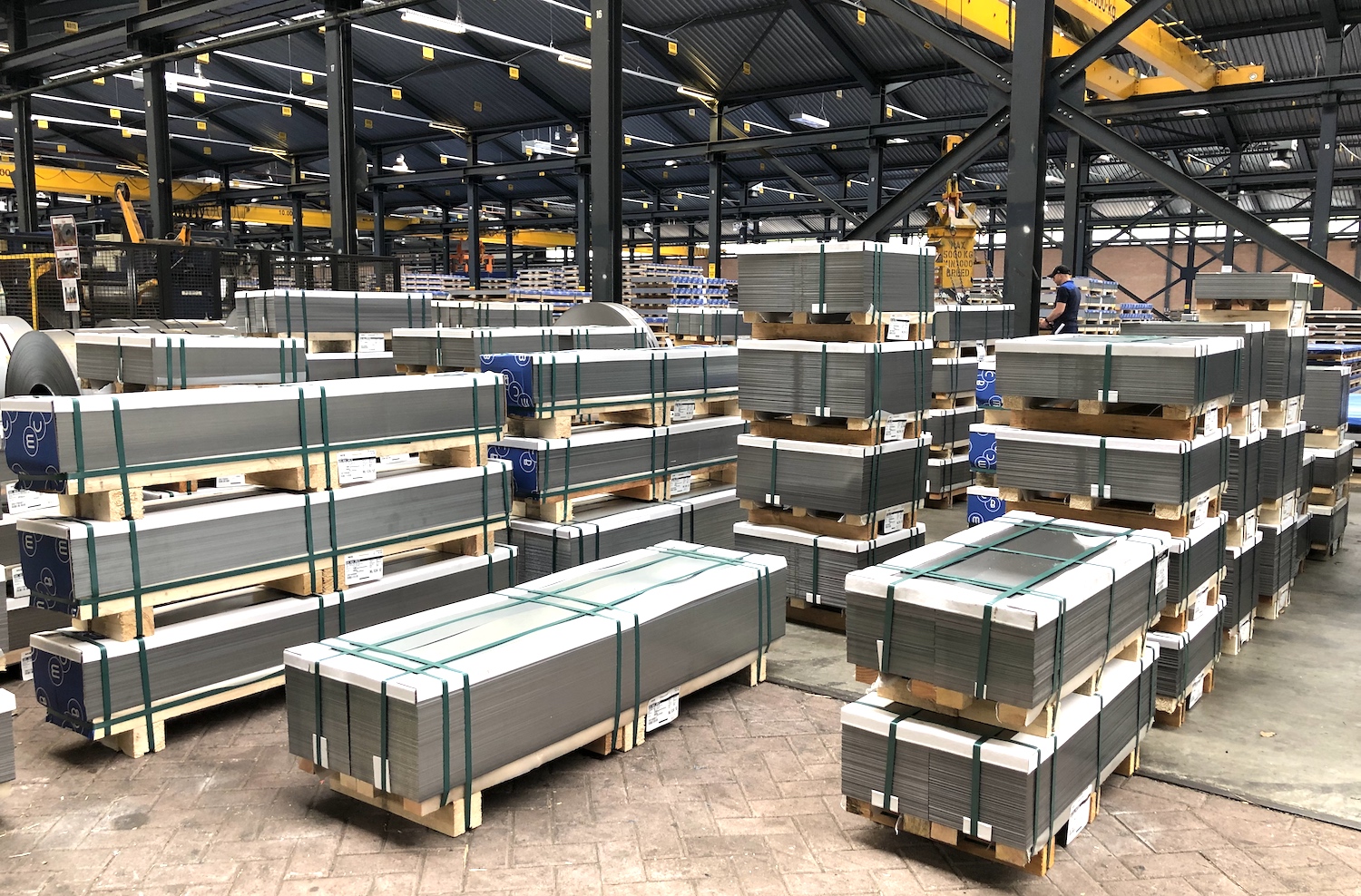
German steel processor Wuppermann to produce CO2-neutral HDG by 2025
Germany-headquartered steel processor Wuppermann said Dec. 6 that it would achieve “CO2-neutral” galvanized steel strip production by 2025 across all sites.
Wuppermann found that the largest share of the company’s energy requirements is generated in strip galvanizing. The company has adopted the “heat-to-coat” process for the production of 1 million mt of strip galvanized steel a year at its three glavanizing sites, which saves more than 30% of CO2 emissions compared to conventional galvanizing, the company said.
“While conventional galvanizing processes are based on fossil energies, our process is electricity-based. This means we can galvanize our strip on the basis of green electricity — a significant competitive advantage in terms of sustainability,” said Johannes Nonn, spokesman of the Wuppermann executive board, adding that about half of the CO2 emissions come from zinc smelting and the company is having discussions with zinc suppliers on the issue.
The processor will only use renewable energy for the production. Since the beginning of the year, the Austrian production sites are powered exclusively by hydropower and the Dutch site in Moerdijk will switch to wind power from 2022. The electricity supply contracts at the production sites in Hungary and Poland will also be successively converted to CO2-free or green electricity.
The company did not say whether they would be looking at the emissions of the pre-material of the galvanized strips as well.
— Laura Varriale

Russia’s stainless output increases in October
Russia’s production of stainless steel increased in January-October, show national statistical service Rosstat data monitored by Kallanish.
Output amounted to 175,200 tonnes, up by 3% on-year. In October alone Russian steelmakers produced 17,700t of stainless steel, more by 7.6%.
In September, Russian steelmakers produced 20,700t of stainless steel, up 34.1% on-year (see Kallanish passim).
Stainless production at Russia’s Krasny Oktyabr (Red October) decreased in October to 12,500t of stainless steel, down by 51.2% on-year. Red October managed to maintain its leading position in the production of stainless steel in the first half of 2021. Moreover, it had a 22.4% share in Russian stainless exports, according to national special steel association USSA.
In October, JSC RSL Group, associated with Russian pipemaker TMK, completed the acquisition of shares in Red October. However, the latter is still in bankruptcy proceedings. RSL Group said its immediate tasks will be restoring pre-crisis production indicators, expanding sales markets, developing industry cooperation and implementing a plan to modernise production.
Earlier, TMK announced it will begin the production of stainless flat rolled products. The design capacity of the proposed complex is up to 500,000 t/year. Total investment is over RUB 100 billion ($1.36 billion). The production site will be located in Volzhsky, but the timing of the project has not yet been specified.
Russia’s additional export duties meanwhile impact only a part of Russian exports of stainless products because most of them are delivered to Eurasian Economic Union (EAEU) countries, USSA said previously.
Svetoslav Abrossimov Bulgaria

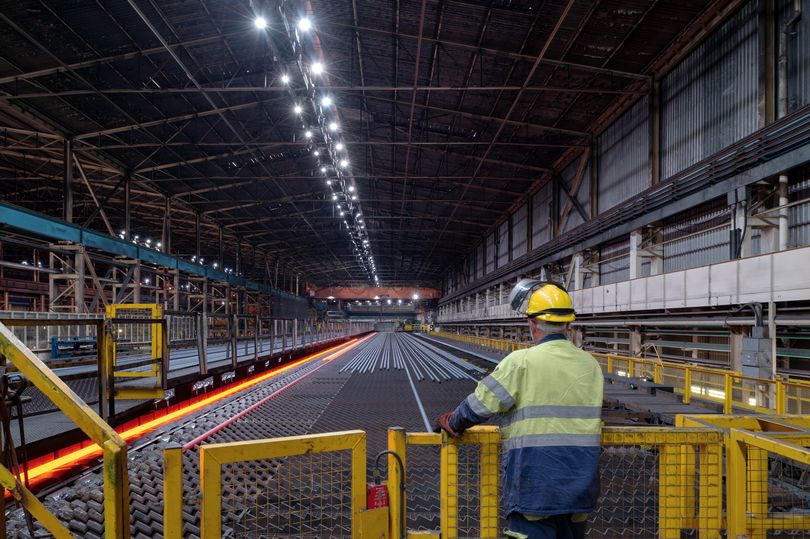
Liberty moves forward restructuring of Benelux units
Liberty Steel says it has taken some steps forward in the process of reorganising the structure of its Benelux units, in Liege and Dudelange.
The group confirms to Kallanish that Belgian authorities have validated the restructuring plan presented by Liberty for the Liege unit. Similarly in Luxembourg, an agreement on the restructuring was reached with the government and local trade unions.
“Following the agreement of its restructuring plan, Liberty Liège will now restart its operations, start to implement a creditor reimbursement plan and continue its social dialogue to ensure its transformation plan can be implemented as soon as possible,” the company says.
“Following the decision to undertake a technical restructuring at Liberty Dudelange to protect its employees, the management team will continue to work collaboratively with its stakeholders to identify new sources of financing and develop sustainable business plans for its future.”
In Liege and Dudelange, Liberty controls ten rolling lines for coil, producing mainly galv and packaging products. Since September, local trade unions have been expressing their concerns over the future of the Benelux plants as the company intends to cut jobs and restructure heavily.
In early November, the Luxembourg trade unions said the Dudelange mill was operating at only 20% of its installed capacity, while a recovery in output was expected in the first quarter next year.
Emanuele Norsa Italy

Margins gradually returning to ‘typical’ distribution levels: Stalprofil
Stalprofil’s consolidated revenue fell 10% on-year in the third quarter to PLN 370 million ($90.9m) due to a drop in the number of infrastructure segment contract awards.
However, steel trading segment revenue surged 75% thanks to continued strong steel demand and elevated prices, albeit with a slight correction. Consolidated net profit also soared almost seven-fold to PLN 26.9m.
The end of the price uptrend in the second half of Q3 is seeing the gradual return of margins to levels typical for the steel distribution sector, Stalprofil says. The reduced infrastructure segment revenue is due to a lack of orders from main customer Gaz-System. The firm sees deliveries to the Polish gas pipeline operator resuming in the coming months.
Consolidated revenue in the nine months through September thus fell 2% to PLN 1.14 billion but net profit attributable to majority shareholders soared over 470% to PLN 87.2m.
In the first half of 2021, Stalprofil saw steel product sales rise 15% on-year to 94,916 tonnes, but export sales revenue almost halved amid competition and influx of cheap steel into the EU from the Far East and CIS (see Kallanish passim).
Adam Smith Germany