

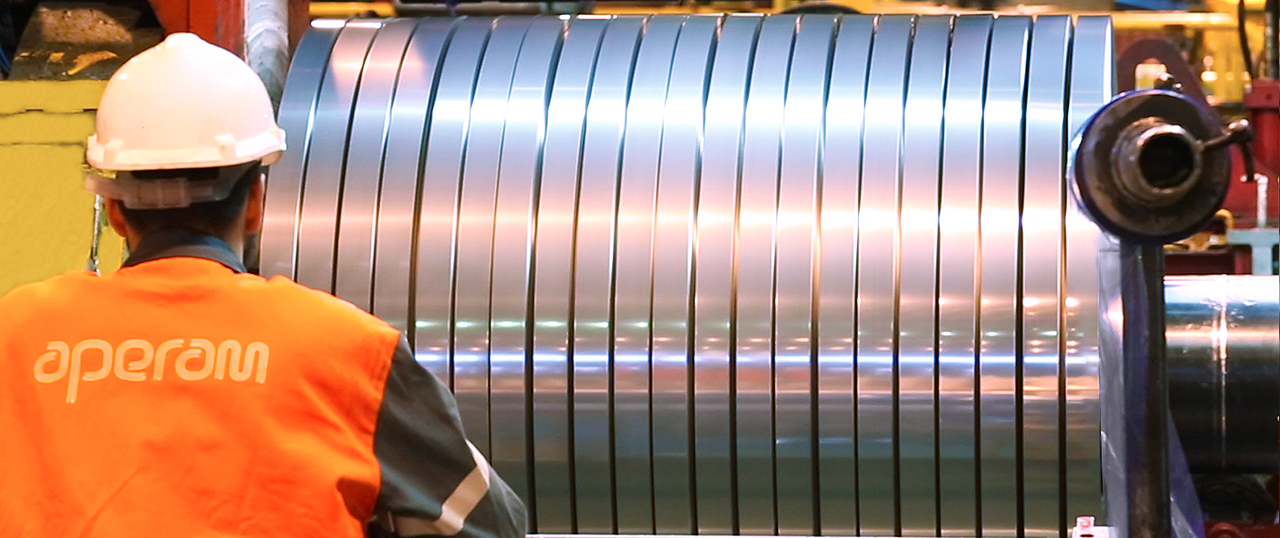
Aperam completes acquisition of recycling group ELG
Special and stainless steelmaker Aperam has completed the acquisition of ELG, a global leader in stainless steel and superalloys recycling, the company said Dec. 27, adding that all necessary regulatory approvals required for the acquisition of ELG have been obtained, without conditions.
ELG, which had been acquired for an enterprise value of EUR 357 million (equity value EUR 30 million), collects, trades, processes and recycles stainless steel scrap and high performance alloys, delivering 1.2 million mt of materials annually.
ELG will be fully consolidated into the Aperam Group as of Dec. 31, 2021, under a new recycling segment.
Investing in sustainable recycling will further improve Aperam’s leading environmental footprint and support the company’s CO2 reduction targets, the company said, adding that the acquisition also enables Aperam to improve its input mix and to expand into the supply of raw materials.
“The acquisition of ELG received all necessary regulatory approvals and is placing Aperam at the core of the circular economy,” Aperam CEO Timoteo Di Maulo said. “Including ELG, about 30% of Aperam’s workforce will create value from working in renewable and recycling upstream. We are excited about the potential of ELG within Aperam and look forward to our journey to create value in the global recycling industry,”
Aperam has a production capacity of 2.5 million mt/year of flat stainless and electrical steel in Brazil and Europe.
— Cenk Can

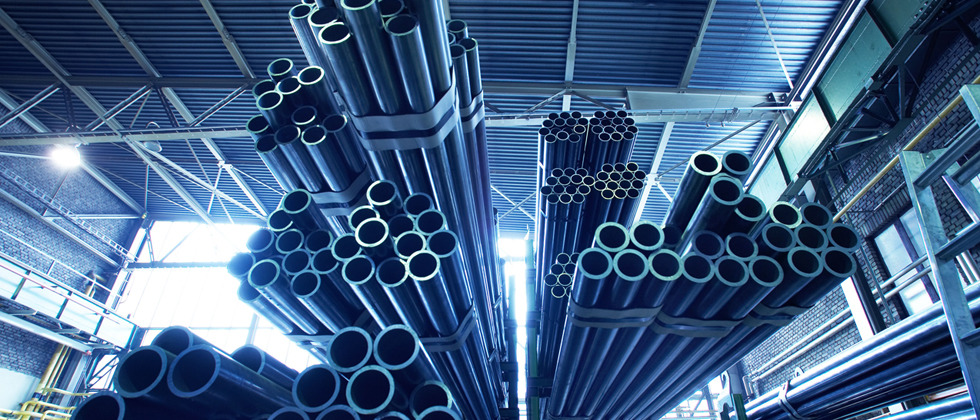
Tubacex sells Tubos Mecanicos to Hierros Anon
Spain-based stainless steel seamless tube manufacturer Tubacex has sold Tubos Mecanicos to the Galician metallurgical group Hierros Anon for Euro 25 million with final additional adjustments to be included, according to a company statement.
With this acquisition, Tubacex has disinvested in a non-strategic asset to reinforce its balance sheet and address its future growth in line with the energy transition, the Spain-based company said Dec. 23.
This growth is one of the main lines of the new strategic plan that Tubacex will present to the market in early 2022, it said.
“Tubacex’s new strategic plan, which will be presented in the first quarter of the year, is focused on supplying innovative solutions that support the decarbonization process of its clients, or the entry into developing markets,” the company said. “To do this, it contemplates investments in strategic assets that boost its positioning, as well as divestments in those businesses that do not support its new growth cycle.”
Tubos Mecanicos is a distributor of carbon steel bars and tubes purchased from third parties for industrial sectors, with six warehouses in Barcelona, Zaragoza, Alava, Galicia, Madrid and Valencia.
This acquisition strengthens the leadership of Hierros Anon in the distribution of steel products – iron, steel and aluminum- particularly in the national market, it said.
Tubacex is a multinational group with its headquarters in Alava, Spain, and a global leader in the manufacture of stainless steel and high-alloy tubular products. It also offers a wide range of services from the design of tailored solutions to installation and maintenance operations.
It has 20 production plants (in Spain, Austria, Italy, the US, India and Thailand, as well as Saudi Arabia, Dubai, Norway, Canada and Singapore through the NTS Group), worldwide service centers and sales offices in 38 countries.
— Cenk Can
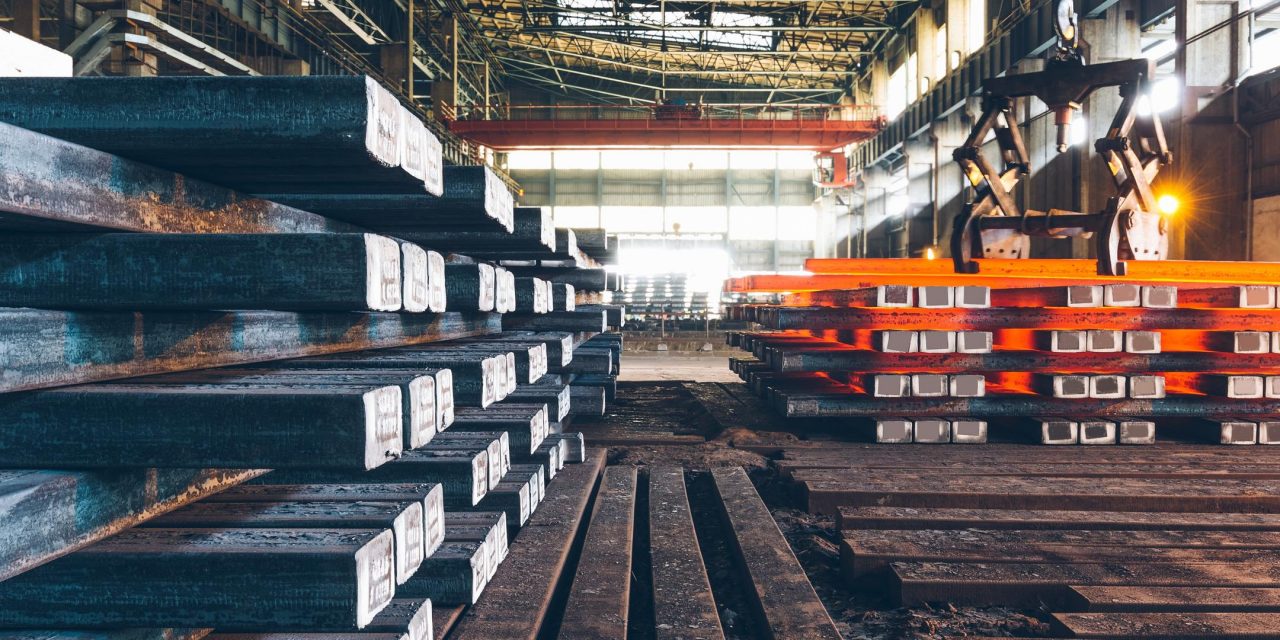
Japan: Nov iron, steel exports rebound 4% from Oct; spikes 18% on year
Japan exported 2.88 million mt of iron and steel products in November, a 3.6% rebound from October and spiking 18.3% year on year, data from the Japan Iron and Steel Federation showed Dec. 27, amid strong demand from several main destinations.
Looking ahead to 2022, the JISF projected annual exports will be similar to 2021, citing a recovery in the global economy and forecasts from the World Steel Association, which expects global steel demand in 2022 to rise 2.2% annually.
Last month, South Korea topped the list of destinations receiving 513,448 mt of Japan’s iron and steel exports, up 7.3% month on month and surging 52.1% against November 2020, the JISF data showed. This comes amid an expanding manufacturing sector as evidenced by the country’s purchasing managers’ index, which widened to 50.9 in November, from 50.2 in October.
Thailand was next at 449,727 mt, down 4.3% from October, but up 14.6% year on year. The mixed outcome seemed reflected in the Thai manufacturing PMI, which slowed to 50.6 in November, from 50.9 in October.
Exports to China were mixed at 419,091 mt, up 3.5% from October, but dipped 0.8% annually. China’s official manufacturing PMI, as published by the National Bureau of Statistics, rebounded to 50.1 in November from 49.2 the month before.
Ordinary steel products made up a good proportion of the overall November exports, coming in at 1.88 million mt, up 4.4% from October 2021 and 20.1% from November 2020. Of the ordinary steel products, hot-rolled wide strips contributed 957,545 mt, up 14.7% month on month and 27.6% year on year.
Of the hot-rolled wide strips, 163,947 mt headed to Thailand, down 3.1% from October, but gained 22.8% annually. About 161,427 mt of the same strips found their way to South Korea, both spiking 26.6% and 70.5% on a monthly and annual basis, respectively.
With the November figures summed up, overall exports over January to November 2021 was 31.59 million mt, up 6.8% versus the corresponding 11 months the year before, and likely to exceed the 32.14 million mt exported for all of 2020.
— Clement Choo
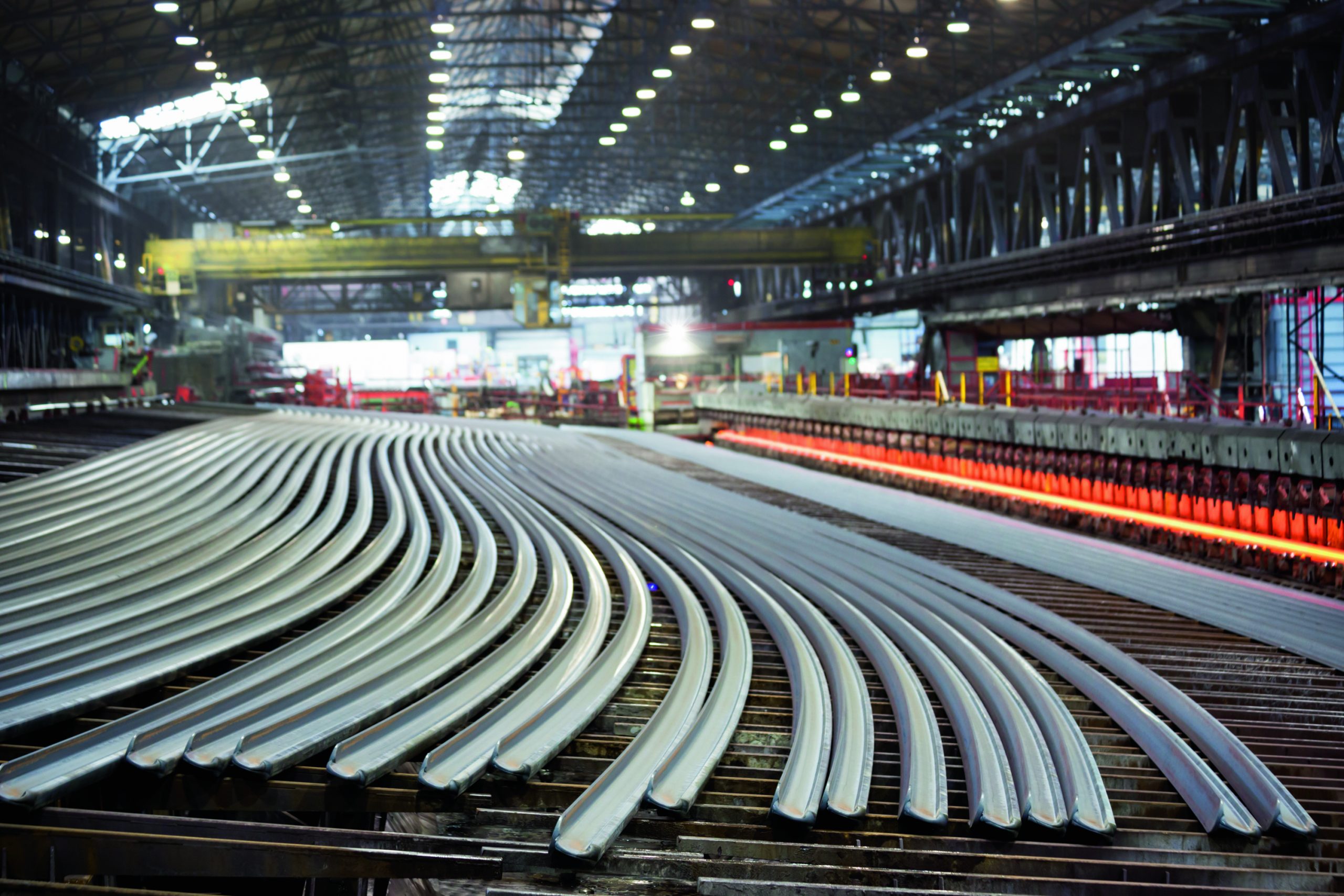
Asian steel output remains firm outside of China
Asian crude steel output fell further in November on the continued cut back in output in China, according to World Steel Association data. Excluding China, output was also down month-on-month but was still growing strongly on-year, Kallanish notes.
Total Asian crude steel output totalled 97.748 million tonnes, down 15.62% year-on-year and 2.6% month-on-month in November. China, the region’s top producer, saw November production of crude steel hit 69.31mt, 3.17% lower m-o-m and slumping 22% on-year. China is seeing a slight rebound in output in December after it completed output reduction targets by the end of November.
Asia excluding China, meanwhile, saw crude steel output drop 1.2% m-o-m to 28.438mt, but this was largely down to the shorter month. Output was still up 5.4% y-o-y. Several countries continue to see stronger output due to the delayed recovery from Covid-19 in 2020 and the steady increase in installed capacity.
Second-largest regional producer India saw crude steel output fall 2.25% from October to 9.825mt. This was up 2.25% from last year. Meanwhile, Japan, the third-largest producer of crude steel, produced roughly 8.04mt, down 2.24% m-o-m but up 10.71% on-year.
South Korea’s steel production in November increased 2.42% m-o-m and 2.72% y-o-y to 5.922mt. Vietnam’s output was up 0.95% m-o-m and 6.72% y-o-y at 1.906mt. November production in Taiwan was 6.78% y-o-y but 3.08% lower on-month at 1.89mt.
January-November steel production across the region was 1.257 billion tonnes, up 1.11% y-o-y. China produced 944.855mt, down 2.84% y-o-y. Output in India increased 19.27% to 107.307mt.
Excluding China, Asia’s combined production was up 15.26% y-o-y across January-November, totalling 312.55mt. With production of 88.397mt, Japan was the third-largest producer of steel in Asia between January-November. This quantity was 16.84% more y-o-y. In South Korea and Vietnam, output over the opening 11 months rose by 5.56% and 20.41% respectively to 61.169mt and 17.929mt. January-November production in Taiwan totalled 21.052mt, up 10.5% y-o-y.

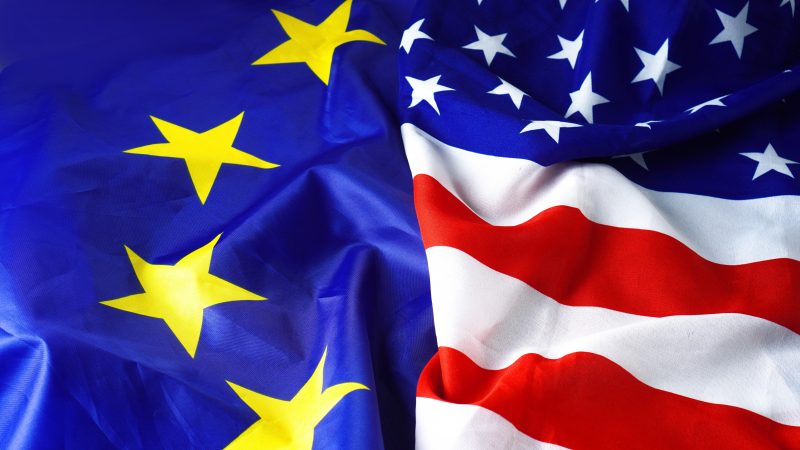
US formalises EU quota arrangement
US President Joe Biden has made a presidential proclamation formalising the tariff-rate quota agreement on steel imports from the European Union.
Through the end of 2023, 3.3 million tonnes of steel products will be allowed to enter the US from the EU tariff-free. Any shipments above this quantity will be subject to the 232 tariffs originally imposed in 2018 by then-President Donald Trump and maintained by the current administration.
President Biden was careful to maintain that all subject steel imports must be melted and poured in an EU member country to receive the duty-free treatment, Kallanish notes.
Additionally, all exclusions that were granted in fiscal 2021 (1 October, 2020, to 30 September, 2021) by the US Department of Commerce allowing EU steel products to enter the US duty-free will be renewed for another two calendar years.
The US and EU have agreed to expand trade remedy coordination and to address non-market excess capacity, setting a deadline of 31 October, 2023, to conclude steel and aluminium negotiations between the two regions.
President Biden, citing “national security interests,” also determined that it would not be necessary or appropriate to remove the current 10-25% tariffs on steel products from other countries at this time.
The American Iron and Steel Institute, which represents the interests of the domestic steel industry, responded favourably to the proclamation.
“We are particularly gratified that the president’s proclamation emphasises that only steel melted and poured in the EU will benefit from this alternative arrangement,” AISI president and ceo Kevin Dempsey says in a statement. “Proper implementation and enforcement of the tariff-rate quota will be crucial to preventing another steel import surge that would undermine our industry and destroy good paying American jobs…We also welcome the president’s direction to the Secretary of ommerce to initiate a regulatory review of the section 232 exclusions process that will include a focus on enhanced consultations with US companies and labor organisations.”
Laura Miller USA