


USA: EU steel tariff proclamation pleases SMA
The Steel Manufacturers Association (SMA) is celebrating the recent proclamation made by President Joe Biden formalising a tariff-rate quota agreement for steel imports from the European Union.
In a recent statement obtained by Kallanish following the proclamation, the SMA expressed pleasure with the implementation of a quota agreement allowing with the EU, allowing for up to 3.3 million tonnes of European steel exports into the US tariff-free through 2023.
“As steel imports are increasing and capacity utilisation has dipped in recent months, it is essential that the implementation, administration and enforcement of this new agreement is done in a manner that continues to support American steel companies and workers…We commend the fact that this agreement includes provisions to help ensure that only steel that is melted and poured in the EU will be eligible for tariff-free status,” says SMA president Philip Bell.
Along with providing protection to the domestic industry from tariff-free imports, the SMA celebrated the agreement for its emphasis on reducing global carbon emissions. According to the association, this agreement may help incentivise other countries to follow American steelmakers’ approach to sustainable steelmaking and carbon-reduction initiatives.
Zach Johnson USA


Celsa France begins new rolling mill trials
Celsa has officially produced the first steel bar at its new hot-rolling mill in France, Kallanish learns from the company.
The facility located at the company’s industrial complex in Bayonne commenced trial production on 27 December. The mill will definitively come into operation once the tests are finished in the next few weeks, Celsa explains.
“The start-up of the new rolling mill at the Celsa France complex in Bayonne will allow the Group to further diversify its activity and strengthen its international business to invoice new growth as of next year,” the steelmaker comments. The mill will produce up to 550,000 tonnes/year of long steel. At full capacity, the new rolling mill has an annual revenue-generating capacity of around €300 million ($339.5m).
“Celsa France will be able to access, directly, the market with greater added value products, which will provide greater capacity for return and profitability on the investment. The steel group will improve its access to the French, Belgium and Netherlands markets and even in northern Spain. The company will also improve delivery times and customer service,” Celsa observes.
Celsa France confirms it has signed a strategic alliance with Netherlands-based VMI group subsidiary Intersig France for the purchase of part of its production and to scale up its presence in the domestic wire rod and rebar market.
The investment in the new rolling mill is €65m and will generate around 140 new direct and 420 indirect jobs across France and Spain.
Todor Kirkov Bulgaria
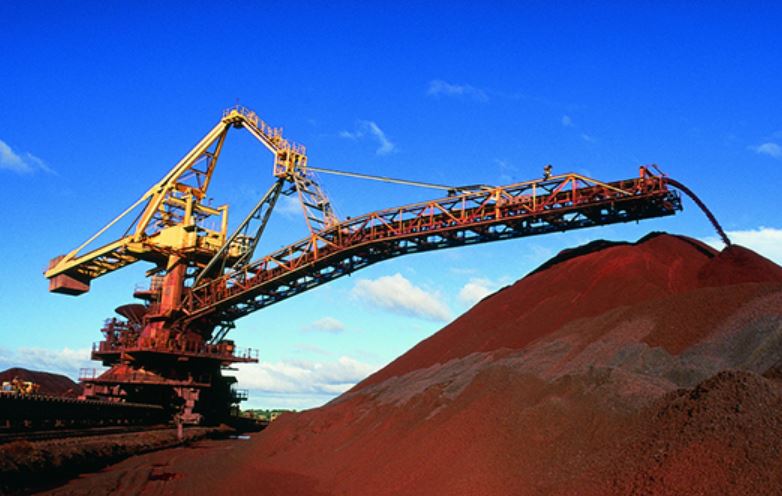
Seaborne iron ore prices end 2021 with uptick
Seaborne iron ore prices gained on the last day of 2021. Inventories are building, however, and the outlook for 2022 is weaker.
The Kallanish KORE 62% Fe index gained $1.87/t on 31 December to $119.01/dry metric tonne cfr Qingdao. The Kallanish KORE 65% Fe index increased $2.07/t to $139.81/dmt cfr, but the KORE 58% Fe index only inched $0.29/t higher to $92.83/dmt cfr. A cargo of 120,000 tonnes of PB Fines and 50,000t of PB Lump sold at a floating price.
On the Dalian Commodity Exchange May iron ore settled flat at CNY 674/t ($106.15/t), while on the Singapore Exchange January 62% Fe futures settled up $2.13/t at $121.07/t. The same contract for 65% Fe and 58% Fe futures settled up $2.44/t at $143.05/t, and down $1.35/t at $93.24/t respectively. Tangshan billet prices were steady at CNY 4,270/t.
Across 35 ports stocks increased by 1.12 million tonnes in the last week of the year to 152.07mt, according to SMM. Even with restrictions easing in January and overall steel output picking up, iron ore markets remain well supplied.
Iron ore had a spectacular year, averaging $159.43/dmt cfr over 2021, up 47.1% from 2020 and marking the second year running of average prices over $100/t. 2022 however is looking very different, with Chinese steel output remaining subdued, risks to steel demand for construction, and the threat of Omicron again disrupting markets in the near term.

European coils market steady; expectations of higher prices from auto return, energy costs
The European coils market was inactive on New Years Eve, with most sources still on holiday and expected to return Jan 3. Despite revelling in the tranquillity of the holiday season, uncertainty still prevailed for next year. Most market participants were optimistic about a potential price increase propelled by a surge in automotive demand, with some OEMs now restarting following a production slump.
Others, however, were still cautious about a price decrease, harbouring doubts about a rapid recovery from the automotive sector and the reality of cheaper import prices come the second quarter of 2022.
There is still much to expect for the steel market in 2022 – the revaluation of steel safeguards in early January, the exhaustion of ‘other countries’ quota in Q2, rising energy costs, magnesium shortages, increased Chinese export duties, and the tumultuous road to achieving green steel.
The revision of section 232 could also spell trouble for Europe, with US prices still fairing a lot better than domestic European steel prices. Mills looking to export sufficient steel quantities could result in another shortage if automotive demand proves to be robust, sources have warned.
The daily Platts TSI US hot-rolled coil index was unchanged at $1,500/st on an ex-works Indiana basis Dec 30, having a $457/mt premium over North European hot-rolled coil.
Plate prices could also see a push upward, with one Italian mill source citing a tradable value at Eur880/mt ex-works Italy, with tendencies towards Eur900/mt growing closer based on a ‘higher energy costs forecast.”
The promise of a bullish Q1 was not a unanimous outlook among UK participants, with one trader concerned about the lack of customer inquiries.
“Not sure what Q1 will bring in all honesty, fingers crossed for an uptake in demand.”
— Amanda Flint
