

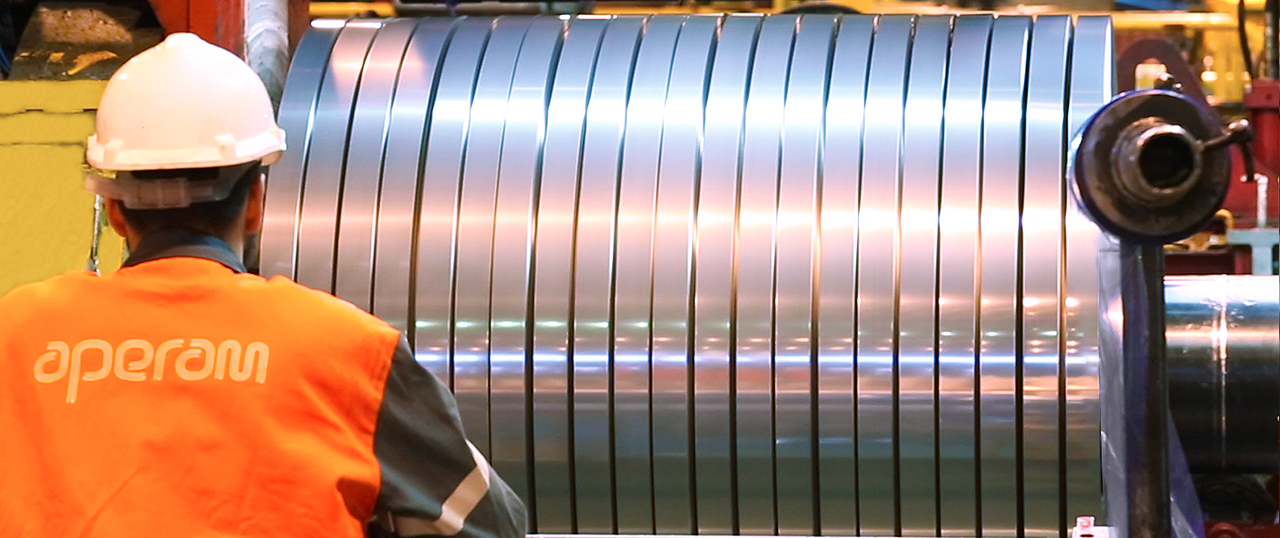
Aperam increases alloy surcharges again
French stainless steel producer Aperam has increased its January alloy surcharges for its austenitic range of flat stainless steels for Europe by €100/tonne ($113) on average versus December. This comes on top of the €100/t increase announced last month, Kallanish notes.
The surcharge for grade 304 (1.4301) has gone up from €2,361/t last month to €2,427/t effective 1 January. For grade 316 it has increased from €3,563/t to €3,643/t. Grade 309S, a heat-resistant stainless steel used in high-temperature applications, has seen its surcharge remain stable this month at €3,267/t. The surcharge for the most popular ferritic grade, 409, however, has gone down for the first time in months, from €1,002/t in December to €922/t in January, the company reveals.
Offers for nickel cash buyers reached $20,925/t on 31 December, Kallanish notes.
Natalia Capra France

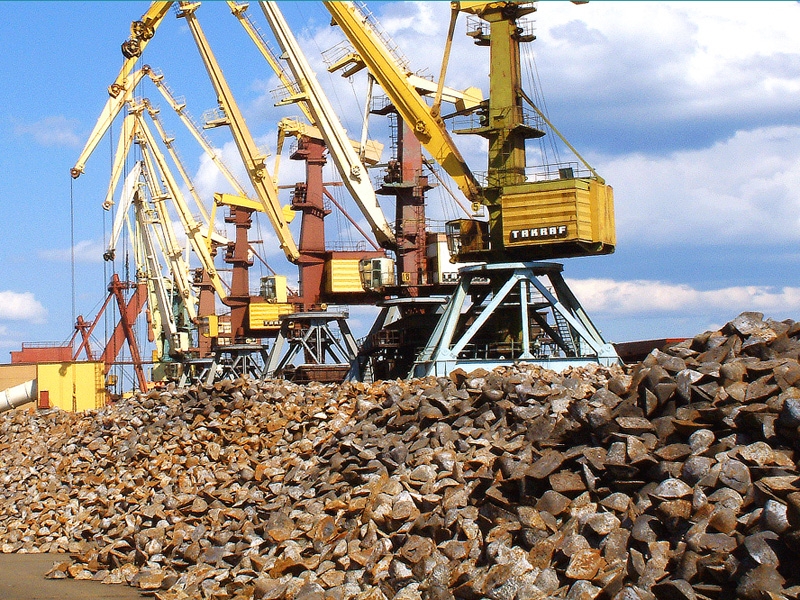
Iron ore firms into the new year
Seaborne iron ore prices continued to tick higher on Tuesday amid a round of spot purchasing following the New Year holiday. Steel markets however remain quiet in the run up to the Chinese New Year next month.
The Kallanish KORE 62% Fe index gained $1.04/t to $121.83/dry metric tonne cfr Qingdao. The Kallanish KORE 65% Fe index increased $2.97/t to $144.98/dmt cfr, and the KORE 58% Fe index was up $0.53/t to $94.63/dmt cfr. 170,000 tonnes of PB Fines sold at $121.75/t with a laycan in 29 January-7 February. 170,000t of Brazilian Blend also sold at $124.55/t with a laycan in 7-16 February, while 80,000t of Jimblebar Fines sold at a floating price.
On the Dalian Commodity Exchange May iron ore settled up CNY 5.5/t at CNY 679.5/t ($106.62/t), while on the Singapore Exchange February 62% Fe futures settled down $0.12/t at $122.25/t. The same contract for 65% Fe and 58% Fe futures settled up $1.12/t at $145.42/t, and up $0.24/t at $95.01/t respectively.
Chinese scrap prices have also increased, but billet remains weighed down by heavier steel prices. 6mm+ heavy scrap delivered to mills in the Yangtze River Delta increased CNY 9/t on Tuesday to CNY 3,581/t. Tangshan billet prices meanwhile were flat at CNY 4,240/t.
Iron ore prices have been supported by other rising commodity prices, as well as expected higher steel output. Weak steel markets however mean that the room for further increases in the short term may be limited. Short-term pollution-triggered production restrictions are expected to be common in northern China over the current quarter, and building steel and iron ore inventories may put further pressure on prices.
China’s wider economy is also a saw of potential volatility as a number of issues could trigger either crises or strong policy responses. The real estate debt crisis in particular could see either mounting bankruptcies or significant support for steel demand from the state.

EU quotas pull down Turkey’s 11-month HRC exports by 11.5%
Turkish mills’ overall HRC exports during January-November declined by 11.5% year on year to 2.4 million mt, mostly due to the trade barriers by the European Union, which is traditionally Turkey’s top HRC export destination.
Quotas and the European Commission’s definitive anti-dumping duties on imports of HRC from Turkey which came into force on July 5, notably restricted Turkish mills’ exports to the region in 2021.
According to the latest monthly Turkish Statistical Institute (TUIK) data sent to S&P Global Platts Dec. 31, exports to Italy, which was Turkey’s traditionally top HRC export destination fell sharply by 30% on the year to 578,600 mt in January-November 2021, while exports to another South European country, Spain, totaled 339,000 mt in that period, up 6.6%.
Turkish mills’ HRC exports to Belgium remained notably above last year at 163,300 mt in the first eleven months, up 85% on the year, while exports to other European countries remained notably lower on the year due to quotas and AD duty.
Despite the decline seen in exports to the EU, Turkish mills managed to increase their HRC shipments to the US as prices there stood notably above other market prices, especially in the first half of the year. Turkish mills’ eleven-months HRC exports to the US totaled 343,000 mt, sharply up from 11,200 mt exported in January-November 2020.
Turkish mills also raised their HRC exports to another North America country, Canada, in January-November by shipping 135,500 mt, versus zero in the same period the previous year.
As the decline in export volumes to the EU region continued in December, and demand remained low in the domestic market due to ongoing exchange rate fluctuations in the country, the pressure on Turkish mills’ HRC prices has been ongoing, amid sharply increased mills’ energy costs with the latest hikes on Jan. 1, sources said.
— Cenk Can

Electrical steel bottlenecks seen throttling e-car production
While global car production is suffering from the shortage of semiconductor chips, the production of electric vehicles faces the additional obstacle of insufficient capacity of electrical steel, according to analytics agency IHS Markit.
Manufacturers of diverse machineries are struggling to negotiate supply contracts with steel mills for 2022, particularly for electrical steel, says John Anton, director of pricing and purchasing at IHS Markit. Carmakers have been notified by steel mills that they will be on allocation for electrical steel for all of next year. Most carmakers expect to get only 80 to 90% of their requirements, Kallanish hears from the agency.
“The impact of the electrical steel shortage could potentially be as damaging to the global economy in 2022 and 2023 as the semiconductor shortage [was in 2021],” Anton states. “If electrical machinery companies do not get the electrical steel they need, buyers will have to deal with much longer lead times and higher prices.”
Electrical steel is used in electrical engines for multiple purposes. Given the growth ambitions of carmakers for e-vehicles, this will be the largest affected sector. The automotive industry in Germany, for instance, plans investments of around €45 billion ($51 billion) per year, largely for research into and production of e-cars (see separate story).
Christian Koehl Germany
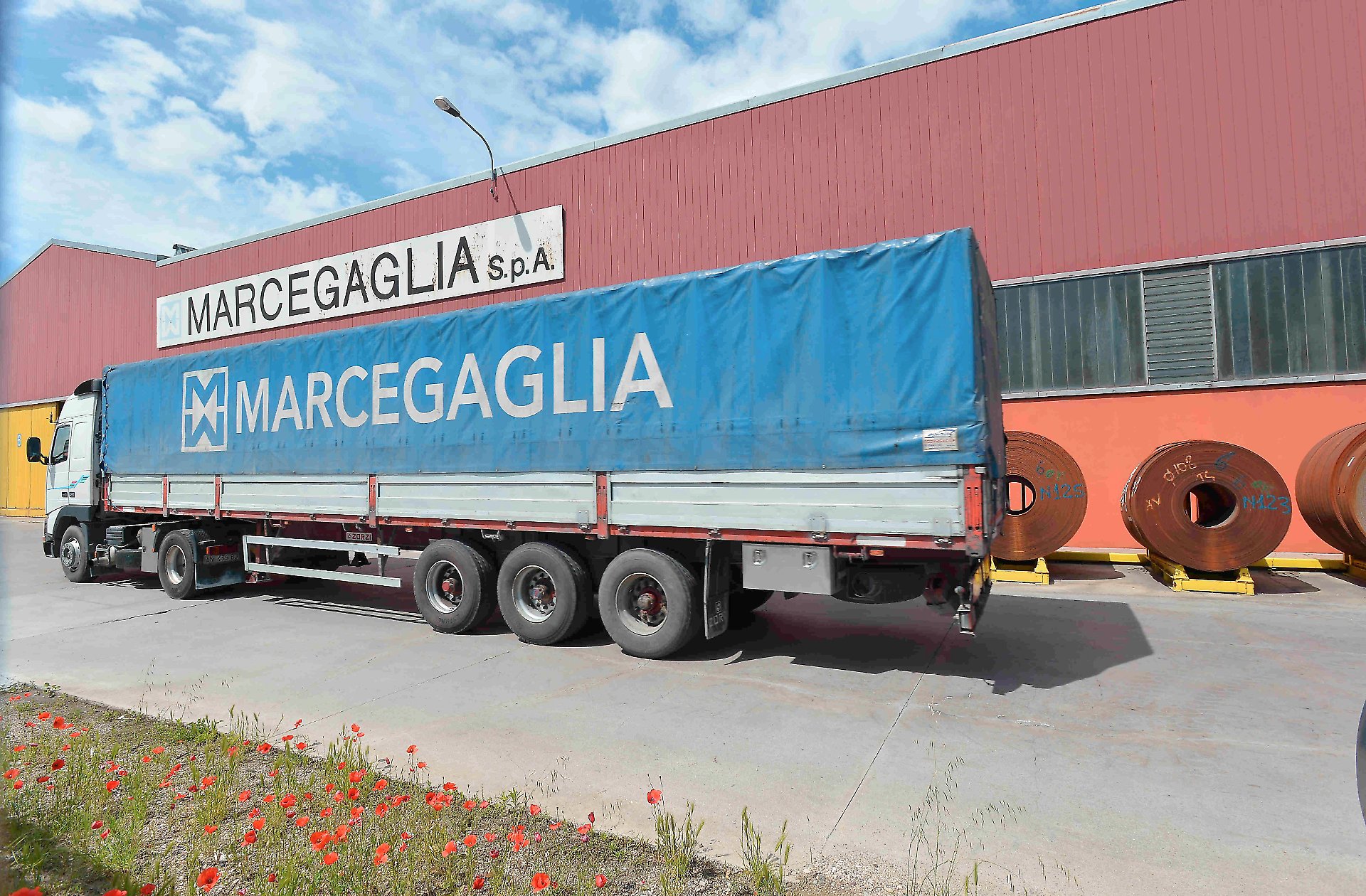
Marcegaglia publishes new stainless price list
Italian re-roller Marcegaglia has published a new stainless tube price list effective this week, Kallanish learns from the company.
The new list will increase prices of all stainless tubes by €250/tonne ($282) on average, depending on product. The move follows the steep hikes for stainless hot and cold rolled coil in Europe, whose prices remain high on account of regional shortages.
“The new price list has become necessary due to a further adjustment to the continuously rising prices of raw materials and the concomitant increase in the costs of energy and all consumables and packaging materials in recent months,” says Marcegaglia specialties purchasing & sales director Egidio Bini.
Marcegaglia produces stainless steel pipe for a variety of applications including mechanical and automotive, the food industry, heat exchangers, the oil and gas sector, construction and ornamental tubes and box sections. The company has an annual worldwide capacity of 400,000 tonnes. Its grades include austenitic and super austenitic, ferritic, duplex and nickel alloy stainless steels.
Natalia Capra France