


European coils market stable; market expects higher steel prices
The European HRC market was stable again Jan. 12, though prices are likely to rise imminently, following announcement of a further increase in prices from a large European mill, sources told S&P Global Platts.
A source close to the large European mill announced Eur1,160/mt delivered Europe for North European HDG prices, with a range of Eur20-25/mt for other regions, which would constitute an overall increase of around Eur30-50/mt.
A German distributor said he had heard that price increases would be possible from the large European mill but was unsure if they would come to fruition in the market.
Prices were heard to be mostly stable, though some buyers were skeptical about a price decrease, suggesting that mills were keen to keep prices high.
Since the last few days, some market participants were expecting uptake from import material to slow on account of increasing protectionist measures, with a lot of material waiting at Italian ports.
An Italy service center source said that although imports were looking less attractive, prices were not likely to fall.
“Prices will not decrease – energy costs in Europe are too high, raw material costs also a factor,” an Italian service center said. “Production is lessening but price will not decrease.”
A European mill source said the ongoing floods in Brazil could be a huge detriment to global iron ore stocks.
Platts assessed North European HRC prices stable at Eur925/mt ex-works Ruhr and in Southern Europe, prices were assessed at Eur835/mt ex-works Italy Jan. 12.
— Amanda Flint

European HDG market sees softening, auto sector uncertainty
The European hot-dip galvanized sheet steel market was relatively stable Jan. 12 with little purchasing activity heard as buyers took a step back from inquiries while the lack of automotive demand resulted in more available steel volumes. Prices were heard to be mostly stable, though some buyers were skeptical about a price decrease, suggesting that mills were keen to keep prices high.
Sources remain hopeful demand could improve on a sustained basis following talks of an easing in the semiconductor shortage.
“Mills are not offering yet for Q2 so it is too early to say, the automotive industry might recover,” a Nordic buyer said.
The source also noted a softening in demand as buyers take a wait-and-see approach to determine the viability of ever-changing prices.
Since the last few days, some market participants were expecting uptake from import material to slow on account of increasing protectionist measures, with a lot of material waiting at Italian ports.
An Italy trader source said that although imports were looking less attractive, prices were not likely to fall.
“Prices will not decrease, energy and raw material costs are too high to do so,” an Italian trader said. “European mills will reduce production before lowering price.”
Platts assessed North European HDG prices stable at Eur1100/mt ex-works Ruhr and in Southern Europe, prices softened by Eur5/mt to Eur1075/mt ex-works Italy.
— Catherine Brown

US steel imports seen rising in 2022
Steel imports in the US are expected to rise enough in 2022 to keep pressure on domestic prices that reached record levels in 2021, but these shipments will not necessarily represent an import surge, according to industry analysts.
John Anton, director of pricing and purchasing at IHS Markit, said the steel import numbers next year may appear as a spike, but this is mainly because imports since 2018 have been abnormally low due to tariffs, the coronavirus pandemic and logistics issues.
“I would see imports maybe getting back to 2015-2017 levels but do not see them surging,” Anton said in a recent interview with S&P Global Platts.
Imports of certain steel products such as hot-rolled coil already increased in the later months of 2021 because high US prices have made lower-priced imports more attractive despite tariffs, Anton added.
US HRC imports reached 458,994 mt in October, the only month in 2021 where shipments of the product exceeded 400,000 mt, according to US Census Bureau data.
UBS analyst Andreas Bokkenheuser said the availability of imports in 2022, along with new North American steel capacity coming on line, will ease supply tightness and may weigh on high domestic prices, a trend that started at the end of 2021.
“A lot of buyers are opting for imports,” he told Platts. “That, in combination with high inventories and lead times having fallen, is going to probably push domestic prices down even further.”
The Platts TSI US hot-rolled coil index was assessed at $1,500/st EXW Indiana at the end of 2021, up from $1,009/st at the beginning of the year but down from a record $1,960.25/st in September.
More subdued price levels will trend in 2022 as US producers respond to higher imports, according to Phil Gibbs, an equity research analyst at KeyBanc Capital Markets.
“For domestic mills to get their order books back, they are going to have to incentivize buyers to come to them and stop them from placing marginal import orders,” Gibbs said in a recent interview with Platts. “That’s going to put pressure on pricing.”
Industry monitoring trade enforcement
Amid the recent uptick in imports, US steel industry groups said the proper application of trade mechanisms in 2022 will be critical to protect domestic producers.
“We’re seeing a lot of steel coming in, and part of that is because we have a strong economy and strong demand,” American Iron and Steel Institute CEO Kevin Dempsey told Platts.
“But we do want to make sure our trade laws, both 232 (tariffs) and the antidumping and countervailing duty laws, are fully and effectively enforced because a new surge in imports, dumped and subsidized imports, could really set back the progress the industry has been making.”
Steel Manufacturers Association President Philip Bell said the finished steel import market share in the US reached 25% through the end of October, a statistic that “we should be concerned about.”
“What we have seen is a steady increase in imports since the beginning of [2021],” Bell told Platts. “We know that we will need fairly and legally traded imports to meet some of the demand in our country, but 25% is starting to approach historic highs.”
According to the latest AISI analysis, the finished steel import market share was an estimated 27% in November and is estimated at 22% over the first eleven months of 2021.
Anton said imports will continue to play a significant role in the US market as long as domestic prices remain elevated above global pricing. However, the price differences between US-produced steel and foreign steel represent a sort of “paradox,” he added.
“The US costs are lower per ton than Europe where they have older mills and even stricter labor laws, probably a looming carbon border tax and there are more natural resources [in the US],” he added. “There’s no reason steel should be more expensive in the US than Europe.”
Quotas could help avoid surge
The Biden administration began modifying the US Section 232 metal tariffs in October upon striking a deal with the EU that would allow a certain volume of shipments to enter the US duty-free under a quota, and similar arrangements with other foreign governments may follow in 2022.
“[The tariff-rate quota with the EU] gives us some protection against a new surge in imports and ensuring full and effective enforcement of that is going to be really important,” Dempsey said.
The Section 232 tariffs were imposed on most countries in 2018 under former President Donald Trump.
Bokkenheuser said the US industry is now “in a bit of a holding pattern” as other countries lobby the US to modify steel tariffs on their own exporters, but changes to the duties will ultimately help US downstream manufacturers.
“Bringing cheaper steel into the country should help to alleviate manufacturers,” he said. “Manufacturers will be more competitive being able to buy price-competitive steel in the US, whether it’s from domestic supply or imports.”
— Nick Lazzaro, Justine Coyne
EU, UK flat steel service center shipments up 9.3% in Jan-Nov: EUROMETAL
Shipments of flat steel products from service centers in the EU27 and the UK rose by 9.3% year on year in January-November 2021, as demand boomed in the recovery from 2020’s pandemic-related market depression, service stockholders’ and distributors’ association EUROMETAL said Jan 12.
Distributors’ shipments of long steel products overall rose 5.2% in the same period, according to EUROMETAL.
EU steel distributors and service centers supply around 80 million mt/year of steel, tubes and metals to EU end-use sectors. This accounts for more than 60% of the supply of steel and tubes to more than 1 million end-users in EU manufacturing industries and construction-related sectors, according to the association.
Strip mill products
Despite gaining in the 11-month period, strip mill products shipments fell 8.1% in November 2021 from the same month of the previous year, the association said in its report.
In days of shipments, strip mill products stocks reached 64 days in November 2021, or an index of 86 (average 2018 = index 100), Eurometal said.
This compared to stock levels of 57 days in November of the previous year, at an index of 78, it said.
Long products
In the category EU27 and UK multi-product & proximity steel stockholding distribution, only rebars and merchant bars registered lower shipments in the first 11 months of 2021, compared to the same period a year earlier, according to EUROMETAL.
In days of shipments, stock volumes in November 2021 in this category stood at 78 days of shipments (at an index of 87), higher than the 67-day level of in November 2020 (index of 80), the association reported.
In the month of November 2021, shipments in the total steel products category fell 7.7% from November 2020 levels, although plates, rebars, tubular products, stainless steel and other alloy steels showed a positive performance, the association reported.
— Diana Kinch
EU steel sections prices increase as mills raise offers
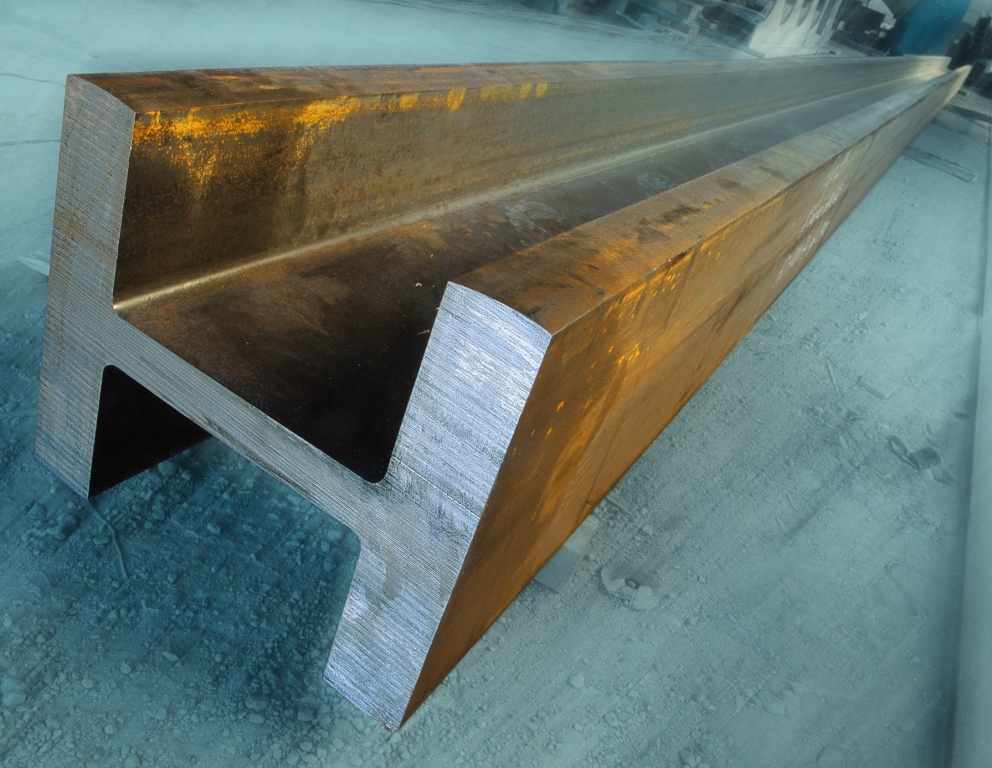
European domestic steel sections prices increased on week to Jan. 12, as sources cited hikes in mill offers amid high energy costs.
S&P Global Platts’ European medium sections price (category 1, S235 JR) was assessed at Eur1070/mt delivered Jan. 12, up Eur70/mt on week, reflecting the highest increase in the assessment since May 19, 2021.
One distributor source in the Benelux region cited mill offers for category 1 medium sections at Eur1060-Eur1100/mt delivered, adding that a price of Eur1050/mt delivered is workable.
He told Platts that demand is getting better this week, since last week was very quiet as most mills were also on holidays, but this week inquiries have started coming in. The source noted that customer sentiment is positive but the ongoing coronavirus situation with increasing omicron cases is putting a damper on the market.
He also highlighted the continuously high energy costs in the market, adding that some mills are now looking at energy costs as a more prominent factor in determining prices as compared to the role that scrap levels played till last year.
“There might be some correction [in electricity and gas prices] after winters but it will never go back to the levels we had last year,” he said.
One European mill source told Platts that the mill has increased prices by around Eur100/mt as compared to medium sections category 1 prices in December. The source noted that the offers are currently only workable for January shipments and indicated that tradable levels are at Eur1090/mt delivered. “Other mills are already offering February deliveries with a higher price. Some mills are offering Eur1150/mt delivered for category 1,” the source said.
He also mentioned that the market has a positive outlook on demand and consumption, but it’s too early to talk about demand as customers are still making inquiries.
— Rabia Arif, Staff

Voestalpine starts 3D sand printer for steel casting
Voestalpine has started operating a 3D sand printer for heavy steel castings at its site in Traisen, Lower Austria, Kallanish learns from the company.
The technology for sophisticated castings using silica sand reduces production times and is more environmentally friendly than the previous process, voestalpine says, claiming that it is Europe’s most advanced 3D sand printer.
Additive manufacturing activities have long been expanded at voestalpine, and a second printer at the site in Traisen will follow in spring 2022. The process is primarily used to produce castings for the energy industry, and for the automotive and railway sector. One recent order, for example, was for rotor discs for water turbines, voestalpine says.
Christian Koehl Germany

Czech Republic should push ETS reform: steel association
The Czech Republic will have its work cut out during its EU presidency in the second half of 2022 to promote reform of the EU Emissions Trading System (ETS) and Carbon Border Adjustment Mechanism (CBAM), says the Czech and Slovak steel association Steel Union. The association finds various aspects of these measures problematic, Kallanish notes.
The European Commission has set a higher relative increase in the emissions reduction target for EU ETS sectors – from 43% to 61% – compared to non-EU ETS sectors – from 29% to 40%. This is despite there being much greater potential for emission reductions in non-ETS sectors, Steel Union says. The Commission also used inadequate data to assess the impact of the EU ETS revision – “We completely lack an impact assessment at Member State level,” the association adds.
Also proposed are the one-off withdrawal of around 120 million allowances and the acceleration of the withdrawal of surplus allowances from the market. Both measures are “unnecessary and harmful, as their only result will be a further artificial increase in the price of allowances at the same level of climate ambition, as well as a faster decrease in free allowances available in the system for industry and energy companies,” Steel Union observes.
A further two measures proposed – the reduction in production emission reference values (benchmarks) and reduction in original ETS allocation immediately after the CBAM launch – will hamper steelmaker competitiveness during the transition period.
“Thanks to the new rules, there is a risk that 6 out of 7 steel benchmarks used by 2020 will fall by up to 50%, which would force companies to buy large amounts of expensive allowances instead of investing money in decarbonisation,” Steel Union says. Meanwhile, question marks remain over CBAM as it is yet to be tested. “If CBAM does work, a reduction in the allocation can be considered, but not before 2030, so that companies have enough time and resources to make decarbonisation investments,” the association adds.
As for the EU Modernisation Fund, 80% not 70% should go towards priority decarbonisation investments, while new natural gas investments should be excluded, Steel Union says. Finally, financial firms should be excluded from ETS trading to prevent unpredictable price rises. “Unlike industry and energy, they [financial firms] do not need allowances, but they see them as a good investment tool, the value of which will continue to rise as the volume of allowances in the market decreases,” the association concludes.
Adam Smith Germany

EU could hasten CBAM transition, ETS phase-out
The EU has updated its proposal for carbon border adjustment mechanism (CBAM) implementation to shorten the period of transition allowing companies to adapt to new regulations.
The bloc presented the first draft of a proposal to implement CBAM in July 2021. According to that first draft, the CBAM system was to become effective from 2023, with a transition period lasting until the end of 2025. In the revised proposal, the transition period could elapse at the end of 2024, according to an official document summary seen by Kallanish.
In addition, the initial CBAM proposal includes a phase-out of existing free EU Emissions Trading System (ETS) allocations to be concluded by 2035. The new proposal, however, foresees the conclusion of the free ETS allocation phase out in 2028.
The revised draft will be discussed in February and voted for by the end of April. The final agreement will need to be published by June.
Emanuele Norsa Italy
EU steel distribution activity drops again in November
EUROMETAL confirms in a note sent to Kallanish that shipments by steel distributors in Europe during November continued to follow a year-on-year declining trend.
Flat steel service centres saw shipments drop 8.1% y-o-y in November. Despite this, overall shipment activity for the first 11 months of 2021 remained 9.3% y-o-y above the same period of 2020.
Similarly, multi-products distributors saw their shipments dropping by some 7.7% y-o-y in November, while overall shipments in January-November remained 5.2% above 2020.
In October, the y-o-y decline was nevertheless more accentuated.
Emanuele Norsa Italy