


Asian stainless CRC rises on jump in nickel prices
Asian stainless cold-rolled coils increased in the week to Jan. 14, supported by the strong rallies seen in nickel prices which reached multiyear highs despite the slowdown in trade activity with the Lunar New Year holidays approaching.
S&P Global Platts assessed 304 grade 2 mm 2B stainless CRC at $3,090/mt CFR East and Southeast Asian ports Jan. 14, up $40/mt on the week.
Market sentiment was supported by strong nickel prices, which surged to their highest in a decade during the week. The official nickel cash price on the London Metal Exchange settled at $22,125-$22,130/mt Jan. 13, up $1,652.5/mt on the week.
The strong nickel prices have also boosted the sentiment in Chinese stainless futures, market sources said. Spot stainless steel market in southern China increased by above Yuan 300/mt in the week, although market activity was winding down as the Lunar New Year holiday falls end of the month, they said.
“Sellers have suspended offers for cargoes for immediate delivery, especially for 304 CRC, due to the market volatility,” said a Chinese trader. “Market inventory is relatively low now, and even if we could find the materials, it’s also tough to arrange the delivery as warehouses would be closed soon.” It’s also too tight to find the vessels now, he added. Both buyers and sellers preferred to wait on the sidelines until the Lunar New Year holidays get over.
Some major mills’ export offers, which are usually announced late of the month, expected to be above $3,000/mt FOB, sources said.
Meanwhile, Taiwanese and Japanese mills were also heard stopped providing offers due to strong nickel and more positive market outlook supported by raw material prices, said a regional trader. Taiwanese mills are likely to raise offers by at least $100/mt to $3,100/mt CFR, he said.
The most actively traded February 2022 stainless steel contract on the Shanghai Futures Exchange closed at Yuan 17,895/mt Jan. 14, up Yuan 985/mt, or 5.8%, week on week and marked the highest level in about two months.
— Staff


Europe may see Q1 steel ‘shortage’ if auto demand recovers: Vanilla Steel
European steel market participants expect another quarter of high product prices on the back of surging electricity prices and import restrictions despite rather slow activity levels at present, according to Alexis Ducros, co-founder of Vanilla Steel, a digital platform for the auctioning of excess steel products and capacity.
The ongoing quotas system under the European Union’s steel imports safeguards system is preventing further imports and could provoke ongoing tightness, Ducros said in an interview.
“Framework contracts are still being negotiated with difficulties given the new highs and players are trying to source complementary procurement solutions,” he told S&P Global Platts. “[The] big unknown factor is the automotive industry as it was paused with ongoing semiconductors shortage. If automotive resumes its consumption, we can expect further shortage of steel in Europe in 2022.”
Ongoing logistics issues, including high prices, transport shortage and delays, have recently limited export market activity, Ducros said.
European flat and long steel prices reached record levels in the third quarter of 2021, as the market spiraled to recovery on stimulus funds following 2020’s COVID-19-related market slump. Furnaces halted near the start of the pandemic regained production levels slowly, leading prices to ease in Q4, especially as demand from the automotive sector continued weak on the semiconductors shortage, which is expected to last well into this year.
Overall, the European steel market remains tight, however. While the lifting of US Section 232 tariffs on EU steel has renewed the region’s export opportunities in that market, with reciprocal opportunities in Europe, the EU continues to exercise a tariff-rate quota (TRQ) import safeguard system which restricts its overall import levels.
A major steelmaking source with mills in Europe said this week that the EU’s quotas for India’s cold rolled steel, Chinese auto grade and Turkey’s wire rod had already been exceeded after one week of this year’s TRQ regime.
Auto demand still ‘sluggish’
European hot rolled coil market participants said Jan. 13 it was unclear whether the market would soon strike a balance between supply and demand as automotive demand continued sluggish. With little purchasing activity heard as buyers took a step back from inquiries, mills were keen to keep prices high despite slowness on import material, the sources said. Mills were heard mostly booked for January and February.
Platts assessed North European HRC prices down Eur2.50 at Eur922.5/mt ex-works Ruhr, and in Southern Europe, prices remained stable at Eur835/mt ex-works Italy Jan. 13.
In the hot-dip galvanized sheet market, where the automotive sector is a major consumer, some market participants said this week they were expecting uptake from import material to slow on account of increasing protectionist measures, with a lot of material waiting at Italian ports.
An Italy trader source said that although imports were looking less attractive, prices were not likely to fall.
“Prices will not decrease, energy and raw material costs are too high to do so,” an Italian trader told S&P Global Platts. “European mills will reduce production before lowering price.”
Platts assessed North European HDG prices stable at Eur1,100/mt ex-works Ruhr and in Southern Europe Jan. 12, while prices softened by Eur5/mt to Eur1,075/mt ex-works Italy.
Enabling ‘slow mover’ sales
Ducros said that during the period of material supply scarcity in Q2-Q3 2021, Vanilla Steel had aimed to enable suppliers to either sell “slow movers” or to sell material in high demand at higher prices via a competitive bidding process on its Berlin-based auction platform, launched in 2020. “The main usage is still to allow European suppliers to auction their excess inventory … to help the suppliers to requalify materials in the European domestic market,” he added.
Carbon and stainless steel flat and long products and tubes are made available on the platform for a four-day period each week at a minimum price and incoterms defined by the supplier. Tinplate and aluminum have been added to the platform this year.
Around 160 steel suppliers from 60 countries now trade on the platform, with German long steel products producer Saarstahl having announced its adhesion to the system this week. Other authorized suppliers include Vitkovice, a plate producer in the Czech Republic and German steel service center Stahlo, Ducros said.
“For the sake of logistics efficiency, most of the auctions are of fully-loaded truck size lots and the average transaction value last year was around Eur18,000,” he said.
Vanilla Steel is now building a secondary market with spot trading for the EMEA market, to closely accompany market cycles, he said.
Currently, 90% of spot steel trading is being done offline including prime and excess steel (slow movers, overrollings or declassified material), according to a statement issued by the platform.
— Diana Kinch

US hot-rolled prices continue to drop, floor uncertain
US hot-rolled coil’s precipitous price decline from last September’s all-time high continued on Jan. 14 as any talk of a pricing floor appeared to be more of a trap door.
The daily Platts TSI US HRC index fell by $40/st to $1,400/st on an ex-works Indiana basis. Prices are now down nearly 29% from Sept. 2021’s peak.
Most market participants were not even attempting to put a number on where prices could bottom out as steelmakers remain extremely profitable given input costs as finished steel prices decline. In addition, there remained an uncertainty from both buyers and sellers about what price level would even generate buying activity given the existing margins for steelmakers and potential for further declines.
One mini-mill source said sellers were basically competing against themselves if they started approaching customers with lower numbers. Even if a mill was to lower pricing it was unlikely to generate any new orders, added the source.
“Something has got to give,” said the mill source, as buyers were still shedding higher-priced inventory and reluctant to place new orders.
A Midwest service center source said his contacts at a Midwest mini-mill maintained prices were still at a minimum of $1,400/st. Still, the buyer was skeptical the mill had booked much of anything during the week. There were still “massive inventories in spots,” according to the source.
Even if mills lowered numbers significantly it was no guarantee of an order. A service center source reported an offer from an established domestic mill at a value closer to new import offers but still did not buy. “We are over-inventoried,” said the source.
A Midwest mill was still able to sell small commodity orders at $1,500/st but admitted there were not many transactions or large-tonnage orders over the past week. He expected larger buyers to start negotiating tons next week.
— Michael Fitzgerald
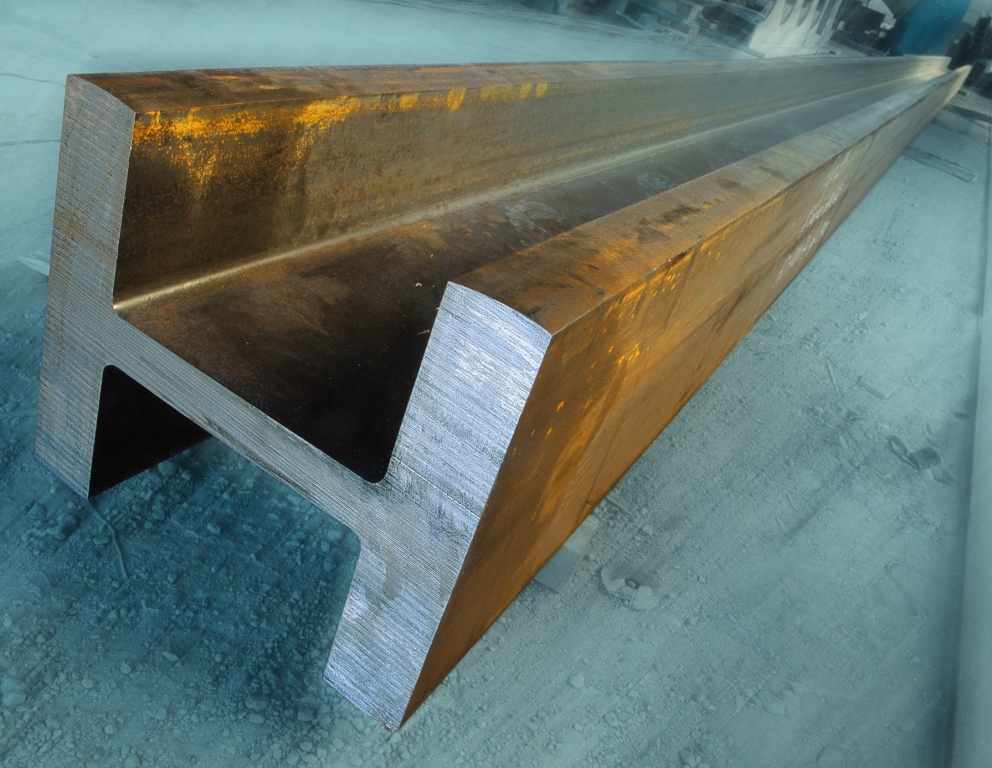
Italian sections producers seek strong increases
Italian sections producers have increased their prices by €100/tonne ($114) compared to December, in line with other long products makers in Italy, Kallanish hears.
The largest sections mill in the market is quoting at €670-680/t for the first category of beams. Prices increase by €20/t for each subsequence category. This is happening after it stopped sales for several days.
Contract prices for the first category of sections are also increasing, in line with the current hikes, and are hovering at €640-660/t ex-works. Values for the first category of beam were at €570-580/t base ex-works last month. Including €380-390/t average size extras, domestic beams start from €1,050-1,060/t ex-works, sources suggest.
Meanwhile, merchant bar prices remain stable compared to last week at €510-550/t base ex-works. Including size extras, values stand at €930-970/t ex-works.
Natalia Capra France

Liberty Belgium plants receive funding, eye mid-February restart
Liberty Liège’s Flémalle and Tilleur plants are expected to restart by mid-February after the firm received the funding required to carry out the first step of its transformation plan. The funding comes alongside the successful conclusion of a number of commercial negotiations.
The transformation plan is expected to be well advanced by the spring. It includes the tinning line at Tilleur developing a new business model, which will see it build partnerships with major customers to manufacture specialist packaging for their products. Also included is the G5 galvanisation line at Flémalle being used to generate short-term profit, a spokesperson for parent company GFG Alliance tells Kallanish.
Toker Ozcan, chief executive of Liberty Steel GREENSTEEL EMEA, which includes Liberty Liège, says: “We strongly believe this new plan is in the best interests of our employees and our loyal customer base. This will help us to deliver a sustainable business model for Liberty Liège. Now we have the initial funding in place, which demonstrates Liberty’s commitment to the business, we are able to restructure and ramp up the business as soon as possible.”
“We continue to encourage the regional Government to support the delivery of this plan. With the continuing rise in energy prices in Europe, with their impact on cheap imports, we also need the continued commitment of the unions to support the transformation of Liberty Liège, which will make the business more productive, more competitive and better able to compete in the global market,” Ozcan concludes.
GFG Alliance has provided funding exceeding €40 million ($46m) to Liberty Liège since it was acquired in July 2019. However, GFG’s long-term investment plans for the plants were initially undermined by the poor steel market in 2019 before the business was adversely impacted by the pandemic and supply chain disruptions, the group says.
Adam Smith Germany
China’s steel exports rebound but imports slump
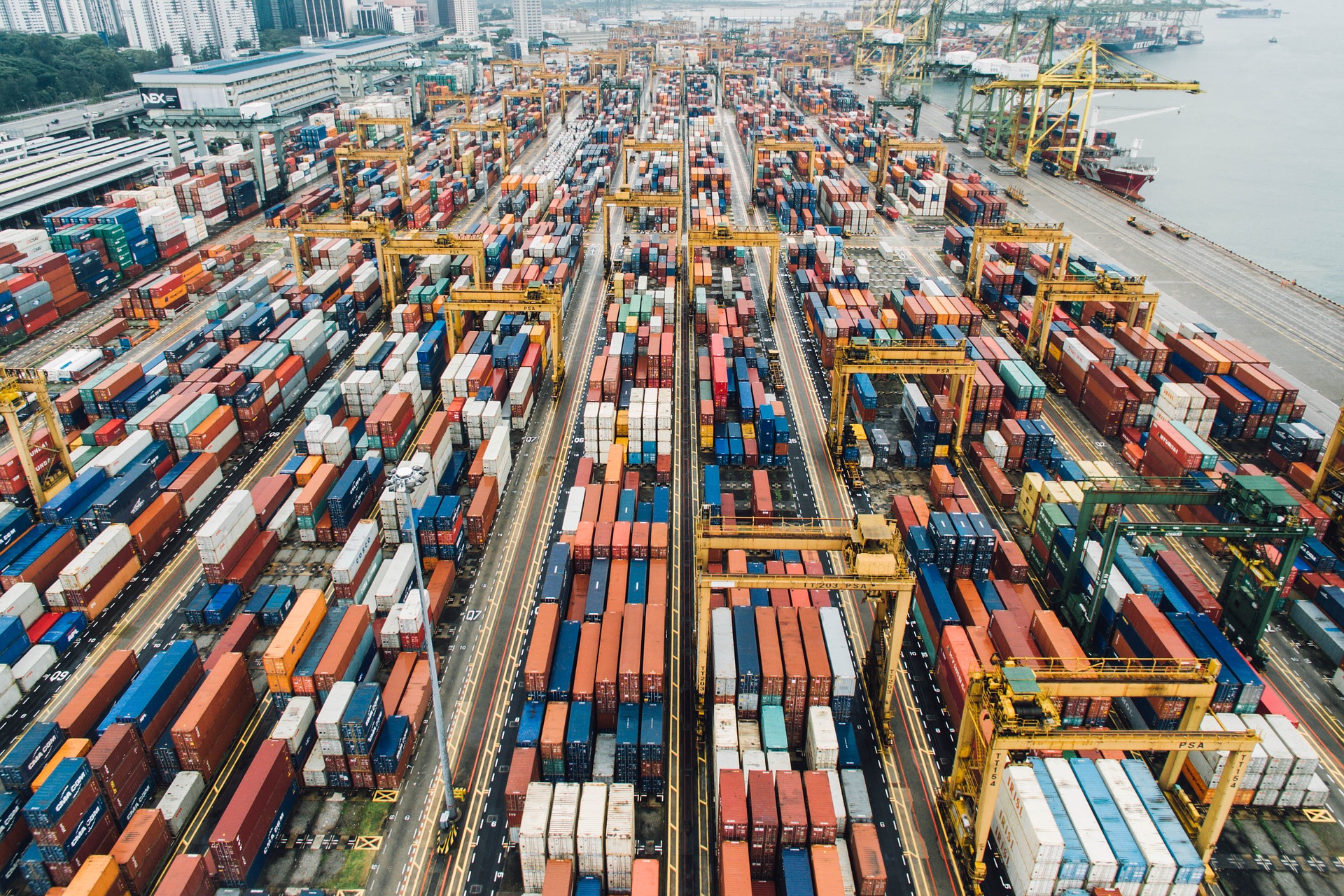
China’s steel exports snapped a five-month decline and rebounded in December 2021, but imports fell due to sluggish steel demand. Full-year 2021 exports also increased after a weak 2020, and imports were down from their surge in late 2020, Kallanish notes.
In December, China’s steel exports rebounded by 15.02% from November to 5.026 million tonnes, which was also a 3.6% increase on-year. Steel mills resumed production after meeting their annual output reduction targets in November, and the increase in supply has meant greater export availability. Traders took advantage of this with short selling even as mills held their prices steady.
According to customs data, finished steel product imports in December declined by 26.93% from November to 1mt. Chinese domestic demand has been very weak and interest in imports fell away towards the end of last year despite very low domestic production. This data does not include imports of semi-finished steel, which have followed a similar trend.
Over the full year, exports were up 24.6% y-o-y to 66.895mt. Although China had expressed its intention to limit exports to advanced steel products, and removed tax rebates on some products, traders still found more opportunities to export last year. Overseas demand recovered from 2020 lows, while Chinese steel output was high during the first half. Covid-19 waves in Southeast Asia however meant that other destinations such as South America grew in importance.
Full-year imports were down 29.5% y-o-y to 14.268mt. Imports remain high by historical standards, but could not replicate the surge of late 2020, which saw China briefly become a net importer of steel. This was mainly due to much weaker demand in the second half of 2021 compared with a year earlier.
Kallanish Asia