


Günther + Schramm adds machinable stainless grades
Günther + Schramm (G+S), a German distributor specialising in special bar qualities (SBQs) has added the stainless ferritic chrome steel 1.4104 to its portfolio, Kallanish hears. The grade is particularly suitable for machining applications in mechanical engineering, G+S explains.
With its high sulphur content, 1.4104 with the specification X14CrMoS17 is available in various flat dimensions and also in large round dimensions. However, flat dimensions are not common on the market for 1.4104. They are used especially in mechanical engineering because they can be processed better during machining and are gentler on tools. “Often the parts to be produced by the customer have difficult contours or long bores,” says Oliver Schoppe, head of stainless steels at G+S.
“At the same time, 1.4104 is a relatively inexpensive stainless material due to its alloy components,” he adds. The company’s steels are sourced from European mills, including wear tests, to warrant a continuous level of quality.
Christian Koehl Germany

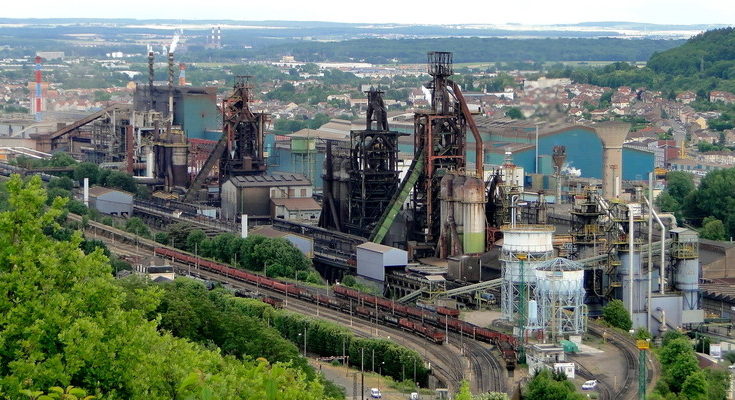
ArcelorMittal Poland revamps Krakow CR mill, ups capacity
ArcelorMittal Poland (AMP) is investing PLN 100 million ($25.2m) to modernise the cold rolling mill at its Krakow site by year-end, with a view to increasing production capacity but at stable electricity consumption.
The work will involve the replacement of the rolling mill motors, modernisation of the sheet pickling line and the purchase of a new grinding machine. The replacement of three DC motors in one of the rolling stands with one AC motor has already been completed.
The greater power of the motor means faster rolling mill speed, thereby lifting overall capacity. By year-end, the sheet pickling line revamp will enable a larger number of hot rolled coils to be prepared simultaneously for treatment. The grinder will meanwhile ensure coil surface deviations do not exceed 0.002mm per meter.
AMP did not respond before deadline to Kallanish request for clarification on CRC mill capacity.
This follows the PLN 30m environmental investment announced at the end of last year into Krakow’s coke plant. “This is the best proof that ArcelorMittal Poland has an appetite for investing into the Krakow unit and that we want our Krakow rolling mills to work in a sustainable manner and be ready to meet the growing needs of our customers,” says AMP chairman Sanjay Samaddar.
AMP decided in October 2020 to close its Krakow hot-end for good after demand failed to recover to satisfactory levels (see Kallanish passim). The BF was initially idled in November 2019 on account of reduced demand and a large volume of imports into the EU. The firm produced 3.9 million tonnes of crude steel in 2020, down 19% on-year.
Adam Smith Germany

European car market drops further in 2021
Car sales in Europe fell 2.4% year-on-year to 9.7 million units in 2021, worsening the already weak performance registered in 2020. Final production data on the continent are yet to be released, but all indicators point towards full-year production figures being in line with 2020.
The second half of 2021 was particularly negative for car sales and December figures marked the sixth consecutive monthly decline compared with 2020. “This fall was the result of the semiconductor shortage that negatively impacted car production throughout the year. Indeed, last year total EU car registrations were still 3.3 million units below pre-crisis sales in 2019,” European car manufacturers association ACEA says in a note seen by Kallanish.
Germany, the largest market in Europe, saw registrations falling 10.1% y-o-y. Italy, by contrast, saw the highest increase of 5.5%, followed by Spain (1%) and France (0.5%).
According to the latest data published by OICA, the global carmakers association, during the first nine months of 2021 European vehicle production was up 5% y-o-y to 11.8 million units. This figure was nevertheless down 25% compared with 2019.
It is understood that activity at European carmaking facilities was particularly hit during the fourth quarter of 2021. For this reason, the overall 2021 production figure could well fall in line with or drop below 2020 output.
Emanuele Norsa Italy
Eurofer welcomes extension of antidumping measures on G-O sheet
European steel producer association Eurofer said Jan. 18 that it welcomes the extension of European anti-dumping measures for a further five years on imports of grain-oriented flat-rolled products of silicon-electrical steel from China, Japan, South Korea, Russia and the US.
Grain oriented electrical steel, or GOES, is a highly specialized steel product manufactured by only around 20 mills globally, of which four are located in the EU, at Stalprodukt, in the Czech Republic; ThyssenKrupp Electrical Steel in Isbergues, France; ThyssenKrupp Electrical Steel GmbH, in Gelsenkirchen, Germany; and Stalprodukt Bochnia in Poland.
GOES is a key component in the production of transformer cores and is crucial for the maintenance and expansion of the EU electrical grid and for further development of the e-mobility sector.
“The EU energy security and climate objectives can only be met by maintaining a viable European GOES industry,” said Axel Eggert, director general of Eurofer. “GOES is a strategic, high-end product, and the European Union cannot be dependent for its supply on foreign mills located in Asia, Russia or the United States.”
According to an official document from the European Commission, the bloc has decided that variable duties under the form of three minimum import prices (MIPs) for three different product categories of GOES are the most appropriate measures.
“The three MIPs would allow the union producers to recover from the effects of injurious dumping as well as they would enable them to return to a sustainable profitability and incentivise them to make the necessary investments,” the EC said.
MIPs currently in force range between Eur1536/mt and Eur2043/mt and “they apply to the individual producers for which individual dumping margins were established from all the countries concerned, i.e. the PRC, Japan, Korea, Russia and the USA,” it said.
— Annalisa Villa


Turkey’s Tosyali to raise capacity of new flat steel mill to 4.5 million mt
Tosyali Demir Celik, one of Turkey’s largest steel producers, plans to raise the liquid capacity of its under-construction flat steel mill project in Iskenderun, southern Turkey, to 4.55 million mt from 2.65 million mt, it said.
According to a file submitted Jan. 17 to the Ministry of Environment and Urbanization for an environmental impact assessment and seen by S&P Global Platts, the company will also increase the ladle furnace capacity of the mill to 4.55 million mt from 2.65 million mt with an additional furnace.
The new mill’s vacuum degassing capacity will also increase to 2.23 million mt from 1.33 million mt and continuous slab casting capacity to 4 million mt from 2.5 million mt.
The board of inspection and survey of the Ministry of Environment and Urbanization will meet for first time on the matter Jan. 27.
Tosyali’s new $1 billion integrated flats mill project is expected to accelerate after receiving approval from the ministry.
Tosyali Demir Celik is part of Tosyali Group, which already operates another steel plant — Toscelik in Osmaniye, Turkey — as well as a DRI direct hot-charge melting plant in Algeria named Tosyali Iron Steel Industry Algerie.
The company also runs a number of rolling mills and is well established in the markets for flat products and welded pipes with a total of 6 million mt of steel production capacity.
— Cenk Can