

Where is my stuff? The global logistics pain point
In the second of a series of three articles, Prof. Benny Mantin from the Centre for Logistics and Supply Chain Management at the University of Luxembourg looks at the challenges faced by the logistics and transport sector.

Global logistics is a pain point for many stakeholders in the industry. With shipping cost soaring, airfreight rates sky-rocketing, and truck drivers heavily sought after, many firms are experiencing challenging trade-offs and have tough decisions to make: how to ship goods to their destinations? Does it make sense to pay more and expedite? Ultimately, given the higher shipping cost, who shall pay for the added cost?
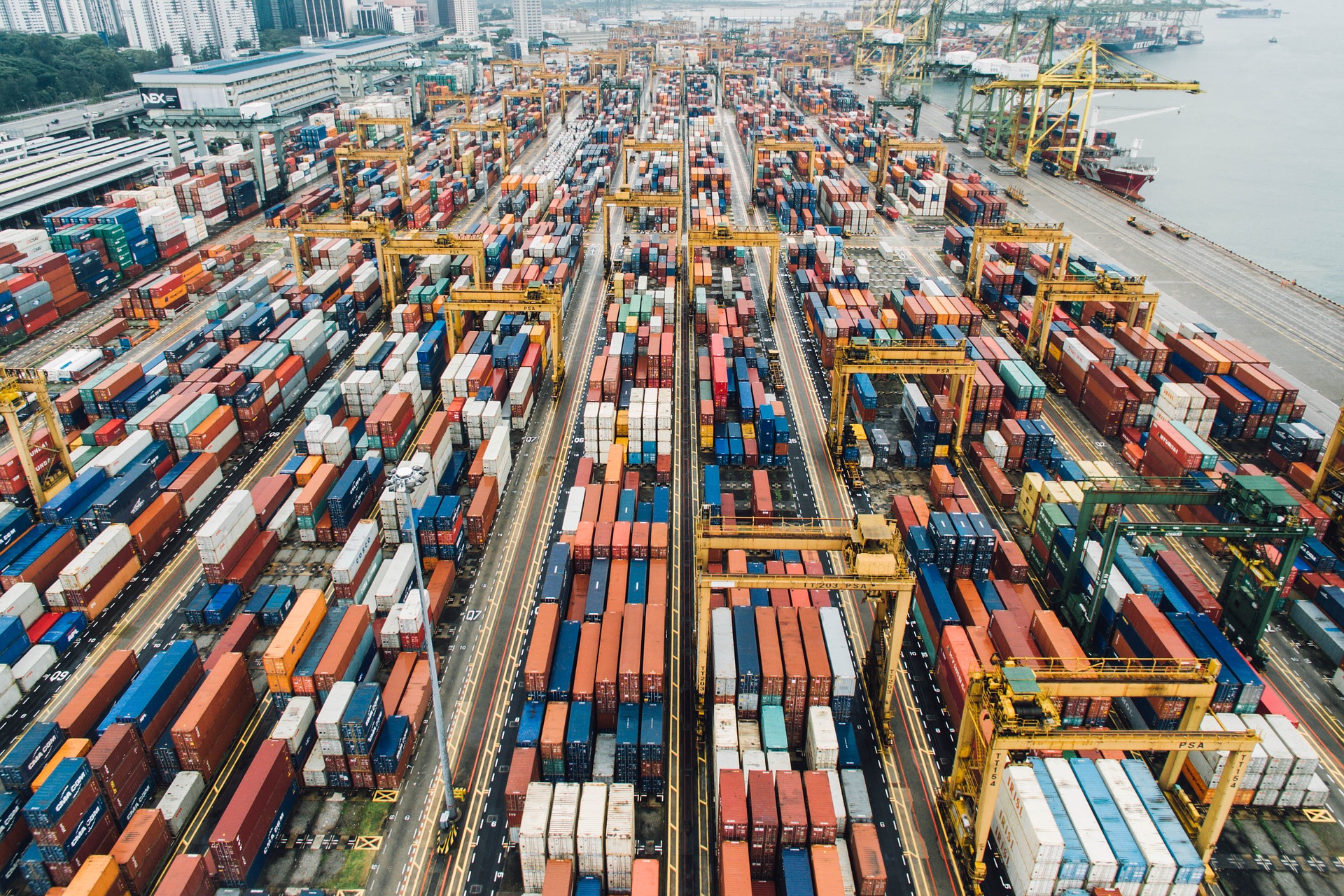
The shipping industry is going through an arms race as container ships are getting larger and larger. The largest container ship at the moment is the HMM Algeciras with a jaw dropping capacity of 24,000 TEUs (Twenty-foot Equivalent Unit, the standard intermodal container). That’s an increase of about 20% in only five years. This increase allows the vessels to ship goods at a lower operational cost.
Concentration of traffic
However, this marks a magnificent degree of consolidation. There are only a handful of ports that can handle such large vessels. What we observe is a steady concentration of traffic at a small number of global ports. It should not come at a surprise that once a terminal closes down due to covid (as was the case at Ningbo-Zhoushan—the world’s busiest cargo port), shockwaves are felt throughout. That is, long and complex supply chains that heavily rely on a limited number of distribution hubs are more susceptible to become bottlenecks when disruptions take place. And the current bottlenecks trigger excessive shipping rates. As one practitioner stated recently: “We now pay airfreight rates for ocean shipping”.
While different, the passenger airline industry has terminated its carrying capacity arms race recently (with a little help from covid) as the A380 is now breathing its last.
Similar to shipping, airfreight demand and rates are higher than ever. Earlier the industry benefited from the elimination of the under-the-belly capacity, that is the cargo space in passenger airplanes that disappeared once airborne passenger traffic ground to a halt during the early days of the pandemic. Now passenger flows are resuming, but nevertheless, airfreight is still the king. Given the excessive delays and higher rate in ocean shipping, air cargo carrier can continue enjoying a surge in demand.
Truck drivers in decline
Trucks offer a versatile and flexible door-to-door service. While attractive to shipping companies, truck driving is becoming less and less attractive as an employment opportunity. The decline in the number of truck drivers has been visible for a while, and covid made things worse. Over the years, cost-saving measures have pushed firms to install sleeping cabins on their trucks and many drivers—instead of spending the night at motels or hotels—now end up staying in lay-bys for the weekend. This is accompanied by shrinking wage premiums, tough working conditions, and elimination of military Heavy Good Vehicles (HGV) licensees. This male dominated sector—only 3% of drivers are female—experiences severe shortages, with some estimating the need to amount to about 400,000 truck drivers in Europe alone. Relief can come through improvement of work conditions, investment in automation, smoothening of operations and reduction of dwell times, and possibly allowing higher capacity trucks on major highways.Trucks can and need to operate in better unison with rail
More importantly, trucks can and need to operate in better unison with rail. Rail is not flexible and requires major investments, but it can offer 24/7 services and connect major nodes at higher speed, in particular distant nodes. The rail system in Europe has suffered from under-investment in the past decades and it still resembles a patchwork of connections. A functioning rail system should relax some of the restrictions currently in place (such as language requirements and constraints on number of wagons) and harmonise the network across the continent (such as the voltage and signalling system used) which is something the EU has been working on for more than two decades with limited progress.
Ultimately, the objective shall be to facilitate fast flows of cargo between major nodes in the European network from which it will be distributed via trucks to their final destinations. Naturally, rail is not the solution to everything, but careful long-term planning can offer substantial relief.
Container is king
International logistics is characterised by the dominance of the standard carrying unit: the container. One might speculate that well-balanced global flows of goods imply that containers always move around goods from one point to the next. However, reality is far from that. One of the key challenges in logistics is managing of the flow of empty containers. While some empty containers sit idle at ports—there were some 65,000 of them at the Port of Los Angeles recently—and other waiting areas, shippers elsewhere are scrambling to find empty containers to ship their goods to their customers. It is much more profitable to ship loaded containers, but the run to move goods amplifies the severity of the challenge as trucks and vessels avoid wasting time handling empty containers and would rather head to the next customer with goods to ship.
As a solution to ease the situation, a pooling mechanism for better rotation of containers needs to be developed. They can be regional pools between companies (some receiving containers, some sending containers), and global pools between large shipping companies. This will require the coordination of many players in this industry, which will be challenging. Hence, alternatives such as investing in collapsible containers should be considered. The technology exists and it is estimated to save up to 57% of inland transportation costs, but firms are reluctant to embrace it given its higher investment price. Further, operators need to find the right balance between collapsible containers and regular ones: to make it affordable, one needs several collapsible containers to go the same way.


CO2-Grenzausgleich der EU-Kommission könnte stahl- und metallverarbeitende Unternehmen zwei Milliarden Euro kosten
Aktuelle Studie des Instituts der deutschen Wirtschaft – WSM fordert Nachbesserung
Zwei Milliarden Euro Zusatzkosten könnten auf stahl- und metallverarbeitende Zulieferer zukommen – als Folge des von der EU-Kommission vorgeschlagenen europäischen CO2-Grenzausgleichsmechanismus. Das ist das alarmierende Ergebnis einer Studie des Instituts der deutschen Wirtschaft (IW) in Köln zu den Auswirkungen des Carbon Border Adjustment Mechanism – kurz CBAM. Er würde die Stahlhütten vor ausländischer Konkurrenz mit größeren CO2-Belastungen bei geringerem CO2-Preis schützen, die Stahlverarbeiter aufgrund steigender Vormaterialkosten aber in den Ruin treiben. Und das Abwanderungsrisiko stark erhöhen. Auftraggeber der Untersuchung ist der Wirtschaftsverband Stahl- und Metallverarbeitung (WSM). Er fordert von der EU-Kommission dringend Nachbesserung und die Einbeziehung der gesamten Wertschöpfungskette.

EU-Vorschlag greift zu kurz
„Der EU-Vorschlag vom 14. Juli 2021 greift zu kurz“, kritisiert WSM-Hauptgeschäftsführer Christian Vietmeyer. „Nur mit ganzheitlichem Blick auf alle Akteure der Lieferkette lässt sich ein Carbon-Leakage verhindern.“ Das IW Köln rechnet vor, dass sich die Kosten der Stahlverarbeiter in Deutschland um zwei Milliarden Euro und etwa 3,5 Prozent der Wertschöpfung der Branche erhöhen würden, „wenn der CO2-Preis auf Stahl dank Grenzausgleich und damit verbundenem Wegfall der kostenfreien Zuteilung von Emissionszertifikaten voll durchschlägt.“ Diese fatale Entwicklung würde die komplette, rund zweiprozentige Umsatzrendite der Stahlverarbeiter schlucken, zumal die meist mittelständischen Betriebe die Kosten nicht weitergeben können. Sie wären nicht mehr wettbewerbsfähig.
Verteuerung könnte unzählige Arbeitsplätze kosten
Unzählige Jobs wären damit in Gefahr – die zehn am stärksten von hohen Stahlpreisen betroffenen Branchen stellen ein Sechstel der deutschen Arbeitsplätze. Einen ähnlichen Negativeffekt hatten vor ein paar Jahren die Stahlzölle in den USA: Sie sicherten laut Schätzungen rund 1.000 Jobs in der Stahlproduktion, vernichteten aber 75.000 in nachgelagerten Branchen.
CBAM: Im Prinzip gut, aber einseitig
Der Verband bezweifelt nicht die Notwendigkeit des Grenzausgleichs. Vietmeyer: „Der Ansatz ist im Prinzip gut. Klimaschutz ist für die europäische Industrie teuer – sie verringert ihre CO2-Emissionen durch Investitionen und bezahlt einen steigenden CO2-Preis. Wenn sie am Standort weiter produzieren soll, braucht sie international vergleichbare Wettbewerbsbedingungen und den Schutz vor günstiger hergestellten Importprodukten.“ Gefährlich ist die einseitige Begrenzung des Ausgleichs auf die pure Erzeugung von Zement, Aluminium und Stahl.
Exportnachteile ausgleichen – Stahl- und Metallverarbeiter führen 25 Prozent aus
Stahl- und Metallverarbeiter wären auch auf internationalen Märkten benachteiligt, da der Grenzausgleich nur für Importe vorgesehen ist. Die stahlverarbeitende Industrie exportiert aber ein Viertel ihrer Produktion in Staaten außerhalb der EU, weitere 25 Prozent entfallen auf Produkte, die wiederum ausgeführt werden. „Sie ist auf den Export angewiesen – ohne Rabattierung der Kosten kann sie auf den Weltmärkten aber nicht mehr konkurrieren“, unterstreicht Christian Vietmeyer.
Der WSM vertritt stahl- und metallverarbeitende Branchen mit rund 5.000 Unternehmen und circa 400.000 Mitarbeitern. Hier seine Forderungen auf einen Blick:
- Folgen für die gesamte Wertschöpfungskette einschätzen: Die EU-Kommission muss die Auswirkung des CO2-Grenzausgleichsmechanismus auf allen Stufen eingehend prüfen. Ziel ist die Sicherung der Wettbewerbsfähigkeit nachgelagerter Industrien.
- Carbon-Leakage verhindern: Nur die ganzheitliche Einbeziehung der gesamten Wertschöpfungskette kann die Abwanderung bei nachgelagerten Verarbeitungsstufen vermeiden. Und so die Arbeitsplätze in der Stahl- und Metallverarbeitung sichern.
- Exportkosten rabattieren: Diese Maßnahme erhält die Wettbewerbsfähigkeit stahlverarbeitender Industrien auf den Weltmärkten.
Hier finden Sie diese PM zum Download, hier die Studie des IW Köln „Kurzgutachten Wertschöpfungskette Stahl“.
mehr Informationen: WSM
Fotos: Vietmeyer: Mourad ben Rhouma

Iron ore hits four-month high on restocking
Seaborne iron ore prices have continued to increase, reaching their highest level in over four months. Mill restocking has pulled inventories lower ahead of the Chinese New Year.
The Kallanish KORE 62% Fe index gained $2.47/t on Friday and $7.50/t over the week to $136.99/dry metric tonne cfr Qingdao, the highest level since early September. The Kallanish KORE 65% Fe index increased $2.81/t from Thursday and $7.74/t on-week to $164.53/dmt cfr. The KORE 58% Fe index inched $0.31/t higher on Friday and recovered $9.55/t over the week to $109.73/dmt cfr. 40,000 tonnes of PB Lump sold at a floating price.
On the Dalian Commodity Exchange May iron ore settled up CNY 13.5/t at CNY 752.5/t ($118.67/t), while on the Singapore Exchange February 62% Fe futures settled up $3.29/t at $137.06/t. The same contract for 65% Fe and 58% Fe futures settled up $3.87/t at $164.60/t, and up $2.94/t at $103.15/t respectively. Tangshan billet held steady at CNY 4,440/t.
Across 35 ports, iron ore inventories fell 2.56 million tonnes to 150.08mt, according to SMM. A pick-up in mill restocking ahead of the Chinese New Year holiday finally brought inventory levels down decisively last week, helping drive iron ore prices higher. With only one more week of trading ahead of the holiday however this may not sustain prices for very long.
Steelmakers are however holding sales prices steady for now before seeing how the market responds to price increases after the holiday when end-user demand may recover. Their confidence in restocking has in part been supported by policies to stabilise the slowing Chinese economy. This includes a number of measures designed to ease the situation at China’s struggling developers. The success of these measures will be key in determining steel demand in the second quarter.

US, EU end WTO dispute on steel tariffs
The US and EU informed the World Trade Organization on Friday that they are terminating a panel dispute concerning steel and aluminium products. The two sides have instead agreed to arbitration in the matter, according to documents filed at the WTO and reviewed by Kallanish.
Late last year, the two sides came to an agreement in which the EU may send up to 3.3 million tonnes of steel products to the US free of the 232 tariffs currently imposed on steel and aluminium imports from most other countries. The agreement allows up to 384,000t of certain aluminium products from the EU to also enter the US tariff free. In response, the EU removed retaliatory tariffs placed on certain imports of US-made products.
The WTO Dispute Settlement Body procedures in this matter began in 2018 after then-US President Donald Trump imposed 10-25% tariffs on imports of steel and aluminium products as a matter of national security. The tariffs remain in place for many countries. The US has entered formal talks with Japan and the UK on an alternative to the tariffs like that of the EU’s.
Laura Miller USA
Experts differ over 2022 outlook for nickel
Commodity experts are not in agreement about where nickel prices are heading this year, says Roland Mauss of recycler Oryx Stainless, himself an expert on stainless steel scrap. In his monthly blog on Oryx Stainless, Mauss says Chinese researchers are playing down the growth potential, while others predict a super-cycle.
Chinese state-owned research institute Antaike forecasts falling prices as soon as the global economy has recovered from the pandemic. It expects that nickel supply will grow by 12% this coming year, while demand will rise 10%. Therefore, Antaike forecasts excess supply of 45,000 tonnes of nickel.
In contrast to this, US investment bank Goldman Sachs argues the other way round, that the recovery from the Covid-19 pandemic as well as global economic measures will boost demand in the long run. It will also be driven higher by the energy transition and global decarbonisation efforts, Kallanish understands.
This view is supported by asset manager BlackRock, which states that infrastructure spending is driving a lot of steel and cement demand, and that decarbonisation will require additional metals such as nickel.
Finally, Mauss takes a look at a survey taken by Reuters in October among analysts of leading commodity brokers regarding the average price of nickel. For 2021, the participants expected an average nickel cash price of $18,195/tonne (after $13,772 in 2020). The actual cash average year-to-date through October was around $18,170/t.
“It does, however, become more interesting for the year 2022,” he continues. The participants expect only a minor further increase due to a shift in the supply and demand ratio. While for 2021, a supply deficit of 62,000t was assumed, they expect excess supply of 72,000t for 2022 – higher than the forecast of China’s Antaike institute.
Christian Koehl Germany
Nippon Steel announces acquisition of Thai steelmakers
Leading Japanese steelmaker Nippon Steel has confirmed it will acquire controlling stakes in G Steel and GJ Steel of Thailand to make them subsidiaries.
The acquisition was signalled last month, when Nippon Steel executive vice president Takahiro Mori said the firm is in talks to buy an integrated steel mill in Southeast Asia, Kallanish notes. However, Nippon Steel denied news of the acquisition in mid-December.
On 21 January, Nippon Steel entered into a share purchase agreement with funds managed by Ares SSG, currently the largest indirect shareholder in G/GJ Steel. Ares Management in the US owns around 50% of G Steel and 40% of G J Steel. The deal with Ares SSG is expected to be completed in February 2022, at a cost of $419 million. In addition, Nippon is also planning to purchase equity from other shareholders, at an estimated cost of $344m.
G Steel and GJ Steel are the only integrated flat steel producers in Thailand with facilities including electric arc furnaces and hot strip mills, supplying hot-rolled steel sheet for general purposes. The two steelmakers have a 1.58 million tonnes/year and 1.5m t/y steel capacity respectively, with hot rolled coil for construction and pipemaking as the main products.
As Nippon is using blast furnaces to produce over 90% of its steel, the acquisition is expected to help the company compete with other EAF steelmakers. Because of technical difficulties, EAFs are still the main way for steel companies to significantly reduce carbon emissions before hydrogen smelting becomes viable. Meanwhile, Nippon plans to boost its global crude steel capacity to 100m t/y by acquiring steel plants in Thailand and India (see Kallanish passim).
Kallanish Asia

British Steel hikes sections by £50
British Steel has hiked its prices for structural steel sections by £50/tonne ($68) for all new orders with immediate effect, an informed source tells Kallanish.
The move is thought to be the result of a further increase in production costs. The steelmaker last hiked sections prices by £30/t in November due to rising production costs (see Kallanish passim). It also reduced output of the products. A month earlier the firm implemented a £25/t surcharge for energy costs plus $5/t for transport.
British Steel produced 2.6 million tonnes of liquid steel in 2020 following its acquisition in March of that year by China’s Jingye Group. The steelmaker recently unveiled its “Low-Carbon Roadmap”, which involves adopting the use of hot-briquetted iron and scrap in the iron making process. It recently increased the amount of scrap used in the integrated steelmaking route and plans to further grow this by 2023. It is also assessing the possibility of electric arc furnace steelmaking.
Adam Smith Germany