


Reibus joins EUROMETAL as associate member

We are pleased to inform you that the company Reibus has joined as an Associate Member of EUROMETAL.
Reibus was founded in 2018 as the only independent and anonymous, SaaS-enabled marketplace, utilising technology to solve ingrained supply chain problems in the industrial material market.
Reibus uses its advanced technology and deep industry knowledge to revolutionize supply chain efficiency by shortening lead times, reducing inventory, and streamlining finance and freight services.
For more information, please visit Reibus at www.reibus.com
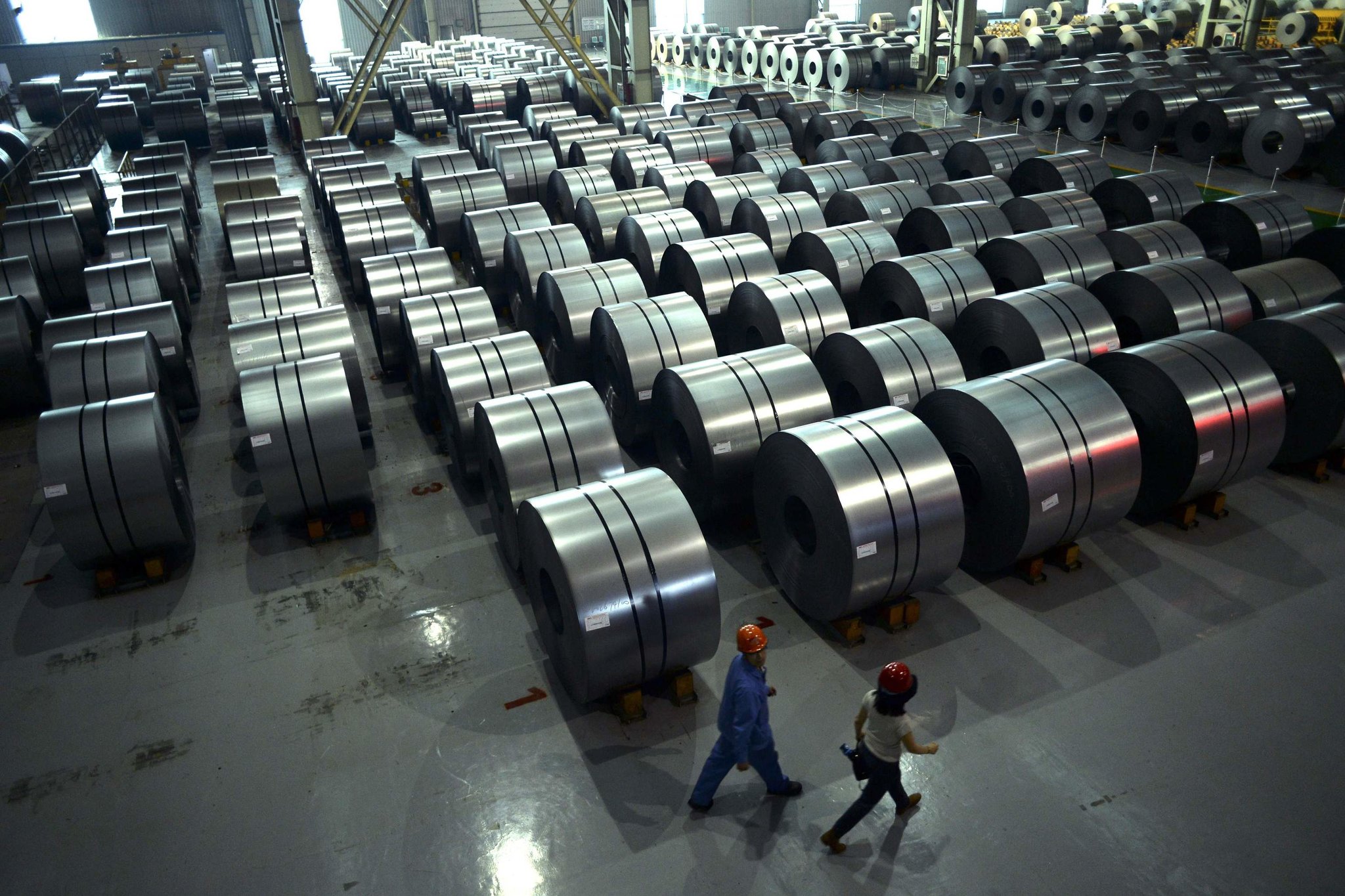
Where is my stuff? The international trade impact
In the final article of his three-part series of three, Prof. Benny Mantin from the Centre for Logistics and Supply Chain Management at the University of Luxembourg explains the effect international trade and global politics sometimes have on supply chains.

International trade and global politics sometimes have an impact on supply chains. Countries around the globe seek to protect their local economies while facilitating smooth and effective trade agreements. Nevertheless, the objectives of different countries may conflict at times, leading to tariffs and duties slapped on certain goods (see the case of the Trump era tariff friction between the US and the EU, a dispute that was resolved only very recently), import and export restrictions imposed on certain goods (as in the ongoing tension between China and Australia), or to general restrictions imposed to change a government’s policy (as is China to restrict exports of rare earth metal and phosphate). The entangled web of world politics is complex—as we have recently witnessed during the Cop26 negotiations. This is particularly true nowadays as supply chains become ever longer, with trade dispute somewhere leading to some unwanted consequence elsewhere on the globe.
Cop26 brings up a related topic: the strive for more sustainable operations. Consumers and policymakers alike play a critical role in influencing supply chains. Consumers by demanding and preferring greener products, and policy makers by setting the boundary conditions that define how firms should and could operate. Recently, within the European Green Deal framework, two resolutions have been adopted. One to reverse EU-driven deforestation and another on corporate due diligence and accountability, both of which define mandatory frameworks that firms need to follow. These can lead to enhanced supply chain transparency, as was discussed in the first article, and can improve the choices we all make.
Another aspect is the EU Emission Trading System (EU ETS), which has seen the price of carbon soaring to record high levels (more than doubling in one year), and the implementation of the EU’s carbon border adjustment mechanism. These two have an enormous potential to induce firms to rethink their supply chains. Some argue it may lead to decoupling of supply chains creating bifurcated chains, with one—greener—heading to Europe and another to the rest of the world; hence, it is important that other nations follow through and adopt similar mechanisms. Nevertheless, if decoupled, the chances of reshoring, which means shorter supply chains, increases.
Final thoughts
The current situation is a perfect storm that was brewing for a long period of time. The Covid pandemic was merely the last straw that broke the camel’s back. Moving forward, all stakeholders need to be engaged in the discourse that will determine the shape of things to come.
Discussions around supply chains stress tests are certainly a step in the right direction. Governments and coalitions of like-minded countries need to engage in policy making to determine how to support certain, likely critical, supply chains. To that end, a whole set of tools and instruments shall be developed to assess strength and resilience of supply chains and to determine the mechanisms to support them.
As discussed above, another important step in the right direction are the emerging regulations on supply chain transparency and due diligence as well as the carbon tax mechanisms. These shall enhance the level of trust that consumers and firms have in upstream tiers of supply chains and shall, hopefully, provide decision makers with further insights to take corrective action and possibly to shorten their supply chains.
Lastly, we as consumers can sometimes influence supply chains. Sometimes we do have choice and we can voice our concerns to kickstart a change. For instance, the right to repair movement is an inspiring shift in consumer demand. The transition is not complete, but repairable cellphones are finally hitting the market such as Fairphone and the recent Apple announcement to follow suit. Consumers can demand transparency and traceability so that they know where their products come from, how they were made, how durable and repairable they are and so forth. Informed consumers can ultimately make educated decisions.
In the meantime, as the ongoing supply issue is expected to persist for a while, I would like to conclude with a recent quote from a Maersk executive : “We need lower [consumer demand] growth to give the supply chain time to catch up”. Again, we as consumers, can take a pause and give supply chains the opportunity to recover. Until the next time.


Global Light Vehicle sales in 2022: Reasons to be cheerful?

After a very difficult couple of years, heading into 2022, significant challenges remain for the automotive industry, notably in the form of ongoing supply shortages and the spread of Omicron.
In the final few months of 2021, the global Light Vehicle (LV) selling rate crept back above 80 million units/year, from the year’s low point of 74 million units/year in September. The latest months’ data suggest two things. First, the worst of the sales hit from the supply disruption may have already taken place. Second, market activity remained well below pre-pandemic norms of 90+ million units/year.
As it stands, market volumes are falling well short of underlying demand — inventory remains tight while discounts are lower and transaction prices are higher. Omicron only adds to a complicated picture, with this latest variant of coronavirus proving more transmissible, though as it appears to be leading to a smaller increase in hospitalisations, the disruption is expected to be more muted than with previous virus iterations. That is not to say there is no impact, whether via government measures, increased voluntary social distancing, or absenteeism from work, but the risk of a major economic downturn is more modest. The current base forecast from our partners at Oxford Economics assumes 4%+ global GDP growth for 2022, even if caution around the Q1 performance has increased. That growth will be supported by recovering household spending, itself benefitting from the partial release of accumulated savings built up during the pandemic, even though household budgets are facing generally higher inflation.
Yet, despite a supportive backdrop for underlying demand, the shadow cast by the supply shortages, most notably relating to that of semiconductors, will continue to act as a drag through 2022 — Toyota’s recent announcement that it would miss its annual production target because of parts shortages and the pandemic only reinforces that view. And even if the Omicron variant does not knock demand off course, it still poses a further threat to the global supply chain.
With the above in mind, our baseline view for global LV sales remains one of generally improving selling rates through the year, as supply constraints ease and vehicle plant output picks up, though annual volume will continue to lag pre-pandemic levels until 2023.
GLOBAL LIGHT VEHICLE SALES (MILLION) & YOY GROWTH


German production rebounds in 2021
In line with optimistic forecasts, German crude steel production in 2021 reached the 40 million tonne mark, totalling 40.1mt, according to national steel federation WV Stahl.
The federation points out that this was the first time in three years that annual output saw a year-on-year increase. In comparison with 2020, the increase was 12.3%. For oxygen-route mills, the increase was more pronounced at 15.9%, reaching a total tonnage of nearly 28mt.
In 2020, oxygen-route mills were most hit by the impact of the initial coronavirus outbreak as they could not react flexibly to the sudden change in demand. Their output dropped massively as many conceded technically complex temporary standstills.
Due to that base effect, electric arc furnace-route mills saw a lesser y-o-y output increase in 2021 of 4.8%, totalling 12.1mt. Strikingly, though, EAF production plummeted 20% y-o-y in December, Kallanish notes. This output downtrend could be observed in the earlier autumn months, and it is probably attributable to production breaks due to rising electricity costs.
The drop in output was especially pronounced in December likely due to an extraordinary overhaul at one rebar mill, which has carried over into January and is still impacting national production.
Christian Koehl Germany


Power outages suspend Turkish steel production
Turkish steel production has been curtailed by electricity outages, following last week’s cut in natural gas supply and significant hike in gas prices. Electric arc furnace mills have been forced to halt production for at least three days, with output planned to resume on Thursday.
The move to suspend power supply to industry for three days as of 00:00 local time on Monday follows last week’s gas supply cut by 40% (see Kallanish passim).
Veysel Yayan, general secretary of the Turkish Steel Producers’ Association (TCUD), says industry was informed of the power outage in an official letter.
“The steel industry is one of the sectors that use the most electricity in Turkey. Every second of the outage is a financial loss for the steel industry,” says Yayan. All of Turkey’s industrial sectors will suffer as a result of the power outages, he adds.
“It creates an extraordinary, serious problem for all industries. We hope that Turkey will overcome this trouble as soon as possible. Every second causes financial damage. We hope that lessons will be learned from this problem and that we will not encounter similar situations in the coming years,” Yayan concludes.
A Turkish merchant bar mill tells Kallanish: “As we are dependent on electricity, we were not much affected by the natural gas cuts. But the electricity outage has come unexpectedly and hit our industry. These cuts are untimely given we are receiving serious demand for merchant bar in the global market.”
Another producer says there is a risk of electricity cuts continuing for more than three days.
“The natural gas cut and the accompanying power outages are an unexpected development that could have a serious negative impact on the production and exports of our industry in January,” says Turkish Automotive Manufacturers Association (OSD) chairman Haydar Yenigun.
“In this process, it must be taken into account that the coordination of all stakeholders in the value chain is critical for the efficiency of production plans,” he continues. “Another important issue is that when developments that will affect production come to the fore, informing as much as possible in advance in order to be able to prepare for the application will allow the automotive industry to adapt to the process.”
“When we consider the export of $30 billion, the domestic market of $40 billion, and when we include the whole ecosystem of service and dealers, a three-day cessation of production means a loss of $1 billion dollars by the simplest analysis,” adds Vehicle Supply Manufacturers Association (TAYSAD) president Albert Saydam.
Burcak Alpman Turkey

W Europe mills keep HRC offers high despite lower E Europe offers
The European HRC market was short of pricing clarity Jan. 24, with buyers still shying away from booking premature orders, and domestic mills still firm on higher prices amid safeguard quota allowance struggle causing a decline in import prices. Vast discrepancies in offers between Eastern and Western European mills have made it difficult for the market to arrive at a standard coil price, sources told S&P Global Platts.
A German steel distributor reported the workable range for hot-rolled coil as Eur930-960/mt ex-works Ruhr, with “special offers not really available anymore,” While a German supplier source heard offers from Eastern mills “firmly below” Eur900/mt ex-works Ruhr.
The same source said Eastern mills were more prone to import exposure and heavily involved in the spot business, whereas Western mills have been keen to keep prices up due to contract negotiations.
Beyond regional spreads, market participants are working around safeguard limitations. Some market participants feel at a loss for options with the safeguard combined with anti-dumping cases. Middle Eastern imports were heard as low as Eur760/mt CIF Antwerp, duty paid, a Benelux Wholesaler source said.
Platts assessed North European HRC prices down Eur5/mt at Eur925/mt ex-works Ruhr, and in Southern Europe, HRC prices were assessed stable at Eur830/mt ex-works Italy.
— Catherine Brown
