

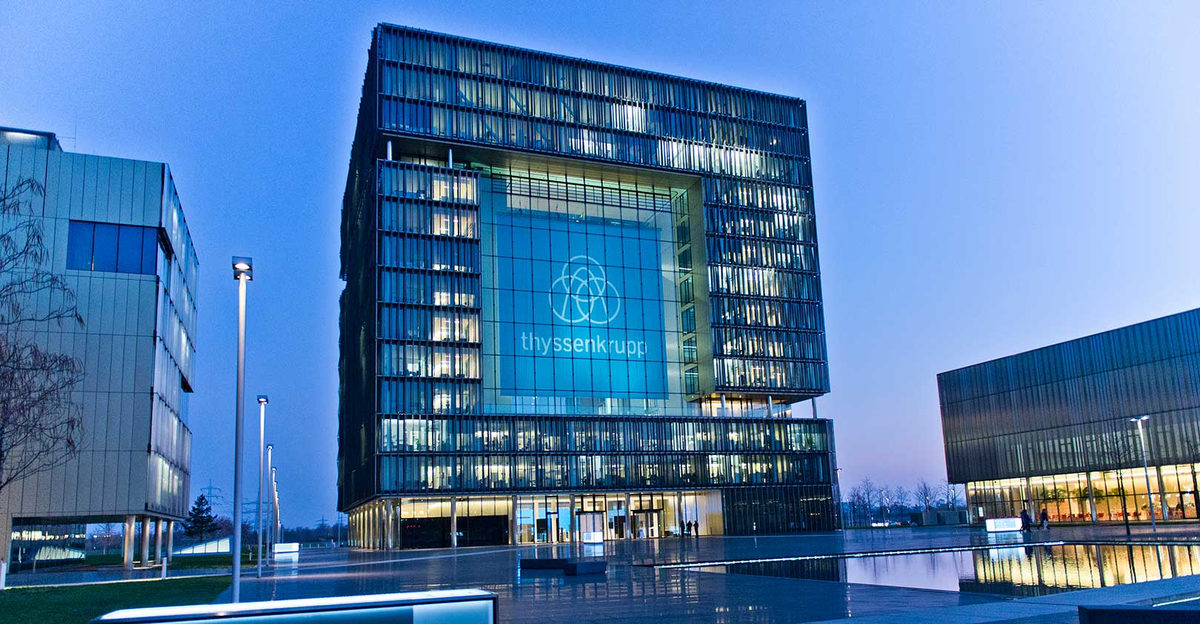
Thyssenkrupp completes sale of AST stainless mill to Arvedi
Thyssenkrupp has successfully completed the sale of its Italian stainless steel mill unit Acciai Speciali Terni, or AST, to Italy’s Arvedi, the German steelmaker said Jan. 31.
The sale, which includes the company’s associated sales organization in Germany, Italy and Turkey, was first announced in mid-September 2021 and the European Commission green lit the acquisition in mid-December.
Thyssenkrupp, in a statement, said both parties had agreed not to disclose the financial details of the transaction, although thyssenkrupp would retain 15% in AST “to strengthen the already existing operating cooperation with Arvedi through such a minority shareholding.”
Thyssenkrupp added that the sale would improve its net financial position to more than Eur600 million ($672.9 million).
AST is the only integrated stainless mill in Italy and has a production capacity of around 1.3 million mt/year of crude steel, of which 70% is stainless and the rest carbon steel.
In the past Arvedi, which is Italy’s second-largest steelmaker, with a capacity of around 4 million mt/year of crude steel, bought part of its stainless hot and cold rolled coils requirement from AST.
— Jacqueline Holman


JAPAN DATA: 2021 iron, steel exports rise 7% on hikes to Thailand, US
Japan’s iron and steel product exports rose 7% year on year to 34.4 million mt in 2021, data from the Japan Iron and Steel Federation showed Jan. 31, led by hikes in shipments to Thailand and the US.
Exports to main buyer Thailand rose 55.4% year on year to 5.93 million mt and to the US rose 32.5% over the same period to 1.18 million mt.
Hot rolled wide strips accounted for 2.04 million mt of the products shipped to Thailand, non-stainless specialty steel 1.76 million mt and semi-finished steel products 0.6 million mt.
Exports to second-highest recipient China fell 12.6% year on year to 5.12 million mt, and to third-highest recipient South Korea rose 1.8% to 4.9 million mt.
China’s overall finished steel imports fell 29.5% year on year to 14.268 million mt in 2021, Chinese customs data showed, due mainly to a higher base in 2020, when China was a net steel importer over June-September while overseas markets were in lockdown.
Japan’s largest iron and steel product export category in 2021 was hot-rolled wide strips, which accounted for nearly a third of the exports at 10.65 million mt, down 1.9% year on year, followed by specialty steel products at 7.68 million mt, up 31.6% over the same period.
Hot-rolled wide strips accounted for a large proportion of the exports to Thailand and the US, with shipments to Thailand surging 80.4% year on year to 2.04 million mt and to the US surging 78.9% to 266.796 mt. Exports of the strips to China fell 24% to 920,796 mt.
Japan’s iron and steel product exports in the first quarter of 2022 were expected to remain relatively stable with Q4 2021, the Ministry of Economy, Trade and Industry said Dec. 23, citing weaker overseas demand and potential downside pressure from coronavirus variants.
— Clement Choo, Samuel Chin

Spanish automotive industry dips in 2021
The Spanish carmaking sector ended 2021 on a down note. The industry says that its performance was impacted by persisting global semiconductor shortages. The continuous fall in demand in its main exporting markets is also weighing on the recovery to pre-pandemic levels, Kallanish notes. The microchip crisis is likely to persist at least until mid-2022, according to the national automotive association Anfac.
“The severe shortage of microchips is conditioning the rate of production,” the association observes. “Although the situation should improve this year, we will not see a complete solution until the beginning of 2023. According to Anfac, the sector is facing an industrial and social transformation towards new mobility.
“It is necessary to immediately find appropriate measures and apply for governmental support after Brussels has given the green light to the funds for the industry,” the association adds.
Output in December reached 147,404 vehicles, a decrease of 25.1% on-year. Full-year production amounted to 2.098 million units, down by 7.5% on-year.
Exports were 127,785 units in December, a decrease of 26% compared to the same month in 2020. Full-year shipments abroad fell by 6.7% y-o-y to 1.82m vehicles, Anfac data shows.
Todor Kirkov Bulgaria

Italian car output downward trend persists
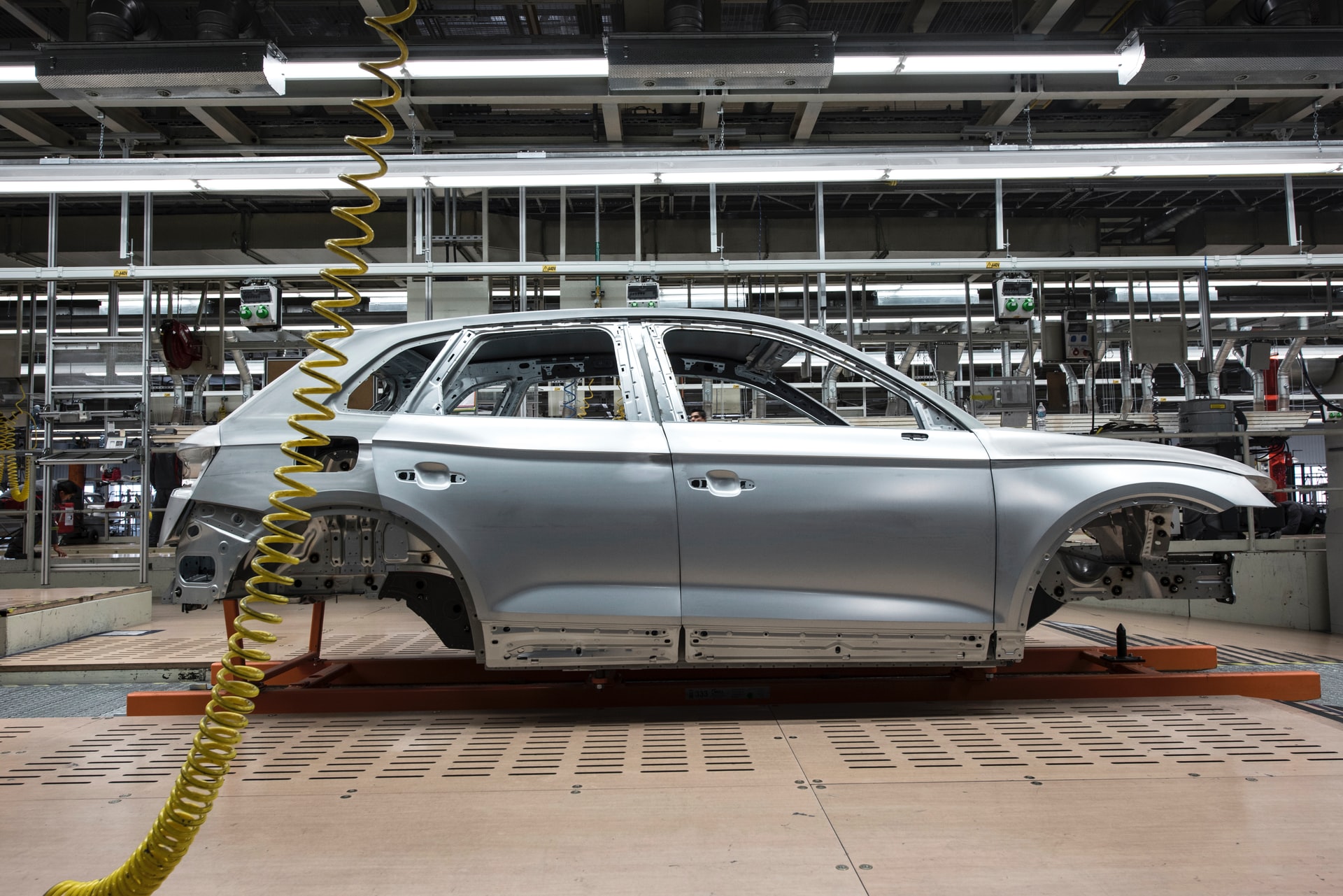
Italian passenger car output significantly decreased again on-year in November by 37%, confirming the downward trend seen in previous months. Output also went down compared to the same month in 2019, Kallanish notes from preliminary data from local carmakers’ association Associazione Nazionale Filiera Industria Automobilistica (Anfia).
Passenger car production stood at 41,621 units in November. Production in November 2020 was 66,047 units, while 46,403 units were assembled in November 2019, Anfia says.
Over the first 11 months of 2021, the country’s passenger car output remained mostly stable to the same period in 2020. It stood at 401,424 units versus 407,669 units last year.
In full-year 2020, Italy’s passenger car production stood at 451,718 unit versus 542,472 units in 2019.
Italy has 23 production plants. By comparison, Spain has 17 plants, France 31 and Germany 42.
Natalia Capra France
Indian Steel Association seeks government support on decarbonisation
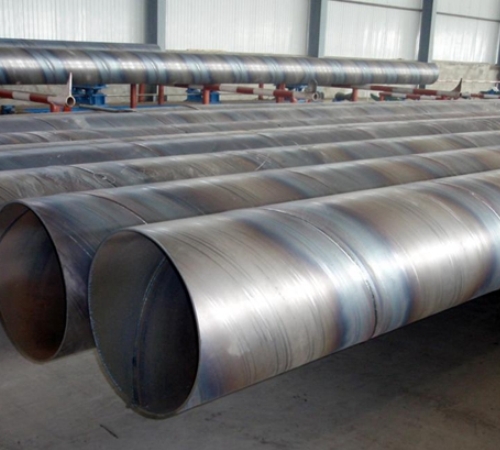
The Indian Steel Association (ISA) is urging the government to stipulate public projects must source at least a portion of their steel from low-carbon emitting steel producers.
It aims to achieve a CO2 emission intensity reduction in India to 2.4 tonnes of CO2/tonne of crude steel by the fiscal year ending 31 March 2030, Kallanish notes.
“Central to a successful journey towards decarbonisation of the steel industry is the availability of sufficient green hydrogen and renewable energy at competitive pricing,” says ISA president Dilip Oommen, also chief executive of AMNS India.
“The technologies required to adapt these with the existing infrastructure will be a real challenge. Therefore, the transition towards greening steel will incur high initial capital costs, and also operating low carbon steel plants will be considerably expensive in the short to medium term at least. The government needs to lay strong emphasis on R&D support, long-term finance availability at competitive rates, cross-sector collaboration, incentives along with a well-designed policy to accelerate this transition,” Oommen adds.
ISA has proposed authorities provide subsidies for technology investment or tax incentives to incentivise steelmakers to reduce their CO2 emission intensity below a set baseline/sectoral target. It is also seeking the implementation of a carbon credit mechanism for the transfer of technology to green steelmaking, and financing for breakthrough technologies. Also proposed to support decarbonisation are carbon capture and storage (CCS) and carbon capture utilisation (CCU).
“Some policy in line with Solar Power or National Bio-Fuel Policy may be introduced to promote carbon capturing and converting the same into sustainable fuel,” says ISA. “Direct incentives may be provided to the industry to make these technologies economically viable.”
ISA is also asking the government to implement a renewable power transmission charges waiver, to encourage investment into new hydrogen and carbon capture plants, and the use of renewable energy for new electric arc furnaces.
The association also suggests introducing standards for green steel to encourage its use in projects. Another suggestion includes funding demonstration projects for hydrogen, R&D on developing a hydrogen ecosystem in the industry and focusing on a carbon border adjustment mechanism (CBAM).
Sayed Aameer India

Italian sections market reaches standoff
After Italian sections producers increased their prices by €100/tonne ($111/t) in January, sales activity became sluggish due to uncertainty involving all long finished products in Italy, Kallanish hears.
The largest sections mill in the market is quoting at €670-680/t for the first category of beams. Prices increase by €20/t for each subsequent category. Contract prices at the moment are also at €670-675/t base ex-works but agents lament small volumes sales in January while buyers doubt that these levels can be sustainable in February.
Including €380-390/t average size extras, contract prices for the first category of sections are hovering at €1,050-1,070/t ex-works, depending on volumes, sources suggest.
Meanwhile, merchant bar prices remain stable compared to last week at €510-520/t base ex-works. Including size extras, values stand at €930-940/t ex-works.
Natalia Capra France

Benelux scrap rises on improved sentiment
After initially dropping, Benelux scrap prices increased in the second half of last week due to the upturn in global sentiment, with hikes seen across finished steel products prices.
With the dollar at 1.1171 per euro, dock prices on Monday were mostly at €365-370/tonne ($408-413) delivered in Belgium. In Holland, however, they are at above €370/t.
An exporter in the Netherlands says he failed to source HMS 1&2 80:20 at €372.5/t on Monday.
Only a single EU-origin booking was heard in the first half of last week in Turkey. A long steel mill bought an EU-origin cargo at average $471/t cfr Turkey, where HMS 1&2 80:20 corresponded to $461/t cfr. Prices, however, later turned upwards, despite the weakening of the euro against the dollar.
European exporters, benefiting from the weaker euro and lower freight, have increased dock prices rather than decreasing offer prices in Turkey. They have instead increased their price targets in Turkey amid higher finished steel prices.
A Benelux exporter tells Kallanish: “No exporter would agree to sell at last week’s price today. Workable levels are at above $470/t [cfr Turkey]. Despite availability of material, domestic suppliers are sourcing a very limited tonnages as they target €400/t levels.”
Another Benelux exporter expects EU-origin HMS 1&2 80:20 offers to appear at around $475/t cfr following the Venezuela and Baltic bookings at $483/t and $493/t cfr respectively for HMS 1&2 95:5.
In the Indian subcontinent, a significant recovery in demand was observed last week due to a shortage in domestic scrap supply. Although buyers bid at lower levels, offers for containerised shredded were at $540-545/t cfr Nhava Sheva, unchanged on-week. Market players expect Dubai-origin HMS 1&2 80:20 prices to reach $500/t cfr sooner now amid the domestic supply shortfall.
Burcak Alpman Turkey