

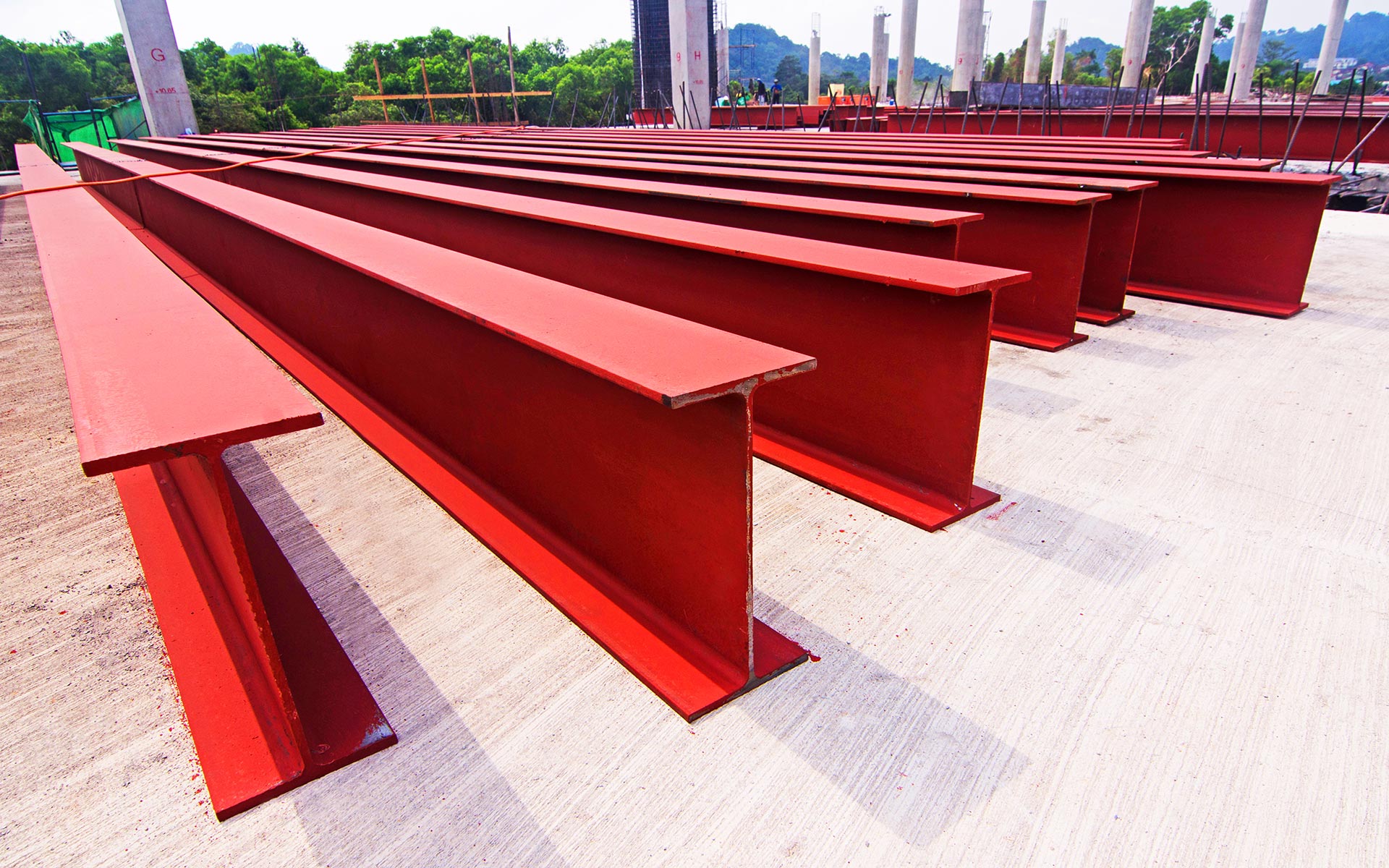
Duferco Travi e Profilati’s new beam rolling mill to start production in 2023
Duferco Travi e Profilati’s new 900.000-mt beam rolling mill at its headquarters in San Zeno Naviglio, northern Italy will become operative in January 2023, Antonio Gozzi, president and CEO Duferco Italia Holding, said in a web seminar covered by S&P Global Platts Feb. 1.
“We are in the phase of installing the reheating furnace. Our new rolling mill will be endowed with the most modern technologies also in terms of environmental impacts and it will be the European best cost producer,” Gozzi said.
In November 2020, the company announced the total investment on the new mill, facility and infrastructure included, amounting to Eur180 million ($202 million). With the opening of the new facility, the total rolling mill capacity of the group will reach 1.5 million mt of long products and make the company more efficient.
“We ended with an investment [that was] a bit higher [than anticipated]… Eur200 million as costs went up, but we are very excited as it will greatly increase our competitiveness and it will also be the first rolling mill to be fed with green energy,” Gozzi told Platts in a follow up call Feb. 1.
The power supply of the new rolling mill will be completely covered by renewable energy thanks to the company’s green power purchase agreement, a first by a steel company in Italy. The mill will have cutting edge technologies, focused on digitization, artificial intelligence and automation both for production and logistics.
During the webinar and the call with Platts, Gozzi said that he was optimistic about the current year, though he expected it to not be as “amazing” as 2021. “The demand for steel will still be very strong, thanks to the rebound of the automotive industry, but also to all the investments… into the infrastructure in Europe and in Italy. As a group, I can say that we had a strong first quarter and although the margins can still be a problem due to the high energy costs, with the correction in [the prices of] the raw materials, [they] are still good,” he told Platts.
Gozzi told Platts that Duferco Travi e Profilati closed 2021 with a net profit of Eur46 million after tax and 800.000 mt of crude steel output. In 2020, the COVID-19 pandemic weighted on the company — the operations of which are largely located in what became the epicenter of the pandemic in Italy — and it closed the year with a profit of Eur4 million.
Duferco Travi e Profilati is part of Duferco Group and owns fours production plants in San Zeno Naviglio, Giammoro, Pallanzeno and San Giovanni Valdarno. Duferco TP is one of the main producers of steel beams and long products in Italy, Europe and North Africa. The steel plant in San Zeno Naviglio, where the new rolling beam will be installed, is the main plant of the group with a production capacity of about 950,000 mt of steel per year.
Duferco Group is an international holding company that has historically operated mainly in the steel industry. Over the years, it developed highly differentiated businesses in energy, industrial and shipping sectors. Headquartered in Luxembourg, the group has 100 operative offices and industrial sites across the world.
In December 2020, Duferco and America-based Nucor ended their 12-year old joint venture, after which Duferco owned 100% of Duferco Travi e Profilati.
— Annalisa Villa


Italy’s Liberty Magona to increase capacity by more than 20%
Liberty Magona, the Italian producer of galvanized and pre-painted flat-rolled coil products, expects to achieve a capacity increase of more than 20% in 2022, a Liberty Steel Group spokesperson said Feb 1.
“A number of challenges (the pandemic, Greensill situation and HRC supply disruptions) impacted Liberty Magona’s ability to operate at full capacity in 2020 and 2021, even though its market and demand from customers was strong,” the spokesman told S&P Global Platts in an email. “We look forward to the business delivering on its strategy this year and so far the La Magona is on track to do so.”
The plant’s significant expansion is expected to come from the addition of new capacity for painting production and a new range of galvanized and pre-painted products, the company said in an earlier statement on Feb. 1.
Sources closed to the mill confirmed that Liberty was investing in La Magona and most of the lines had increased their production, with the pre-painted line moving to 21 shifts from 15 from February, including the hiring of a further 10 workers.
“Liberty is trying to take advantage of the strong steel market and is trying to show that it is still a credible player after all its financial problems,” a source close to the mill told Platts. The company had a cash squeeze after the collapse of principal financer Greensill Capital in March 2021.
According to a source familiar with the company, the La Magona pickling line, which has a design capacity of 870,000 mt/year, is now producing 700,000 mt. The organic coated line, which has a design capacity of 100,000 mt/year and was idled in 2009, was also now producing at full capacity.
The company now has two coated lines and produced 150,000 mt of pre-painted coils in 2021.
La Magona has two galvanized lines that are working at 320,000 mt and has a rolling line that run at 600,000 mt against the 750,000 mt/year installed capacity.
The company buys coils on the open market, mainly from ArcelorMittal’s Fos site in France, and from Liberty Galati in Romania.
— Annalisa Villa

Nucor to add galvanizing, prepaint lines at Indiana sheet mill
Nucor’s board of directors has approved a $290 million investment to modernize its sheet mill in Crawfordsville, Indiana, through the installation of a construction-grade continuous galvanizing line and pre-paint line, the US-based steelmaker said Feb. 1.
The continuous galvanizing line will have a capacity of 300,000 st/year while the pre-paint line will have an annual capacity of 250,000 st/year, Nucor said. The Crawfordsville mill has an annual rated production capacity of 1.9 million st/year, according to data from the Association for Iron and Steel Technology.
The modernization project is expected to take two years to complete pending permitting, regulatory approvals, the award of state and local incentives and other tax considerations, the company said.
The investment in the Crawfordsville facility, Nucor’s first electric arc furnace sheet mill, is part of the company’s strategy to grow its core steel business and expand its portfolio of value-add product, Rex Query, Nucor’s executive vice president for sheet and tubular products, said in a statement. The mill has been in operation since 1989.
Nucor recently added continuous galvanizing lines at its sheet mills in Arkansas and Kentucky and acquired Precoat Metals’ paint line facility in Armorel, Arkansas, in October 2020.
Spot prices for US domestic hot-dip galvanized sheet have weakened since the third quarter of 2021 alongside falling hot-rolled coil prices, but continue to sit above historic norms, according to S&P Global Platts pricing data.
The daily Platts TSI US cold-rolled HDG index was at $1,700/st Jan. 31, while the Platts TSI US hot-rolled substrate assessment was at $1,690/st. Both prices are on an ex-works Midwest basis.
— Justine Coyne

Knauf Interfer selects tk Materials for digitalisation
Knauf Interfer has linked up with thyssenkrupp Materials Services for the digitalisation of its services. This means a cooperation between Germany’s third largest and largest steel distributors, Kallanish notes. Klöckner & Co is number two.
Knauf Interfer will use the “toii” Industrial Internet of Things platform developed and marketed by thyssenkrupp Materials IoT. The latter is a spin-off from thyssenkrupp Materials Services. As part of its “Materials as a Service” strategy, the materials distributor and service provider is systematically expanding its supply chain service business. This includes the development of innovative, data-driven business models such as toii. The platform also provides real-time transparency on productivity, quality as well as order progress.
The processing centres of tk Materials Processing Europe have been using toii for six years. “Thanks to toii we have so far been able to achieve productivity increases of between 10-15% at our sites,” says Wilhelm Budéus, head of the Krefeld branch and member of the management board of thyssenkrupp Materials Processing Europe.
Knauf Interfer has an annual turnover of around 1 million tonnes of material.
Christian Koehl Germany

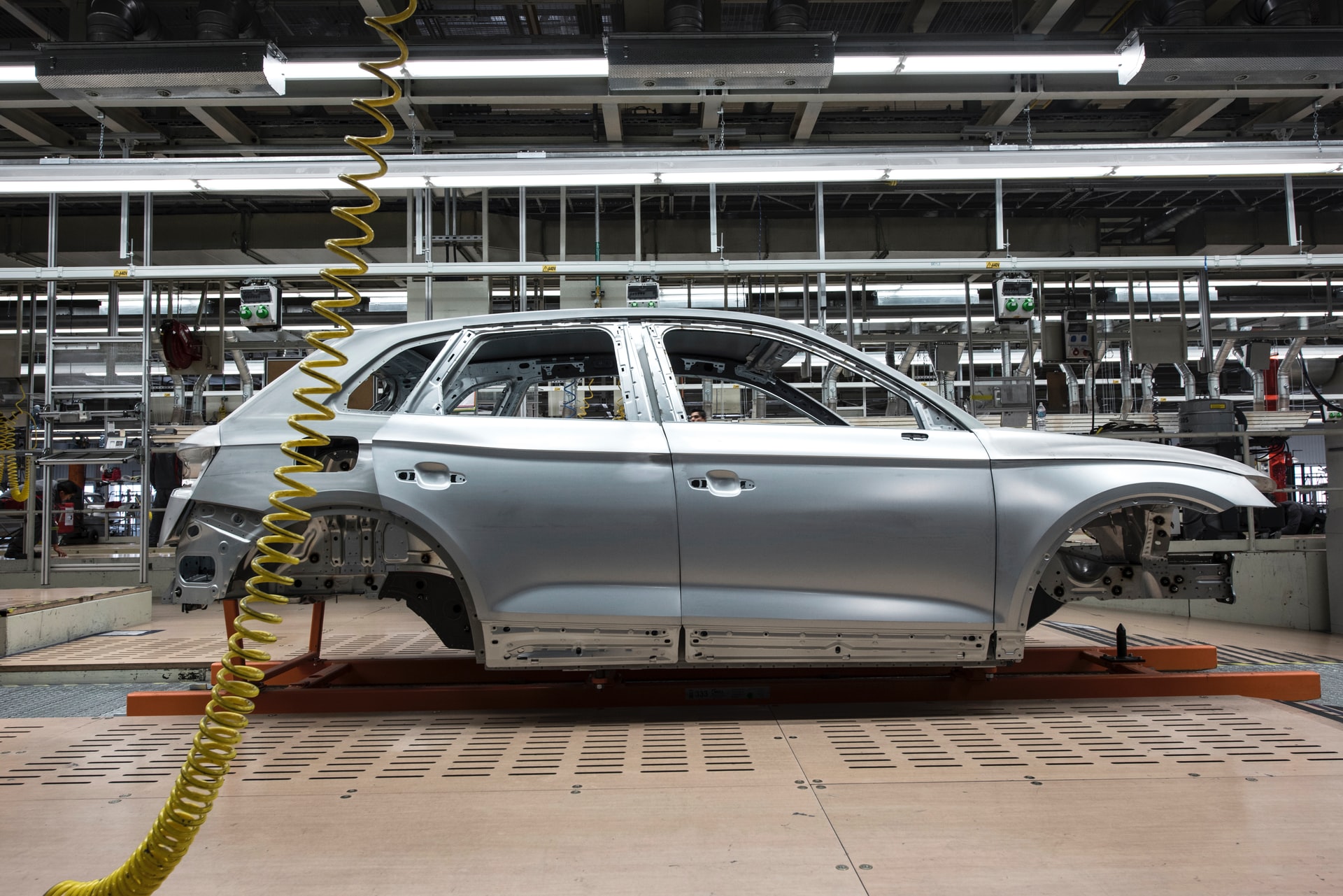
BMW taps Salzgitter for low-carbon steels
Salzgitter will from 2026 supply all the European plants of the BMW Group with low-CO2 steel, Kallanish learns from the German steelmaker.
The companies have concluded an agreement for serial delivery from the low-CO2 process route. According to Salzgitter, this makes BMW Group the world’s first automotive manufacturer to have concluded an agreement of this kind. Based on the established electrified steel route at the Peine mill, preparations for the transformation to green steel serial production are already under way at Salzgitter.
Five years ago, BMW and Salzgitter already established a closed-loop materials flow for reusable steel from BMW’s Leipzig plant. When supplying the plant with steel coil, Salzgitter takes away steel to be recycled from the stamping plants, for instance from punching out doors, and feeds it into the production of new steel. The partners have now set about expanding this cooperation.
Last autumn, BMW signed an agreement with Swedish start-up H2 Green Steel to procure steel produced exclusively using hydrogen and renewable energies from 2025 onwards. Together, the two agreements will supply over 40% of the steel required by the company’s European plants and save around 400,000 tonnes/year of CO2 emissions, BMW says. Its press plants in Europe process more than half a million tonnes of steel annually.
In addition to sourcing low-carbon steel, the group has also invested in an innovative method for carbon-free steel production developed by American start-up Boston Metal.
Christian Koehl Germany

European steel to enjoy good 2022: Duferco’s Gozzi
Antonio Gozzi, president of Duferco Italia Holding and former Federacciai head, expects the European steel sector to enjoy a positive 2022 despite a number of global uncertainties.
“2022 will be a good year,” Gozzi said during a Siderweb webinar on Tuesday attended by Kallanish. “Not extraordinary like 2021, but still positive. Demand is still strong for the steel sector and I expect raw material prices to move down slightly from 2021 levels. The automotive sector is also starting to send some recovery signals after the negative trend of 2020 and 2021. Finally, the positive effects of the Next Generation EU investments should start being seen during this year.”
Energy prices are expected to remain one of the main issues going forward. Gozzi believes energy prices are close to peaking in Europe, but in the medium term these will move in a new higher range compared with pre-2020 levels.
Answering a question directly on safeguard measures, Gozzi highlighted that the European economy needs to always take into consideration that the EU has decided to be on the frontline of the climatic transition. “At this stage, it is not possible to be completely open on the market front if domestic European producers face high costs linked to decarbonisation,” he explained. It is therefore not possible to consider the cancellation of safeguard measures at present, he added.
Emanuele Norsa Italy

Skyrocketing stainless coil plunges EU market into lull
The European stainless steel coil shortage has persisted this month despite the increased volume of purchases from the import market. European mills’ coil price hikes are said to have become unsustainable, Kallanish learns from market sources.
While service centres consider final demand lively and reliable in both southern and northern European countries, European coil sales activity has reached a standoff due to high hot and cold rolled coil prices from the four European mills. Large buyers are now refusing to purchase European material priced based on the formula comprising base price plus the ever-rising alloy surcharges.
Using the traditional base plus alloy formula, CRC in Europe is now being offered and sometimes sold at the “exorbitant” price of over €4,400/tonne ($4,962) delivered, sources say. This level has decimated coil sales activity. Most buyers are now purchasing Chinese, Taiwanese, or other Asian-origin material. Even including duty, import offers are more competitive than European prices. All EU mills are quoting long delivery times of between April and May.
To wake up the sleepy market, some mills are said to be considering a fixed price for both CRC and HRC, to finally free buyers from the current formula. With a fixed price, CRC may reach approximately €4,000/t delivered, which may be a more acceptable value for buyers and still elevated enough for producers to keep their margins.
European stainless HRC prices have stopped increasing and remain at a more reasonable value of €3,800-3,900/t delivered, due to lower-priced import offers, particularly from China.
Including duty, Chinese CRC was transacted in recent days at €3,650-3,700/t cfr southern Europe, while HRC was at €3,200/t cfr last month, meaning a significant gap between European and Chinese values. Last month, CRC was also sold by Indian steelmakers into Europe at €3,700-3,750/t cfr including import duty, sources suggest. This material will however also be delivered in April and will not help the current coil shortage.
Meanwhile in Europe, nickel prices skyrocketed to $24,400/t on 20 January, only to decline to $22,800 on 31 January, Kallanish notes.
Natalia Capra France

SDI closes on acquisition of New Process Steel
US steelmaker Steel Dynamics Inc now holds a minority equity interest in its largest flat rolled steel customer, New Process Steel.
The companies closed on the previously-announced acquisition this week. Terms of the deal were not disclosed. New Process ceo Richard Fant will remain the majority 55% equity holder, Kallanish understands.
New Process Steel is a processor and distributor based in Houston, Texas. It operates two manufacturing facilities in Mexico and four in the US. Two of the facilities are located on-site at SDI’s mills in Butler, Indiana, and Columbus, Mississippi.
“This minority equity interest enables us to expand our exposure to value-added manufacturing opportunities, while continuing to serve our other long-standing flat roll steel customer needs.” says SDI ceo Mark Millett.
SDI says it is committed to “creating innovative supply-chain solutions” and believes New Process will offer a variety of opportunities for growth in value-added manufacturing for the companies.
Laura Miller USA