


Spain’s December crude steel production, scrap usage fall
The Spanish steel sector saw both steel production and scrap melting decrease on-month and on-year in December 2021, Kallanish notes.
According to Spanish steelmakers’ association Unesid, the local steel industry produced around 858,000 tonnes of crude steel in December. This was 26.2% less than November output of 1.16 million tonnes and down by 4% year-on-year. According to Unesid data, December saw the lowest monthly crude steel production in 2021.
Spanish full-year 2021 output totalled 14,184,000t. Unesid did not disclose a comparison with 2020 volume in its latest report, but taking worldsteel figures into account, the annual growth is estimated at 27%.
Spain used 604,000t of ferrous scrap for steelmaking in December, down 35.3% month-on-month. This volume was also 60,000t or 9% less over the same month in 2020. Cumulative scrap usage was 11,138,000t, representing 78.5% of total crude steel production in 2021.
Todor Kirkov Bulgaria


Outokumpu registers record 2021, foresees first-quarter continuation
Stainless steelmaker Outokumpu expects first-quarter financial performance to continue the positive trend seen throughout 2021.
The company notes that newly received orders during the current quarter already reflect higher stainless steel prices and “more than offset the increase in energy and consumable prices”.
The company’s consolidated 2021 sales surpassed €7.7 billion ($8.8 billion), up 37% year-on-year. Ebitda exceeded €1 billion versus only €101 million in 2020. “In an exceptionally strong market environment, we delivered our best annual financial results in recent history,” Outokumpu chief executive Heikki Malinen says in a report seen by Kallanish.
Stainless steel deliveries reached almost 2.4 million tonnes in 2021, up 13% y-o-y.
“Throughout the year, our mills have been running at full capacity … All business areas provided solid results in 2021 and development in realised stainless steel prices has been favourable. We have had logistical challenges throughout the year as the global supply chains have been under pressure. Our teams have worked very hard to overcome the difficult situation,” Malinen concludes.
Emanuele Norsa Italy
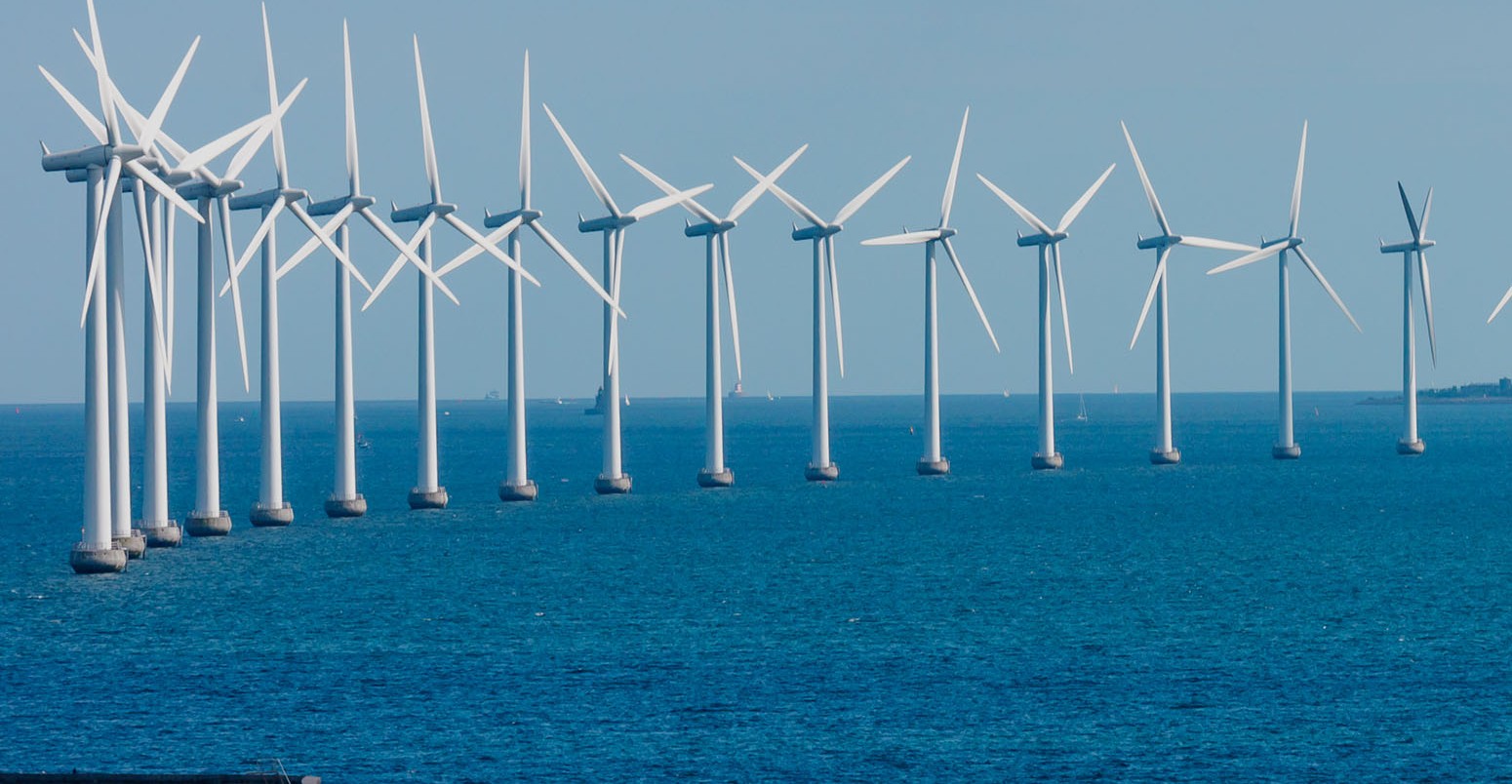
Steel-consuming wind power projects require acceleration: German associations
Onshore wind power capacity in Germany expanded faster last year than it did in 2020, and is expected to add more momentum this year. Still, wind power industry interest groups are bemoaning that the growth pace is not enough to meet the targets set by the government for renewable energies.
Last year saw the addition of 484 wind towers with 1.9 gigawatts of power capacity on land, according to VDMA Power Systems and Bundesverband Windenergie (BWE). This was 35% higher than the addition seen in 2020. For 2022, the federations expect another 2.3-2.7GW to be installed, Kallanish understands.
They are especially critical of hurdles to the approval of new buildings by the relevant authorities. At present, any approval takes four to five years, and some 10GW of capacity are currently awaiting approval, according to BWE and VDMA Power Systems.
They point at China and the USA as model markets, where the addition of new onshore capacities is expected to reach 40GW (China) and 10GW (USA).
Offshore, no construction occurred at all in 2021. Installed capacity of the 1,501 towers adds up to 7.8GW. The federations call on the new German government to step up the expansion to meet the declared offshore target of 30GW by 2030. Of this, 10GW is defined as capacity dedicated to electrolysis for the production of green hydrogen.
Germany’s major steel plate making companies recently announced more activities in wind power. Dillinger Hütte will expand production of super heavy plate as well as production of wind tower foundations, known as monopiles. It will invest €56.5 million ($65.8m) at its main mill in Dillingen and at its monopiles making subsidiary Steelwind Nordenham.
Salzgitter has signed a cooperation agreement with Danish power company Ørsted. The steelmaker will produce low-carbon steel for use in Ørsted’s offshore wind farms, while the former will provide wind power and green hydrogen.
Christian Koehl Germany
Duferco accelerates renewables-powered sections mill construction
Italian sections producer Duferco Travi e Profilati has broken ground for the new Smart Beam Manufacturing (SMB) rolling mill at its San Zeno Naviglio site, near Brescia.
The mill supplied by SMS will become operational in 2023, a company source confirms to Kallanish. With a yearly output of 1.5 million tonnes of long products, it will increase Duferco’s current capacity by 650,000t. Powered by renewable energy, the new mill will have a low carbon footprint, thanks also to the use of green hydrogen.
“The construction of the new rolling mill is making progress day by day according to the schedule: the roof of the buildings is now in place and the assembly of the re-heating furnace by Forni Industriali Bendotti has started,” the Italian company says in a note. The reheating furnace’s burners will also be powered by hydrogen, it adds.
The overall investment is €180 million ($205m). Duferco was awarded last year a loan of €72m for the construction of the mill, provided by UniCredit and DZ Bank over 11 years. The German Export Credit Agency (ECA), Euler Hermes, will support the transaction.
In December, the company and former American partner Nucor signed the financial closing that ended their partnership in the joint venture for Duferco’s Italian operations. The Covid-19 pandemic and consequent cut in Nucor’s overall investment budget were at odds with Duferco’s intention to proceed with the investment in San Zeno (see Kallanish passim).
Natalia Capra France

EU proposes $43 billion microchip investment programme
The EU announced on Tuesday a €43 billion ($49 billion) plan to become a major chip producer, to ease dependency on Asian manufacturers of the components, Kallanish notes.
“Chips are at the centre of the global technological race,” says European Commission (EC) President Ursula von der Leyen. “The Covid-19 pandemic has painfully exposed the vulnerability of its supply chains. While demand was increasing, we could not deliver as needed because of the lack of semiconductors.”
The new Europe Chips Act will link research and coordinate EU and national investment. The plan will combine public and private funds to allow for state aid to provide for massive investments to boost chip production.
The EC aims to more than double the EU’s global market share in semiconductor production to 20% by 2030. Now, European nations only have 9% of the global market share of semiconductors.
To this end, the EC is providing subsidies of €11 billion for research in the field of chips, which will come from EU funding instruments as well as member states’ finances. The EU hopes to secure the remainder of funding from private investments.
The funds are also intended to encourage investment by foreign companies. American chipmaker Intel, for example, has announced its intention to invest in Europe.
The proposed regulation will now be discussed by the European Parliament and the Council. The Commission will assist the co-legislators to reach an agreement as soon as possible.
German carmaker Volkswagen Group expects the short-term supply of semiconductors to the automotive industry to continue to be very volatile and strained, the company tells Kallanish.
“At least the first half of 2022 will remain very volatile and challenging due to ongoing supply bottlenecks,” the enterprise claims. “However, there will probably only be a real upward trend in 2023, when the capacities that the semiconductor manufacturers are now building arrive on the market. It should then be possible to make more reliable predictions.”
In 2021, global production of 9.5 million vehicles was delayed due to a lack of chips, the European Association of Automotive Suppliers (CLEPA) said last week. Although this year could show a modest recovery in global light vehicle production, supplier and market estimates still forecast, on average, production losses of 4-6m vehicles, CLEPA claims.
Svetoslav Abrossimov Bulgaria
Turkish steel output could rise 10% in 2022 on new capacity, energy relief: TCUD.
Turkey’s steel output is expected to reach a historic high in 2022 due to new capacity and as state gas distributor Botas called an end to recent gas and power cuts which had hit production, the Turkish Steel Producers’ Association (TCUD) said. Botas said in a statement natural gas flow cuts to industrial plants in Turkey ended as of 8 am local time Feb. 8, as gas flow to Turkey from Iran returned to normal.
Turkish steel output, which was hit by energy cuts in December and January, is expected to continue 2021’s upward trend in 2022.
“With the start of the new capacities Turkish steel output which reached 40.4 million mt in 2021 is expected to rise at least a further 10% in 2022. This is also expected to reduce the rise in steel imports, and increase the export/import coverage ratio to 120% this year,” industry body TCUD said in a statement sent to S&P Global Platts.
Turkey became Europe’s largest and the world’s seventh biggest steel producer in 2021 after a 12.7% rise in output, despite the negative effects of December’s power cuts, it added.
Steel production capacity in Turkey, especially in flat steel, is expected to rise notably in the coming years due to new investment.
Turkish coated coil producer Yildiz Demir Celik is planning to start hot-rolled coil production within three years by building a melt shop with a liquid steel capacity of 4 million mt and a hot-rolling mill with a finished product capacity of 3.5 million mt, according to a document submitted to the Ministry of Environment and Urbanization Jan. 24.
Another coated coil producer, MMK Metalurji, the Turkey-based subsidiary of Russian steelmaker Magnitogorsk Iron & Steel Works, already started hot rolled coil production at its electric arc furnace facility with a casting and rolling module in July 2021. The company is expected to reach 2 million mt production capacity in 2022.
Tosyali Demir Celik, one of Turkey’s largest steel producers, is also currently building a new flat steel mill with a liquid steel capacity of 4.55 million mt.
With other Turkish producers starting work to raise their HRC output, including big producer Colakoglu, the country’s total HRC production capacity is expected to rise more than 9 million mt/year in the coming few years, while some new coated coil and long steel capacities are also on the way.
— Cenk Can


Europe steel margin recovery in 2021 offset by current cost concerns
European steel markets currently face prolonged higher coking coal, ferrous scrap and iron ore costs hitting margins, as steel profitability and demand recovered last year following the initial pandemic shutdowns in 2020. High steel prices in 2021 supported margins, peaking in August, while supply chain volatility elevated steelmaking costs.
Cost increases followed record high iron ore and coking coal prices at different phases through the year, while higher iron ore and coking coal costs have persisted. This is partly due to seasonally weaker supply and disruptions, including pandemic-related restrictions in supply basins such as the US Appalachians and Australia.
The Northwest European hot-rolled coil steel to raw materials price spread averaged just above Eur635/mt ($725/mt) in 2021, more than double the Eur253/mt average in 2020, according to S&P Global Platts calculations.
The difference in 2021 of Eur382/mt could contribute into profits, as indicative margins factor in typical and one-time running costs and weaker operational performance by European steel mills in 2020.
Steel to raw materials spreads have seen pressure, after January’s spike in global iron ore and coking coal costs. The Northwest Europe HRC-steel raw materials spot spread fell to Eur532/mt in January, from Eur591/mt in December.
Investment bank Jefferies analysts recently cited sustained high energy prices in Europe, coking coal prices greater than $400/mt and iron ore’s recent rebound to greater than $130/mt as contributing factors for mills seeking higher flat steel prices. EU carbon prices have risen further, boosting compliance costs.
Platts Northwest Europe HRC prices averaged Eur927.18/mt ex-works Ruhr in January, down 0.66% from December.
Steel spreads have fallen gradually from a record of over Eur795/mt in August as coking coal costs climbed on supply disruption and a turn up in global demand to restore met coke supplies.
The cost of pig iron’s main iron ore and coking coal raw materials inputs, climbed in 2021 to average at $398/mt on a CFR Rotterdam basis, up from $245/mt in 2020, based on Platts calculations using a basket of iron ore grades including pellets and representing a mix of solid fuels.
North European shredded scrap prices averaged at Eur396.25/mt delivered basis in 2021, up from Eur237/mt in 2020.
Platts tracked costs using major steel feedstock cost references, including a basket of iron ores with high-grade fines, lump and pellets typically consumed by Northwest European blast furnaces.
In Turkey, the outright spread between steel rebar export prices and imported HMS 80:20 scrap has strengthened to $219/mt in 2021, from $158/mt in 2020. However, the impact of scrap yields available and the greater loss on yield at higher scrap prices limited the additional margin available to mini mills melting scrap.
Platts Europe HRC to raw material price spreads are indicative operating margins that do not account for inland logistical costs, power, natural gas or other blast furnace and steel-making inputs such as ferroalloys, anodes and refractories. Costs to operate sintering and coke plants are not included.
There may be further upward pressure on typical operating break-even levels at regional blast furnace mills due to higher energy, carbon permit and logistics costs.
Platts European HRC spreads are based on commodity-grade flat steel specifications. Contract steel sales may have additional grade and specification-based premiums, and terms may lag spot indexes.
Producers with higher grade steel portfolios may be less exposed to commodity-grade steel margins against underlying steel raw materials costs.
— Hector Forster