


Toyota cuts annual output target by 500,000 units due to chip shortage
Japan’s Toyota Motor Corp. has lowered its production target for the year ending March 31, 2022, to 8.5 million vehicles, because of the effects of the COVID-19 pandemic on production, the company said Feb. 14.
The company has cut its output projection twice; from the initial 9.3 million vehicles in August and 9 million units projected in September.
The latest revision comes as Toyota lowered its global March production by 100,000 vehicles to 950,000 vehicles “due to the impact of semiconductor shortages,” the company said.
From March 2 to March 22, the company plans to shut three domestic production lines at its Kyushu Miyata and Iwate plants, down from seven lines in six plants in February.
Lower vehicle production has reduced demand for automotive steel, resulting in local steelmakers cutting their yearly forecast.
Nippon Steel has cut its projected consolidated crude steel production for the financial year ending March 31, 2022, to 44.80 million mt, down 2% from the 45.7 million mt it had forecast on Nov. 2, 2021, the steelmaker said Feb. 3, citing a drop in steel demand from the automotive industry as one factor.
Another steelmaker JFE Steel lowered its annual output forecast by 500,000 mt to 26 million mt, but the outlook was still higher than the 24 million mt produced for fiscal year ended March 31, 2021.
“Steel demand is temporarily weakening due to the reduction in automobile production, resulted from the shortage of semiconductor [chips] and parts,” it said Feb. 8.
— Clement Choo


ArcelorMittal expanding steel sales in 2022 with carbon certificates
Steelmakers in Europe are driving sales of steel offered with carbon reduction certificates and voluntary carbon offsets in combination with decarbonization investments ahead of bigger emissions reductions on the horizon from hydrogen, electrolysis, scrap and metallics.
Steel group ArcelorMittal in 2021 sold 100,000 mt of steel with carbon reduction certificates, driven by the group’s own decarbonization investments, and it said it expects steel sales with the offsets to reach 600,000 mt/year by the end of 2022.
The Luxembourg-based steelmaker has launched several low emissions products under its XCarb brand, including certified emissions credits bundled steel and a range of renewable steel products. ArcelorMittal is looking to invest in renewable power capacity, offering large baseload electricity purchasing commitments as part of a larger drive to expand further into direct reduction iron at multiple sites in Europe and Canada, with the potential to use green hydrogen and electrolysis, CEO Aditya Mittal told analysts late last week.
“Demand across all segments shows customer appetite for green solutions,” the company said in an investor presentation.
The XCarb green steel certificates are independently verified and offered with ArcelorMittal’s blast furnace-based steel, directly related to CO2 savings from group investments in decarbonization technologies implemented across a number of European sites. The certificates are based on an average 2.1 mt of carbon emissions representing Scope 1 and 2 emissions for flat steel products, according to the company.
The company’s environmental product declaration for hot-rolled coil in Europe states 2.23 mt of carbon emissions to produce 1 mt of finished steel, from manufacturing, transport and raw material supply, as published by Institut Bauen und Umwelt.
Swedish steelmaker Ovako has moved its electric arc furnace-based operations to be carbon neutral, and starting this year is using carbon offsets to counterbalance the full Scope 1 and 2 carbon emissions from steel production, according to the Greenhouse Gas Protocol and ISO 14064:2018 and audited yearly, the company said on its website.
Ovako has chosen to procure credits from projects verified by either The Gold Standard or VCS, while planning to gradually reduce the use of offsets with further investments in new technology and decarbonization. In 2020, Ovako’s operations had a carbon footprint of 180,254 mt on a Scope 1 and 2 basis, according to a KPMG report.
Arcelormittal’s products allow buyers to record zero emissions under the Greenhouse Gas Protocol, Mittal said.
“Clearly, we need to grow that product range, and we’re doing that through the investments that we have,” Mittal told analysts on a Feb. 10 call.
“I think when I look at the totality of our European operations and the totality of what we’re trying to achieve, I feel very comfortable that we’re on the right track, and we’re doing the right things.”
The steelmaker is adapting existing steel processes to increase use of scrap metal and enable gas injection to save on other fuels, such as carbon-based products.
It targets completion of two smart carbon initiatives at its Gent, Belgium, site by the end of the year, under the Carbalyst and Torero projects, which capture CO2 from the blast furnace and produces bioethanol. The company has plans for a 100,000 mt/year DRI pilot plant in Hamburg using hydrogen exclusively.
ArcelorMittal has also made climate-related investments under the XCarb Innovation Fund in five technology partnerships
— Hector Forster
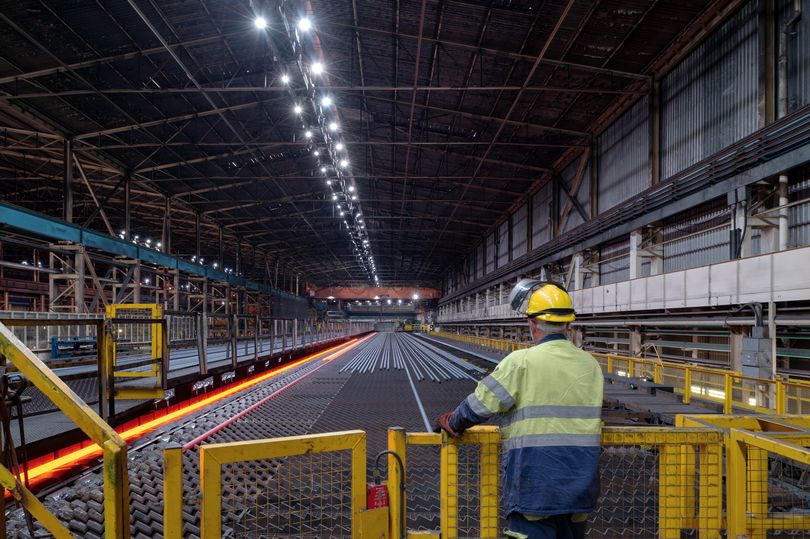
Celsa becomes first BBA rebar certification recipient
Celsa’s site in Cardiff has been the first to obtain the British Board of Agrément (BBA)’s new UKAS-approved rebar certification.
The BBA announced it was launching the scheme last September (see Kallanish passim).
Celsa Steel UK sustainability and strategy head Chris Hagg says: “The BBA has been at the forefront of certification of a broad range of construction products for well over 50 years and the addition of reinforcing steel to its portfolio is very welcome. In a post-Grenfell world of doubts being cast on the validity and authenticity of product testing, this scheme offers additional independent, third-party verified, trusted approval and brings extra value, confidence and reassurance to our customers.”
Celsa is the UK’s largest rebar producer, shipping some 1 million tonnes/year of long products from Cardiff.
The Reinforcing Steel Scheme covers production at steel mills, cold rolling and processing plants, assessing manufacturing, process control and management systems to industry-defined standards, backed by continual benchmarking through material testing, BBA says.
Adam Smith Germany


Liberty restarts packaging line in Belgium, evaluates galv
Liberty Steel has recommissioned the packaging line at its Tilleur site, near Liege, in Belgium.
The line has been down for some time, with the last three months focused on maintenance works to ensure its restart. The decision to relaunch packaging production is part of the plan of the company to relaunch the Liege business with a long-term plan.
The galvanised steel production line in Flemalle, near Liege, is still down, but discussion are continuing on this issue, the company explains. “We are pursuing our action plan to restart the galvanizing activities at the Flémalle site as soon as possible,” says Liberty Liege managing director Olivier Lacroix.
“The Tilleur packaging line, dedicated to the specialist steel required for packaging, has been impacted by an intermittent disruption in raw material supplies and the pandemic. In line with the plant’s new business model, which is to build partnerships with major customers to manufacture specialist packaging for their products, discussions have now been concluded for the contracts required to restart production,” Liberty says in a note sent to Kallanish.
“The restart means that around 150 workers on this line, as well the associated support functions, will return to work. This workforce is aligned with the social agreement reached with the trade unions to ensure that the plant’s organisation meets the expected profitability objectives,” it concludes.
Emanuele Norsa Italy