


À Liège, Liberty Steel proche de la dissolution
Écrit par Jeremy Zabatta
Sans Liberty Steel Liège, le site de Dudelange ne peut pas survivre, d’où les craintes autour d’une dissolution des sites belges. (Photo: Guy Wolff/Maison Moderne/Archives)https://spkt.io/a/3739483
L’avenir de Liberty Steel en bord de Meuse s’assombrit, et le sidérurgiste se rapproche encore un peu plus de la dissolution après la révocation du plan de réorganisation judiciaire par le procureur du Roi.
En Belgique, le procureur du Roi vient de demander la révocation du plan de réorganisation judiciaire de Liberty Steel pour les usines de Tilleur et de Flémalle, en région liégeoise.
Autrement dit, la société LLD, filiale liégeoise du sidérurgiste Liberty Steel, est visée par une procédure de dissolution. Une nouvelle étape judiciaire qui devrait sonner le glas du sidérurgiste en bord de Meuse après n’avoir pas réussi à tenir ses engagements dans le cadre d’un plan de réorganisation judiciaire.
Le 16 mars prochain, le tribunal de l’entreprise de Liège se prononcera au sujet de cette demande de révocation du plan de réorganisation judiciaire et donc, à terme, sur la dissolution des entités belges du groupe Liberty Steel qu’elle pourrait entraîner.
Dans moins de deux semaines, les 690 ouvriers liégeois seront fixés sur leur avenir.
Une dissolution de Liberty Steel Liège pourra avoir des conséquences lourdes sur le site de Liberty Steel Dudelange, dans la mesure où les sites liégeois approvisionnent le site luxembourgeois.
«On avait prévu cette étape, et nous prenons acte de cette procédure qui peut conduire à la liquidation des sites liégeois sur décision du tribunal. En attendant, nous continuons notre travail avec le ministère de l’Économie pour trouver des solutions si le pire se produit à Liège», souligne Robert Fornieri, secrétaire général adjoint du LCGB.
«Liberty Liège a l’intention d’offrir une défense solide lors de l’audience, en soulignant les progrès réalisés par l’usine dans le cadre de son plan de transformation, ainsi que l’engagement de Liberty à fournir les investissements nécessaires pour couvrir les besoins en suspens et assurer l’avenir des usines. Liberty continuera à s’engager avec les parties prenantes des usines avant l’audience et leur fournira les informations nécessaires pour s’assurer que nous travaillons tous ensemble pour atteindre le même objectif d’une entreprise durable qui continuera à fournir des emplois dans ces usines», a indiqué le porte-parole du sidérurgiste
Ministère et syndicats travaillent à une alternative
Le ministère de l’Économie et les syndicats LCGB et OGBL ont ainsi publié un communiqué de presse commun soulignant la volonté de se préparer à une solution afin de «maintenir des activités sidérurgiques et préserver l’emploi sur le site de Dudelange en prenant en considération toutes les options possibles, y compris la reprise par un autre acteur industriel.»
Entre les lignes, on peut donc comprendre qu’il existe un certain intérêt à la reprise du site de Dudelange.
«Le site de Dudelange a fonctionné la semaine dernière et, pour le moment, ils n’ont pratiquement rien à produire. Sans Liège, je ne sais pas comment Liberty Steel peut faire pour faire tourner le site, sauf à demander aux clients d’acheter la matière première», explique Robert Fornieri, avant d’ajouter: «Pour le mois de mars, nous n’avons pas une grande visibilité».
«Il y a des discussions qui sont menées pour trouver des solutions. Je suis confiant pour l’avenir du site de Dudelange qui est un site intéressant et intéressé», glisse le syndicaliste.
Du côté de Liberty Steel, on assure que «la direction de Dudelange continue de s’engager avec ses syndicats et le gouvernement pour identifier et développer un plan d’affaires durable pour l’avenir de l’usine et celui de ses employés de grande qualité et très engagés. Le groupe Liberty Steel reste engagé en faveur d’un avenir durable pour Liberty Dudelange.»
En tout cas, l’avenir de Liberty Steel à Dudelange s’assombrit d’autant que, selon nos informations, la direction commence à puiser dans ses dernières réserves financières.

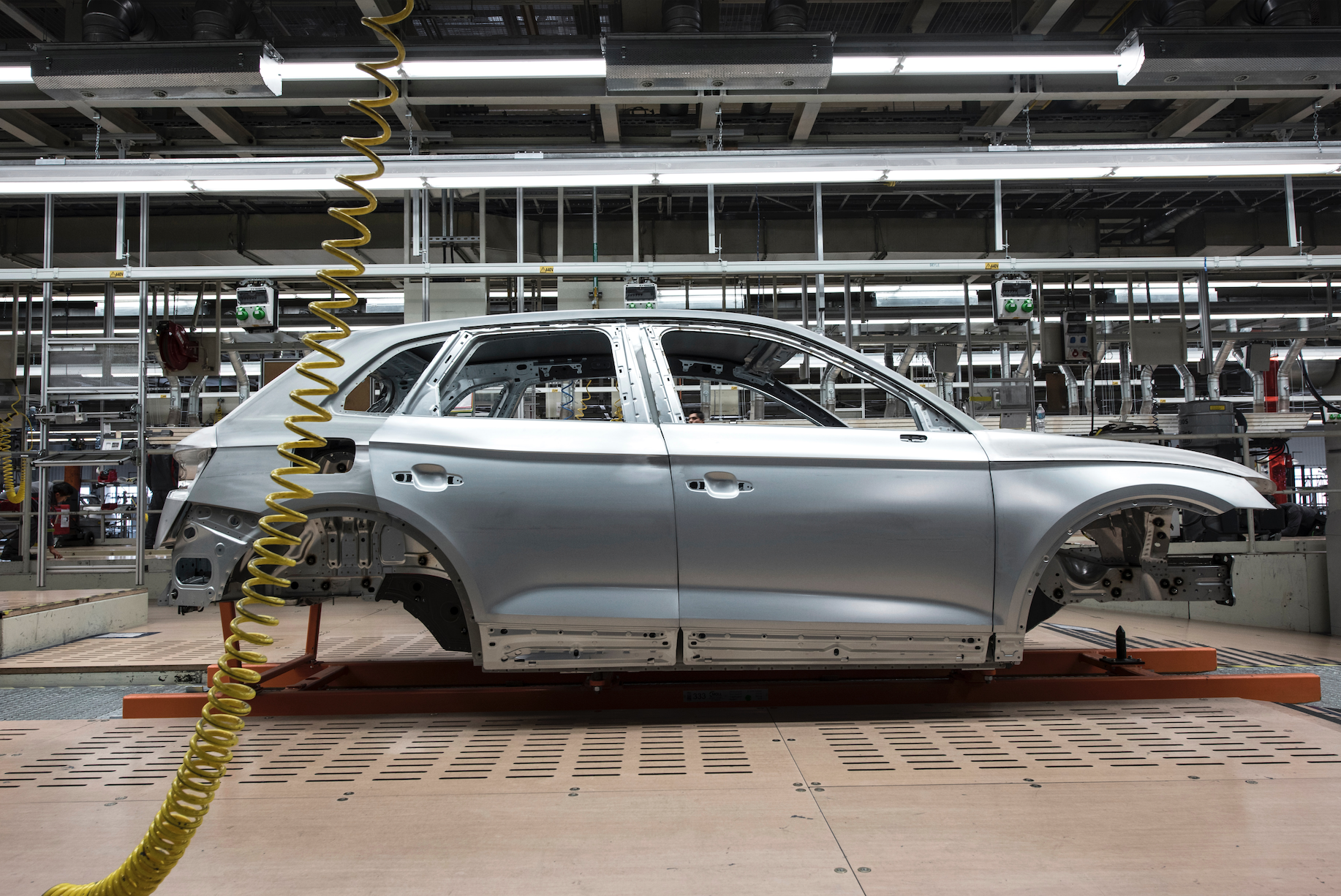
Volkswagen suspends Polish production amid Ukraine supply disruptions
Volkswagen will suspend production at its Polish plants in Poznan and Wrzesna from 10 March due to supply chain disruption as a result of the war in Ukraine.
Crisis teams at VW Hanover and VW Poznan are working on finding alternative sources of supply, the firm tells Kallanish. Among the input materials experiencing shortages are wiring harnesses, which are sourced from Ukraine.
VW Poznan is meanwhile supporting the Polish Red Cross in delivering aid to refugees from Ukraine.
“Immediately after the outbreak of war, at the group level, but also directly at Volkswagen Poznan, we summoned crisis teams to determine on an ongoing basis the possible effects on our operations of the war, and carry out all activities necessary to ensure the production stoppage is as short as possible,” says Volkswagen Poznan chief executive Dietmar Mnich.
The Polish division of VW produces some 200,000 commercial vehicles per year.
Adam Smith Germany

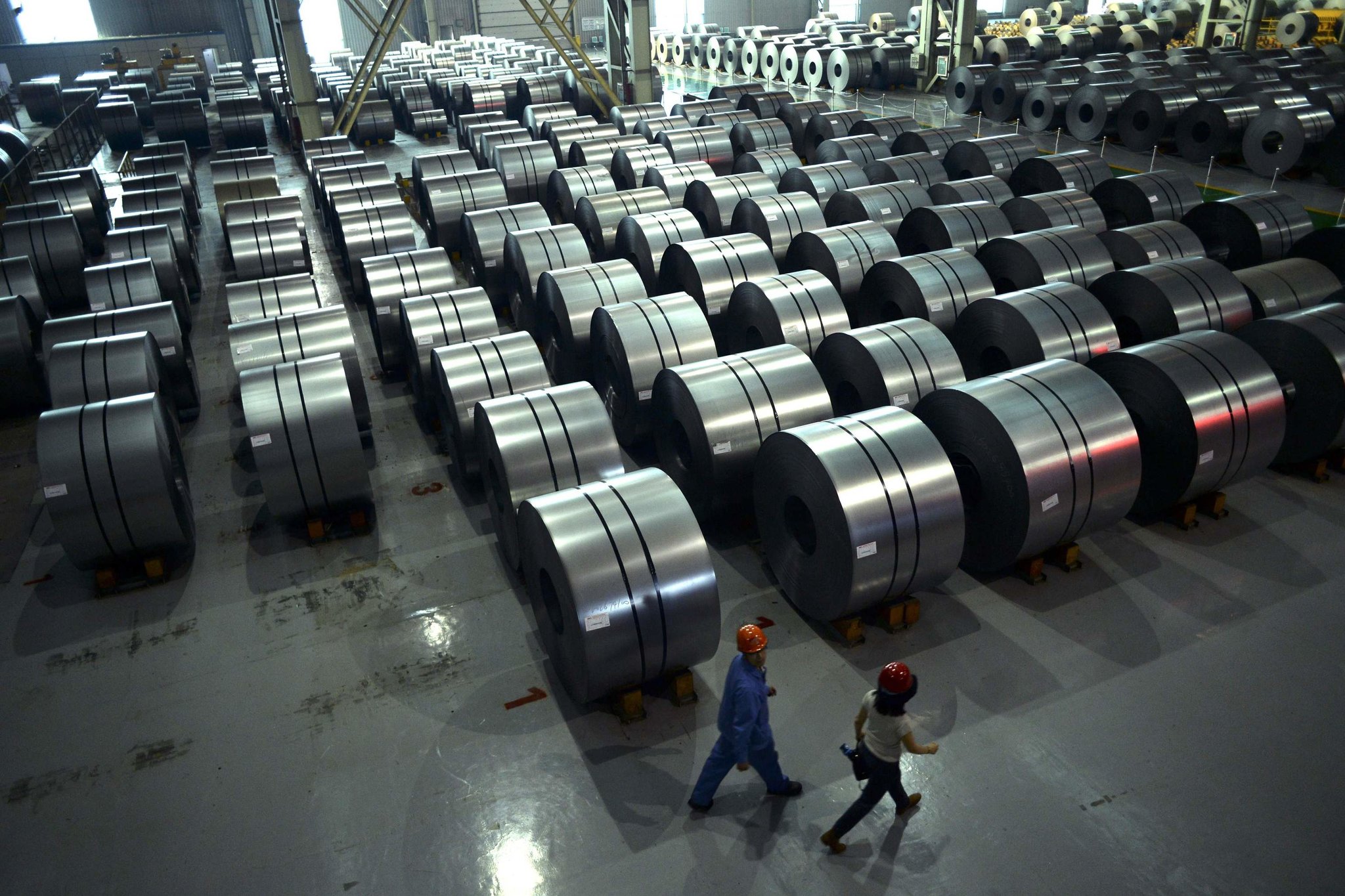
ArcelorMittal Kryvyi Rih suspends operations amid war
ArcelorMittal Kryvyi Rih (AMKR) has suspended all operations amid the intensifying war in Ukraine following Russia’s invasion of its neighbour last week.
The process to idle all blast furnaces began on Thursday and will last between seven and ten days. On Tuesday, the firm said it had suspended the operation of blast furnace No.9 due to a lack of raw materials, but blast furnaces No.6 and No.8 would continue to operate normally. Earlier, the firm announced the reduction of steelmaking operations to a technical minimum.
“ArcelorMittal is deeply concerned about the situation in Ukraine and the threat to our employees and the entire Ukrainian population,” the global steelmaking group says in a note sent to Kallanish.
In 2021, AMKR saw crude steel output increase by 5.2% on-year 4.92 million tonnes. It is a major producer of billet, rebar and wire rod for both the domestic and export markets.
Adam Smith Germany

Polish distributors register enquiry surge, mill offer issues
Polish steel distributors continue to conduct sales as normal despite the war raging across the border in Ukraine, but there are issues with procurement from some European mills and fears in some corners over an impending material shortage.
The Polish Union of Steel Distributors (PUDS) tells Kallanish it has registered problems with offers from mills, not only in Europe but also elsewhere, while some mills are completely not carrying out orders.
Many association members employ Ukrainian workers who have returned home for their families and remained in Ukraine to fight. Member companies have been organising collections in support of refugees from Ukraine, over 600,000 of which are estimated to have reached Poland since the war began last week. Distributors are also organising transport out of Ukraine for workers’ families, funding refugees’ accommodation, as well as offering them jobs, a PUDS spokesman says.
Nevertheless, sales from Polish distributors continue as normal. “In recent days, the number of enquiries has been huge, also from lower distribution, less so from end users, which might be due to concerns over future availability of material,” PUDS observes.
Last month PUDS stressed that imports remain a crucial component to supplying domestic demand, with Polish intake surging 24% in the 11 months through November 2021 to 12.46 million tonnes, while exports rose 8% to 5.22mt (see Kallanish passim).
In the nine months through September, Ukraine-origin imports into Poland soared by 129% on-year, meaning the country overtook Czech Republic as second-largest supplier. This suggests there is likely to be significant steel supply disruption as a result of the war in Poland’s eastern neighbour.
Adam Smith Germany

Turkish scrap skyrockets, seen racing past $600
Scrap prices ballooned on fresh deals heard on Thursday.
One mill in the south is heard to have bought EU-origin HMS 1&2 80:20 at $560/tonne cfr Turkey on Tuesday.
A Baltic supplier, which offered HMS 1&2 80:20 at $590/t cfr on Wednesday, refused a bid at $580/t cfr and then sold 23,000 tonnes of 80:20 at $585/t, 6,000t of shredded at $610/t and 6,000t of bonus at $610/t cfr.
An EU supplier has sold 13,000t of HMS 1&2 75:25 at $588/t and 4,500t shredded at $620/t cfr.
These deals point to a sharp increase in scrap prices considering last week’s deals at $515-520/t cfr for HMS 1&2 80:20.
Although there are rumours of a shredded scrap deal being concluded at $640/t cfr from the UK, this is yet to be confirmed. A US supplier is nevertheless heard targeting $640/t cfr levels for HMS 1&2 80:20.
Romanian scrap was bought by a Turkish mill at $555/t cfr.
One Turkish mill source told Kallanishon Thursday: “Everything has gone out of control. This is an extraordinary situation and people are trying to get the most from it. $600/t cfr will be exceeded today.
A scrap supplier says: “Even if you need to sell, no one should offer HMS 1&2 80:20 at below $620/t cfr today. At the current speed of the market, this will be cheap tomorrow. Turkey has not yet covered even half of its April-shipment requirements.”
While Turkish mills’ demand for scrap remains strong, offers in the market are scarce. Given this situation, scrap prices are expected to continue their sharp rises in the following bookings.
Turkish mills in the west were seen increasing domestic shipbreaking scrap prices gradually on Thursday, when prices rose to $510-525/t delivered from $495-503/t a day earlier.
Dock prices in the Benelux are also recording sharp increases, meanwhile. Exporters’ dock prices, which stood at €405/t ($448) at the beginning of the week, increased up to €470/t delivered on Thursday, with flow remaining weak even at these levels.
The Kallanish daily assessment for HMS 1&2 80:20 scrap increased $53.5/t on-day to $603.5/t cfr Turkey on Thursday.
Burcak Alpman Turkey

Iron ore breaks through $150
Seaborne iron ore prices have been driven higher as markets adjust to the extent of disruption from the Russian invasion of Ukraine. Debate continues however on the extent to which China will stimulate its own economy.
The Kallanish KORE 62% Fe index jumped $7.73/t to $150.92/dry metric tonne cfr Qingdao, the highest since 1 September 2021. The Kallanish KORE 65% Fe index leapt $9.51/t to $181.97/dmt cfr, and the KORE 58% Fe index increased $3.21/t to $127.60/dmt cfr.
On the Dalian Commodity Exchange May iron ore settled up CNY 44/t at CNY 790.5/t ($125.17/t), while on the Singapore Exchange April 62% Fe futures settled up $9.11/t at $158.22/t. The same contract for 65% Fe and 58% Fe futures settled up $11.56/t at $188.24/t, and up $3/t at $130.67/t respectively.
Chinese scrap and billet prices were also increasing. 6mm+ heavy scrap delivered to mills in the Yangtze River delta gained CNY 23/t to CNY 3,663/t, driven by higher mill prices in Zhejiang and Anhui provinces. In Tangshan, billet prices increased CNY 50/t to CNY 4,680/t.
The Russian invasion of Ukraine has set commodity markets on fire. For iron ore, it not only implies disrupted shipments and higher freight rates. It also means traders are willing to hold stocks as they expect prices to increase and they prefer to hold stocks close to their customers. This has left prices rising despite little seaborne spot activity being completed over the two main public trading platforms.
Confidence in prices has also been supported by speculation over greater Chinese stimulus. Guo Shuqing, chairman of the China Banking and Insurance Regulatory Commission, voiced support for limited stimulus at a State Council press briefing on Wednesday. However, he also spoke against “flood irrigation”, which means the indiscriminate release of credit to spark greater economic activity. Stimulus may be less steel intensive than in the past.
Tomas Gutierrez UK
London Stock Exchange bans GDR trade in major Russian energy, commodity companies
The London Stock Exchange has suspended trade of global depositary receipts (GDRs) of major Russian energy and commodity companies, including Gazprom, Lukoil, Rosneft, En+ and RusHydro with immediate effect, it said in a market notice March 3.
GDRs are financial instruments issued by banks that represent shares in a foreign company, allowing them to be traded on a local stock exchange.
“Further to recent sanctions in connection with events in Ukraine, in light of market conditions, and in order to maintain orderly markets, the London Stock Exchange has suspended the admission to trading of the instruments […] in accordance with Rule 1510 of the Rules of the London Stock Exchange, with immediate effect,” it said. “The Exchange will continue to keep this situation under review.”
The affected companies have operations across crude and refined products, natural gas, power generation, steel and non-ferrous metals, petrochemicals and port infrastructure.
The companies include the following:
En+
Global Ports Investments
Novolipetsk Steel
Gazprom
Lukoil
MMK
Nornickel
PhosAgro
RusHydro
Tatneft
Rosneft
Sberbank
Surgutneftegas
— James Burgess

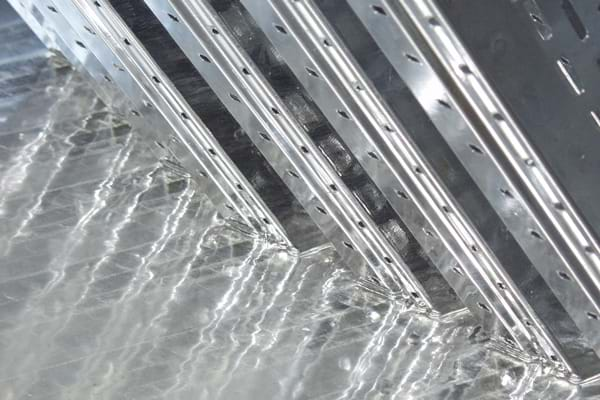
Italy’s Arvedi starts work on new galvanizing and painting lines at Trieste
Italy’s largest flat steel producer Arvedi has kicked off a Eur92 million investment to build new galvanizing and painting lines at its Trieste site in northeast Italy, the company said March 3.
The galvanizing and painting lines will coat coils with a special alloy of zinc, aluminum, magnesium for the automotive industry, and both will have capacity of 200,000 mt/year.
A second galvanizing line is expected to be built in 2023 with a capacity of 300,000 mt/year, a company spokesperson confirmed to S&P Global Commodity Insights.
The company is also planning to build an electrolysis plant to make green hydrogen for the new galvanizing line. The plant will powered by a solar PV installation of 6 MWp on the roof of the new re-roller lines building.
— Annalisa Villa

Ukrainian steelmaker Metinvest says not possible to resume production
Ukrainian mining and steel company Metinvest sees no possibility of restarting its operations in Mariupol because the city has been without power and communications since the Russian invasion of Ukraine, the company said March 3.
Metinvest, which normally produces around 40% of Ukraine’s steel, suspended its two iron and steel works in Mariupol — Ilyich and Azovstal – on Feb. 24 in the wake of Russia’s invasion of Ukraine. Production is also halted at Metinvest’s Mariupol Machining and Repair Plant. These sites only have staff on hand to maintain the equipment and ensure there are no accidents.
On March 1, unable to ship its products, conduct cross-border payments and because of mounting risks to its personnel and assets, the company declared force majeure.
Located on the Azov Sea, Mariupol on March 3 was encircled by Russian forces, according to the UK Defense Ministry, as reported by AP.
“Today, there is no question of resuming work, as Mariupol remains without power and communications due to Russia’s military invasion,” Metinvest said.
Emergency teams are doing their best to repair damaged equipment to restore communications, said Metinvest, adding it has been helping residents of Mariupol, especially those made homeless by the war.
Metinvest’s Avdiivka Coke plant in the town of Avdiivka, like Mariupol near the Donbass border, continues to operate, although the majority of coke ovens have been put in standby mode, Metinvest said. Due to the hostilities and insurmountable logistical issues, Avdiivka Coke has been forced to put the second, third and fourth coke batteries, and the coal preparation shop into standby mode, it said.
Technical staff are working in shifts to ensure the preservation of production equipment. Remaining employees have been temporarily released. Part of the administrative staff is working remotely.
— Ekaterina Bouckley