


Sanctions start to isolate Russian commodity firms in international financial markets
Russian energy and commodity companies are becoming increasingly isolated in international financial markets, as the London Stock Exchange suspended shares of more companies March 4 following international sanctions on key banks and companies.
The LSE has suspended trade of global depository receipts of more Russian companies, including Novorossiysk Commercial Sea Port and Federal Grid, Russia’s electricity transmission grid, a day after the suspension of major energy and commodity companies including Gazprom, Lukoil, Rosneft, En+ and RusHydro.
“The catastrophic depreciation of the GDRs and their near-inevitable forthcoming delisting is a huge blow to the respective Russian brands, indicating the effective termination of access to western equity capital markets,” George Voloshin, head of the Paris branch of Aperio Intelligence, told S&P Global Commodity Insights late March 3.
The affected companies have operations across crude and refined products, natural gas, power generation, steel and non-ferrous metals, petrochemicals and port infrastructure.
The move would have operational knock-on effects for the companies involved, Voloshin said.
“The dearth of equity capital and the inevitable loss of access to affordable debt funding will leave the brands affected with big operational problems to manage and a lack of realistic opportunities for further growth and expansion,” he said.
For most of the companies involved, “London was the key and often only gateway to the international investor community,” he said. “With their overseas investor base shrinking drastically, the affected Russian brands will have to refocus on the domestic market where, however, unprecedented adverse developments have been underway since Feb. 24.”
GDRs are financial instruments issued by banks that represent shares in a foreign company, allowing them to be traded on a local stock exchange.
“The London Stock Exchange notes the ongoing deterioration of market conditions since 2 March 2022, and in order to maintain orderly markets, the Exchange has suspended the admission to trading […] with immediate effect” of instruments relating to Federal Grid, Novorossiysk Commercial Sea Port and fertilizer company Acron, it said March 4 in a market notice. “The Exchange will continue to keep this situation under review.”
On March 3, LSE issued a similar notice for a range of other companies “further to recent sanctions in connection with events in Ukraine.”
The companies with suspended shares include the following:
- En+
- Global Ports Investments
- Novolipetsk Steel
- Gazprom
- Lukoil
- MMK
- Nornickel
- PhosAgro
- RusHydro
- Tatneft
- Rosneft
- Sberbank
- Surgutneftegas
- Novorossiysk Commercial Sea Port
- Federal Grid
- Acron
— James Burgess


Stainless steel prices likely to see increases on higher demand, lower supply
Stainless steel prices are expected to see increases on higher demand, lower supply and higher raw material costs, industry sources told S&P Global Commodity Insights in the week to March 4.
Stainless steel and other steel products have continued their upswing as the global markets recover from the pandemic, with producers having posted their best earnings in recent history last year.
Higher energy prices nevertheless were already an issue in fourth-quarter 2021, with mills having to increase prices. With the additional challenge of the Russian invasion of Ukraine currently, supply of key ingredient nickel was getting limited and pushing energy prices even higher.
The market is already pricing a degree of supply risk as the recent price surge shows, according to a source from a large stainless steel producer.
“According to many analysts, a 30+k scenario is likely if the disruption of supply is fully materialized. We do not have any better knowledge of the price development in a very volatile market,” he said.
Norilsk in Russia is the world’s second-biggest exporter of Class 1 nickel and covers about 50% of the London Metal Exchange stocks. At present, LME holds 80,000 mt of Class 1 nickel. Normally, it holds around 200,000 mt.
Stocks
Stainless steel products are mainly produced with 80%-90% scrap and approximately 10% Class 1 nickel, with both products expected to increase together with higher energy costs.
“With no nickel imports from Russia, we think that nickel stocks in the EU can go very quickly under 40,000/mt. In 2006 when the price of nickel exploded to $55,000/mt, the stocks at LME were precisely at this level of 40,000 mt,” a spokesperson for Euranimi, the European association of independent stainless steel and aluminum importers, told S&P Global.
“Perhaps now can be even worse: Russia/Belarus/Ukraine export 150,000-200.000 mt/year of scrap with 9%-10% nickel to Rotterdam. In round numbers, this corresponds to a production of 200,000 mt tons of stainless steel,” the spokesperson added.
Other sources said although prices can go up mainly on higher energy costs, if the supply of Class 1 nickel becomes particularly tight, “then major producers will become inventive, as they have been in the past to ensure production in support of market demand continues”.
“Nickel can be substituted by manganese in a proportion of stainless steels produced and these manganese-bearing grades represent around 22% of global production currently,” an analyst said.
Exports
Europe produced 6.76 million mt of stainless crude steel in 2019, according to Eurofer data. In term of finished products, Ukraine and Russia have no significant exports of flat products to the EU, but with the exception of seamless tubes and hollow bars. Ukraine exports about 20,000-25,000 mt to EU of bars every year. The remaining approximately 30,000 mt goes as billets to other mills.
Ukraine’s exports of seamless tubes and hollow bars to EU are of sizable volume, a Euranimi spokesperson said.
On top of this, such products are already in short supply in Europe and their imports from Asia are currently either under antidumping restrictions from China or the object of severe customs scrutiny, as a consequence of a report issued by OLAF on alleged circumventions of the AD measures.
The stainless steel sector largely drives global nickel demand, accounting for about 70% of all nickel demand. Alloys take up around 20%, with such demand likely to take the longest to return to prepandemic levels.
The metal is also set to play a pivotal role in energy transition due to the growing market for nickel-cobalt-aluminum batteries used in electric vehicles, which account for around 10% of all nickel demand.
The LME three-months spot nickel price was trading at $29,690/mt as of 1424 GMT March 4 while hitting $30,295/mt in intraday trading. Nickel last closed above 30,000/mt in late-March 2008 at $31,450/mt.
— Annalisa Villa
Tesla gets final approval for Giga Berlin
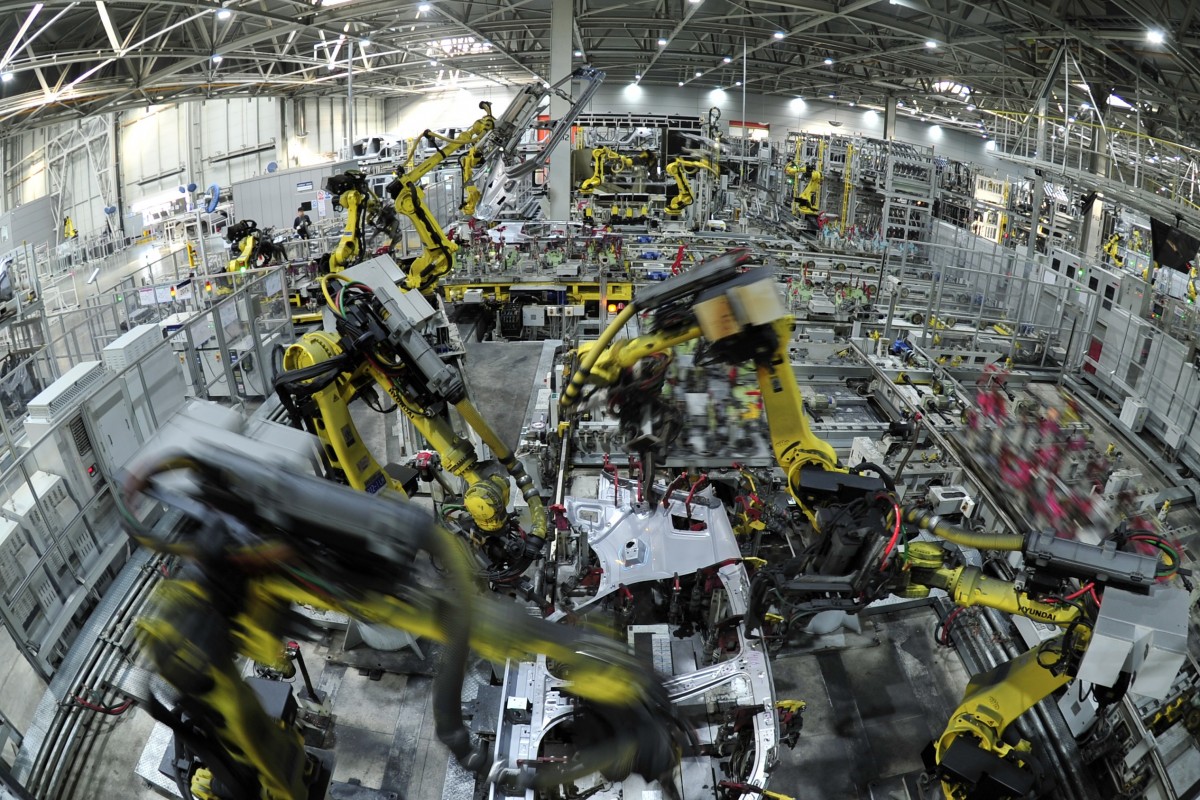
German authorities have finally approved Tesla’s mammoth $5.5 billion project in Grünheide, in the state of Brandenburg, Kallanish reports.
Both the state and federal governments confirmed on Friday the approval notice was granted with around 400 conditions. This means Tesla can continue its construction works and other activities, but operations will only be allowed to start after “several conditions” are met and checked by responsible authorities.
Such conditions include the installation of measuring devices for air pollutants and precautions for fire protection and accidents. A timeframe for production start-up is yet to be announced by Tesla, following its previous plan to open Berlin Giga last summer.
The final approval covers a project designed to produce up to 500,000 Model Y per year, as well as undisclosed battery manufacturing. It includes aluminium smelting plants and an aluminium foundry; plants for surface treatment, heat generation and storage. The facility also includes an operational wastewater treatment plant, fire brigade equipment house and laboratories and workshops.
“The Tesla approval process is unusual in several ways,” says environment minister Axel Vogel. “In a comparatively short time, the State Office for the Environment [LfU] inspected and approved not just a factory, but an entire industrial area with several large-scale plants and repeated public participation.”
The process started in January 2020 and had several changes along the way. It received 813 objections mostly from environmentalists concerned about its impact on local habitat, water and air. In its 536-page decision, the LfU says Tesla must reforest nearly 318 hectares by year-end and another 319 hectares by the end of 2025. Additionally, the carmaker has to install 90 nesting aids for birds, 60 bat boxes and alternative quarters for reptiles such as sand lizards and smooth snakes.
“The Tesla settlement is a showcase project,” comments economics minister Jörg Steinbach. “Tesla is an investor who was willing to take extensive risks and who in turn also contributed to the acceleration [of investments in the region] … I’m firmly convinced that the Tesla project will have a pull effect for years to come.”

UK steelmakers anticipate no CIS supply-related production disruption
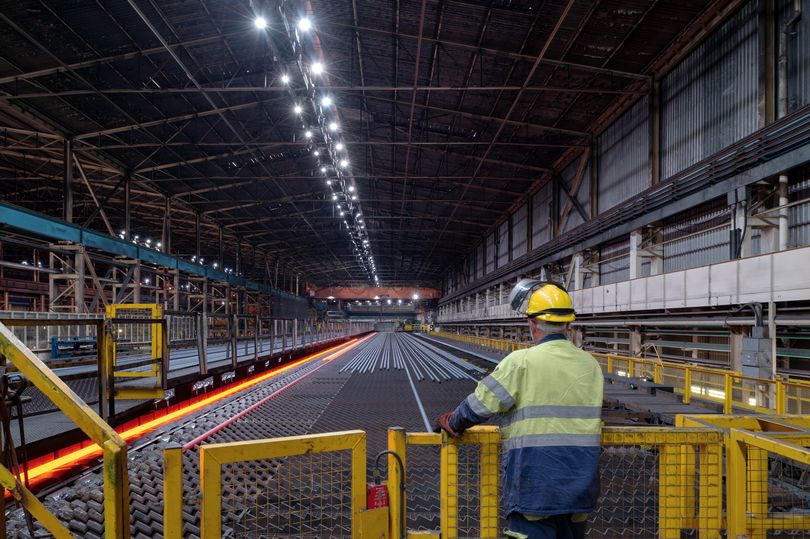
UK blast furnace-based steelmakers say they have contingency plans in place to ensure production remains unaffected amid CIS supply disruption as a result of the war in Ukraine.
Russia’s invasion of Ukraine and subsequent drastic reduction in Ukrainian iron ore and coking coal production, halt to Black Sea export activity and sanctions on Russia limiting trade routes pose question marks over raw materials supply. Many European blast furnace mills rely on feedstock from the CIS for their steelmaking operations.
A British Steel spokesperson tells Kallanish: “We are not reliant on Russia or the Ukraine for supply of our raw materials, therefore we do not anticipate any supply disruptions and continue to operate according to our production plans. Our raw materials procurement teams are assessing the changing global supply chains and trade flows and we have contingency plans in place should this be required.”
Meanwhile, a Tata Steel spokesperson says: “Both Russia and Ukraine are manufacturers and exporters of steel in addition to being suppliers of raw materials including coking coal and natural gas. The tragic events unfolding with the Russia-Ukraine crisis will impact supply-demand dynamics, input costs and the overall global economy. We are continuously monitoring the evolving situation and have contingency plans in place to ensure our customers and stakeholders remain unaffected.”
Various steelmakers in the EU have also said they are thus far unaffected by the situation, with US Steel Kosice saying it has at least 90 days of production’s worth of raw materials in stock, voestalpine also well stocked and Salzgitter having contingency plans to avoid production disruption (see separate story).
Adam Smith Germany
Carmakers in Germany halt production amid supply disruption
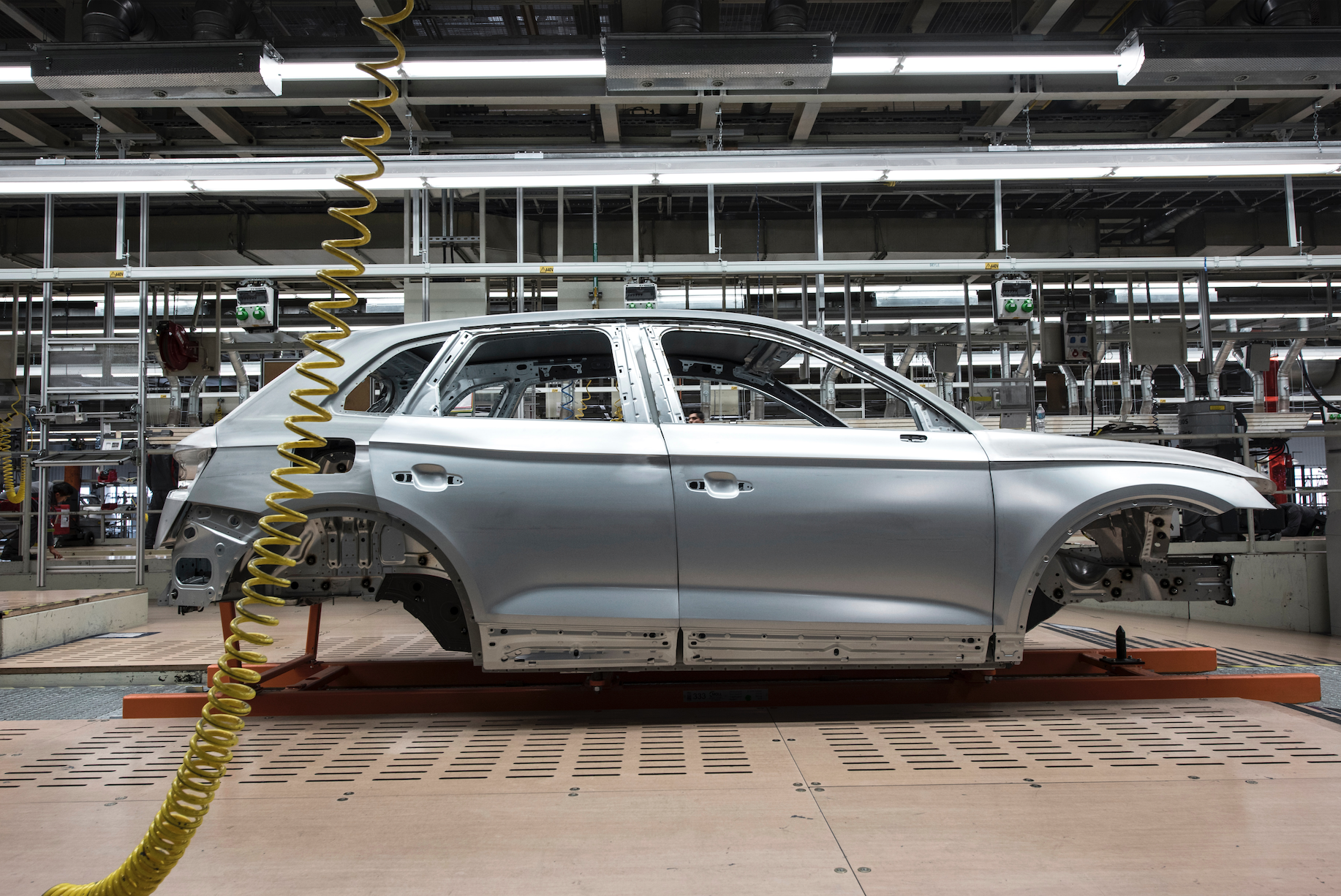
German carmakers Volkswagen (VW), Porsche and BMW say they are halting production temporarily because of disruptions in the supply chain from Ukraine amid the Russian invasion.
“The supply chains of some German and also European plants are already affected,” VW tells Kallanish. “Suppliers in Ukraine mainly supply wiring harnesses for the vehicle electrical systems, but also numerous switches in the interior. In addition, problems in the logistics chain can arise due to the loss of forwarding capacities and, for example, long waiting times at border crossings.”
At VW’s Zwickau plant, production will be suspended from Tuesday to Friday, and in Dresden from Wednesday to Friday. Production at the Wolfsburg plant is running according to plan this week, but VW expects production restrictions in mid-March and by the end of the month it may no longer be possible to operate at Wolfsburg.
At the Volkswagen Commercial Vehicles plant in Hanover, there will also be production stoppages from mid-March. Detailed planning is still in progress at the Emden plant. The component factories are also affected.
Porsche, part of VW, will also interrupt production at Leipzig, from Wednesday until the end of the week. The company already stopped deliveries of its vehicles to Russia with immediate effect.
BMW has decided to stop production in Germany and exports to the Russian market until further notice, due to the current geopolitical situation, the enterprise confirms to Kallanish.
“The war in Ukraine also has a significant impact on the local automotive supply industry, which in combination with the ongoing semiconductor bottlenecks is leading to production adjustments and interruptions at our European plants,” the company says. “From 7 March, this will lead to production interruptions at the Dingolfing, Munich and Oxford [UK] plants.”
“Together with our suppliers, we are evaluating the situation and defining measures to secure production again as quickly as possible and we are in intensive talks with our suppliers,” it adds.
Svetoslav Abrossimov Bulgaria