

LME halts nickel trading after unprecedented surge
The London Metal Exchange (LME) has halted trading of nickel on all its venues following an unprecedented rise in its three-month nickel contract to over $100,000/tonne, Kallanish reports.
Nickel prices had risen 90% to $55,000/t on Monday, before reaching $101,365/t during night trading into Tuesday. This price then dropped to over $80,000/t prior to opening day, when an LME special committee decided to suspend trading.
The committee says “it’s evident” that the evolving situation in Russia and Ukraine has affected the nickel market in particular. “Given price moves in Asian hours this morning, the LME has taken this decision on orderly market grounds,” it explains in a notice.
The suspension started at 08:15am GMT on Tuesday and could be extended to potentially a multi-day closure, the LME says. If that is the case, the exchange will make arrangements to deal with upcoming deliveries.
The previous historical peak for nickel prices on the LME was $51,800/t in May 2017. Prices on the Shanghai Futures Exchange (SHFE) also rose to all-time highs, opening the day trading at CNY 228,810/t ($36,266/t) on 8 March.
Heightened geopolitical tensions as a result of the war involving the world’s third-largest supplier of nickel are now sending shockwaves through global nickel markets, and consequently, to end-users such as the electric vehicle (EV) and steel industries.
According to Rystad, Russia accounted for nearly 13% of total global nickel mining capacity last year, compared to Indonesia’s 34% and the Philippines’ 15% shares. It produced 283,000 tonnes of nickel (metal weight) in 2020, which is 11.27% of global nickel output, the consultancy adds.
Russian nickel miner Nornickel said earlier this week the “geopolitical situation” has not affected its production and sales. The company has pledged to continue its investment plans to expand capacity and meet increased demand coming from the EV industry. It intends to produce 205,000-215,000t of nickel this year, and had previously forecast a mild 42,000t surplus in 2022 – prior to the Russian invasion of Ukraine.
Susan Zou, senior analyst at Rystad, expects the price gap between LME and SHFE to remain wide given the SHFE platform has restricted the daily price increase at 15%, whereas LME has no similar cap on price increase.

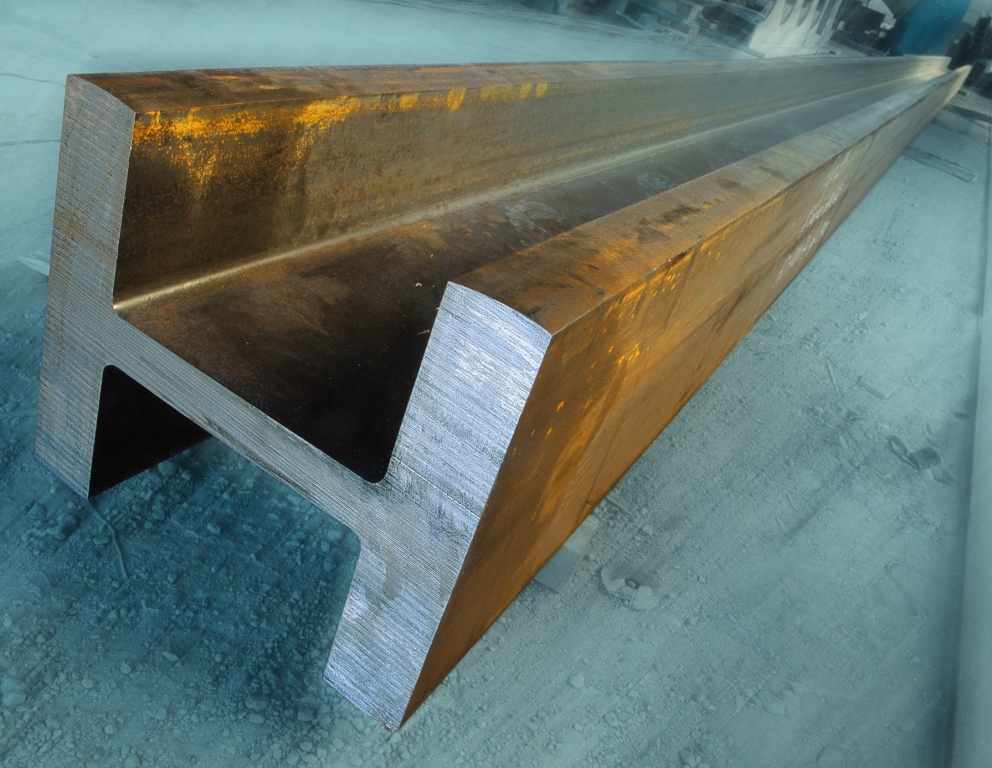
Italian sections prices skyrocket amid shortages, mill stoppages
Italian sections prices are increasing by €150/tonne ($163) on average amid restricted availability and high demand. The Russian-Ukrainian conflict has left Italian mills without ferroalloys, semi-finished products and pig iron, with energy costs and scrap prices skyrocketing, Kallanish hears.
In Italy, the main sections producer is implementing production halts a few days per week and allocating small tonnages per customer. All long steel producers are idling their mills on account of raw material shortages.
Paid prices for the first category of beams are now at €800-820/t base ex-works. Including €380-390/t average size extras, domestic beams contracts are hovering at €1,190-1,200/t ex-works, sources suggest. Prices increase by €20/t for each subsequence category. New beam quotes are now hovering at €910/t base ex-works. Sales executives are not allowed to sell more than one truck load per contract.
Meanwhile, merchant bar producers are also idling their mills and continuing rolling with the billet they have left in stock. Paid prices until last Friday were at €590-620/t base ex-works. Including €420/t average size extras, domestic contracts are at €1,010-1,040/t ex-works, sources suggest. New asking values for limited material allocations are said to be at around €700-710/t base ex-works, Kallanish notes.
Natalia Capra France

Czech steelmakers continue output, eye alternative feedstock sources
Czech steelmakers are so far coping with the disruption to feedstock supply from the CIS as a result of Russia’s invasion of Ukraine, but are concerned over future supply shortages and enquiring with alternative suppliers, Czech industry sources tell Kallanish.
Czech Republic imported 4.97 million tonnes of iron ore from Ukraine in 2021, while iron ore imports from Russia were 682,363t, according to Czech Statistical Office data. Slab imports from Russia, meanwhile, reached 465,099t.
“Czech mills are running but obviously follow the developments in Ukraine with great concern,” says Czech and Slovak steel association Steel Union chairman Daniel Urban. “They have already experienced some interruptions in the supply of ore from Ukraine. We fear worse is to come. As for alternative sources of ore, the mills are of course looking to Australia and Brazil but the time required to get the stuff here is well over two months.”
The country’s main long steelmaker, blast furnace-based Trinecke Zelezarny, says production continues. “We have set up production processes to react promptly to the latest developments of the situation in Ukraine and to ensure a sufficient supply of raw materials,” the firm observes. “We are working intensively on strengthening the range of suppliers to ensure smooth operation of our facilities.”
A spokesperson for BF-based Liberty Ostrava meanwhile says the firm “continues to monitor the fast-developing situation in Ukraine to ensure our contingency plans remain effective. We continue to focus on ensuring the resilience of our supply chain as well as working closely with our customers to manage this unprecedented situation.”
Spokespeople for plate re-roller Vitkovice Steel did not respond to request for comment before deadline. Merchant slab had however been a scarce commodity even before the Russian invasion, while prices have since skyrocketed amid the absence of CIS supply.
A spokesperson for the Czech-Moravian Confederation of Trade Unions, which represents steel workers, says there are reports of disrupted steelmaking feedstock supply from Ukraine. “The managements of individual companies are trying to find other possibilities to overcome this problem till the time the war is over. So far, the steel mills were running but the question is for how long.”
A Czech service centre source comments: “Our contract suppliers in the region (blast furnace) have assured us they hold enough raw material stocks to keep them going for weeks yet, but there is clearly a lot of nervousness around both demand and supply. Prior to the invasion, mills were bullish and reporting full orderbooks for the foreseeable future.”
Those supplying the automotive sector have experienced disruption to deliveries for months caused by semiconductor shortages and therefore have surplus steel in stock. A new issue limiting automotive production is nevertheless the disruption to wiring harness deliveries from Ukraine.
More immediate problems than material shortages are the lack of manpower, as many Ukrainian workers have returned home, as well as transport companies being hit by soaring fuel costs, the service centre source concludes.
Adam Smith Germany

European stainless market slows amid skyrocketing costs
Because of spiralling nickel values, daily alloy surcharges from European mills are in doubt as all producers have stopped sales and are not quoting. The situation has arisen from Russia’s invasion of Ukraine. Soaring nickel prices have sent shockwaves throughout the global stainless steel sector.
Mills in Europe are dealing with raw material shortages, high scrap values and leaping energy prices. French stainless steel producer Aperam is applying a €431/tonne ($469) energy surcharge to its contracts starting this month. The company increased its alloy surcharges for March for its austenitic range of flat stainless steels for Europe by another €150/t. The new Aperam energy surcharge effective 1 March is composed of electricity, gas costs, and CO2 emissions allowance, Kallanish notes.
The reference for the electricity costs evolution is the producer “price index in industrial production sold in France − CPA 35.11 and 35.14 − wholesale electricity”, reported by the national institute of statistics Insee. The reference for gas costs is also provided by Insee in its “producer price index in industrial production sold in France − CPF 35.23 − wholesale of gas, on spot markets”. The carbon emissions allowance is based on “carbon emissions futures – EUA daily future/front December futures, daily close prices” reported by ICE.
Meanwhile, Aperam’s surcharge for grade 304 (1.4301) has gone up from €2,519/t last month to €2,682/t effective 1 March. For grade 316 it has increased from €3,791/t to €3,995/t. Grade 309S, a heat-resistant stainless steel used in high-temperature applications, has also seen its value hike significantly from €3,409/t to €3,652/t. The surcharge for the most popular ferritic grade, 409, has gone from €898/t in February to €949/t this month, the company reveals.
Offers for nickel cash buyers have increased to unprecedented levels since the conflict started. The London Metal Exchange (LME) has halted trading of nickel on all its venues following an unprecedented rise in its three-month nickel contract. Nickel prices had risen 90% to $55,000/t on Monday, before they reached $101,365/t during night trading on Tuesday 8 March. This price then dropped to over $80,000/t prior to opening day, when an LME special committee decided to suspend trading (see separate article).
Natalia Capra France

TURKEY DATA: Imports of HRC rise 18% to 486,600 mt in Jan
Turkey imported 486,600 mt of hot-rolled coil in the first month of 2022, 18% higher year on year, according to data from the Turkish Statistical Institute (TUIK).
Imports from Ukraine totaled 106,000 mt in January, 20% lower on the year, while Russia supplied 76,000 mt, down from 136,300 mt in the same month of 2021.
Russia was Turkey’s top HRC supplier in 2021 at 1.93 million mt, 57% higher year on year, while imports from Ukraine totaled 1.17 million mt last year, up from 707,700 mt in 2020.
With shipments from these countries having collapsed in recent days due to the Russia-Ukraine conflict, Turkish HRC prices have increased more than $300/mt since the beginning of the month to over $1,200/mt EXW on March 8.
Turkey’s HRC imports from the UK increased notably in January to 70,000 mt versus zero in January 2021, the TUIK data showed.
Some EU countries also increased their HRC shipments to Turkey in January. France shipped 49,000 mt, up 69% year on year, while the Netherlands supplied 42,500 mt versus just 1,600 mt in January 2021.
Turkey’s other HRC suppliers in January 2022 were: Japan (22,300 mt), Slovakia (20,800 mt), Romania (19,500 mt) Spain (18,300 mt), Italy (11,800 mt), Germany (11,200 mt) and Japan (10,000 mt).
— Cenk Can

Spanish steel plants suspending operations amid record energy: Unesid
A number of Spanish steel plants have halted production due to high energy costs, Spain’s steel industry association Unesid said March 8 without adding details.
While some have suspended production since early March others have brought forward maintenance outages during the spike, according to director general Andres Barcelo.
Spanish power prices hit a new record high of Eur544.98/MWh on the OMIE exchange for March 8 delivery, an increase of 23% from the previous high set March 7 and a 44% increase from the day before.
The gas price on the MIBGAS exchange was Eur214.36/MWh for March delivery, up 10% on the day and also a record high.
Spain is Europe’s fourth largest steel producer, behind Germany, Italy, France.
According to Europa Press, on March 4 Megasa halted production at its 700,000 mt/yr Naron steel plant near A Coruna, having already shifted much of its production to night shifts to avoid peak prices.
The company did not reply to messages seeking confirmation.
One of Spain’s largest steel producers ArceloMittal de Espana said March 8 it had not taken any decision to cease production but had been carrying out selective outages in its long products division since the end of 2021 in response to hourly power prices.
According to Spain’s large consumer association AEGE, industrial users have been more exposed to spot price volatility since interruptible contracts were phased out in 2019.
A government proposal to offer large consumers bilateral contracts at competitive prices was yet to proceed, according to AEGE General Director Fernando Soto.
One answer has been for consumers to sign multi-year power purchase agreements with power generators at stable prices.
Steel tube maker Tubos Reunidos announced March 8 it had agreed a ten-year deal with Norway’s Statkraft, with power sourced from Statkraft’s 1.2-GW Spanish renewables portfolio and payments protected under Spain’s electro-intensive industries’ guarantee mechanism, FERGEI.
Arcelor Mittal already has one small-scale (10 MW) PPA running since April 2019, while Sidenor signed an offtake deal with Naturgy in March 2021 for 350 GWh/yr, sufficient to produce 600,000 mt/yr of steel, according to S&P Global Commodity Insights.
Spanish PPA offers made by project developers on Zeigo’s platform averaged Eur34.36/MWh in Q4 2021 for 10-20 year agreements.
— Gianluca Baratti