


Kaltenbach Solutions expands to Spain
Beginning of March, representatives of influential Spanish steel traders met with Valentin Kaltenbach
(CEO of Kaltenbach.Solutions) in the Spanish capital to exchange knowledge about strategies and
opportunities for IoT-based performance management in processing. Kaltenbach.Solutions’ digital
solutions for operations in the steel trade and steel processing industry were convincing and the first
pilot projects were agreed.
After preparatory discussions at international meetings such as the Eurometal congresses in Spain
and Portugal last year, a group of innovative steel traders formed around Roberto González Portilla to
explore the possibilities of IoT-based performance management in processing. González Portilla is
CEO of Grupo Tirso and president of the UAHE. The Unión de Almacenistas de Hierros de España
represents the metal trading companies of the Iberian Peninsula and is an important partner of the
steel industry in Europe.
For last week’s meeting, the UAHE made its own premises in the centre of Madrid available. In this
context, Valentin Kaltenbach had the opportunity to present Kaltenbach.Solutions’ innovative
strategy for increasing performance in prefabrication. As a family-run industrial group with over 60
years of experience in recycling, environmental management and the steel industry, Grupo Tirso has
facilities in the north of Spain and on the Canary Islands. Now, Tirso will use Kaltenbach.Solutions’
web-based solutions for the steel trade in a first pilot project to increase the performance of its
machines in pre-processing by 30% or more.

Martín, member of the UAHE Board of Directors), Roberto Gonzáles Portilla (CEO Tirso, President of
the UAHE), Valentin Kaltenbach (CEO Kaltenbach.Solutions), Pol Agustí (General Director Ferros
Agustí) and Fernando Moraga (General Director Grupo Hierros Alfonso and Vice President of the
UAHE) at the UAHE premises in Madrid.
About us
KALTENBACH.SOLUTIONS GmbH strives for long-term cooperation with companies in the steel
processing industry. It has set itself the goal of becoming a preferred partner – to the benefit of both
sides. As a full-service provider with decades of experience in the steel industry, it develops
innovative web- and AI-based industry solutions to improve performance in operations. Thanks to
its expertise in mechanical engineering, KALTENBACH.SOLUTIONS has succeeded in linking the
world of steel with the digital world. This unique link guarantees customers their measurable
success and creates sustainable added value.
Press contact
Nicola Chlench
T +800 454 0 2345
marketing@kaltenbach-solutions.com
www.kaltenbach-solutions.com

Liberty Ostrava announces surcharge on flat steel products
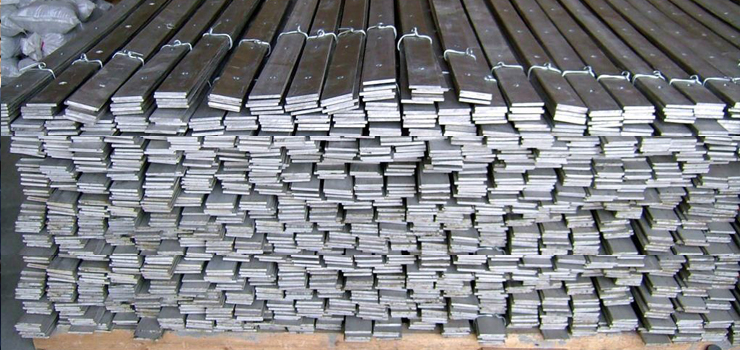
Liberty Ostrava, a major Czech Republic-based steel producer, has announced surcharges of Eur125/mt ($136.71/mt) on flat-rolled products and Eur175/mt on long and tubular products, citing increases in production costs related to the war in Ukraine.
The surcharges were announced March 10 by the company, part of the Liberty Steel group, in a note to customers. The surcharge for long and tubular products include for threaded bars and mining support products.
Liberty Ostrava highlighted the risk that some raw materials suppliers might declare force majeure on shipments as a result of Russia’s invasion of Ukraine, along with higher energy costs.
“Besides the energy cost increase, we start to face force majeure situation with regard to raw materials and suppliers, which we are trying to avert,” Liberty Ostrava said.
The integrated mill is understood to regularly purchase iron ore supplies from Ukraine, and is using pulverized coal injection coal as well as coking coals and met coke.
Russia is the largest supplier of PCI to Europe, with limited spot PCI coal availability currently at Czech and Polish coal mines, according to market sources.
Miners Metinvest and Ferrexpo are continuing to rail iron ore products to markets in Eastern and Central Europe, and their central Ukraine-based mining and processing operations are continuing.
Ferrexpo was reported as having issued force majeure notices on some seaborne contracts Feb. 25 due to disruption of logistics operations following Russia’s invasion of Ukraine Feb. 24.
Some railed iron ore shipments to the border were said to be at lower than typical rates based on rail service availability.
Liberty said commercial invoices would be revised “with immediate effect for material in production or pending shipment.”
A northern-European service center source confirmed receipt of the surcharges but hadn’t heard of new April offers, despite expecting new levels this week.
“I guess they will wait until it’s clear how they can settle the pending orders,” said the source.
Offers for March delivery for hot-rolled material were reported in Central Europe last at Eur875-Eur890/mt ex-works, with no further details.
In the South, a distributor source confirmed similar discussion around surcharges with large clients, at comparable levels of Eur100-Eur120/mt on flat products.
“There have been conversations about surcharges, the idea is to make increasing costs more transparent to end-users,” said the source. “I wouldn’t be surprised to see more surcharges across the market.”
— Benjamin Steven, Hector Forster

EU plate hits record highs on Ukraine war-caused supply chain constraints
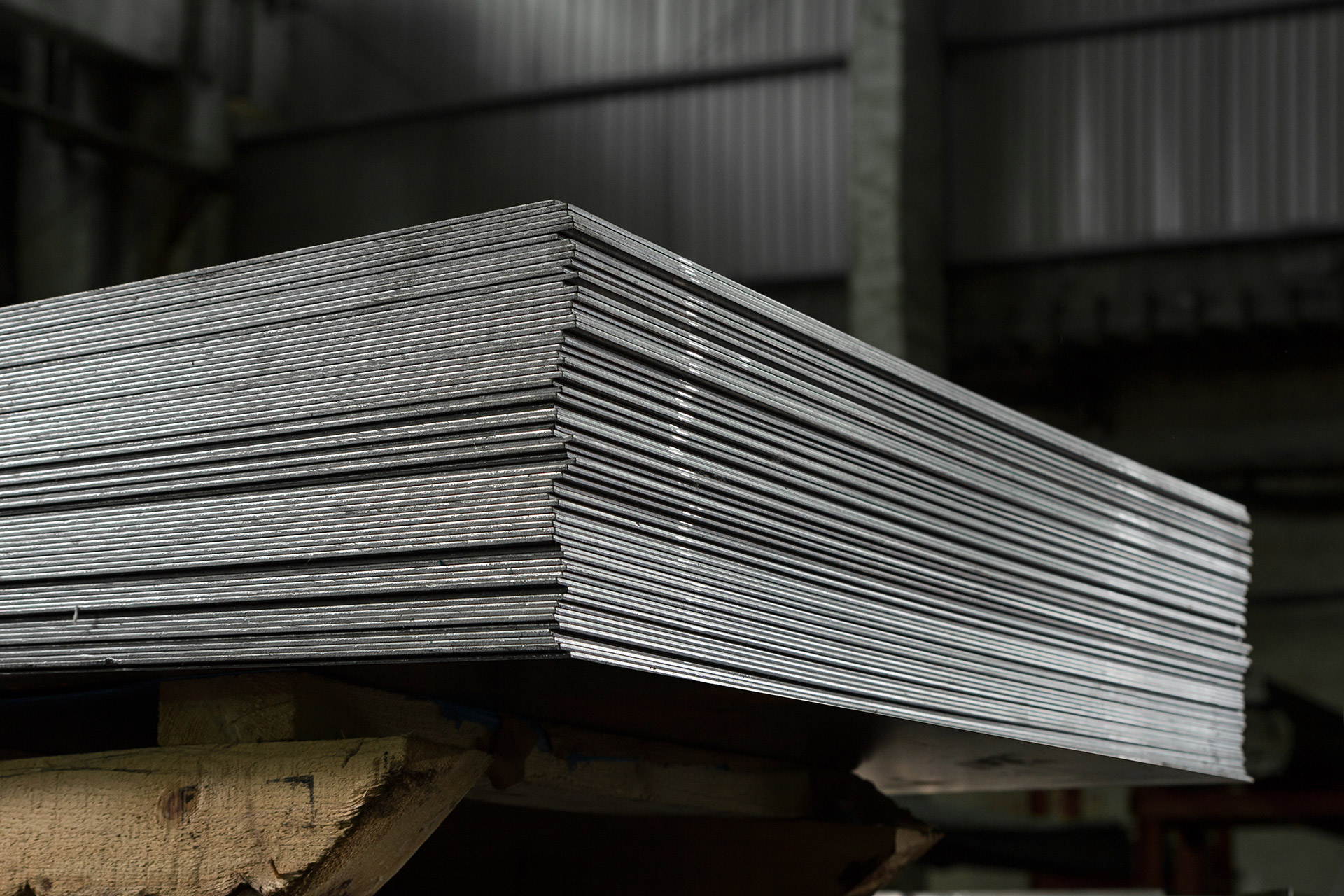
European plate prices saw sharp increases March 11 due to upstream supply illiquidity, largely due to the war in Ukraine, with buyers prioritizing guaranteed delivery over negotiations on price.
EU plate prices hit record levels again March 11, with the Platts assessments for Northern and Southern European plate rising Eur400 on the day.
With slab supply so tight given the EU market’s dependence on CIS area material, plate products were subjected to particular pressure following Russia’s invasion of Ukraine. Rising energy costs were also said to be a major factor.
“Heavy plate is the biggest focus for the market at the moment, followed by hot-rolled coil — everyone is desperate for new sources of supply,” said an Italian distributor source.
“It’s difficult to be in line with client expectations given the lack of necessary materials.”
The source described high acceptance rate on offers, with little negotiation on tradable levels: “I see no negotiation on price anymore, if material is guaranteed, then people will accept offers.”
An Italian mill source agreed, offering, “if you need to buy in this market, you will pay any price”.
In discussing alternative supply sources, market participants considered imports non-feasible.
“Short lead times are off the table, imports may be priced competitively but June delivery may be too late for required inventories,” said a mill source. “it’s a really desperate situation.”
A Nordic buyer said they were avoiding the plate market but reported concern that existing contracts could be cancelled.
“We haven’t seen a situation like this in 15 years,” the buyer said.
A German distributor was also worried about delivery of contracted material.
“Most mills are out of the market due to slab shortages, everyone has full orderbooks but there are significant doubts whether these orders will be fulfilled,” the distributor said.
Platts assessed North European plate at Eur1575/mt ex-works Ruhr March 11 and South European plate at Eur1500/mt ex-works Italy.
— Benjamin Steven
Eurofer demands nickel fluctuation resolution, LME eyes measures
European steelmakers’ association Eurofer called on the London Metal Exchange (LME) and the Financial Conduct Authority (FCA) on Wednesday to resolve artificial fluctuations in nickel prices and ensure they do not reoccur.
“In the last days, and since markets opened on 7 March in particular, we have seen an unprecedented surge in nickel prices that cannot be explained by supply and demand, nor by the sanctions recently imposed on Russia,” said Eurofer director general Axel Eggert.
Previously, in summer 2019, there was a similar situation of possible market manipulation by a specific player, Eurofer points out. “It is of utmost importance to solve this issue once for all so we do not see this happening a third time,” warns Eggert.
Following further unprecedented overnight increases in the three-month nickel price, the LME suspended nickel trading on Tuesday (see Kallanish passim). Nickel prices reached $101,365/tonne during night trading into Tuesday.
The LME concluded that the significant price moves during early hours trading activity on Tuesday morning “had created a systemic risk to the market, including in relation to margin calls, which if LME had not acted would have closed at levels far in excess of those ever experienced in the LME market”, it says. “The LME and LME Clear had serious concerns about the ability of market participants to meet their resulting margin calls, raising the significant risk of multiple defaults.”
On Thursday, LME said the two criteria needed for trading to resume were yet to be met. These are operational procedures to effect a safe re-opening, and analysis of the possibility of netting-off long and short positions prior to re-opening.
The LME however said it was doing everything it can to reopen the market as safely and swiftly as possible. This includes working on price bands, both for nickel and for all other physically-deliverable contracts. “In relation to netting off long and short positions, the initial responses indicated limited potential uptake, particularly from those with short positions, and considerable differences in view on the appropriate price,” LME said.
Eurofer requested the LME to keep the market closed until stability and normal price levels are restored. It has asked for an investigation of the trading practices by some market players to determine whether they may constitute market abuse or the creation of a disorderly market, or another prohibited practice.
Adam Smith Germany


Uncertainty slows Italian stainless steel activity
Italian stainless steel scrap activity has reached a standoff this month. Given ballooning nickel prices, scrap sellers and buyers are at odds with each other when it comes to quoting.
Last week, nickel prices ballooned and the London Metal Exchange suspended nickel trading, with scrap suppliers calling the situation a “global price inferno”.
Based on the few transactions registered this month, prices seem to have increased €300/tonne ($330/t) versus February for grade 304, but uncertainty has frozen activity.
Some merchants have so far refused to grant their suppliers the €300/t increase and decided to wait as values are escalating every day. The entire stainless steel sector is practically stopping. Service centres and re-rollers say “there is no market” (see separate article).
Some local long product mills are not buying scrap, while others have purchased grade 304 this month at approximately €2,500/t delivered. This grade sold at the beginning of January at $2,050/t delivered on average, Kallanish notes. As a consequence of high energy prices and the lack of raw materials, Italian and European mills are either stopping production or reducing it.
Nickel levels for cash buyers reached $100,000/t at the beginning of last week and then went down to $80,000/t, versus $23,225/t on 3 February.
Natalia Capra France

Russia set to centralise ferrous pricing
Russia’s government looks set to introduce a national commodities and goods pricing regime as the country’s economy takes a hit from Western sanctions.
Russian deputy industry and trade minister Evgeniy Evtukhov told steelmaker, trader and scrap procurement firm representatives during a 10 March meeting that domestic steel prices – which he cited at RUB 75,000/tonne ($558/t) – are unacceptably high and need to be lowered. The formula that the ministry has offered to producers is cost of production plus around 20-25% maximum, with traders’ margin set at “3-5-7%”, Evtukhov said at the meeting, a recording of which was obtained by Kallanish. Companies were given several days to come up with their exact numbers.
Any attempt to increase prices any higher, use additional middlemen, or refuse to comply would be passed on to appropriate departments for further action. Those traders who do not agree to the terms are welcome to close their business, even if leads to bankruptcies, Evtuhov is heard as saying. Prices in export markets will however not be regulated.
The deputy minister, answering questions from representatives about feedstock prices, explained that every single extractor and producer will be following this formula, so there should be a reduction in prices throughout the whole chain. These meetings have also apparently been held with other industries’ representatives, including food.
Evtuhov told representatives that this regime was likely to last for several months. He also noted that a reduction in output in order to increase cost of production will not be tolerated. Steelmakers are also expected to carry on with their modernisation plans, even while they are earning less. “You had a very good last year; I am sure you can continue with modernisation plans for a while using these resources,” he concluded.
EU to ban ‘key’ Russia-origin ferrous imports
The European Commission will ban imports into the EU of “key” iron and steel products from Russia, as part of its fourth package of sanctions against Russia announced on Friday. Authorities are however yet to specify what exact products will be targeted, Kallanish notes.
The ban “will hit a central sector of Russia’s system, deprive it of billions of export revenues and ensure that our citizens are not subsidising Putin’s war,” the Commission said in a note on Friday.
Other measures, being enacted together with G7 partners, include revoking Russia’s status of most-favoured-nation, which includes working to suspend Russia’s membership in leading multilateral financial institutions. The EU will also continue pressuring Russian elites close to Putin as well as their families and enablers, and make sure the Russian state and its elites cannot use crypto assets to circumvent sanctions.
It will also aim to ban the export of any EU luxury goods to Russia and ban new European investments across Russia’s energy sector.
Previous rounds of EU sanctions have hit Russian banks and certain oligarchs linked to the steel sector, which coupled with drastically reduced Black Sea shipping activity have made it more difficult to trade steel with Russia. However, the overwhelming majority of Russian steelmakers were not technically prohibited from exporting to the EU, if financing and freight could be arranged. This latest round of sanctions appears to be the hammer blow to ferrous trade between Russia and the bloc.
Adam Smith Germany