


LME US HRC steady as futures look to spot market for guidance
US hot-rolled coil futures on the London Metal Exchange pulled back slightly from recent highs in the week ended March 21 but traded steady, as rising input costs have triggered price increases from steelmakers, supporting futures further down the curve.
The structure of the forward curve tightened but still held at wide contango as futures retreated from recent highs. Spot prices were stronger with rising mill offers and service centers were committed to only buying what they needed to fill demand gaps in inventories, as buying activity remained slow during the week with the higher mill offer levels.
The March contract settled at $1,200/st March 28, up $35/st on the week.
The April contract settled at $1,472.50/st, down $5/st from the March 21 close but still up $57.50 from the start of the first quarter. Spot prices have recovered some of their recent losses, but were still down $200 during the same period as buyer inquiries have yet to translate at purchases at these higher mill offer levels.
The spreads tightened during the week as trading volumes were steady week-on-week, and spot prices were firmer during the March scrap buy week, settling at $1,380/st March 25, up $80 on the week.
The spot-to-three month spread narrowed but remained in contango, last settling at $175/st. Second-quarter contracts continued to see support, and bids for spot volumes continued around the $1,300/st-$1,400/st level with offers rising to the $1,450-$1,500/st range as mills scrambled to secure raw materials amid concerns of a possible disruption after Russia’s invasion of Ukraine.
The contract’s volumes saw 500 st trading. More than 632,000 st have traded since the contract’s launch in 2019.
Spot prices in the physical market have recovered as inventories, which have been the main driver of a price correction, remained at elevated levels, and some physical traders and importers have stopped quoting future tonnage due to uncertainties around input costs.
The average mill lead time for HRC ticked up to 5.3 weeks as April production has sold out amid availability from several mills, according to S&P Global Commodity Insights data.
— Nick Ruggiero

Megasa resumes Portugal production
Portuguese long steel producer SN Seixal, part of Grupo Megasa, resumed activity last weekend after the forced stoppage of production on high energy costs, Kallanish learns.
Megasa suspended production at the SN Seixal and SN Maia plants on 5 March after it became economically unviable. The two facilities are the largest consumers of electricity and gas in Portugal.
The production shutdown is understood not to have affected the rolling lines, which continued to run normally using billet from stock.
The Seixal and Maia operations produce wire rod, rebar and welded mesh.
The worsening of the energy crisis caused by the war in Ukraine and the consequent strong impact on prices of electricity and natural gas have also led Megasa to suspend production in Spain. According to a media report, the steelmaker will resume activity at its Narón and Zaragoza plants by the end of this week.
Todor Kirkov Bulgaria

Turkish automaker Oyak Renault pauses output for 10 days on microchip shortage
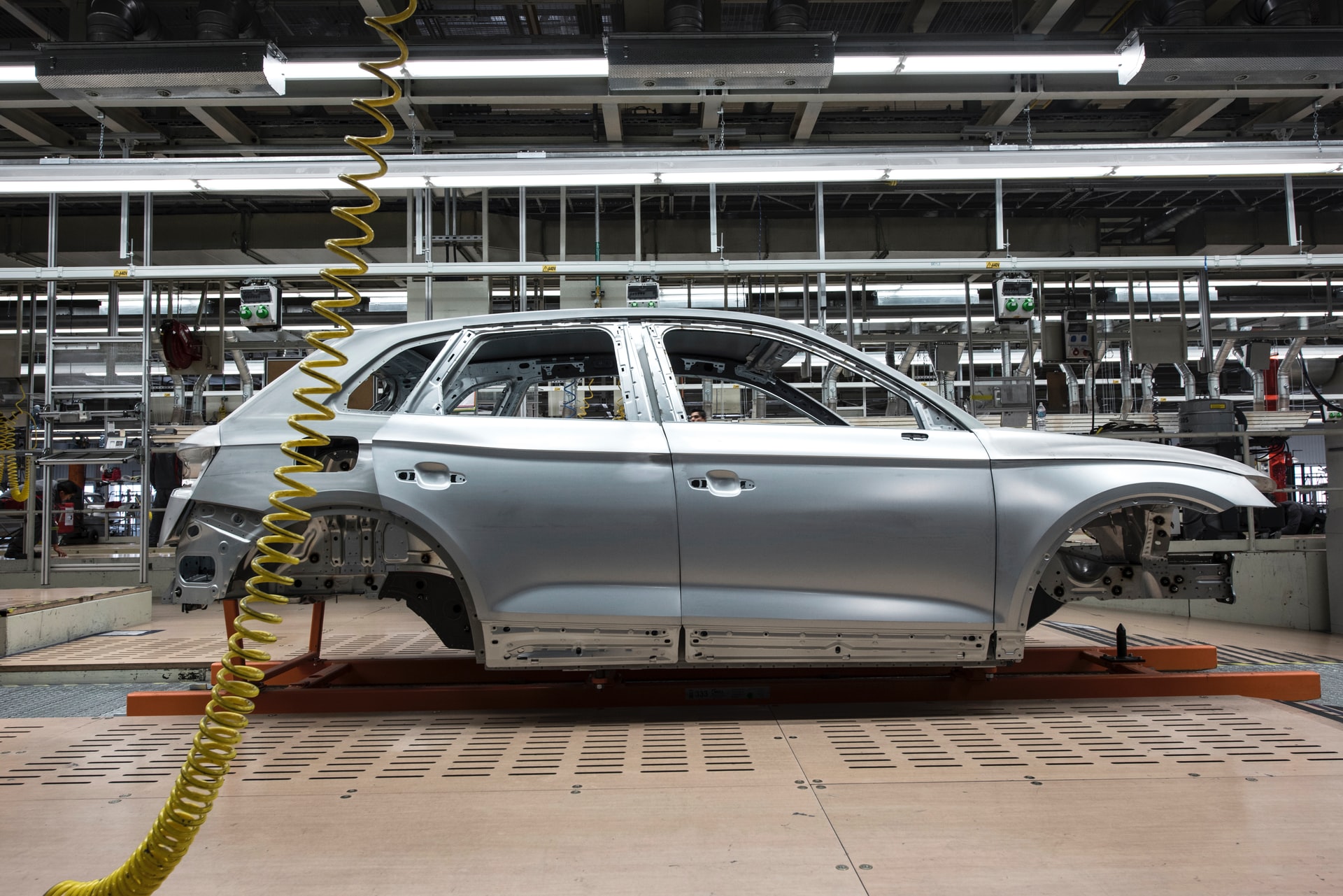
Turkish automobile manufacturer Oyak Renault has paused output for 10 days at most of its production departments as of March 25, due to the ongoing microchip shortage, according to a company notice seen by S&P Global Commodity Insights.
“We have obliged to make changes to our production plans on electronic components supply problems which have been continuing to affect the global automotive industry,” the company said.
Oyak Renault paused output for 15 days as of Jan. 24 for the same reason, while Turkey’s other major auto producer, Toyota, also suspended production at its Turkish plant for five days as of March 7, as previously reported by S&P Global.
These decisions follow output cuts by major producers throughout 2021.
Bursa-based Oyak Renault is a joint venture between France’s Renault Group and Turkey’s Oyak — parent company of Turkey’s largest integrated steel producer Erdemir.
These stoppages have also been affecting the sector’s steel demand, sources said.
Oyak Renault has 378,000 units/year of automobile production capacity and 920,000 units/year of motor production capacity.
Ongoing microchip shortages could continue to affect automotive output in Turkey in the coming months, as the global shortage is expected to continue albeit at a diminishing pace throughout 2022, according to industry reports.
According to the latest Turkish Automotive Manufacturers’ Association (OSD) data, total vehicle production in Turkey fell 12% on the year to 196,164 units in the first two months of 2022, while automobile output fell more sharply 20% to 109,322 units, amid ongoing microchip shortage.
— Cenk Can

Benelux scrap remains firm despite weak export demand
Scrap prices in the Benelux have remained firm, even increasing slightly in Belgium. The spread between vales in Belgium and Holland, which widened last week, has now narrowed.
On Monday, prices in Belgium were seen mostly at €510/tonne ($559), while in the Netherlands they were at €515-525/t ($565-576) delivered for HMS 1&2 80:20.
A Benelux scrap supplier tells Kallanish: “Prices have not changed much because of the non-existent scrap buying activity in Turkey last week. Exporters do not need to fill vessels and have remained inactive in their purchases during Turkey’s silence. They initially wish to see the prices in Turkey.”
A Dutch exporter says: “We are at €525/t, but I can’t say the flow is great. Exporters bidding at lower prices are mostly not much interested in buying.”
The expectation for an increase in domestic prices in April and Turkey’s ongoing need for May shipment scrap purchases are seen keeping scrap prices firm in the Benelux.
No scrap booking was heard in Turkey last week. In the absence of Turkish mills, some Benelux exporters have offered HMS 1&2 80:20 at $645/t cfr Turkey, while others offered the same grade at $660/t cfr. A cargo comprising HMS 1&2 75:25 was offered at $637/t cfr.
Turkish mills, having seen a decline in finished steel demand last week after completing EU sales, did not show interest in scrap offers. They initially wanted to gauge the situation with steel sales.
On Monday, however, a Turkish mill is confirmed to have bought EU-origin HMS 1&2 80:20 at $643/t cfr and shredded at $668/t cfr Turkey.
The situation in India was no different. Although Indian mills were not active in scrap purchases, containerised shredded suppliers have increased their offer prices. On Monday, containerised shredded offers were seen standing at $640-645/t cfr Nhava Sheva, while buyers’ price targets remained at below $635-640/t cfr. UAE-origin HMS 1&2 80:20 offers are hovering at $555-560/t cfr Nhava Sheva, meanwhile.
Burcak Alpman Turkey
Apparent demand returns in Italian longs market
Italian long products are expected to increase a further €50/tonne ($54/t) in April contracts. Between this week and next, merchant bars, sections and wire rod prices are seen hiking in line with domestic scrap, which is also forecast to increase in April, distribution sources tell Kallanish.
Apparent steel demand, or buying to fill stocks, has returned to the market after over a year’s absence during which much business was done back-to-back. In March, demand from both distribution and end-users has been extremely high for all long products, particularly for beams which are also seeing strong export market demand. Buyers in Germany and Central and Eastern Europe are currently shopping in Italy, impacted by the lack of finished product coming from the CIS.
Demand for wire rod and merchant bar is said to be strong, particularly for the export market. However, after the general restocking registered in March, April’s buying activity is expected to be slightly slower, but will pick up again by the end of the month and into May.
Today, before the new expected increases, the first category of sections is sold at approximately €1,500/t ex-works. Merchant bar is at €790-850/t base ex-works, or €1,210-1,270/t ex-works including size extras. Domestic drawing-quality wire rod is at €1,130-1,150/t ex-works, sources suggest.
Natalia Capra France