


Construction increases Mechel Service’s shipments in first quarter
Mechel’s trading arm, Mechel-Service, sold more than 432,000 tonnes of steel products in the first quarter of 2022, up by 17% on-year, Kallanish notes.
The growth in sales of beams was 59%, hardware was 47%, shaped steel – 5%, wire VR-1 – 88% and ordinary sheet 16%.
“In the first quarter of the year, we retained our share in the rolled metal market for construction purposes,” says Mechel-Service director for sales Stanislav Karpov. “We continue to develop sales of products of the universal rail and beam mill of the Chelyabinsk Metallurgical Plant. In order to reduce costs and make our customers more comfortable, we are planning to open new sorting and roofed hardware warehouses in the regions.”
Earlier, Mechel-Service supplied 4,900t of rebar for the construction of United Metallurgical Company (OMK)’s green metallurgy complex, “Ecolant,” in Vyksa (see Kallanish passim).
The products, produced by Mechel’s Chelyabinsk steelworks, were used in the construction of a full-cycle electrometallurgical complex using modern environmentally friendly technologies.
This is a “green” steelmaking pilot project in Russia, which uses technologies that are advanced not only for the country but also for Europe, Mechel-Sevice claims.
The future OMK complex will produce steel using the direct reduction method using iron ore pellet and natural gas. Ecolant will have a 1.8 million tonnes/year of liquid steel capacity, and will be equipped with two continuous casters. Commissioning is scheduled for 2025.
Construction demand boosted Mechel-Service shipments in 2021 by 15% on-year to 1.75mt (see Kallanish passim).
Parent company Mechel forecasted steady demand for most products in 2022, but this was before the Russian invasion of Ukraine and new sanctions against Moscow.
The company saw last year crude steel output decreased by 3% on-year to 3.53mt and pig iron output was down 10% on-year to 3.16mt. Consolidated revenue however increased by 51% to almost $3.8 billion.
Svetoslav Abrossimov Bulgaria


Megasa recovers production at Narón plant
Spanish steelmaker Megasa has resumed operations at its electric arc furnace-based plant in Narón, in the Galicia region, on Friday after the forced stoppage of production on high energy costs, Kallanish learns. The company also restarted its operations in Portugal last week.
The steelmaker will produce only during nights, weekends and holidays when electricity rates are lower.
Megasa suspended production at the site on 1 March after it became economically unviable. The plant is one of the largest consumers of electricity and gas in northwestern Spain.
The one-month shutdown comprised only the foundry section, affecting almost 50 workers between 14 and 31 March. The production stoppage is understood not to have affected the rolling lines, which continued to run normally using billet from stocks.
According to a media report, the steelmaker is also resuming scrap supplies from the Port of Ferrol. Raw material imports were not affected during the 16-days domestic road transport strike in the country.
Other steel companies in Spain, such as ArcelorMittal and Celsa Atlantic are also gradually resuming production (see Kallanish 1 March).
Todor Kirkov Bulgaria
Ukraine war concerns Turkish steelmakers
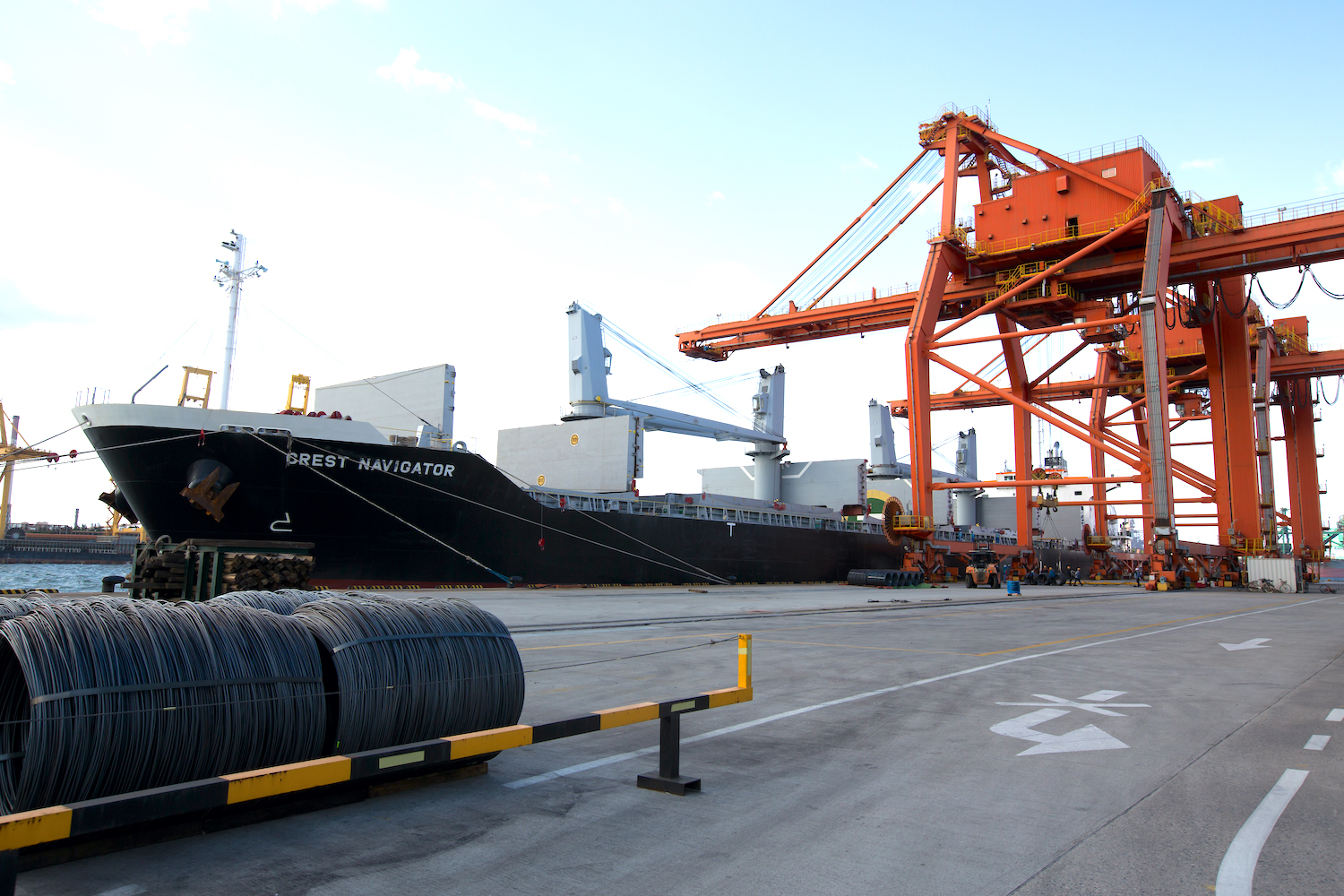
Turkish steelmakers are concerned that the continuation of the war in Ukraine will cause difficulties with raw materials supply to Turkey.
“Although our country has come to the forefront as one of the countries that will benefit most from the new quota distribution as a result of the EU sanctions after Russia’s invasion of Ukraine, there is a concern that the negative impact of the invasion on our steel production will reach serious levels as main raw materials such as scrap, anthracite, ferro silico manganese and pig iron are mostly imported from Ukraine and Russia,” says Turkish Steel Producers’ Association (TCUD) general secretary Veysel Yayan.
TCUD expects the decline in imports of raw materials and semi-products to more clearly reveal its impact on March indicators.
“The fact that the ships carrying cargo to this region are not insured, due to the Black Sea being declared a risky region, is another important source of problems Turkish producers are facing,” says Yayan.
Turkey’s February crude steel production fell 3.3% on-year to 3 million tonnes, while two-month production declined 5.7% to 6.1mt.
February finished steel consumption rose 1.9% to 2.9mt, Kallanish notes. In January-February, however, it fell 1.2% to 5.9mt.
January exports of steel products grew 1.3% to 1.3mt and increased 46.5% in value to $1.2 billion. Two-month exports rose 2% to 2.6mt, and by 52.4% to $2.4 billion.
Imports rose 12.9% on-year to 1.4mt, and by 76.3% to $1.5 billion. January-February imports grew 13.8% to 2.8mt, and by 67.6% to $2.9 billion.
The ratio of exports to imports declined to 80.8:100 in January-February from 88.9:100 last year due to the significant rise in imports.
Yayan also noted that production fell for three consecutive months including December 2021 and scrap imports from Russia and Ukraine, which are Turkey’s important scrap suppliers, decreased significantly in February due to the high tax on scrap exports and partly due to the war that started on February 24. Turkey’s scrap imports from Russia decreased by 96.6% from 160,000 tonnes to 5,000t, and imports from Ukraine decreased from 17,000t to 2,000t.
Burcak Alpman Turkey

Iron ore driven high despite lockdowns
Seaborne iron ore prices topped $160/tonne on Friday after surging through much of last week. Despite Covid lockdowns in many areas, easing restrictions in Tangshan and hopes of a demand recovery were driving prices higher.
The Kallanish KORE 62% Fe index jumped $3.19/tonne to $160.10/dry metric tonne cfr Qingdao, the highest level since August 2021. The Kallanish KORE 65% Fe index gained $0.81/t to $183.64/dmt cfr, and the KORE 58% Fe index leapt $6.19/t higher to $141.01/dmt cfr. 170,000t of PB fines sold at $157.70/t with a laycan in 27 April-6 May.
On the Dalian Commodity Exchange, September iron ore settled up CNY 12/t at CNY 907/t ($142.64/t), while on the Singapore Exchange May 62% Fe futures settled up $1.70/t at $161.34/t. The same contract for 65% Fe and 58% Fe futures settled up $1.55/t at $184.14/t, and up $6.71/t at $140.70/t respectively. Tangshan billet prices increased CNY 30/t to CNY 4,860/t.
An easing of restrictions on moving materials from ports in some areas has begun to bring port stocks lower. Across 35 ports, iron ore stocks fell 1.08 million tonnes to 149.35mt, according to SMM. The slight easing in restrictions on transport within Tangshan and the resumption of mill restocking in several regions led to the decline in stocks.
Meanwhile, the growing economic impact of lockdowns on key cities such as Shanghai has fuelled speculation of further stimulus measures. Government officials have sounded supportive of this, with premier Li Keqiang and the State Council encouraging the early issuance of local government special purpose bonds this year.
In the short term, however, lockdowns are expected to continue to hamper steel demand. Shanghai is due to emerge from a broad lockdown next week, but residents widely expect most of the city to remain shuttered for many more days after that.
Tomas Gutierrez UK
Shortage, high prices continue for Italian longs
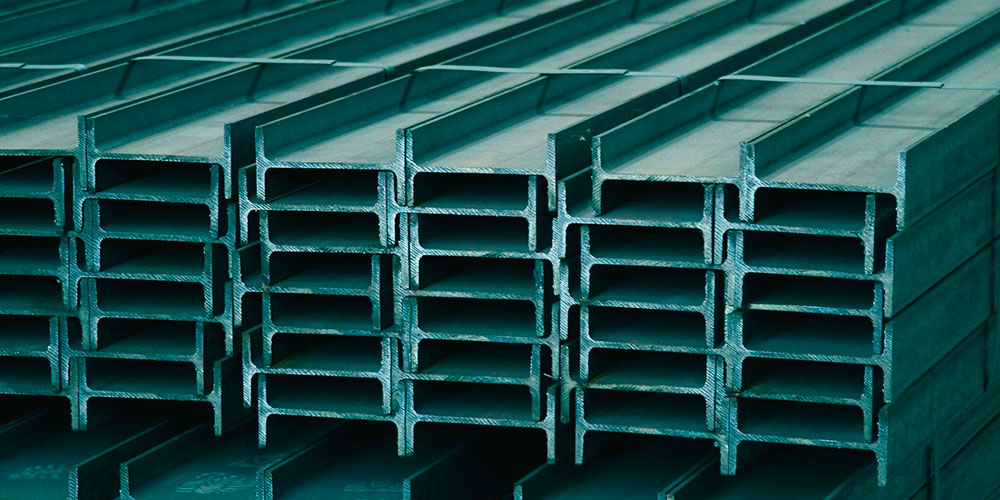
Limited quantities of merchant bars are being allocated to customers as demand is currently exceeding supply. Sections and wire rods are also troubled by limited supply and strong domestic and export demand, market participants tell Kallanish.
Apparent steel demand, or buying to fill stocks, returned to the market in March when sales and sales prices were reported to be strong with demand from both distribution and end-users remaining tense. While both merchant bars and sections producers have consolidated the past increases, they are now mulling more price hikes, also in line with forecasts that domestic and imported scrap will increase this month in Italy.
Today, before the new expected increases, the first category of sections is being sold at approximately €1,520-1,530/tonne ($1,680-1,691/t) ex-works including size extras, with material scarcity. Merchant bar is at €820-850/t base ex-works, or €1,240-1,270/t ex-works including size extras. This base price is seen increasing to €900/t in April, sources suggest.
Natalia Capra France

Italian steelmaker Arvedi pledges Eur1 billion to relaunch AST with green emphasis
Representatives of Italian steelmaker Arvedi, the new owner of special and stainless steel mill Acciai Speciali Terni, met April 1 with representatives of the Umbria region, where the site is located, and union members to present a new industrial plan for AST, a company spokesperson and union sources told S&P Global Commodity Insights. At the meeting, Arvedi’s board confirmed reporting by Platts that it will invest Eur1 billion ($1.10 billion) in the mill for the relaunch of AST.
From 2022 to 2026, the new investments will be used to revamp old lines with high-tech plant innovations, as well as to decarbonize the mill via green hydrogen produced at the site using photovoltaic panels. The company will also build a scrapyard that will use new waste management technologies.
The company will again produce magnetic steel, sustained by the high demand from the auto industry for electric engines.
The company did not disclose the amount of its magnetic production for the time being, but in the first phase it has allocated 50,000 square meters of area for it. AST produced about 200,000 mt/year of magnetic steel until 2004, when Thyssenkrupp, the owner at the time, decided to move production to Germany, where it was already the market leader.
AST will have also a new pickling line. In total, the company will increase its production up to 1.5 million mt/year of crude steel from the 1.1 million mt/year it is producing currently.
“We positively evaluate the plan, not only for the relaunch of production that over time had been lost or diminished, but also above all because it is a plan that looks to the future, as it plans hydrogen and green steel,” a union source said.
AST is the only integrated stainless mill in Italy, which produces 70% stainless steel and 30% carbon steel.
— Annalisa Villa

Europe HRC steel spread surges in March on offers, raw materials costs spike
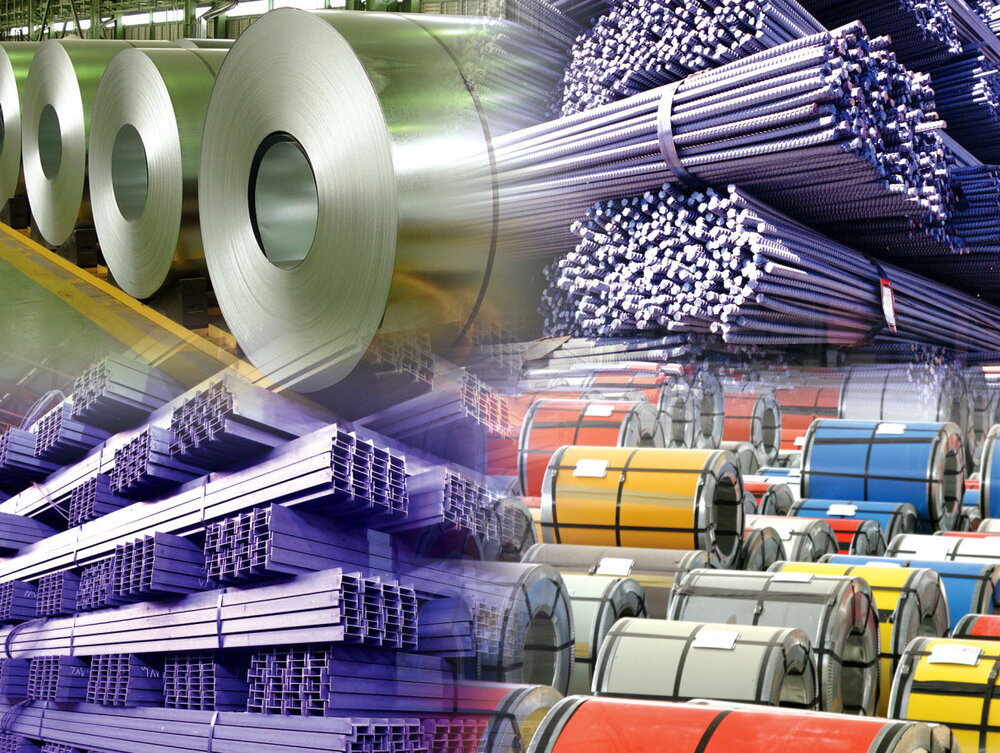
The spread between European hot-rolled coil steel and raw materials prices rose 44% in March as higher offers and prices for steel more than covered a spike in coking coal, iron ore and ferrous scrap, according to analysis by S&P Global Commodity Insights.
The Northwest European HRC steel-raw materials spot spread rose to Eur773/mt ($850/mt) in March, from Eur538/mt in February. The record high was Eur795/mt in August 2021, according to S&P Global calculations.
The NWE HRC spread averaged around Eur614/mt in Q1, down from Eur645/mt in Q4 2021. The spread peaked in 2021 at an average Eur771/mt over Q3.
Regional steel prices recovered sharply in March on tighter available supplies following Russia’s invasion of Ukraine, a key steel, ferrous scrap and iron ore exporter, and as higher energy and raw materials costs continued to support steel producers’ offers.
European steelmakers strongly depend on ongoing supplies of PCI coal (pulverized coal injection material) and iron ore pellets from Russia and Ukraine, with alternatives pushing up costs and with the possibility of additional operating constraints.
Meanwhile, stronger-than-average HRC prices over the past year have supported available cash cost margins above typical steel industry levels, according to S&P Global data.
Seaborne coking coal prices hit new record highs in March, while iron ore prices increased further. Pellet and lump premiums, high-grade fines and concentrate prices and demand found support from relatively wide 62%-65% Fe fines spreads last month.
Higher raw materials costs further boosted the overall cost of pig iron produced in Europe, while higher European shredded scrap prices lifted steel making costs further.
S&P Global tracked costs using major steel feedstock cost references, including a basket of iron ores with high-grade fines, lump and pellets typically consumed by NWE blast furnaces.
HRC prices rise
Platts NWE HRC prices averaged a record high Eur1,290/mt ex-works Ruhr in March, up 34% from February. Platts NW Europe HRC was assessed at Eur1,390/mt ex-works Ruhr on March 31.
Spot prices for commodity-grade HRC are not fully reflected in sales and deliveries by steelmakers, due to earlier negotiated pricing terms and long-term contract pricing.
Iron ore import prices in China, used as a benchmark for global contracts, rose further in March as stimulus measures aided expectations for stronger forward demand. Prices in March averaged $150.84/dry mt CFR China for benchmark Platts IODEX 62% Fe fines, up 6.2% from February.
Spot lump ore premiums in China rose 18% month on month to 40.27 cents/dmtu in March, to the equivalent of around $25.17/dmt. Premiums more than doubled from December.
Platts Atlantic blast furnace contract pellet premiums in March increased to $67/dmt, up from $66.50/dmt in February, tracking contract premiums and pricing terms settled for Q1 volumes. Premiums rose from the Q4 average of $55.50/dmt.
Coking coal prices on a delivered net forward basis into Rotterdam in March rose 34% to $617.17/mt CFR Rotterdam, a fresh high for the price reference using Capesize vessel rates from Queensland.
Regional northern European shredded scrap prices increased to Eur525/mt in March, from Eur430/mt delivered basis in February.
China, US spreads
In China, the spread between HRC export prices and imported iron ore and coking coal costs rose to $359.65/mt in March, from $335.48/mt in February, on higher steel prices.
Steel prices continued to outpace higher iron ore and coking coal prices delivered into China.
China HRC spreads remained stronger than a year earlier, and higher than 2020 levels, which were below the $300/mt mark.
A recovery in US flat steel prices followed higher raw materials costs. US HRC to Midwest shredded scrap spreads recovered to $707.33/st in March, from a recent low of $678.41/st in February.
S&P Global’s Europe HRC to raw materials price spreads are indicative operating margins that do not account for inland logistical costs, power, natural gas or other blast furnace and steel-making inputs, such as ferroalloys, anodes, and refractories. Costs to operate sintering and coke plants are not included.
There may be further upward pressure on typical operating breakeven levels at regional blast furnace mills, due to higher energy, carbon permit, and logistical costs.
Before the pandemic, an HRC-raw materials spread of Eur250/mt was said to be close to operating breakeven for commodity grade steel, based on operating facilities at higher capacity utilization, according to steel industry sources.
However, with higher logistics, trade financing, operating, and facilities costs stemming from the sudden shutdown of furnaces and mills in 2020, industry costs have risen. In 2019, the Northwest European HRC spread averaged Eur241/mt.
Breakeven levels in Europe are partly dependent on the mix of logistical costs and raw material configurations.
S&P Global’s estimated European HRC spreads are based on commodity-grade flat steel specifications. Contract steel sales may have additional grade- and specification-based premiums, and terms may lag spot indexes.
Producers with higher grade steel portfolios may be less exposed to commodity-grade steel margins against underlying steel raw materials costs.
— Hector Forster

Optimism returns to EU HRC market, transactions remain limited
The EU coils market was optimistic April 1 on the back of subdued panic, though transactional activity remained limited.
In Northern Europe, deals concluded through week beginning March 28 were reported at Eur1380-1390/mt, with a mill source reporting tradable value at the Eur1390/mt level.
Service center sources were largely united on workable levels, reporting a spread of Eur1380-1400/mt in achievable prices from Northern mills.
Sources expected levels to stabilize in the near-term after bullish trends softened on week, as mill production costs remain inflated given rising energy prices across Europe.
“I expect prices to be relatively stable in the short-term as the market is well stocked and panic is much reduced,” said one service center source. “Beyond that, we may see further increases as mills really have no room to decrease offer levels, production costs are through the roof and energy pressures are still very present – mills will go to short-work rather than move offers down.”
In the South, sentiment was much the same – one service center source reported tradable value as moving closer to the Eur1350/mt mark as seller ambitions relaxed against buyer resistance.
“Despite higher [production] costs we are seeing reductions in the market. A lot of the panic is gone as volume availability is better than expected a few weeks ago – at the end of the day you can still buy steel if you need it which was the main worry for buyers,” said the source.
A distributor source confirmed the sentiment but did not predict further decreases – “I don’t believe prices will collapse, a one-week slowdown is fully acceptable after the recent rally.”
Platts assessed the hot-rolled coil TSI price for Northern Europe stable on the day at Eur1390/mt ex-works Ruhr. HRC in Italy was down Eur10 at Eur1350/mt ex-works Italy.
— Benjamin Steven